Why Healthcare Workers & Teachers Get Recruited for Studies

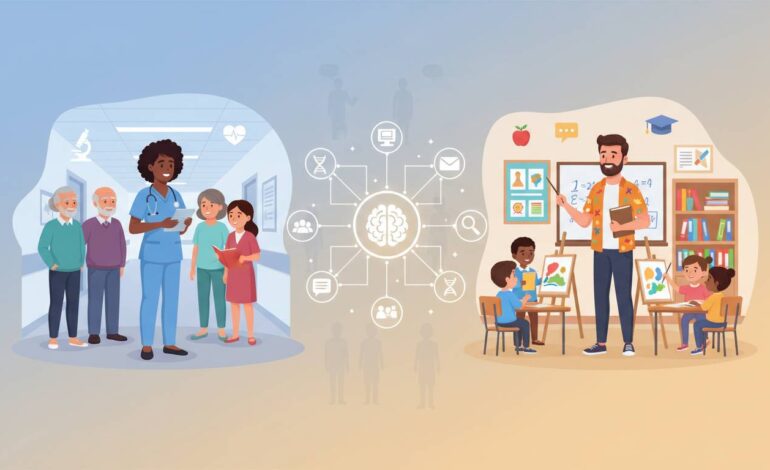
The pipeline from clinical settings and classrooms into specialized research programs isn’t accidental—it’s strategic. Organizations actively recruit healthcare workers and teachers because they bring something that fresh graduates with textbook knowledge simply cannot replicate: lived, practiced fluency in the environments where research must ultimately function. This isn’t about filling quotas or offering sympathetic career pivots. It’s about making research actually work when it leaves the laboratory and enters the messy, human realities of hospitals and schools.
They Understand the Actual Systems, Not Just the Theoretical Ones
A researcher who has never managed a patient load cannot anticipate how a new intervention will collide with a nurse’s existing workflow. The same applies to classroom research conducted by someone who has never managed twenty-seven teenagers in a room for six hours a day. When organizations recruit healthcare workers and teachers for specialized studies, they’re buying years of embedded institutional knowledge that no graduate program can replicate.
Consider how a nurse researcher approaches a study on reducing medication errors. That nurse already knows the exact moment when a busy floor becomes chaotic, where shortcuts get taken, which handoffs routinely fail, and which colleagues will actually follow a new protocol versus which ones will pay lip service to it. A researcher without clinical experience might design a brilliant intervention that looks perfect on paper and fails completely in practice because it assumes a level of staffing, time, and cognitive bandwidth that doesn’t exist in real healthcare environments.
The same logic drives teacher recruitment into educational research. A researcher who has spent years in classrooms understands that a seemingly simple variable—like changing how homework is assigned—ripples through parent expectations, grading software limitations, athletic eligibility requirements, and a dozen other contextual factors that no literature review would surface. Studies conducted by former teachers consistently show higher implementation fidelity because the researcher anticipated obstacles that outsider researchers stumble into blindly.
This isn’t an argument against academic training. It’s an argument for complementing that training with professionals who already possess the contextual intelligence that makes research actionable.
They Carry Existing Trust with the Populations Being Studied
Recruitment into specialized studies frequently fails not because the research is bad, but because participants don’t trust the researchers. Healthcare workers and teachers solve this problem immediately. A community health worker who has served a neighborhood for a decade carries credibility that an outsider with impressive credentials cannot buy.
This trust advantage manifests in concrete research outcomes. Participation rates in studies led by clinicians with established relationships dramatically outperform those conducted by external researchers, particularly in underserved communities where institutional distrust runs deep. When a community health nurse approaches residents about a health study, the conversation starts from a foundation of existing relationship. When an academic researcher makes the same request, they face an uphill battle of establishing credibility first.
In educational research, this dynamic is even more pronounced. Teachers recruiting their own students’ parents for studies face none of the suspicion that external researchers encounter. Parents trust the teacher who has communicated with them for months about their child’s progress. That trust translates directly into consent rates, follow-up completion, and the honesty of responses.
Organizations have recognized this explicitly. The National Institutes of Health has increasingly prioritized community-based participatory research models precisely because they understand that the researchers’ relationships with target populations determine whether studies succeed or die in the recruitment phase.
They Bridge the Implementation Gap That Destroys So Much Research
The chasm between research findings and practical implementation is one of the most expensive problems in both healthcare and education. Billions get spent producing findings that gather dust in academic journals because nobody figured out how to make them work in the environments where they’re needed. Recruiting practitioners for specialized studies directly addresses this gap.
A physical therapist recruited into a research program on stroke rehabilitation doesn’t just study interventions in the abstract—they know exactly what equipment most rehab facilities actually have, what insurance will and won’t cover, how long patients typically stay, what family members can realistically be trained to do at home, and which protocols will be abandoned within a month versus which ones have a fighting chance of becoming standard practice. This knowledge transforms research design.
The same applies to teachers recruited for educational research. When a teacher with fifteen years of experience joins a research team studying literacy interventions, they can immediately identify which proposed approaches will require so much additional teacher time that they’ll never survive contact with a real school day. They know which materials schools actually have, which standardized tests dominate scheduling, and which administrative requirements will create competing demands.
This practitioner knowledge prevents the most common cause of research waste: studies that produce technically valid findings that no real-world setting can implement. Organizations that recruit from clinical and classroom settings are making an explicit bet that research which accounts for implementation realities will actually get implemented.
Funding Structures Explicitly Favor Professional Experience
The grant landscape has shifted substantially to reward community-engaged and practice-based research, creating structural incentives for recruiting healthcare workers and teachers. Major funders, including the Agency for Healthcare Research and Quality and the Department of Education, now prioritize applications that demonstrate practitioner involvement in study design and execution.
This isn’t philanthropy. It’s recognition that research produced without practitioner input consistently fails to translate into changed practice. Funders have grown tired of seeing their investments produce findings that clinicians and teachers ignore because the research didn’t account for their actual constraints. As a result, grant applications featuring embedded practitioners score substantially higher in review processes.
This creates a recruitment pipeline. Organizations seeking competitive funding understand that including active healthcare workers and teachers strengthens applications. Healthcare systems and school districts have responded by creating formal pathways for clinicians and teachers to participate in research without abandoning their primary roles. These range from joint appointments that split time between clinical work and research to release time arrangements that allow teachers to participate in study design during summer periods.
The practical outcome is that healthcare workers and teachers with research interest now find themselves actively courted by institutions seeking both the practitioner expertise and the funding advantage that their participation provides.
They Fill Critical Shortages in Specialized Skill Domains
Certain specialized research areas depend almost entirely on recruiting from clinical and educational backgrounds because the specialized knowledge required cannot be obtained through standard research training. Clinical trial management, for instance, requires understanding of patient recruitment dynamics, adverse event recognition, and regulatory compliance that only comes from direct patient care experience.
The shortage of researchers with these hybrid backgrounds has created aggressive recruitment of experienced professionals. Healthcare organizations facing this gap have developed internal pathways that allow nurses, physicians, and allied health professionals to transition into research roles while maintaining connection to clinical work. These professionals bring domain expertise that pure researchers take years to develop—if they ever fully develop it.
The pattern repeats in education. Specialized areas like special education research, behavioral intervention design, and school climate studies require professionals who have actually worked in those environments. A researcher who has never navigated an Individualized Education Program meeting, never managed a classroom with significant behavioral challenges, and never dealt with the institutional pressures that shape school decision-making will struggle to produce research that practitioners find credible or useful.
This shortage has become more acute as both fields have pushed toward evidence-based practice mandates. Schools and healthcare systems are required to demonstrate that their decisions are research-informed, but the research enterprise hasn’t kept pace with the demand for practice-adjacent studies. Recruiting from professional ranks is the most direct solution.
They Bring Burnout-Driven Motivation That Produces Exceptional Work
Here’s an uncomfortable truth that most recruitment articles won’t acknowledge: many healthcare workers and teachers enter specialized research precisely because they’re burned out on their current roles—and that burnout, managed correctly, becomes a powerful driver of meaningful research.
A nurse who has spent years watching preventable patient harms occur because the system lacks adequate research on safe staffing levels brings a different kind of urgency to a nursing research program than a graduate student who selected the topic academically. That nurse has witnessed the human cost of knowledge gaps directly. Their research questions emerge from genuine problem recognition rather than literature review gaps.
This motivation manifests in exceptional work output. Studies have shown that researchers with clinical backgrounds often produce work with higher practical relevance and greater persistence in pursuing difficult questions. They’ve already demonstrated commitment to their field through years of often underpaid, high-stress work. When they redirect that commitment into research, they bring demonstrated dedication alongside their professional knowledge.
Organizations that recruit burned-out professionals need to manage this dynamic thoughtfully. The same intensity that produces excellent work can also lead to replication of clinical patterns—working excessive hours, difficulty maintaining boundaries, and transfer of emotional burden. The most successful programs build in structures that harness this motivation without reproducing the conditions that caused the burnout in the first place.
They Possess Language and Cultural Competencies That Outsiders Lack
Healthcare and education operate in increasingly diverse contexts where cultural competency directly determines research validity. A nurse who serves a Spanish-speaking immigrant community brings language fluency and cultural understanding that no research methodology course can teach. A teacher who has worked in communities experiencing generational poverty understands contexts that external researchers often misread fundamentally.
This competency matters for more than just communication. Cultural understanding shapes what questions get asked, how they’re framed, whether participants feel respected, and whether findings will be accepted by the communities they describe. Research conducted without this understanding frequently produces findings that are technically accurate but practically useless because they mischaracterize the populations studied.
The practical impact shows up in study design. A researcher working with adolescent populations needs to understand youth culture, peer dynamics, and the specific pressures that shape behavior in ways that differ dramatically from adult populations. A researcher studying rural healthcare access needs to understand transportation barriers, geographic isolation, and the specific economics of rural practice that urban researchers often completely miss.
Organizations increasingly recognize that diverse research teams produce more valid and useful findings. Recruiting from the professional ranks is one of the most reliable ways to build this diversity—not as a checkbox exercise, but as genuine incorporation of people who have lived and worked in communities that research aims to serve.
They Accelerate Policy Translation That Most Research Never Achieves
Research that influences policy requires understanding of how policy actually gets made—which is frequently very different from how academic literature assumes decisions get made. Healthcare workers and teachers who enter research bring direct experience with the policy implementation pipeline that pure researchers rarely possess.
A researcher who has navigated hospital accreditation processes, dealt with regulatory compliance, and managed the institutional politics of healthcare systems can design research that speaks to the actual decision points in those systems. They know which administrators need which types of evidence in which formats to change practice. This sounds cynical, but it’s practical: research that doesn’t account for how decisions actually get made will fail to influence them regardless of its quality.
The same applies in education. Teachers understand school board dynamics, state regulatory environments, union considerations, and the specific pressures that drive administrative decisions. Research that ignores these factors often gets dismissed as impractical precisely because it is—it doesn’t account for the real constraints that administrators face.
When organizations recruit practitioners into research roles, they’re not just improving study design. They’re building a pipeline of researchers who can translate findings into policy-relevant formats and contexts. This translation capacity determines whether research stays buried in journals or actually changes the systems it studies.
Conclusion
The recruitment of healthcare workers and teachers into specialized studies isn’t a favor to professionals seeking career changes, and it isn’t simply about adding credibility. It’s a recognition that research which ignores practitioner knowledge consistently produces findings that don’t translate into practice. The organizations that have figured this out are producing more useful research faster precisely because they’ve stopped pretending that academic training alone can produce researchers who understand how their findings will actually be used.
The implication for healthcare workers and teachers considering these pathways is straightforward: your years of practice aren’t a limitation that needs to be overcome through research training. They’re the precise expertise that research institutions desperately need but cannot produce through traditional academic pipelines. The question isn’t whether your clinical or classroom experience qualifies you for specialized research—it’s whether you’re willing to apply that experience in a different context where it can influence systems rather than just individual patients or students.
If you’ve been considering this path and waiting for permission or validation, understand that the structural incentives have already aligned in your favor. The question now is what you’ll do with the opportunity.