Which smartwatch should you get for serious fitness training?

Picking a smartwatch for fitness isn’t about grabbing the priciest option on the shelf. It’s about matching technology to how you actually train, figuring out which metrics matter for your sport, and deciding whether you want to deal with another device that needs charging every two days. Whether you’re prepping for a marathon, grinding through 5/3/1 cycles, or trying to crack a sub-20-minute 5K, the right watch can tell you where you actually stand instead of leaving you to guess.
This guide covers what separates a real fitness watch from something you’d grab at Best Buy, breaks down the current options worth your attention, and helps you figure out which one fits your training goals without overpaying for features you’ll never touch.
What Actually Separates a Fitness Smartwatch from a Regular Smartwatch
A standard smartwatch tracks steps and heart rate. A fitness-focused smartwatch does more, but not always in ways that matter to you.
The real differences come down to sensors, sport-specific software, and external accessory compatibility. Multi-band GPS gives you accurate distance tracking in cities or under tree cover. Optical heart rate monitors have gotten better, but most flagships also include SpO2 sensors and some form of recovery tracking. The software side offers customizable workout screens, interval timers, automatic rest detection for strength training, and post-workout analysis that actually tells you something useful.
Water resistance matters if you swim. Look for at least 5ATM (50 meters) if you’re doing laps. Open water swimmers might want 10ATM for serious use.
The question isn’t whether a watch can track your workout—most can. It’s whether the data it gives you actually changes how you train.
Key Features to Prioritize Based on Your Training
Your sport and training style should drive what matters most. Here’s how different athletes should think about their priorities:
Runners need GPS accuracy, pace tracking, and running dynamics if they want to optimize form. Some watches connect to foot pods for indoor track or treadmill work where GPS fails. Vertical oscillation, ground contact time, and cadence data help if you’re chasing efficiency gains.
Swimmers need dedicated swim profiles, stroke detection, and lap counting that works. Pool length customization is essential. Open water swimmers should prioritize GPS accuracy in water and navigation features.
Strength and hybrid athletes benefit from automatic rep counting, rest timer automation, and muscle heat maps that some watches now offer. HRV tracking helps manage recovery between sessions.
Endurance athletes should care about battery life more than almost anything else. Some watches offer solar or extended battery modes that double or triple runtime by turning off certain sensors.
Start with your primary sport. A watch built for marathon training is probably overkill for someone mostly doing CrossFit and occasional runs.
The Current Market Leaders: What Each Brand Brings to the Table
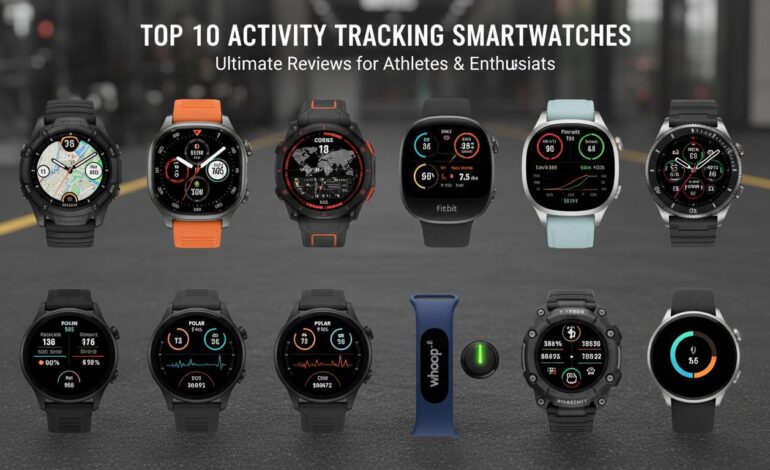
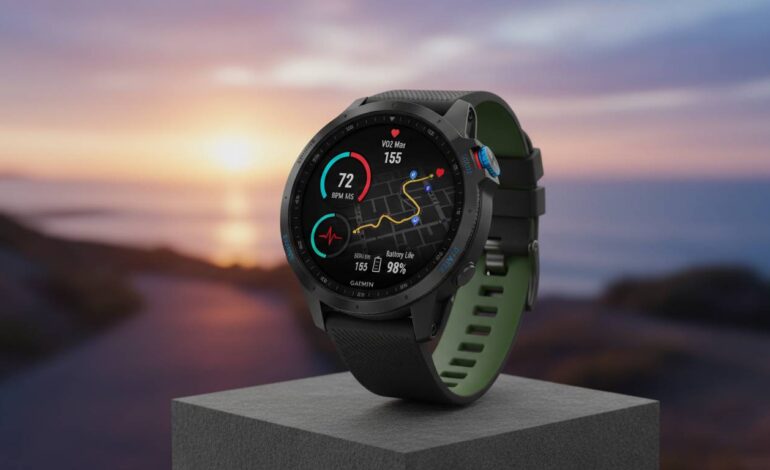
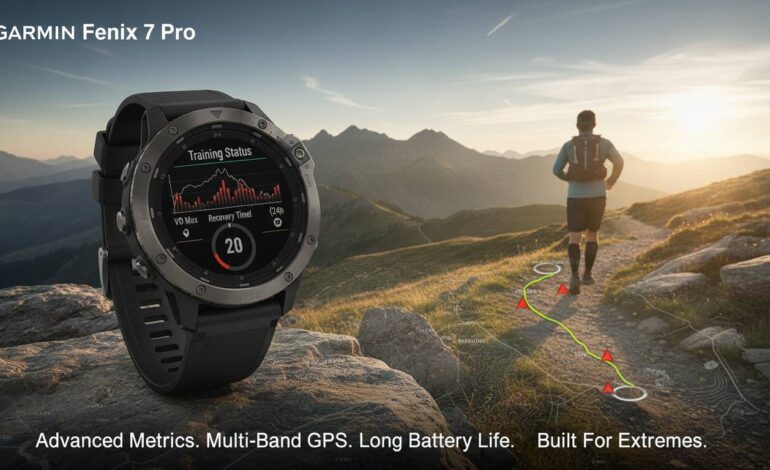
Garmin dominates dedicated fitness watches for good reason. The Forerunner and Fenix lines offer the most comprehensive sport profiles, excellent battery life, and software that syncs with nearly every training platform. The Forerunner 965 gives you up to 23 days in smartwatch mode with full-color topographical mapping for trail runners. The Fenix series adds titanium cases, solar charging, and multi-continent mapping. Garmin’s training readiness score and daily suggested workouts actually help you improve, not just log data.
Apple turned the Ultra into a serious fitness watch. The Apple Watch Ultra 2 brings improved GPS, 36-hour battery life (extendable to 72 in low-power mode), and depth sensors for scuba and free diving. If you’re in the Apple ecosystem, the Ultra offers cellular connectivity and seamless iPhone integration. The trade-off is that sport-specific analysis stays somewhat shallower than dedicated fitness brands, though each watchOS update narrows the gap.
Coros built a cult following among serious endurance athletes. The Vertix 2 and Apex 2 Pro deliver ridiculous battery life (up to 140 hours in GPS mode), lightweight titanium builds, and training metrics that compete with Garmin at lower price points. Coros Evolve AI Coach provides automated training plans that adapt based on your recovery status. The learning curve is steeper, but the value is strong.
Whoop shifted the conversation toward strain and recovery. The Whoop 4.0 and newer 5.0 track cardiovascular strain, sleep quality, and daily readiness without a traditional watch face. It’s more of a band than a watch, which appeals to athletes who want constant monitoring without bulk. The subscription model is polarizing, but the recovery and sleep data is genuinely useful for serious trainees.
Polar brings scientific rigor to heart rate training. The Polar Vantage V3 continues that tradition with extensive recovery testing, leg recovery scans, and fuel-wise nutrition tracking. It’s less flashy than competitors but excels at helping athletes train in specific heart rate zones with precision.
Samsung’s Galaxy Watch series has improved fitness credentials with each generation. The Galaxy Watch 6 and newer 7 offer solid workout tracking, body composition analysis, and decent Samsung Health integration. GPS performance has gotten better, though it still trails Garmin and Apple in tough conditions.
Battery Life: The Hidden Factor That Changes Everything
Battery life sounds boring until you’re at mile 18 of a marathon and your watch dies. Or you’re mid-interval set and lose tracking because you forgot to charge overnight.
Garmin’s solar-charging models can extend battery life indefinitely in smartwatch mode for light users, though heavy GPS usage still drains it. Apple claims 36 hours for the Ultra under typical use, dropping significantly with cellular, LTE workouts, or continuous GPS. Coros leads with 140+ hour GPS tracking on the Vertix 2, making it a favorite for ultra-marathoners and multi-day events.
Think about your typical workout duration. If you’re doing 45-minute sessions, battery probably won’t matter. If you’re doing 4+ hour rides or long runs, battery becomes a deciding factor.
Software Ecosystem and Third-Party Integration
Your watch is only as useful as where its data goes. Check which training platforms your watch supports before buying.
Garmin Connect is robust but feels dated. It exports to Strava, TrainingPeaks, TrainHeroic, and most major platforms. Apple Health integrates with everything that plays nice with iOS, plus Apple Fitness+ for guided workouts. Coros has solid partnerships but a spartan native app experience compared to Garmin. Whoop pushes its own ecosystem with Strain Coach and recovery recommendations built in.
If you use a specific training platform, verify compatibility first. Manual data entry after every workout gets old fast.
Price vs. Value: Where Should You Actually Spend
Fitness smartwatches range from under $200 to over $1,000. Here’s what’s real at each tier:
Under $300: Solid basics—GPS, heart rate, basic sport profiles. Apple Watch SE is good value for Apple users, though fitness features are limited. Garmin’s Forerunner 55 covers fundamental running needs. Expect shorter battery life and fewer advanced metrics.
$300-$600: This sweet spot gets you most features. The Garmin Forerunner 965, Coros Apex 2 Pro, and Apple Watch Ultra (first gen) all land here. Multi-sport support, solid battery, detailed training analysis. Most serious athletes won’t need more.
$600+: You’re paying for premium materials (titanium, sapphire crystal), solar charging, mapping, and maximum battery life. The Garmin Fenix 7 Pro, Apple Watch Ultra 2, and Coros Vertix 2 target users who want everything and don’t want to charge often.
Don’t buy more watch than you need. If you run three times a week and lift occasionally, a $600+ model might offer features you never use. If you’re training for an Ironman, cheaping out on battery could ruin race day.
Best Smartwatch for Different Types of Athletes
Runners training for marathons or ultras: Garmin Forerunner 965 or Coros Vertix 2. Excellent battery, accurate GPS, detailed pace and power data, training load analysis that helps you avoid overtraining.
Triathletes: Garmin Forerunner 965 or Apple Watch Ultra 2. Both handle swim-bike-run transitions smoothly. Garmin edges ahead with dedicated triathlon profiles and better cycling sensor integration.
Swimmers: Apple Watch Ultra 2 wins on depth sensors and water temperature. Garmin Swim 2 is a strong option if you only care about pool and open water tracking without smartphone features.
Gym rats and strength trainers: Whoop 4.0 or 5.0 excels at strain tracking and recovery analysis. Garmin Forerunner 965 offers automatic rep counting and muscle heat maps. Apple Watch handles basic strength tracking well.
Cyclists: Garmin holds the edge with ANT+ sensor compatibility, bike power meter integration, and cycling dynamics. Coros Vertix 2 works well but needs slightly more setup.
Casual fitness enthusiasts: Apple Watch SE or Samsung Galaxy Watch 6 delivers everything most people need. Fitbit’s Sense 2 also deserves mention for general wellness tracking.
Making the Final Decision: Questions to Ask Yourself
Before buying, walk through these:
What’s your primary sport? Your answer narrows options immediately.
How long are your typical workouts? Battery matters more for endurance athletes.
Do you care about maps and navigation? Trail runners and hikers need it. Road runners can skip it.
Are you already invested in an ecosystem? Switching from iPhone to Android loses your health history and often means buying a new watch.
What’s your budget, and does it include subscription costs? Some watches (Whoop, Apple Fitness+) require ongoing payments for full features.
Will you actually use advanced metrics? Ground contact time, running power, recovery scores are useful if you understand them, noise if you don’t.
The best smartwatch is the one you’ll actually wear and the data you can actually act on. Fancy metrics mean nothing if they sit in an app you never open.
Conclusion: Start With Your Goals, Not the Spec Sheet
The fitness smartwatch market has matured to where nearly every major option works fine. The real differentiator is fit—does the watch match your training style, your ecosystem, your budget, and your goals?
For most serious runners and triathletes, Garmin Forerunner 965 hits the sweet spot of features, battery life, and price. For Apple loyalists who need cellular and solid smartwatch features alongside fitness, Ultra 2 is the clear winner. For ultra-endurance athletes who prioritize battery above all, Coros delivers unmatched value.
Don’t get seduced by features you’ll never use. Find the watch that delivers the metrics that actually influence your training, and commit to using the data. That’s where the real value lives.
FAQs
What’s the best smartwatch for marathon training?
Garmin Forerunner 965 or Coros Vertix 2. Both offer excellent GPS accuracy, battery life, and training analysis for marathon and ultra-marathon runners.
Do I need a smartwatch with solar charging?
Solar charging helps if you do long outdoor activities and want to minimize charging. For most gym-goers and casual athletes, standard battery life is fine. Solar models cost more—only get it if you’ll actually use the extended runtime.
Can I use an Apple Watch for serious fitness training?
Yes. The Apple Watch Ultra and Ultra 2 are designed for serious athletes, with accurate GPS, decent battery life, and comprehensive health tracking. It integrates perfectly with iOS but may lack some sport-specific features compared to dedicated fitness brands.
What’s more important: GPS accuracy or battery life?
Both matter, but for different users. Runners and cyclists need GPS accuracy to trust their data. Ultra-endurance athletes need battery to finish events. For general fitness, both should be acceptable on modern flagships.
Should I get a chest strap heart rate monitor to use with my smartwatch?
Optical wrist-based heart rate monitors have improved, but chest straps still outperform them during high-intensity intervals, heavy lifting, and activities with lots of arm movement. If precision matters for training zones, add a compatible chest strap.
How long do fitness smartwatches typically last?
Most quality fitness smartwatches last 4-6 years with proper care, though battery degradation reduces capacity over time. Software updates typically continue for 3-4 years after release. Consider your purchase an investment in a multi-year training tool.