West Indies vs Afghanistan Scorecard – Live Cricket Match

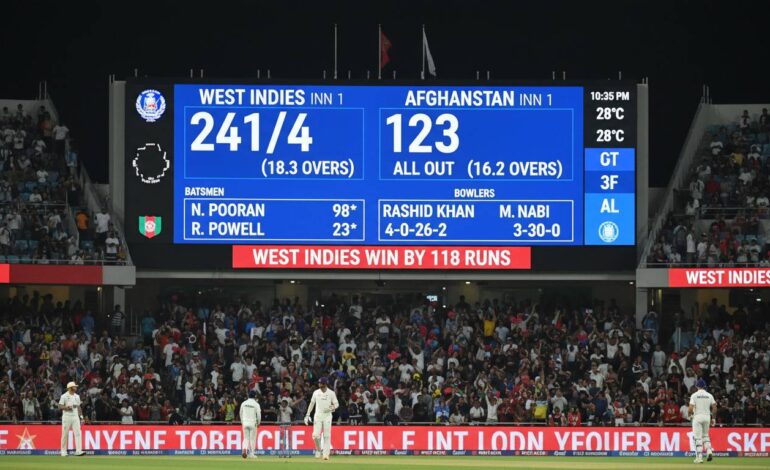
When West Indies take on Afghanistan, cricket fans check the scorecard to follow every boundary, wicket, and over. This guide explains how to read match scorecards and what the numbers tell you about team and player performance.
Understanding the West Indies vs Afghanistan Match Scorecard
A cricket scorecard is the complete statistical record of a match. The primary display shows runs scored, wickets lost, and overs bowled for each innings, giving you the result and competitive context immediately.
The batting section lists each player’s runs, balls faced, strike rate, and how they got out. Openers appear first, followed by the middle order and tail-enders. The bowling section shows overs bowled, maidens, runs conceded, wickets taken, and economy rate. This is where you see who controlled the game and who went for runs.
Complete scorecards also include fall of wickets – showing exactly when each wicket fell and who was batting. Partnership breakdowns are equally useful, revealing whether batsmen built solid platforms or if quick collapses occurred.
For finished matches, you’ll find the match result, player of the match, and sometimes fielding statistics including catches, stumpings, and run-outs. These details complete the picture of which players made the biggest impact.
West Indies Cricket Team Profile
West Indies represents Caribbean nations and has a rich legacy in international cricket. The team won the ICC Cricket World Cup in 1975 and 1979, establishing themselves as limited-overs pioneers.
West Indies is known for explosive batting, particularly in white-ball cricket. They’ve produced legendary players like Sir Vivian Richards, Clive Lloyd, and more recently Chris Gayle – power-hitters who can clear boundaries consistently.
In recent years, West Indies has worked toward more balanced teams across formats. Their bowling attack combines experienced pace bowlers with promising spin options. The team has shown particular strength in T20 cricket, winning two ICC T20 World Cup championships.
The West Indies batting order usually centers around established players who can anchor innings while accelerating when needed. Their bowlers have historically enjoyed success on home conditions but have improved overseas as well.
Afghanistan National Cricket Team Profile
Afghanistan’s journey in international cricket is remarkable. From playing in refugee camps to achieving Test status in 2018, Afghanistan has exceeded expectations. The team gained ODI status in 2011 and has competed at the highest levels since.
Afghanistan’s greatest strength is their spin bowling. Players like Rashid Khan, Mujeeb Ur Rahman, and Mohammad Nabi have become well-known in limited-overs cricket worldwide. Rashid Khan has become one of the most sought-after bowlers in T20 leagues because of his wicket-taking ability and economic bowling.
Their batting has improved significantly, though inconsistency remains a challenge. Players like Rahmat Shah, Hashmatullah Shahidi, and Gulbadin Naib have provided stability, while younger talents continue to emerge from Afghanistan’s domestic system.
Afghanistan has achieved notable victories against established cricketing nations, proving they can compete with the best when conditions favor their style. Their performances in ICC tournaments have created memorable moments, with upset wins capturing worldwide attention.
Key Statistics to Look For in the Scorecard
When analyzing a West Indies vs Afghanistan match scorecard, certain statistics provide the clearest picture of team and individual performance.
Batting strike rate matters in limited-overs matches, showing how quickly batsmen scored relative to balls faced. A strike rate above 150 in T20 cricket indicates aggressive batting. In ODIs, anything above 100 in the middle overs represents positive scoring. Compare each batsman’s strike rate against the team rate to identify who accelerated and who slowed down.
Bowling economy rate tells you which bowlers contained opposition scoring. In T20 matches, an economy under seven runs per over is excellent. In ODIs, anything under five is exceptional. High economy rates often indicate bowlers who struggled.
Run rate progression throughout the innings reveals momentum shifts. Consistent scoring between six and eight runs per over indicates a steady innings, while significant variations suggest partnerships being built or wickets falling in clusters.
Individual matchups between specific batsmen and bowlers often decide outcomes. When Rashid Khan bowls to a West Indies power-hitter, that’s a crucial contest worth examining. Similarly, West Indies pace bowlers targeting Afghanistan’s weaker batting periods can be decisive.
Recent Encounters Between West Indies and Afghanistan
West Indies and Afghanistan have met across all three international formats in recent years, creating compelling matchups that showcase different cricketing philosophies. These encounters have produced varied results, with neither team establishing clear dominance.
In white-ball cricket, both teams can win regardless of conditions. Their meetings in ICC tournaments have been competitive, with both sides understanding the importance of these high-stakes encounters.
The head-to-head record in ODIs and T20Is shows relatively even competition, though Afghanistan has improved in recent years. Their spin bowling attack has caused problems for West Indies batting lineups multiple times, while West Indies’ pace power has exploited Afghanistan’s occasional batting vulnerabilities.
In Caribbean conditions, West Indies traditionally holds an advantage due to familiarity with local pitches and weather. However, Afghanistan has proven capable of adapting to different conditions, and their experience in various global T20 leagues has prepared them for diverse environments.
Conclusion
Following a West Indies vs Afghanistan cricket match through the scorecard gives you comprehensive statistical data that reveals the true story behind the result. Whether checking live scores during an ongoing match or reviewing a completed game, understanding how to read each section enhances your appreciation of cricket.
Both teams bring unique strengths – West Indies with their power-hitting tradition and pace attack, Afghanistan with their world-class spin bowling and improving all-round performance. The match scorecard captures these dynamics in detail, showing exactly which players performed and when crucial moments occurred.
For the best experience, check the scorecard at key intervals during live matches, paying attention to partnership builds and bowling changes. This approach transforms passive viewing into engaged analysis.
FAQs
Where can I find the live scorecard for West Indies vs Afghanistan matches?
You can find live scorecards on ESPNcricinfo, Cricket West Indies official website, Afghanistan Cricket Board website, or various sports streaming platforms that provide cricket coverage.
What does a cricket scorecard show?
A cricket scorecard displays complete match statistics including runs scored, wickets lost, overs bowled, individual batting performances with runs and strike rates, bowling figures with wickets and economy rates, and fall of wickets details.
How do I read bowling figures in a cricket scorecard?
Bowling figures appear as overs (O), maidens (M), runs conceded (R), and wickets taken (W). For example, 4-0-20-2 means four overs bowled, zero maidens, twenty runs conceded, and two wickets taken.
Which team has won more matches between West Indies and Afghanistan?
The head-to-head record varies by format, but both teams have recorded wins against each other in recent years across ODIs and T20 Internationals, making their matchups competitive.
What is the best way to track live match scores?
Use official cricket apps like ESPNcricinfo or the ICC app for real-time updates. These platforms provide ball-by-ball commentary, live score strips, and updated scorecards throughout the match.