Sociopath vs Psychopath: Key Differences in Traits and Behavior

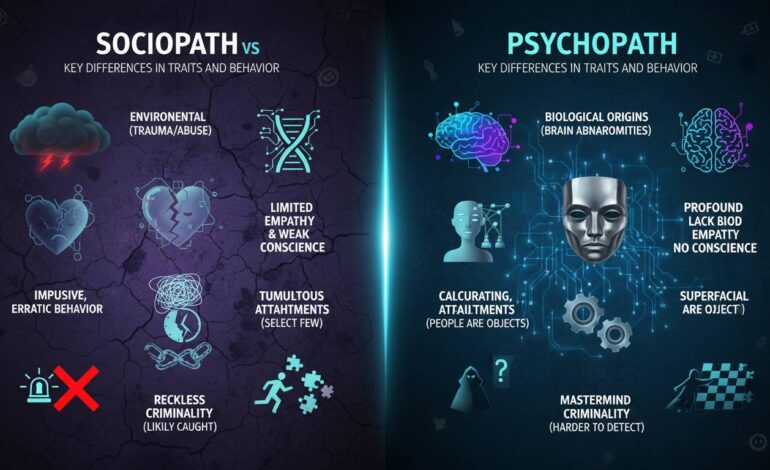
Sociopaths and psychopaths both fall under the umbrella of Antisocial Personality Disorder (ASPD), yet they differ in their emotional makeup, behavioral patterns, and underlying origins. In short: psychopaths are often born with innate emotional deficits and calculated manipulation, whereas sociopaths are typically shaped by their environment, showing impulsive, erratic behavior and occasional emotional attachments.
Understanding the Foundations of ASPD
Antisocial Personality Disorder, or ASPD, serves as the clinical framework encompassing both psychopathy and sociopathy. It describes a sustained pattern of behavior that not only disregards—but often violates—the rights of others. These behaviors may include repeated law-breaking, deceit, aggression, irresponsibility, and a glaring lack of remorse or empathy. In diagnostic terms, individuals with ASPD display a pervasive pattern of disregard for societal rules and the wellbeing of others, making both psychopathy and sociopathy subtypes within this larger category .
Emotional and Interpersonal Differences
Psychopaths are defined by their cold, calculated demeanor. They have minimal capacity for genuine emotion or empathy. They’re often superficially charming and highly manipulative, able to mimic normal relationships without actually forming them. Their emotional detachment allows them to plan and act without remorse or moral conflict, often appearing calm and cold-blooded .
Sociopaths, by contrast, exhibit emotional volatility. They may feel fleeting guilt or remorse, and can form attachments with certain individuals or groups. However, these attachments are marred by instability, anger, and impulsivity—and they struggle to maintain consistent relationships or responsibilities .
Behavioral Patterns: Calculated vs. Impulsive
Psychopathy is often defined by control and cold strategy. Psychopaths plan actions meticulously and execute them with purpose. Their behavior is methodical, focused more on long-term goals than instant gratification. This strategic thinking makes their harmful actions harder to detect .
In contrast, sociopaths act on impulse. Their decisions are often reckless, unplanned, and fueled by intense emotions. Their behavior is chaotic and unpredictable, making them easier to identify—and more likely to get caught .
Origins: Born vs. Made
The roots of psychopathy are thought to lie in biology. Psychopaths often show structural and functional brain differences, particularly in areas like the prefrontal cortex and amygdala, which regulate emotion and impulse control. Genetics may also predispose individuals to these traits .
Sociopathy, however, is typically shaped by life experiences. Trauma, neglect, abuse, or emotional instability during childhood are common precursors. It’s a condition made by damaging environments rather than born into .
Real-World Examples and Context
Imagine a corporate executive who’s meticulously manipulative. They build trust, climb the ladder, and exploit allies—all while remaining emotionally detached. That’s a classic psychopathic style.
Now picture someone with explosive emotions—a person who reacts violently, struggles to keep a job, and lashes out in relationships. That’s more sociopathic behavior.
These differences matter, especially in workplaces, relationships, and criminal justice contexts. Recognizing the patterns can shape how we approach prevention, control, and support.
“Psychopaths often operate with chilling precision and calculated deception, while sociopaths are impulsive and emotionally volatile.”
This captures the heart of the distinction: one is strategic and cold; the other, erratic and reactive.
Why the Distinction Matters
Recognizing the difference helps with risk assessment, treatment plans, and even social expectations. A psychopath’s calculated manipulation may require long-term behavioral strategies, while a sociopath’s volatility might benefit more from emotional regulation therapies.
But here’s a note of caution: both “psychopath” and “sociopath” are non-clinical, informal terms. Professionals diagnose ASPD, and these terms serve more to describe behavioral patterns than medical labels .
Summary Table: Comparing Traits
| Aspect | Psychopath | Sociopath |
|———————-|——————————————–|———————————————–|
| Emotional Traits | Emotionally detached, superficial charm | Volatile, shallow emotions, occasional remorse |
| Behavior Style | Controlled, strategic | Impulsive, erratic |
| Relationships | No real attachments, manipulative | May form unstable attachments |
| Origin | Innate or biological | Environmental or traumatic |
| Danger Level | Potentially hidden risk, calculated harm | More conspicuous risk, uncontrolled actions |
Conclusion
Sociopaths and psychopaths both reflect forms of antisocial behavior within ASPD, but their differences are stark. Psychopaths—cold, calculated, clever—act on strategy, while sociopaths—emotional, impulsive, unstable—act on intuition. One is born, the other is made. Understanding these differences not only sharpens diagnostic insight but also refines safety precautions, therapeutic approaches, and public awareness.
FAQs
What is Antisocial Personality Disorder (ASPD)?
ASPD is the clinical diagnosis that includes symptoms like disregard for others, deceit, impulsivity, aggression, and lack of remorse. It’s the umbrella under which psychopathy and sociopathy fall .
Are psychopaths or sociopaths more dangerous?
Psychopaths can be more dangerous due to their calm, strategic behavior and emotional detachment, which can make their harm more calculated and harder to detect. Sociopaths are more impulsive and erratic, making their danger more immediate and visible .
Can someone change if they show psychopathic or sociopathic traits?
These are enduring personality patterns that are challenging to change. However, therapy—especially focused on emotional regulation—can help manage behaviors and reduce risk, particularly for sociopathic individuals influenced by trauma .
Why aren’t “psychopath” and “sociopath” used as clinical diagnoses?
Because they’re vague, non-standardized labels that don’t align with diagnostic criteria. ASPD is the recognized clinical term. Professionals favor objective tools like the PCL-R for measuring psychopathic traits in a structured way .
Are the traits of psychopathy visible in childhood?
Often, early signs appear as conduct disorder—aggression, deceit, and rule-breaking. These behaviors may signal later development of ASPD traits, though not always definitively .
Can biology and environment both play a role?
Absolutely. While psychopathy leans more genetic or neurological, sociopathy is often environmental—but many individuals exhibit a mix influenced by both nature and nurture .