Social Media Marketing Strategy That Converts in 2025

The social media landscape keeps shifting, and if you’re not paying attention, your competitors will eat your lunch. With nearly 5 billion people scrolling daily, the brands that win are the ones treating social media as a real business priority—not just something junior handles between meetings.
This guide breaks down what actually works in 2025. Not theory. Not what’s trending on Twitter. What gets you leads, sales, and a audience that actually cares.
What Is a Social Media Marketing Strategy?
Let’s cut through the jargon: a social media strategy is just a plan. You decide what you want social media to do for your business, then you figure out how to make it happen.
That’s it.
Most companies skip this step. They post when they remember, complain about algorithm changes, and wonder why nothing sticks. A strategy forces you to be specific about your goals, your audience, and what you’ll actually publish. Without it, you’re just throwing spaghetti at the wall.
Here’s what every strategy needs:
- Clear goals: Brand awareness, leads, sales, support—what matters to your business?
- Target audience: Who are you trying to reach? What do they care about?
- Brand voice: How do you want to sound? Professional, casual, witty?
- Content plan: What are you posting and when?
Companies with documented strategies consistently outperform those flying by the seat of their pants. That’s not some academic finding—it’s just common sense. When you know what you’re doing, you waste less time and get better results.
How to Create a Social Media Marketing Strategy in 2025
Here’s the actual process. Not theory—here’s what works.
Define Your Goals
Stop saying “increase engagement.” What does that even mean?
Say what you actually want: “Get 500 leads from LinkedIn by Q3” or “Grow Instagram followers from 10K to 25K in six months.” Specific goals let you measure progress. Vague goals let you pretend you’re making progress when you’re not.
Align these goals with your business. If your company needs more sales, your social media should feed that. If you’re building brand awareness for a launch next year, that’s different. Don’t pick goals that sound good—pick ones that actually matter to your bottom line.
Know Your Audience
This sounds obvious, but most companies get it wrong. They’re guessing about who their followers are instead of actually looking at the data.
Check your analytics. Who follows you? What posts get traction? When are they online? Beyond demographics, think about what problems your audience has and what content actually helps them. The better you understand this, the easier it is to create stuff people actually want to see.
If you’re B2B, you’re probably reaching different people than consumer brands. IT managers, executives, end users—each one needs different messaging. One size doesn’t fit all.
Pick Your Platforms
You can’t be everywhere. Nobody can.
Focus on where your audience actually hangs out. Here’s the quick version:
- LinkedIn: B2B, thought leadership, leads
- Instagram/TikTok: Visual brands, younger crowds
- Facebook: Broad audiences, local businesses, groups
- YouTube: Tutorials, educational content, SEO
Pick two or three max. Do those well. Spreading yourself across seven platforms usually means doing all of them poorly.
Build Your Content Calendar
You need a plan for what you’re posting and when. Without one, things slip, consistency suffers, and your audience tunes out.
A few tips:
- Balance promotional content with stuff that’s actually useful. Nobody follows brands just to be sold to constantly. Try 80% value, 20% promotion.
- Map content to your business moments—product launches, seasons, industry events.
- Use a calendar tool (Buffer, Hootsuite, even a spreadsheet) so your team knows what’s happening and when.
Engage Like a Human
Posting isn’t enough. You have to actually talk to people.
Reply to comments. Answer DMs. Join conversations. The brands that win on social media are the ones that make followers feel like actual people, not broadcast targets.
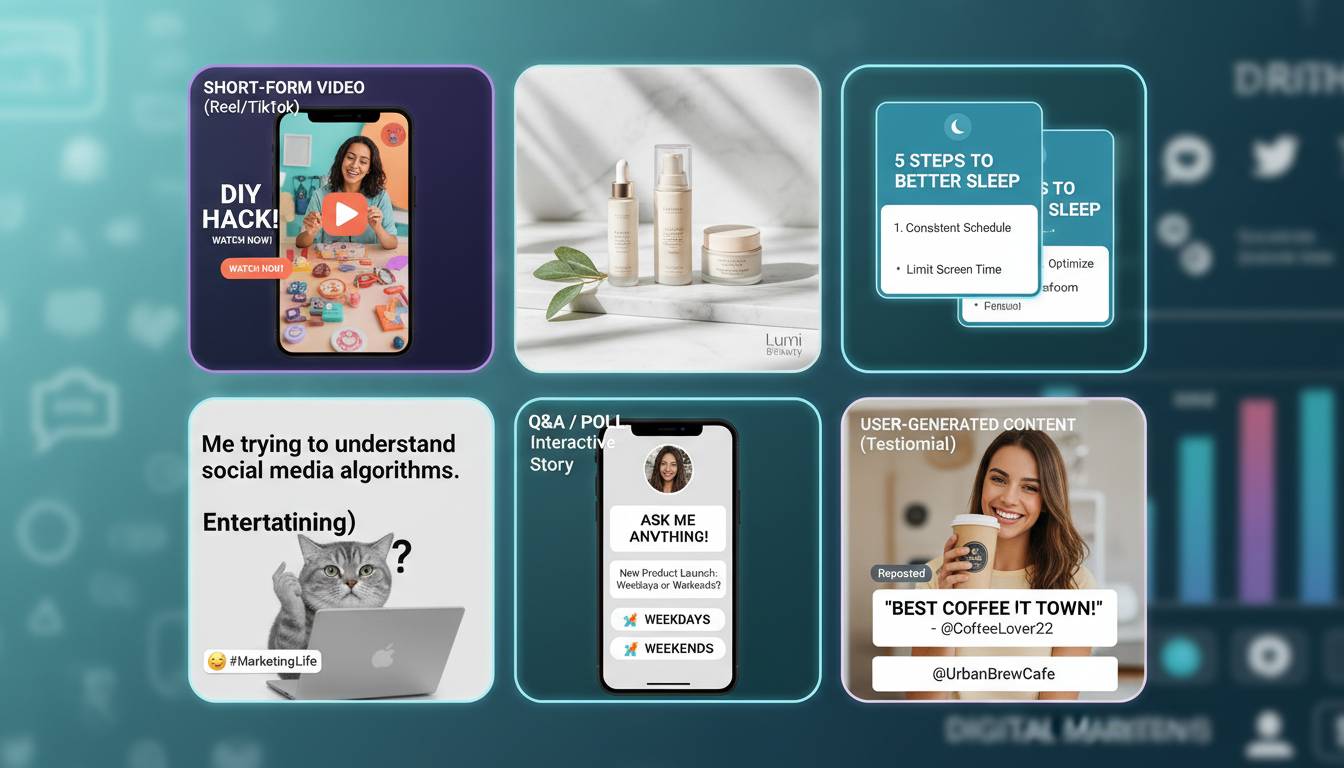
User-generated content is huge in 2025. When customers share their experiences with your product, that authenticity beats anything your marketing team can dream up. Encourage it. Feature it. Reward it.
Platform-Specific Strategies
Each platform has its own rules. Here’s what matters most in 2025:
Facebook: Groups are still powerful. Video performs. The ad platform is mature and lets you target precisely. Good for community-building and direct sales.
Instagram: Visual consistency matters. Reels get reach. Shopping features make the path from discovery to purchase pretty seamless. If you can look good in photos and video, this is your lane.
LinkedIn: The B2B playground. Long-form posts work. Thought leadership builds credibility. Decision-makers are actually here, unlike some other “professional” networks that shall remain nameless. Share expertise, not memes.
TikTok: Gen Z central. The algorithm rewards authenticity way more than polish. If you can be funny, real, or genuinely useful in under 60 seconds, you can build massive reach here. Corporate brands still struggle with this—opportunity if you can pull it off.
YouTube: Second-largest search engine for a reason. Tutorials, product demos, behind-the-scenes content—longtail traffic that keeps giving. Invest here if you can commit to consistency.
Measuring What Matters
Let’s talk numbers. Because if you’re not measuring, you’re just guessing.
Key metrics to track:
- Engagement rate: Are people actually interacting, or just scrolling past?
- Click-through rate: Are you driving traffic anywhere useful?
- Conversions: Are leads and sales actually happening?
- Follower growth: Is your audience actually building?
- Ad spend return: If you’re paying for reach, is it worth it?
Review these regularly. Monthly at minimum. Look for patterns—what works, what doesn’t, when to post. Then adjust.
A/B testing paid campaigns helps too. Try different headlines, images, audiences. Let the data tell you what to spend more on.
Common Questions
What’s the best strategy for small businesses?
Pick one platform and go all in. Do it consistently. Actually talk to people who comment. User-generated content and genuine engagement beat expensive production every time.
How long until I see results?
First three months: some traction. Six to twelve months: real momentum. Social media builds slowly. If you want instant wins, pay for ads. If you want sustainable growth, be patient.
What’s a reasonable budget?
There’s no universal answer. If you’re just starting, focus on organic first—figure out what works before you pay to amplify it. When you do advertise, start small, measure, then scale what performs.
Which platform should I choose?
Depends on your audience. B2B? LinkedIn. Consumer, younger demographic? Instagram or TikTok. Research where your people actually spend time. Quality engagement beats being everywhere.
How often should I post?
Consistency matters more than volume. Better to post three times a week with great content than seven times with stuff that stinks. Start somewhere reasonable and adjust based on what your specific audience responds to.
How do I prove ROI?
Track conversions. Use UTM codes. Set up conversion pixels on ads. Compare revenue from social channels against what you’re spending. If the math works, keep going. If not, change something.
Wrapping Up
A social media strategy isn’t optional anymore. It’s table stakes. The brands winning in 2025 are the ones treating this seriously—picking their spots, creating real value, measuring what matters, and adjusting as they go.
You don’t need to be everywhere. You need to be somewhere, consistently, and actually good at it.
Pick your platforms. Know your audience. Post stuff worth seeing. Measure what matters. That’s the whole game.