Research Company Before Interview: Go Beyond the About Page

Walking into an interview knowing only what the company’s About page tells you is like showing up to a first date having only read someone’s self-written dating profile. You might get by, but you’re not doing yourself any favors. The About page is polished marketing copy—carefully crafted to attract customers, investors, and yes, candidates like you. It tells you what the company wants you to know. What it doesn’t tell you is whether the company is hemorrhaging talent, whether the CEO just stepped down, or whether that “fast-paced environment” actually means chronic burnout with extra steps.
The candidates who land offers aren’t necessarily the most qualified on paper. They’re the ones who walked into the interview room already knowing the company’s latest funding round, understanding the competitive pressures they face, and able to speak intelligently about challenges the industry is navigating. Interviewers notice when you’ve done your homework. It signals genuine interest, preparation, and—perhaps most importantly—that you’re the type of person who does due diligence before committing to something significant.
This isn’t about becoming a corporate detective or spending hours building a stalker-level dossier. It’s about strategically allocating thirty to sixty minutes of research time across the right sources so you walk in informed, confident, and ready to ask questions that actually matter. Here’s how to do it properly.
Financial Health and Funding Trajectory
Understanding a company’s financial situation tells you more than just whether they’ll be able to pay you. It reveals their growth ambitions, stability, and priorities. A well-funded startup with Series C funding operates completely differently from a bootstrapped company navigating profitability. Neither is better or worse, but knowing which you’re walking into helps you tailor your questions and manage expectations.
Crunchbase should be your first stop for funding history. You’ll see every funding round, the amounts raised, and which investors participated. When a company has backing from prominent VCs like Andreessen Horowitz, Sequoia, or Y Combinator, that’s a signal. It means sophisticated investors have done due diligence and believe in the trajectory. More importantly, look at the gap between funding rounds. A company that raised Series A in 2021 and hasn’t announced anything since might be struggling to raise again, or they might be profitable and bootstrapping. Either way, it’s worth asking about in your interview.
For public companies, SEC filings (accessible through the SEC’s EDGAR database) are a goldmine of information. The 10-K annual reports and 10-Q quarterly reports contain detailed financial statements, risk factors, and management discussions. These documents are brutally honest. Companies are required to disclose legal proceedings, material risks, and challenges they face. If you’re interviewing at a public company and haven’t read at least the most recent 10-K, you’re showing up unprepared.
PitchBook offers more detailed private company data, though access typically requires a subscription. Many public libraries provide free PitchBook access through their business resources. If you’re serious about a particular company, this level of detail can reveal burn rate, valuation trends, and investor sentiment that’s not visible in press releases.
What to look for: Is the company in a growth-at-all-costs phase or pushing toward profitability? Have they had layoffs recently? Is their revenue scaling faster than their burn? This context shapes everything from interview intensity to culture expectations.
Employee Sentiment and Workplace Culture
The About page will tell you they have “an amazing culture” and “passionate team members.” Glassdoor, Indeed, and Reddit will tell you the truth.
Glassdoor reviews offer unfiltered employee perspectives, but you need to read them strategically. Don’t fixate on any single review—one person’s terrible experience might be a personal fit issue rather than a systemic problem. Instead, look for patterns across twenty or thirty reviews. Are multiple people complaining about the same thing? If you see recurring mentions of “burnout,” “poor management,” or “lack of transparency,” that’s data. Also pay attention to when the reviews were written. A company that was dysfunctional two years ago might have new leadership that’s turned things around. Recent reviews carry more weight.
Indeed company reviews tend to be less adversarial than Glassdoor and often include more balanced perspectives from employees who left voluntarily. Indeed also publishes salary data that can help you negotiate if you receive an offer.
For current employees’ unfiltered takes, LinkedIn offers surprisingly candid comments when companies post jobs. Look at who’s commenting on the company’s posts—are current employees enthusiastically sharing, or is the engagement hollow? You can also reach out directly to people in similar roles. A brief, respectful message asking for fifteen minutes to learn about their experience often yields valuable insights.
Blind (an anonymous app) provides brutally honest employee discussions, though the anonymity means you should take specific claims with a grain of salt. Use it to identify potential red flags rather than confirm them.
What to look for: Consistent themes around work-life balance, management quality, growth opportunities, and compensation fairness. A company where employees consistently describe “learning a lot” despite challenging conditions might be exactly what you want, or it might mean they’re churning through people. Context matters.
Recent News and Press Coverage
Companies want you to know about their product launches, awards, and expansion plans. They want you significantly less to know about layoffs, lawsuits, or executive departures. Yet this information is exactly what demonstrates serious research effort.
Set up Google News alerts for the company name, its CEO, and relevant industry keywords. By the time your interview arrives, you’ll have a steady feed of recent coverage. This takes thirty seconds to set up and requires no ongoing effort.
PR Newswire and Business Wire publish official company announcements. These are useful for tracking product launches, partnerships, and leadership changes. When a company announces a new CTO or VP of Sales, that’s someone you’ll likely meet during the interview process. Knowing their background gives you an instant conversation opener.
For startups and tech companies, TechCrunch, Forbes, and Axios cover funding rounds, acquisitions, and industry trends. A company that just got covered for raising $50 million is likely in expansion mode, which might mean rapid hiring and opportunity, or it might mean pressure to hit aggressive growth targets.
LinkedIn’s news section has become surprisingly useful for company-specific coverage. Search for the company name and filter by “news” to see recent articles.
What to look for: Any mention of layoffs (check all hands meetings, WARN notices, and local news coverage), executive changes, lawsuits, or regulatory issues. Also note the tone of coverage. Is the company being positioned as an industry leader, or are articles focusing on challenges and competitive threats?
Leadership and Team Research
You wouldn’t go on a date without Googling the person, and you shouldn’t walk into an interview without knowing anything about the people you’ll be meeting. This goes beyond basic LinkedIn stalking. It’s about understanding who makes decisions and what their priorities might be.
Search for LinkedIn profiles of your interviewers and their direct reports. What backgrounds do they come from? Did they join from a competitor, or have they been at the company for years? A leader who joined from a company known for rigorous processes might bring different expectations than someone who rose through the ranks. When you can reference their background authentically—”I saw you came from X, which I’ve heard has an incredible training program. How has that shaped your approach here?”—it signals sophistication.
Research the founders and executives separately. Search for their names in news articles, conference talks, and social media. A founder who’s publicly vocal about work-life balance suggests a company that actually practices it. An executive who’s frequently quoted on industry trends is signaling priorities you might be able to align with.
Board members matter more than most candidates realize. A company with board members who have successfully scaled companies before offers different guidance than one with board seats filled by investors looking for returns. Crunchbase shows board composition, and knowing who’s advising (or pressuring) leadership helps you understand strategic priorities.
What to look for: Leadership tenure, background diversity, and whether executives are founders or hired operators. Rapid executive turnover is a red flag. Consistent leadership with clear vision is a positive signal.
Industry Context and Competitive Landscape
Understanding the company’s position within its industry demonstrates business acumen and helps you ask smarter questions. Interviewers don’t expect you to be an industry expert, but showing you understand the broader context separates prepared candidates from those just showing up.
Identify major competitors and understand how the company differentiates. Are they the low-cost option, the premium player, the technology leader? This shapes everything from sales strategy to product roadmap. When you can speak to their competitive positioning—”I noticed you’re competing primarily on speed to market against X and Y, how do you think about feature velocity versus stability?”—you demonstrate strategic thinking.
Use Owler or SimilarWeb to understand market share and traffic trends. SimilarWeb shows website traffic patterns that often correlate with business health. An e-commerce company with declining traffic is worth questioning about competitive challenges.
Industry reports from Gartner, Forrester, and IDC provide macro context, though these typically require subscriptions. Many public libraries offer free access to business databases. Industry trade publications often publish annual reports with market analysis that’s freely accessible.
What to look for: Whether the company is gaining or losing market share, what industry headwinds or tailwinds they’re navigating, and how they talk about competitors. A company that trash-talks competitors often reveals insecurity. One that acknowledges competitive threats while explaining their differentiation shows maturity.
Social Media and Real-Time Signals
Company websites and press releases show you the polished narrative. Social media shows you what actually resonates, and what doesn’t.
Check the company’s recent posts on X (Twitter), LinkedIn, and Instagram. What content performs well? High engagement on product announcements suggests a company with an engaged customer base. Low engagement or heavily promotional content might indicate a brand struggling to connect. Comments sections can reveal customer complaints or praise that never made it to formal reviews.
Follow the company’s leadership on LinkedIn and X. Executives who actively share industry insights often signal a culture of thought leadership. Those who never post might indicate a company where leadership is heads-down on execution.
For customer-facing companies, Trustpilot and Better Business Bureau reveal customer complaints that might never appear in company communications. A pattern of unresolved complaints is concerning. A company that actively responds to negative reviews shows commitment to customer experience.
What to look for: Engagement rates, response to negative feedback, and whether company messaging aligns with what employees say about culture. A disconnect between “we care about customers” and customer complaints on social media is worth probing.
Applying Your Research in the Interview
Research means nothing if you don’t use it strategically. The goal isn’t to recite facts back at your interviewer. It’s to weave your findings into natural conversation that demonstrates genuine interest and preparation.
Prepare three to five smart questions based on your research. If you learned the company just raised funding, ask about expansion plans. If you saw they hired a new VP of Engineering, ask about their vision for technical leadership. These questions signal that you’ve done homework and have substance behind your curiosity.
Use research to tailor your answers to their specific challenges. If the company is navigating increased competition, your examples of navigating competitive situations become more relevant. If they’re in a growth phase, emphasizing your scaling experience hits differently than it would at a stable company.
Mentioning a recent article or news item can be powerful—”I saw your recent announcement about X, I’m curious how that’s affecting day-to-day operations?”—but only if it’s genuine. Forced references feel transparent. If you can’t naturally integrate your research, keep it for follow-up questions rather than forcing it into answers.
Here’s the counterintuitive part: sometimes your research should make you not apply for a role. If you discover consistent red flags—leadership instability, toxic culture patterns, financial distress you can’t get comfortable with—you’ve saved yourself from a mistake. The goal isn’t to find ways to justify every company. It’s to find the right fit. Walking away from a bad fit before wasting interview time is wisdom, not failure.
Final Thoughts
The candidates who impress interviewers aren’t those who memorize every detail about a company. They’re the ones who understand the narrative—who can speak to where the company is headed, what challenges it faces, and why they’d be excited to contribute to the mission. That understanding comes from research beyond the polished corporate narrative.
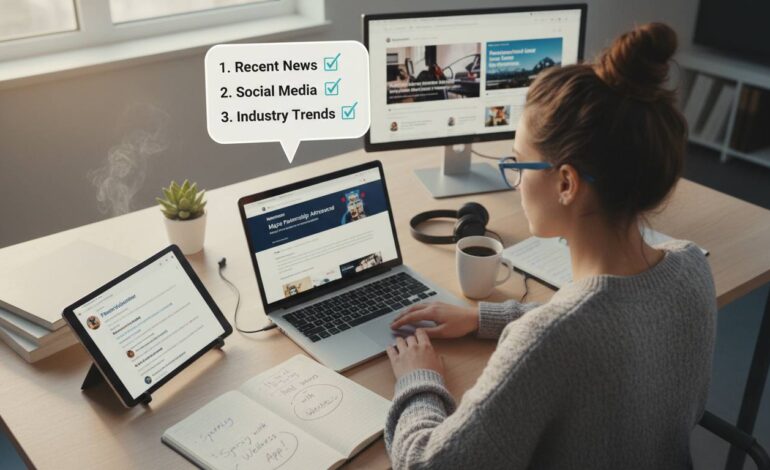
Set aside an hour before your interview. Split it between financial health (Crunchbase, SEC filings), culture reality (Glassdoor, LinkedIn), and recent news (Google Alerts). Take notes on what you find. Walk in prepared to have a real conversation about the business, not just to answer questions about yourself.
The About page tells you what they want you to know. Your research tells you what you need to know. That’s the difference between hoping for an offer and earning one.