Our Favorite Fitness Smartwatches Under $400

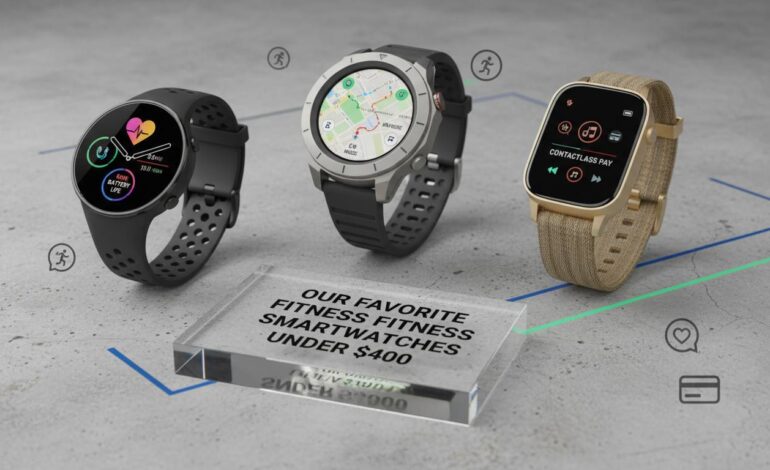
Finding a quality fitness smartwatch doesn’t require spending a fortune. The sweet spot for most fitness enthusiasts lands right around $400—enough technology to track nearly anything your body can do, without the premium price tags that push past $500 or even $1,000. Whether you’re training for your first 5K, lifting weights three times a week, or just want to understand your sleep patterns better, there’s a capable device waiting for you in this price range.
This guide breaks down the best fitness smartwatches under $400, examining what makes each one worth your consideration. We looked at real-world performance, sensor accuracy, battery life, and how well each watch integrates with the ecosystems you probably already use. The result is a curated list that actually helps you decide, not just a list of products with marketing copy.
What Actually Matters in a Fitness Smartwatch
Before diving into specific models, it’s worth understanding what separates a decent fitness tracker from one that genuinely improves your training. The most expensive option isn’t always the best fit for your needs, and sometimes the features you think you want aren’t the ones you’ll actually use.
Heart Rate Monitoring and GPS
The foundation of any fitness smartwatch is accurate tracking. Optical heart rate sensors have improved significantly in recent years, but quality still varies. Most watches in this price range use green LED sensors, which work well for running and cycling but can struggle with high-intensity interval training or activities with lots of arm movement.
GPS is essential if you run or cycle outdoors. Some watches include built-in GPS, while others rely on your phone’s GPS. Built-in GPS is more convenient and typically more accurate, but it also drains battery faster. For runner-specific watches like Garmin’s Forerunner line, multi-band GPS has become common, offering better accuracy in challenging environments like dense urban areas or forests.
Battery Life: The Hidden Factor
Battery life gets overlooked until you’re on a long run and your watch dies at mile 12. If you want comprehensive sleep tracking, you’ll need to charge less frequently—most people don’t want to take their watch off every morning to juice up. Watches in this price range range from about 18 hours of heavy use (like the Apple Watch) to over a week (some Garmin models). Consider what matters most: constant smartwatch features or multi-day battery for extended activities.
Water Resistance and Swim Tracking
Not every watch can handle a pool. Water resistance ratings get confusing—ATM ratings don’t directly translate to depth or pressure tolerance. For swimming, look specifically for swim-proof ratings, usually 5ATM or higher. Even then, salt water and chlorine can degrade seals over time, so rinsing your watch after pool sessions matters.
App Ecosystem: The Smart Side
The fitness tracking hardware only matters if the software makes sense of the data. Consider what platform you already use: Apple users will find the Watch SE or Series 9 integrate seamlessly with Health and Fitness+, while Android users might prefer Samsung’s Galaxy ecosystem or Google’s Fitbit acquisition. Garmin’s Connect platform is popular among serious athletes, though its learning curve is steeper than consumer-focused alternatives.
Apple Watch SE (2nd Generation): The Best All-Rounder
The Apple Watch SE has earned its place as the default recommendation for most people, and for good reason. At around $249, it delivers 95% of what the flagship Series 9 offers at a significantly lower price point.
The second-generation SE dropped the blood oxygen sensor found on older models, but honestly, most people never used that feature regularly anyway. What remains is everything that actually matters: accurate heart rate monitoring, sleep tracking, crash detection, and fall detection. The Retina display is bright and easy to read outdoors, and the 40mm and 44mm case sizes fit most wrists comfortably.
For fitness specifically, the SE tracks workouts automatically in many cases—it recognizes when you’re walking, running, cycling, or swimming without you telling it. You get Activity rings that gamify your daily movement, which sounds cheesy but actually works for building consistent habits. The smartwatch features are strong in this price range: Apple Pay, messaging, phone calls, and thousands of apps from third-party developers.
Battery life runs about 18 hours with typical use, which means nightly charging. That’s not ideal for sleep tracking unless you’re willing to charge during your shower and wear the watch to bed. The SE also lacks the always-on display of the Series 9, which matters more than you’d think for checking stats mid-workout without moving your wrist awkwardly.
The bottom line: if you have an iPhone and want the most polished all-around experience, this is your watch.
Garmin Forerunner 255: The Serious Runner’s Choice
Garmin has owned the running watch market for years, and the Forerunner 255 proves why. At approximately $349, it’s designed for runners who want data without compromise.
The 255 includes multi-band GPS as standard, meaning you get accurate distance and pace even in difficult environments. That’s not a luxury—it’s essential if you run in cities with tall buildings or anywhere with tree cover. Previous generations required upgrading to the “M” variant for this feature, so this is meaningful value.
Training features go far beyond basic tracking. The 255 includes recovery recommendations based on your sleep and recent training load. It suggests when to push and when to take it easy, which feels almost like having a coach on your wrist. Body Battery aggregates stress, sleep, and activity data into a single score helping you understand your energy levels.
Daily suggested workouts adapt based on your recovery status. On heavy training days, you might get an easy recovery run. After rest days, expect something more challenging. This takes the guesswork out of training plans, though it requires wearing the watch consistently for accurate recommendations.
Battery life stretches to about seven days in smartwatch mode and up to 30 hours in GPS mode with music. You can run a 100-miler and still have battery left. The MIP (memory-in-pixel) display isn’t as vibrant as OLED screens, but it’s readable in direct sunlight—which matters when you’re actually running outside.
The Forerunner 255 does lack some smartwatch conveniences—no third-party apps, limited contactless payments, no music storage from major streaming services. It’s a running computer that happens to tell time, not a smartwatch that happens to track runs. If you’re primarily a runner, this distinction won’t bother you.
Samsung Galaxy Watch 6: The Android Alternative
Android users often feel left out of the smartwatch conversation, but the Galaxy Watch 6 offers a compelling option at around $299. It’s the most feature-complete Android smartwatch in this price range, with health tracking that rivals Apple.
The BioActive sensor combines optical heart rate, electrical heart (ECG), and blood pressure monitoring in a single module on the back of the watch. The blood pressure feature requires calibration with a traditional cuff and isn’t available in all countries, but when it works, it provides meaningful insight for people managing hypertension.
Sleep tracking on the Galaxy Watch 6 improved dramatically over previous generations. It measures sleep stages (light, deep, REM) with reasonable accuracy and provides a sleep score each morning. The detailed sleep animal graphics—your results display as a cartoon creature—seem gimmicky but make checking your sleep feel less clinical.
The rotating bezel remains a signature design element, and it genuinely makes navigating menus more intuitive than touch-only interfaces. You can scroll through widgets without smearing fingerprints across the display. The watch feels substantial without being heavy, and the 44mm case accommodates larger wrists well.
Bixby still trails Siri and Google Assistant in natural language understanding, which matters less for fitness tracking than general smartwatch use. Samsung’s Health app provides comprehensive data but feels less refined than Apple’s Health ecosystem. Battery runs about 40 hours with typical use, which is better than Apple Watch but worse than dedicated fitness watches.
If you have a Samsung phone, the integration is seamless—auto switch between Samsung earbuds, quick camera controls, and messages that mirror your phone. For other Android users, it still works well but loses some integration benefits.
Fitbit Sense 2: The Stress-Management Specialist
Fitbit carved out a unique niche focusing on holistic health rather than athletic performance. The Sense 2, priced around $249, emphasizes stress management and long-term wellness tracking over hardcore training metrics.
The flagship feature is cEDA (continuous electrodermal activity) sensors that detect subtle skin conductance changes associated with stress. Combined with heart rate variability, Fitbit provides a daily “stress management score” and prompts you to breathe when it detects elevated stress. Whether you find this useful depends on your relationship with biofeedback—some users love having data about their nervous system, others find it adds anxiety rather than relieving it.
ECG capability lets you take electrocardiogram readings on demand, checking for atrial fibrillation. This feature requires regulatory approval in various regions and can take a few tries to get a clean reading, but having it available provides peace of mind for people with heart health concerns.
The Sense 2’s GPS works but requires your phone nearby—there’s no built-in GPS for standalone tracking. That’s a meaningful limitation for runners who don’t want to carry their phones. The battery lasts about six days with typical use, which is excellent for a full-featured smartwatch.
Fitbit’s strength has always been the software experience. The Fitbit app presents data clearly, with trends over time that help you understand whether you’re actually improving. The active zone minutes system gamifies getting into heart rate zones, and the community features add social motivation.
The biggest concern is Fitbit’s uncertain future under Google ownership. The company continues releasing products, but integration with Google’s broader ecosystem remains unclear. Current devices work fine, but long-term software support is an open question.
Garmin Venu 3: The Daily Driver
Garmin’s Venu line occupies an interesting space between the hardcore Forerunner series and consumer fitness trackers. The Venu 3, at approximately $399, aims to be your everyday watch that happens to be extremely capable for fitness.
The AMOLED display finally brings Garmin into the premium screen conversation. Colors pop, text is crisp, and the always-on option works well without killing battery. This alone makes the Venu 3 feel more like a “real” smartwatch compared to the utilitarian MIP screens on older Garmins.
Fitness features include the full suite: GPS tracking, strength training rep counting, automatic rest timers between sets, and detailed workout profiles for just about any activity you can imagine. The body battery and recovery features mirror the Forerunner line, so you get the same training intelligence in a more watch-like package.
New additions on the Venu 3 include gesture controls—turn your wrist to answer calls or dismiss alerts—which feels gimmicky at first but becomes genuinely useful once you adapt. The speaker allows voice prompts during workouts without headphones, and you can take phone calls directly from your wrist.
Battery life reaches about 14 days in smartwatch mode and about 26 hours in GPS mode. That’s less than the Forerunner 255 but more than enough for most people. The 30-gram weight makes it comfortable enough to wear 24/7, including sleep tracking.
The Venu 3 costs more than the Forerunner 255 and does slightly less for pure runners, but if you want a watch that works for daily wear and fitness without compromise, this is Garmin’s best option under $400.
Amazfit GTR 4: The Budget Powerhouse
Not everyone wants to spend $300+, and the Amazfit GTR 4 proves you don’t have to. At approximately $199, it offers features that would have cost twice as much two years ago.
The GTR 4 includes dual-band GPS—real multi-constellation support that rivals Garmin’s accuracy at a fraction of the price. In testing, it’s held up reasonably well against much more expensive competitors, though consistency can vary in challenging environments. For casual runners, it’s more than adequate.
Battery life stands out as genuinely impressive: up to 14 days with typical use and 24 hours with continuous GPS. You’d pay significantly more for that kind of endurance from a mainstream brand. The 14-day battery makes sleep tracking practical without the charging anxiety that plagues daily-charging watches.
The Zepp app provides health and fitness tracking that mirrors Fitbit’s consumer-friendly approach. It’s less polished than Apple or Garmin’s software but functional for the basics: steps, heart rate, sleep, stress, and dozens of workout profiles. The app has improved significantly but still occasionally feels clunky compared to established ecosystems.
The GTR 4 lacks NFC for contactless payments, which is a notable omission for a modern smartwatch. Notifications work but don’t allow responses on iOS. The design leans toward traditional watch aesthetics with a round face and physical crown, which appeals to people who don’t want to look like they’re wearing a computer on their wrist.
For the price, the GTR 4 delivers extraordinary value. If budget is your primary concern, there’s no reason to spend more for basic fitness tracking needs.
How to Choose What’s Right for You
With all these options, the “best” watch depends entirely on your priorities. Here’s how to think through the decision:
If you’re an iPhone user who wants the easiest experience: Apple Watch SE delivers the most polished combination of fitness tracking and smartwatch features. The daily charging is the main tradeoff.
If running is your primary activity: Garmin Forerunner 255 offers the best GPS accuracy and training insights. The limited smartwatch features are worth accepting for what you get as a runner.
If you’re deeply embedded in the Android/Samsung ecosystem: Galaxy Watch 6 provides the most integrated experience with the most complete health sensors.
If stress management and holistic wellness matter more than athletic performance: Fitbit Sense 2’s wellness features remain unique in this price range.
If you want Garmin quality without looking like a serious athlete: Venu 3 balances premium design with full fitness capabilities.
If you want the most features per dollar: Amazfit GTR 4 delivers impressive specs at half the price of competitors.
Consider what you’ll actually use six months from now. Fancy metrics you never check don’t matter. The watch that fits your lifestyle and gets worn consistently outperforms the technically superior watch that stays in a drawer.
Conclusion
The $400 price range gives you access to watches with nearly every feature that matters for fitness tracking. Whether you choose the Apple Watch SE for its polished ecosystem, the Garmin Forerunner 255 for serious training, the Samsung Galaxy Watch 6 for Android integration, the Fitbit Sense 2 for wellness focus, the Garmin Venu 3 for all-around capability, or the Amazfit GTR 4 for budget value, you’re getting capable hardware that will genuinely help you understand and improve your fitness.
What matters most isn’t the most expensive option or the one with the most features—it’s the watch you’ll actually wear. Think about your daily habits, your primary activities, and which ecosystem makes sense for your phone. Test one in a store if possible. The best fitness smartwatch is the one that becomes part of your routine, not the one with the longest spec sheet.
FAQs
Can I swim with any of these watches?
Most of these watches are water-resistant to 5ATM, meaning they’re safe for pool swimming. The Apple Watch SE, Galaxy Watch 6, Garmin models, and Fitbit Sense 2 all handle swimming well. The Amazfit GTR 4 is also swim-proof, though it’s rated at 5ATM like the others.
Do I need to replace the band for better comfort?
Factory bands work fine for most people, but aftermarket bands are widely available and affordable. If you have smaller wrists or find the default band uncomfortable, swapping to a third-party band costs $15-30 and can significantly improve daily wear comfort.
Can these watches track strength training?
All of these watches track strength training, though capabilities vary. Garmin watches offer the most detailed strength tracking, including rep counting for some exercises and muscle heat maps showing which groups you’ve worked. The Apple Watch and Fitbit track strength workouts but provide less detailed analysis.
Will these watches work with iPhone and Android?
The Apple Watch only works with iPhones. Samsung Galaxy Watch 6 works best with Samsung phones but functions with other Android devices. Garmin, Fitbit, and Amazfit watches work with both iPhone and Android, though some features are platform-specific.
How accurate is sleep tracking on these watches?
Sleep tracking accuracy has improved significantly across all major brands. All of these watches track sleep stages (light, deep, REM) and provide daily sleep scores. Accuracy varies by individual and night, but they’re generally reliable for identifying sleep patterns and trends. For clinical sleep disorders, a sleep study remains the gold standard.
Do I need to pay for subscription fees?
Basic fitness tracking works without subscriptions on all these platforms. Fitbit offers a Premium subscription ($9.99/month) that unlocks more detailed analytics and third-party app integrations. Garmin and others occasionally offer subscription features, but core tracking remains free.