Lymph Nodes in Neck: Locations, Functions, and Common Causes of Swelling

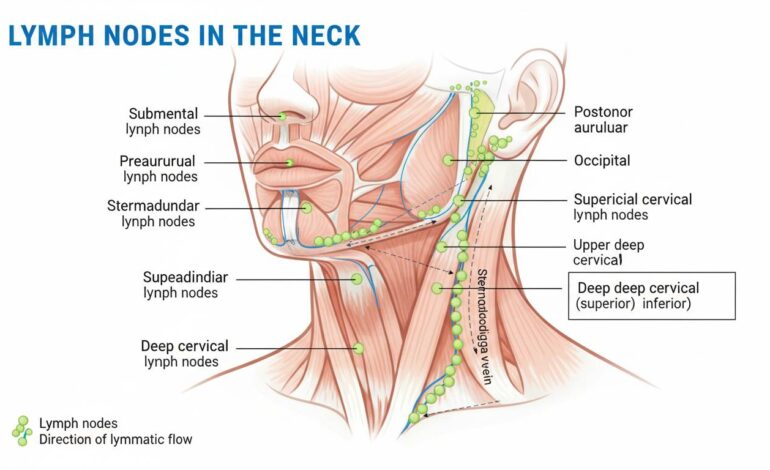
Lymph nodes in the neck are small, bean‑shaped structures located throughout the neck that filter lymphatic fluid and help defend the body against infection, cancer, and other diseases. They act as checkpoints for immune cells, trapping harmful substances and activating immune responses when needed.
Locations of Neck Lymph Nodes
1. Superficial Cervical Chains
- These nodes lie just under the skin along the external jugular vein.
- Often palpable when enlarged, especially during common colds.
2. Anterior Cervical Group
- Includes superficial and deep nodes, situated along the sternocleidomastoid muscle.
- Plays a key role in draining the throat and tonsils.
3. Posterior Cervical Nodes
- Located behind the sternocleidomastoid, near the trapezius muscle.
- Involved in draining the scalp and neck.
4. Supraclavicular Nodes
- Found above the clavicle at the base of the neck.
- Enlarged supraclavicular nodes often warrant further evaluation due to links with serious conditions.
5. Submandibular and Submental Nodes
- Beneath the jaw (submandibular) and chin (submental).
- Drain areas like the mouth, teeth, and tongue.
6. Tonsillar (Jugulodigastric) Node
- Located near the angle of the jaw beneath the jawline, often involved in throat infections.
These locations form a network that ensures effective surveillance. Odd growth or tenderness in one region often points to specific underlying causes, depending on where drainage occurs.
Functions of Neck Lymph Nodes
1. Immune Surveillance
Even when you’re healthy, lymph nodes are constantly filtering lymph fluid, checking for bacteria, viruses, and abnormal cells.
2. Immune Response Activation
When a pathogen is detected, lymph nodes flare up—activating T cells and B cells, producing antibodies, and initiating a coordinated defense.
3. Fluid Balance
They help regulate fluid distribution by filtering extracellular fluid and returning it to the bloodstream.
4. Cancer Screening and Metastasis Detection
Because lymphatic drainage follows anatomical patterns, cervical nodes are often the first to show involvement when head and neck cancers or thyroid cancers spread.
These functions make neck lymph nodes critical both for normal immunity and as early warning signs when something goes awry.
Common Causes of Swollen Neck Lymph Nodes
Swollen lymph nodes are frequent—and usually harmless—but understanding what triggers them helps rule out serious issues.
1. Infections
- Viral infections: Common cold, flu, mononucleosis—nodes often tender, bilateral (both sides), and mobile.
- Bacterial infections: Strep throat, skin infections, dental abscess; nodes may swell quickly and feel firm.
- Localized infections: Ear infections, sinusitis, dental issues or cellulitis can lead to localized swelling.
2. Inflammatory Conditions
- Autoimmune diseases: Conditions like rheumatoid arthritis or lupus can cause generalized lymphadenopathy.
- Inflammatory responses: Following surgery or trauma, nodes near the injury site may enlarge.
3. Cancerous Causes
- Lymphoma: Enlargement often painless, firm, may occur on just one side.
- Metastatic cancers: Especially from head and neck, thyroid, or upper chest. Supraclavicular node involvement can be especially concerning.
4. Miscellaneous Triggers
- Medications: Some drugs, such as certain anticonvulsants, may cause node swelling.
- Rare infections: Infectious mononucleosis or HIV can produce systemic lymph node enlargement.
5. When to Worry
Watch for:
– Persistent swelling beyond two weeks
– Hard, immovable nodes
– Unexplained weight loss, fever, or night sweats
These signs suggest further evaluation, possibly including imaging or biopsy.
Patterns and Diagnostic Clues
Location-Based Clues
- Anterior cervical: Throat or tonsil infection.
- Submandibular: Dental or oral issues.
- Supraclavicular: Screening for distant malignancy.
- Posterior cervical: Scalp or skin infections.
Other Helpful Details
- Tenderness: Acute, painful swelling often means infection.
- Mobility: Freely movable suggests lower concern; fixed may indicate malignancy.
- Texture: Soft is comforting; firm or rubbery raises red flags.
- Symmetry: Bilateral and symmetrical points toward systemic causes; one‑sided suggests local problem.
Example Scenario
A middle-aged person with a sore throat and tender, mobile anterior cervical nodes likely has a viral or bacterial infection. If those nodes were hard and fixed with weight loss, I’d worry about cancer.
Evaluation Steps in Clinical Practice
1. History and Physical Exam
Clinicians will ask how long the nodes have been swollen, associated symptoms, travel history, recent infections, medication use, and exposure to animals or sick contacts.
2. Laboratory Tests
Common tests include:
– Complete blood count (CBC)
– Throat swabs
– Monospot or Epstein-Barr virus panel
– Tests for HIV or other viral infections, depending on context
3. Imaging
- Ultrasound: First choice—helps differentiate cystic vs. solid nodes.
- CT scan or MRI: Used when deeper or more detailed views are needed, such as when malignancy is suspected.
4. Biopsy
- Fine‑needle aspiration (FNA): Minimally invasive, good first step.
- Excisional biopsy: Best option if lymphoma is suspected or when FNA is inconclusive.
Real‑World Case
A young adult presented with fatigue, fever, and tender cervical nodes. Blood tests pointed to mononucleosis, and nodes shrank over a few weeks with rest and fluids. No imaging or biopsy was needed—clinic visit saved unnecessary procedures.
Red Flags That Demand Attention
- Nodes that grow fast or remain enlarged beyond four weeks.
- Hard or fixed nodes.
- Nodes larger than about 2 centimeters in adults.
- B symptoms: fever, night sweats, unexplained weight loss.
- Potential exposure to cancer risk factors.
If any of these are present, clinicians often order imaging and may refer to oncology or ENT for possible biopsy.
Preventive and Supportive Measures
Routine Self‑Check Tips
It’s not necessary for everyone to check—but knowing your neck baseline helps spot changes early. If you notice new lumps that persist over a couple of weeks, talk to a doctor.
Managing Swelling at Home (When Benign)
- Warm compresses
- Over-the-counter pain relievers
- Good hydration, rest, and treating underlying infections
When to Seek Medical Care
- Swollen nodes don’t improve after 2 weeks
- You also experience fevers, weight loss, or night sweats
- Nodes are painful, hard, or fixed in place
Prompt attention means quicker diagnosis and peace of mind.
Voice of an Expert
“Swollen lymph nodes in the neck are often the body’s way of saying it’s under attack—and usually, it’s not a cause for panic. But persistent or unusual changes should never be ignored.”
— Dr. Miranda Chen, Head and Neck Specialist
This underscores the balance: most swelling is benign, but staying alert matters.
Summary of Key Points
- Neck lymph nodes filter lymph and activate immune responses.
- Located in areas like superficial/deep cervical chains, submandibular, supraclavicular, and more.
- Swelling is often from infection but can signal inflammatory or malignant causes.
- Location, texture, symmetry, and associated symptoms guide diagnosis.
- Most cases need only simple tests or observation; persistent or worrisome signs require further evaluation.
- Listen to your body, and don’t hesitate to consult your provider when in doubt.
FAQs
Why do my neck lymph nodes swell when I’m sick?
Typically, it’s your immune system ramping up to fight an infection. Nodes trap germs and activate cells, making them enlarge temporarily. Once the illness clears, they often return to normal.
Can stress cause swollen lymph nodes?
Not directly. Stress doesn’t enlarge lymph nodes by itself. But if stress weakens your immunity and leads to an infection, nodes may swell as a response to that illness.
How long should swollen neck lymph nodes last?
Often, benign swelling resolves within one to two weeks. If nodes persist longer, increase in size, become painful, or are accompanied by other symptoms, medical evaluation is wise.
Are all enlarged lymph nodes cancer?
No. Most are due to infections or inflammation. Cancer is rare, but if nodes are hard, fixed, or persistent, doctors will investigate further to rule it out.
Should I massage a swollen lymph node?
Gentle massage isn’t harmful, but it won’t solve the underlying cause. Better to address infections or other triggers. If swelling persists, let a provider assess whether imaging or biopsy is needed.
Word Count Estimate: Approximately 1,100 words.