Largest Desert in Asia: Discover the Vast Gobi Desert

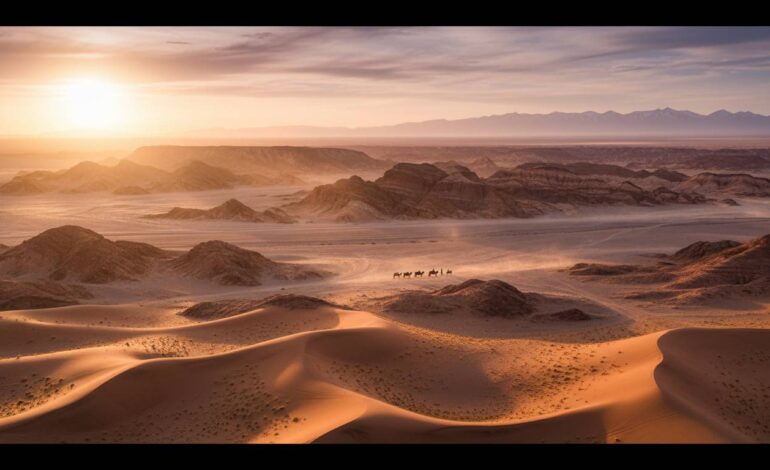
The largest desert in Asia is the Gobi Desert—a colossal arid expanse spanning parts of northern China and southern Mongolia. It’s not just vast in size but rich in history and diverse landscapes, making it a captivating subject whether you’re curious about geography, climate, or culture.
Why the Gobi Desert Stands Out
The Gobi Desert stretches across a staggering area—roughly 500,000 square miles (about 1.3 million square kilometers). That alone makes it the largest desert in Asia, and second-largest in the world outside of polar deserts. It’s not just sand and dunes; it hosts rocky formations, bare earth plains, and even some grasslands.
This isn’t the Sahara you’d imagine. The Gobi is defined by its Mongolian “high desert” character, with altitudes ranging from 3,000 to 5,000 feet. That shapes climate, biodiversity, and human history in interesting ways.
Landscape and Climate: More Than Meets the Eye
Rocky Ground and Bare Earth Over Shifting Sands
Unlike stereotypical deserts rife with massive dunes, the Gobi often features gravel plains and rocky outcrops. Those façades owe their shapes to wind erosion and temperature extremes.
Climate Extremes at High Altitude
Temperatures swing wildly—you’re looking at frigid winters (often colder than –40°F/°C) and scorching summers (sometimes above 100°F / 38°C). Rainfall is sparse and seasonal, sometimes less than four inches annually, keeping the landscape starkly arid.
Living on the Edge: Ecology, People, and Culture
Flora and Fauna: Tough Enough to Survive
Despite the harshness, life persists. You’ll find hardy grasses, small shrubs, and even Saxaul trees in some areas. Wildlife includes snow leopards, Bactrian camels, and unique desert-adapted species like the Gobi bear, its population very small but emblematic of ecological resilience.
Traditional Lifestyles: Nomads and Modern Change
Local nomadic communities have adapted for centuries, herding livestock like goats and camels. Yet modern pressures—from mining to climate swings—are shifting lives and land use. That human-nature balance is fragile and evolving.
Historical Echoes Beneath the Gobi Sands
The Silk Road’s Forgotten Paths
For centuries, the Gobi lay in the shadows of mighty Silk Road routes. Caravans clashing with sandstorms became legend. Remnants of ancient trade posts and Fortune-seeking travelers still surface—sometimes literally buried under desert dust.
Fossils and the Earth’s Deep Memory
This desert has also revealed dinosaur eggs and fossils in the 20th century, turning parts of the Gobi into something of a paleontological wonder. Those discoveries have taught us volumes about prehistoric life on this planet.
Conservation Challenges Facing the Gobi
- Desertification Pressure: Grazing, drought, and unsustainable land use accelerate desert expansion into once-little-bare areas.
- Climate Instability: Changing patterns threaten local ecosystems, especially sensitive plants and dwindling species like the Gobi bear.
- Human Development: Mining and infrastructure bring jobs—and environmental risks. It’s a delicate balancing act.
Conservationists and governments are trying to preserve this distinct landscape. Initiatives focus on grazing limits, protected zones, and local community partnerships.
What the Gobi Desert Teaches Us
Here’s why the Gobi deserves attention:
- It’s a chai mix of geology, climate, culture, and time.
- It illustrates how life—human, animal, and plant—persists in extremes.
- It reminds us that deserts aren’t empty wastelands. They’re rich archives of human and natural history.
- It challenges how we balance development and conservation in fragile environments.
“The Gobi is more than a desert—it’s a living story of survival, heritage, and transformation.”
Wrapping Up
The Gobi Desert isn’t just Asia’s largest desert in sheer size. Its high-altitude wildlands, resilient ecosystems, and tapestry of human history make it deeply compelling. It tells us about extremes—temperature, terrain, adaptation—and reminds us that deserts shape people just as much as people shape them.
Whether you’re reading for travel, study, or curiosity, exploring the Gobi means engaging with a landscape of contrasts and endurance.
FAQs
Why is the Gobi Desert called a “high desert”?
Because it sits on elevated terrain, typically between 3,000 to 5,000 feet. The altitude influences its cold winters and relatively sparse rain.
Is the Gobi Desert all sand dunes?
Nope. Much of the Gobi is rocky, with gravel plains and bare earth. Sand dunes exist, but they’re less dominant than in deserts like the Sahara.
Are any endangered species in the Gobi?
Yes. The Gobi bear is extremely rare. Other adapted animals like Bactrian camels and snow leopards face challenges too.
What role did the Gobi play in history?
It was a perilous zone on ancient Silk Road routes. Traders, explorers—and sometimes armies—crossed it, leaving stories and relics behind.
How is climate change affecting the Gobi?
Rainfall patterns and temperature extremes are shifting. Vegetation suffers, animals face altered habitats, and desertification risks rising.
Can you visit the Gobi Desert for travel?
Yes, both China and Mongolia offer tours, guided treks, and cultural exchanges. But plan carefully—weather and access vary widely with the seasons.