Is Bronchitis Contagious? Causes, Risks, and Prevention Explained

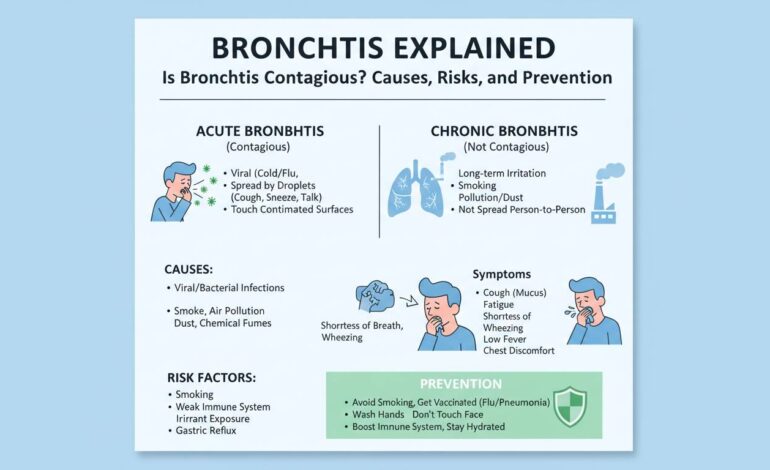
Yes—bronchitis can be contagious, but it depends on the type. Acute bronchitis is usually caused by viruses and can spread through coughing, sneezing, or touching contaminated surfaces and then touching your face. Chronic bronchitis, on the other hand, is typically not contagious; it’s a form of chronic obstructive pulmonary disease (COPD) often linked to smoking or long-term airway irritation.
Why Acute Bronchitis Often Spreads Easily
Acute bronchitis usually starts from a viral infection—think of common culprits like the flu, cold, or RSV. Viruses travel through droplets when someone coughs or sneezes. These germs can land on surfaces or nearby people. Then, whoever touches the contaminated surface or inhales droplets may catch it. Simple, really, but effective.
Beyond that, once a virus takes hold in your airway lining, it inflames the bronchi—those big air tubes down there. This inflammation triggers your body to produce mucus and makes you cough. That cough becomes its own form of delivery system, airing out more viruses into shared spaces.
How It Typically Spreads
- Through droplets from coughing or sneezing
- From touching infected surfaces, then touching your mouth, nose, or eyes
- Close contact—like being in crowded indoor places or caring for someone who’s ill
What Makes Chronic Bronchitis Different
Chronic bronchitis is more of a long-term, ongoing condition. It’s not caused by germs that hop from person to person. Instead, it’s driven by persistent irritation of the airways—most often from tobacco smoke, pollution, or other pollutants. So while it’s serious, it isn’t something you pass on to someone else.
Imagine two scenarios:
– Acute bronchitis: you get it, cough into your sleeve, and someone standing close might inhale those virus-laden droplets.
– Chronic bronchitis: that’s like a long-burning fire inside your lung tubes—there’s no accute outbreak to spread.
Risk Factors That Make Things Worse
Even if bronchitis can be contagious, some folks are more vulnerable:
- Very young children or infants
- Older adults
- People with weak immune systems, like those with diabetes or chronic diseases
- Smokers, who already have irritated airways
In crowded areas like schools, nursing homes, or public transport, the virus can glide around more easily. And if you’re already not feeling 100%, you’re more likely to pick it up.
Prevention Tips That Actually Work
Alright, let’s get practical. What helps keep bronchitis from spreading—or keeping you from getting it? Here’s the rundown:
- Wash your hands. Often, especially after sneezing or touching shared surfaces.
- Cover your coughs. A tissue or your elbow, not your hand.
- Use disinfectants. Clean surfaces—doorknobs, counters, phones.
- Stay home when sick. It’s just considerate and smart.
- Boost your defense. Get flu shots, consider COVID vaccines, and keep your immune system strong with rest and decent nutrition.
These steps won’t just help with bronchitis. They’re part of everyday good hygiene.
Real-Life Examples Bring It Home
Picture this: a coworker snorts into a shared airspace, day after day. Eventually, one more person coughs, then another—before long, an entire team is down with a hacking cough. That’s typical acute bronchitis spread.
On the flip side, think of a lifelong smoker who has chronic bronchitis. They battle coughing every day, but nobody else catches that condition—it’s not infectious. That’s the stark difference between contagious and chronic.
At a Glance: Acute vs. Chronic Bronchitis
| Type | Cause | Contagious? | Main Risk Factors |
|——————–|————————|—————-|————————————-|
| Acute Bronchitis | Viral infection | Yes | Close contact, weak immune systems |
| Chronic Bronchitis | Long-term irritation | No | Smoking, pollution, COPD linked |
Expert Insight
“Acute bronchitis is one of the most common respiratory illnesses, and its ability to spread hinges almost entirely on viral transmission. Spillover happens through droplets and surface contact, making personal hygiene and isolation during symptoms your best defense.”
— Dr. Emily Hart, Pulmonologist
Things to Watch For and When to Seek Help
Acute bronchitis usually resolves within a week or two, but if you notice symptoms worsening—like a high fever, chest pain, or wheezing—don’t wait. Get checked. For chronic bronchitis, regular doctor visits are key to manage symptoms and avoid complications.
Quick Summary
Acute bronchitis does spread—mostly thanks to viruses and our proximity. Chronic bronchitis, on the other hand, sticks to its host and doesn’t jump. Good hygiene and sick-day mindfulness go far in stopping the spread. And if you find yourself coughing more often than usual, tracking those symptoms can keep small issues from turning serious.
FAQs
Is acute bronchitis caused by bacteria or viruses?
Acute bronchitis is most often viral. Bacterial causes are rare. When bacteria are at play, doctors sometimes prescribe antibiotics—but not for viral cases.
How long is acute bronchitis contagious?
Typically, you’re most contagious during the first few days of symptoms. You might still be a bit contagious for up to a week or two, but that fades as symptoms ease.
Can children easily catch bronchitis from school?
Yes. Young kids often spread viruses quickly—especially in daycare or school. Their hygiene habits aren’t always the best, which helps viruses move around fast.
Can chronic bronchitis become acute?
Absolutely. Someone with chronic bronchitis may get hit with an acute virus, leading to flare-ups. That’s why vaccinations and avoiding smoking are crucial.
Do cold temperatures make bronchitis more likely?
Cold air can irritate airways and weaken defenses, so it may increase the chance of acute bronchitis—especially in people with respiratory sensitivities.
Hope that helps—and take care of those lungs!