Imran Khan Breaking News: Latest Updates, Speeches & Analysis

Imran Khan has spent decades at the center of Pakistani public life—from captain of Pakistan’s 1992 World Cup-winning cricket team to the country’s 22nd prime minister, and now as a former leader fighting multiple court cases. Here’s where things stand.
From Cricket Captain to Political Leader
Khan retired from cricket in 1992 after leading Pakistan to its first World Cup victory. He later founded the Shaukat Khanum Memorial Cancer Hospital in Lahore, establishing his reputation as a philanthropist before entering politics.
In 1996, he launched Pakistan Tehreek-e-Insaf (PTI) with a straightforward promise: clean governance and an end to the corruption that had defined Pakistani politics for decades. The party struggled for years, but Khan’s base grew steadily among urban youth and middle-class Pakistanis tired of the same political families cycling through power.
That patience paid off in 2018 when PTI won the most seats in national elections. Khan became prime minister, inheriting an economy already showing serious stress.
The 2022 Ouster
Khan’s government never found stable footing. By April 2022, coalition partners were abandoning him, and the opposition filed a no-confidence motion. The vote passed with 174 lawmakers supporting it—making Khan the first Pakistani prime minister removed this way.
Khan responded with a simple claim: his removal was orchestrated by foreign powers, specifically the United States, working with Pakistan’s military leadership. Neither the US nor the military has confirmed this. The military went further, issuing rare public statements denying any foreign conspiracy.
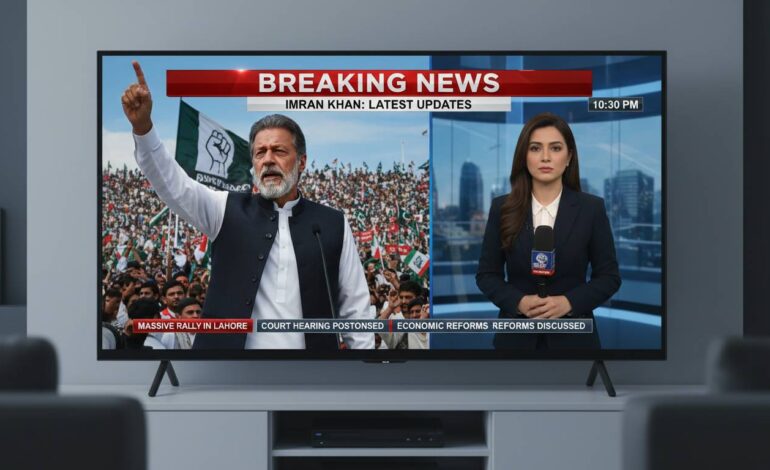
After his removal, Khan hit the road, drawing massive crowds to rallies across the country. His message stayed consistent: the vote was stolen, the current government is illegitimate, and only fresh elections could fix what went wrong.
The Court Cases
Khan now faces a stacked calendar of legal proceedings:
The Toshakhana case cost him his National Assembly seat in 2022. The election commission found he’d failed to properly report gifts he received while in office—jewelry, watches, and other items. He challenged the disqualification, and the Islamabad High Court eventually overturned it, though the case isn’t fully resolved.
The cipher case is potentially more serious. prosecutors allege Khan possessed a classified diplomatic cable and shared it publicly, violating Pakistan’s Official Secrets Act. If convicted, he could face years in prison.
Additional cases—some filed during his time in office, others after—cover allegations ranging from terrorism to financial misconduct. Khan’s lawyers argue the timing of these prosecutions isn’t coincidental: they’re designed to keep him off the ballot.
Khan denies everything. He calls it a coordinated campaign to silence him.
Where Things Stand Now
Khan remains free for now, though his movement has been restricted at times. He’s maintained contact with supporters through social media and occasional public appearances, though authorities have broken up some of his rallies.
The country itself is stuck. The coalition government formed after Khan’s removal hasn’t managed to stabilize the economy or generate much public enthusiasm. PTI, despite losing its official status in parliament, still draws crowds—especially among voters under 30.
The military, traditionally the most powerful institution in Pakistani politics, has made clear it isn’t backing Khan’s narrative about foreign conspiracies. That matters, because whoever controls the security establishment usually controls the direction of Pakistani governance.
What This Means for Pakistan
Khan’s legal troubles aren’t just about one man. They’re a test of whether Pakistan’s courts will convict a former prime minister on what his supporters call manufactured charges—and whether the political system can absorb that kind of shock.
The economy presents harder questions. Inflation has eaten into household budgets. The Pakistani rupee has lost value steadily. The government has had to negotiate with the International Monetary Fund for rescue packages that come with painful conditions.
Khan’s supporters say only he can fix this. His critics point out that the economy was already struggling when he left office.
Human rights groups have urged fair trials and warned against using courts as political tools. Whatever the outcome, each ruling will likely trigger protests from one side or the other.
The Bottom Line
Love him or hate him—and Pakistanis do both—Khan has fundamentally reshaped the country’s political landscape. He forced corruption onto the national conversation, mobilized young voters in unprecedented numbers, and now occupies a legal gray zone where conviction and vindication both seem possible.
What happens in the coming months could determine whether Pakistan moves toward some kind of stability or slides deeper into the kind of political crisis that has periodically upended the country throughout its history.
Quick Answers
What is Khan charged with?
The Toshakhana case involves undeclared gifts from his time as prime minister. The cipher case involves a classified diplomatic document he allegedly shared publicly. Other cases touch on terrorism accusations and financial matters. He denies all charges.
When was he removed?
April 2022, through a no-confidence vote in the National Assembly.
What party does he lead?
Pakistan Tehreek-e-Insaf (PTI), which he founded in 1996.
Is he in prison?
His status has changed several times. Check current news for the latest—situations shift quickly.
What was his big cricket moment?
Captain of the 1992 World Cup team, Pakistan’s only World Cup win.