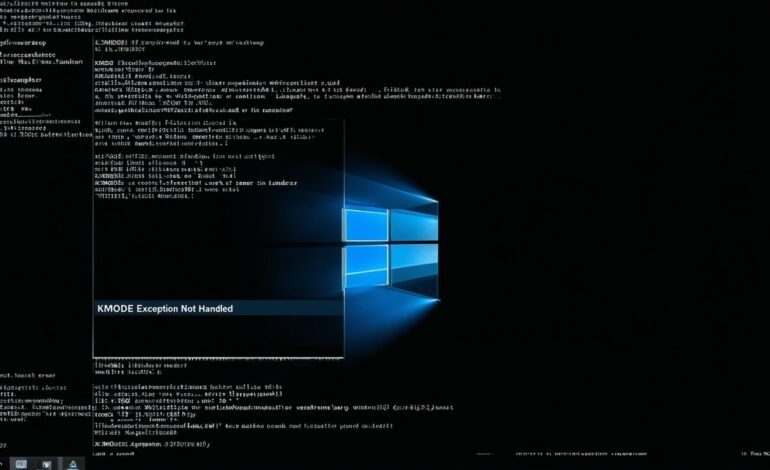
A “KMODE Exception Not Handled” error is one of the more perplexing issues Windows users encounter—a Blue Screen of Death (BSOD) that brings even the most robust systems to an abrupt halt. Typically accompanied by an error code like 0x0000001E, this message signals that a critical error was triggered in the kernel mode of the system, often caused by incompatible drivers, faulty hardware, or corrupted system files. While the technical jargon may feel overwhelming, the underlying cause is usually rooted in issues most users and administrators can address with some targeted troubleshooting.
Behind each unexpected BSOD, there lies a ripple effect: interrupted workflows, lost productivity, and, occasionally, system instability that erodes user confidence. As the Windows ecosystem remains foundational for many businesses and individual users, understanding how to resolve such errors is essential for maintaining digital continuity and peace of mind.
Common Causes of the KMODE Exception Not Handled Error
The first step in fixing the KMODE Exception Not Handled error is to pinpoint possible origins. Analysts and IT professionals observe several recurring causes in both enterprise and personal computing environments:
Outdated or Corrupt Drivers
Device drivers act as translators between the operating system and hardware components. When these drivers become outdated, incompatible, or corrupted—whether through botched updates or malware—they often provoke critical system crashes.
- Graphics card drivers
- Network adapter drivers
- Third-party drivers (especially from external peripherals)
Faulty RAM or Memory Issues
Random Access Memory (RAM) integrity is central to system stability. Errors in memory chips or faulty installation may cause data to be read or written incorrectly, triggering kernel exceptions.
Recently Installed Software or Hardware
Newly added programs or hardware devices, especially those requiring powerful kernel-level access, can disrupt Windows’ internal processes.
- Virtualization tools
- Security suites
- Hardware components such as USB controllers or expansion cards
Corrupted System Files
Operating system files do not remain immune to corruption—whether from abrupt power loss, malicious code, or gradual disk decay.
“Most BSOD incidents in recent Windows versions are tied not to Windows itself, but to underlying driver incompatibilities and user-installed software interfering at the system level,” observes Monica Gestrich, a longtime Windows support engineer.
Beyond these, specific incidents such as system overclocking or BIOS misconfigurations can be complicit culprits.
Step-by-Step Solutions to Fix KMODE Exception Not Handled
A successful fix blends methodical troubleshooting and an understanding of underlying system architecture. Here’s an escalation framework:
1. Identify the Faulty Driver or Module
The initial blue screen may reference a specific file such as nvlddmkm.sys or ntoskrnl.exe. Noting this filename helps significantly.
- Check the error message for a driver name.
- Use reliability monitors or event viewers (Control Panel → Security and Maintenance → Reliability Monitor) for context.
2. Update Device Drivers
Drivers should be your first stop, especially for graphics, network, and storage devices.
- Go to Device Manager (Win + X → Device Manager)
- Right-click target device and select “Update driver”
- Download updates from official hardware manufacturer websites, not only Windows Update
3. Run Windows Memory Diagnostics
Diagnose RAM issues:
- Search “Windows Memory Diagnostic” and select “Restart now and check for problems”
- Remove and reseat RAM modules if possible
4. Scan and Repair System Files
Corruption in system files is a frequent offender. Use built-in utilities:
- Open Command Prompt as administrator
- Run
sfc /scannow - Run
DISM /Online /Cleanup-Image /RestoreHealthfor deeper integrity checks
5. Uninstall Recently Added Software or Hardware
Revert any changes made recently. Remove peripheral devices and uninstall related software, checking if the issue resolves.
6. Adjust BIOS and Disable Overclocking
Reset BIOS settings to defaults and disable any overclocking. Sometimes, restoring default clock speeds stabilizes the system.
7. Perform a Clean Boot
A clean boot disables non-Microsoft services and startup programs, helping isolate conflicts.
- Open System Configuration (msconfig)
- Select “Selective startup” and uncheck “Load startup items”
- Disable all non-Microsoft services under the Services tab
If the error does not occur during a clean boot, the culprit is likely a service or app enabled during normal startup.
Real-World Scenarios and Insights
Major PC vendors, such as Dell and HP, frequently cite the KMODE exception in support documentation, particularly after Windows Feature Updates. For corporate IT, systematic driver vetting is a routine before deploying wide updates—a lesson home users can easily apply.
A notable example: Post-2021, Windows 10 users employing older network adapters encountered this error in droves, particularly after an update conflicted with legacy drivers. Microsoft addressed it through targeted hotfixes, emphasizing the importance of timely system and driver updates.
Preventive Steps for a Healthier Windows Environment
A reactive approach fixes today’s problem, but a proactive strategy guards against recurrence.
Always Keep Drivers and Windows Updated
Leverage trusted sources for drivers and enable automatic Windows Updates to minimize vulnerabilities.
Use Reliable Security Solutions
Malware can corrupt drivers and system files, so maintaining up-to-date antivirus protection is crucial.
Create Regular Backups and Restore Points
Windows System Restore and third-party imaging tools allow for quick system recovery, minimizing downtime.
Test Hardware Periodically
Investing time in periodic hardware diagnostics (including RAM checks) helps detect early-stage issues before they escalate.
Conclusion
The KMODE Exception Not Handled error, while disruptive, is rarely unsolvable. Most cases trace back to driver or memory issues—which methodical updates, diagnostics, and careful configuration can remedy. Strong maintenance practices—for both software and hardware—provide lasting defenses against future blue screen interruptions. With a blend of vigilance and troubleshooting know-how, users can restore system stability and confidence.
FAQs
What does “KMODE Exception Not Handled” mean in Windows?
This error signals a problem at the system’s kernel level, often due to a faulty driver or hardware issue, and usually leads to a blue screen crash.
Can I fix the KMODE Exception Not Handled error myself?
Yes, most users can resolve this by systematically updating drivers, checking hardware, or repairing system files using built-in Windows tools.
How do I identify which driver caused the error?
The blue screen may list a specific driver file—note its name and update or reinstall it using Device Manager or the hardware vendor’s official site.
Does the error mean my computer is permanently damaged?
No, it’s usually a fixable software or hardware issue. However, repeated occurrences may indicate underlying problems that need thorough troubleshooting.
Is it necessary to reset my PC to fix this issue?
A full reset is rarely needed unless all troubleshooting steps fail. Most cases resolve with driver updates, memory checks, and removing incompatible software.
What should I do if updating drivers doesn’t fix the problem?
Try further diagnostics: run memory tests, perform system file scans, and if needed, seek help from a professional to check for hardware faults or persistent system corruption.