How Much Protein in an Egg: Protein Content of Whole Eggs and Egg Whites

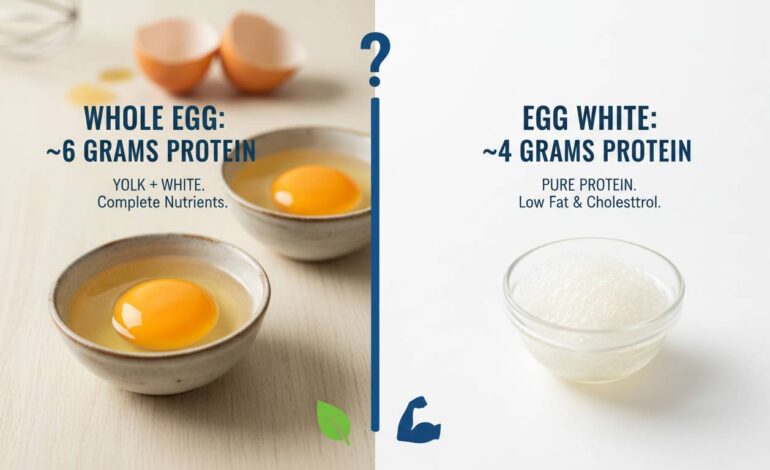
You’re looking for a clear, straightforward answer? A large whole egg typically contains about 6 to 7 grams of protein. If you’re only eating the egg white, you’re getting around 3 to 4 grams of that protein. Let’s go deeper, break it down, and explore why these numbers vary, how to make the most of your eggs, and how this fits into your diet.
Why the Exact Protein Count Can Vary
Eggs aren’t all identical. Their size, how they’re prepared, and even the hen’s diet can shift the numbers slightly. Most nutrition labels reflect the average of large eggs. These eggs are the ones commonly found in grocery stores and used in dietary guidelines.
- Large whole egg: about 6–7 grams of protein.
- Egg white only: roughly 3–4 grams, depending on size.
- Extra-large or jumbo eggs have a bit more—sometimes by a gram or two.
That’s why the numbers you find online may differ a little. It’s still close enough to guide your meal planning.
Protein Breakdown: Whole Egg vs. Egg White
Whole Egg Protein
In a typical large egg, you get protein from both the white and the yolk. The white gives you around 3.6 grams, while the yolk adds roughly 2.7 grams, totaling around 6.3 grams. That matches the often-quoted “6 grams” but it’s a bit more exact if you care about details.
Egg White Protein
When just using the egg white, you cut out the fat, cholesterol, and most vitamins and minerals. But you keep about 3.6 grams of protein. If you’re measuring it by weight, 30 grams of egg white has around 3.5 grams of protein. It’s useful for low-fat, high-protein goals, like building muscle or trimming down.
How Cooking Methods Affect Protein Availability
Cooking eggs actually impacts how your body absorbs that protein. Raw eggs provide less digestible protein (~51%) but cooked eggs bump that digestibility up to more than 90%. That’s a big difference—so if you want to get real value, you’re better off cooking them.
Cooking highlights:
- Scrambled or fried eggs: close to 90% protein absorption.
- Boiled eggs: also high, around 90+%.
- Poached or soft-cooked: still above 90%, though precise numbers vary.
In practice, it means cooking your eggs helps you absorb way more of that protein punch.
Why This Matters: Egg Protein in Your Diet
Supporting Muscle Growth and Maintenance
Protein’s your building block. Athletes, fitness folks, and aging adults all benefit from moderate-to-high protein. Egg whites offer lean, high-quality protein that’s easy to digest. Including whole eggs adds healthy fats and micronutrients, so it’s about striking a balance.
Managing Calories and Fat Intake
If you’re cutting calories or watching your fats, egg whites let you enjoy that protein without the yolk’s extra calories and cholesterol. On the other hand, if you’re not restricted, whole eggs are more nutrient-rich.
Cost and Convenience
Eggs are cheap, portable, and versatile. If you’re balancing meal prep, nutrition, and budget, they’re hard to beat. A dozen eggs can last you through multiple breakfasts, snacks, or meals.
Real-World Example: A Week of Egg-Based Meals
Here’s a quick, realistic glimpse into a week:
- Monday breakfast: Two whole eggs scrambled (~12g protein) + veggies.
- Wednesday gym snack: Two egg whites omelet (~7g protein) + spinach.
- Friday dinner: Three whole eggs in a frittata (~18–21g protein) with potatoes.
With that, you’re meeting daily protein needs effortlessly, especially if you’re pairing eggs with other proteins like yogurt, chicken, or beans.
Expert Insight
“Eggs remain one of the most efficient, affordable, and complete sources of protein. And cooking them activates the full nutritional value.”
This helps sum up why nutritionists often recommend eggs for both beginners and seasoned healthy eaters.
Comparing Egg Protein with Other Foods
Here’s a quick comparison:
- Chicken breast (3 oz): ~25g protein.
- Greek yogurt (6 oz): ~15g protein.
- Egg (1 large): ~6g protein.
- Egg white (from 1 large egg): ~3–4g protein.
Eggs aren’t the highest protein item, but they’re fast-cooking, easy to portion, and packed with nutrients. Plus they complement other protein sources nicely.
Choosing What’s Right for You
Whole Egg vs. Egg White
If fat and cholesterol are a concern—egg white. If you want full nutrition and satisfied hunger—whole egg. You can also mix, like three egg whites plus one yolk per omelet, to dial it in.
Frequency and Timing
- Post-workout: Whole eggs pair well with carbs.
- Midday snack: Egg whites are low-calorie and fill you without heaviness.
- Aim for 1–3 eggs a day if within your calorie and cholesterol boundaries.
Variety and Flavor
Eggs are versatile. Hard-boiled for snacks, poached over toast, scrambled with veggies, or folded into a frittata. Taste changes, but protein stays reliable.
Quick Nutrition Table (Approximate)
| Item | Protein (g) | Notes |
|——————–|————-|————————————|
| Large whole egg | 6–7 | Includes yolk and white |
| Egg white (1 large) | 3–4 | Fat- and cholesterol-free |
| Extra-large egg | 7–8 | Slightly more than a large egg |
| Jumbo egg | 8–9 | At top of common sizes |
This gives you flexibility to estimate based on your egg size.
Summary: Why It Still Matters
Eggs are simple yet powerful nutrition tools. They deliver high-quality protein. You can tailor them to your goals, whether it’s trimming fat or maximizing vitamins. Cooking improves absorption dramatically. And their low cost and versatility make them a go-to for balanced diets.
FAQs
How much protein is in a jumbo egg?
A jumbo egg usually has about 8 to 9 grams of protein. It’s just a bit more than large eggs, so useful if you track macros precisely.
Can I eat egg whites only every day?
Yes—egg whites offer lean protein with minimal fat and no cholesterol, making them a popular daily choice. Just remember you miss out on the yolk’s vitamins and healthy fats.
Does boiling vs frying eggs change the protein amount?
Not in quantity, but in how well your body absorbs it. Cooking—boiling, frying, poaching—raises protein digestibility from about half when raw to over 90%.
Is egg protein as good as meat protein?
Eggs contain all essential amino acids, making them a complete, high-quality protein. Meat may offer higher protein per ounce, but eggs match well when balanced across meals.
Are there nutrients in egg yolks worth keeping?
Yes—yolks hold vitamins A, D, E, B12, DHA, and choline. If you skip them regularly, consider getting those nutrients elsewhere.
How many eggs should I eat per day for muscle gain?
It depends on your total protein target, but 2–4 eggs (whole or combined whites) fits most moderate protein diets. Pair with other proteins for variety and balance.
Final Thoughts
Eggs hit a sweet spot—convenient, affordable, and nutritionally dense. You’ll generally get 6–7 grams of protein in a whole egg and around 3–4 grams from just the white. Cook them right, they deliver most of it efficiently. Whether you’re managing calories or looking for complete nutrition, eggs remain top-tier. Combine them well, vary preparation, and they’re a reliable friend in your meal rotation.