How Much Is a Water Softener? Cost Breakdown and Buying Guide

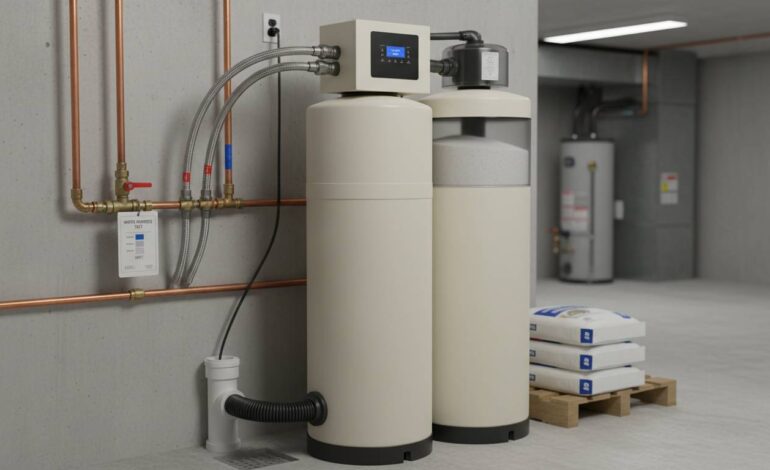
The cost of a water softener typically ranges from a few hundred to several thousand dollars. Basic units start around $500, while mid-range systems fall between $1,000–$3,000, and premium or whole-house setups may reach $4,000–$6,000 or more—including installation.
Here’s a deeper look at those numbers, breaking down components, options, and real-world examples…
Understanding the Price Range of Water Softeners
Entry-Level Systems (approx. $500–$1,000)
These are often compact, single-tank units suited for small households.
• Costs are lower because they’re simpler—minimal digital controls or automation.
• You might do much of the installation yourself to save further.
Still, they handle basic hardness levels and may require more frequent salt refills.
Mid-Range Systems ($1,000–$3,000)
This is the most popular segment.
• Includes twin-tank dual-filtration units, smart controls, and higher capacity.
• Serves larger homes or families that value convenience and lower maintenance.
• Some are configured for both softening and filtration.
High-End and Whole-House Systems ($3,000–$6,000+)
Built to serve everything from well water to entire homes, including irrigation.
• Often combine softening, filtration, UV sterilization, and sometimes remineralization.
• Prices include professional installation—the system is generally more complex.
• Designers and installers price based on water quality, flow rate, and custom needs.
What You’re Paying For—Breaking Down the Cost
1. Equipment Itself
- Resin capacity and quality matter—the more grains per foot, the higher the cost, generally.
- Special features like Wi-Fi, metering, or low-salt regeneration add dollars.
- Branded systems with warranties, certifications, and support always cost more.
2. Installation and Labor
- Basic installs (within 50 feet, existing plumbing, no alterations) run $300–$800.
- Complex setups (new plumbing runs, space issues, electrical add-ons) can hit $1,500–$2,500.
- Plumbers may charge hourly—expect $75–$150 per hour depending on region.
3. Maintenance and Operating Costs
- Salt refills: about $5–$10 per month for small to medium households.
- Replacement resin every 10–15 years—often $200–$500.
- Occasional service visits: $100–$200 annually.
Over time, these add up but remain modest compared to upfront costs.
Real-World Example Scenarios
Scenario A: Small Apartment Household
A one-bedroom apartment opts for an entry-level salt-based softener at $600.
DIY install saves labor. Maintenance comes to around $6 monthly for salt.
Outcome: Hardness control with minimal upfront cost and upkeep.
Scenario B: Family Home with Moderate Hardness
A 4-bedroom house installs a mid-range twin-tank softener for about $2,500 installed.
Automated controls minimize salt use. Annual maintenance just one visit.
Outcome: Smooth performance, lower environmental footprint, convenience.
Scenario C: Whole-House Multi-Stage System
A custom system—softening, filtration, UV—costs $5,500 including ripping into slab and plumbing upgrades.
Hefty price, but handles multiple quality issues. Installed by specialist.
Outcome: Premium system offering long-term water quality and service.
Factors That Drive Price Variation
Water Quality and Treatment Needs
Hardness level, iron, manganese, or sediment presence all affect system complexity—and price.
System Type and Technology
Options include salt-based, salt-free alternatives, reverse osmosis, and hybrid setups. Salt-free can cost more upfront but may lower operating costs.
Home Size and Usage
The more bathrooms, appliances, or irrigation, the bigger (and more expensive) the unit needs to be.
Installation Complexity
Remodels, tight spaces, or outdated plumbing drive up labor hours and costs.
Additional Features
Automation, Bluetooth/Wi-Fi, smart metering, and remote monitoring boost both functionality and price.
Expert Insight on Investing in Water Softeners
“Investing in a system that matches your household’s softening needs—and allows for features that reduce maintenance—is what really pays off over time.”
This reflects the practical sense that a slightly higher upfront spend on smart, efficient equipment saves in the long run on salt, service calls, and hassle.
Buying Tips: Saving Money Without Sacrificing Quality
-
Get Multiple Quotes
Compare basic vs. smart-enabled systems. Look for bundled services. -
Watch for Rebates and Incentives
Some utilities or municipalities offer rebates for high-efficiency equipment. -
DIY When Possible
If you’re handy and the plumbing is accessible, you can shave many hundreds off. -
Think Long-Term Savings
Smart units may cost more initially but save salt and water in the long haul. -
Plan for Maintenance
Budget for salt, svc calls, resin replacement—typically a few hundred dollars per decade.
Quick Cost Table (Estimated Ranges)
| System Type | Equipment Cost | Installation Cost | Total Approximate Cost |
|—————————|——————|——————-|————————-|
| Entry-Level (small home) | $500–$1,000 | DIY or $300–$800 | $500–$1,800 |
| Mid-Range (family home) | $1,000–$3,000 | $500–$1,500 | $1,500–$4,500 |
| High-End / Whole House | $3,000–$6,000+ | $1,000–$2,500+ | $4,000–$8,500 |
When It’s Worth Paying More
- You have very hard or iron-rich well water.
- Whole-home treatment, not just one bathroom.
- Smart features reduce salt use, alerts service needs.
- You expect to stay in the home many years—long-term value.
On the other hand, if your hardness is mild and usage low, less expensive models may suffice.
Conclusion
Water softener pricing ranges widely—generally $500 for basic models, $1,000–$3,000 for mid-tier, and up to $6,000 or beyond for full-featured systems including install. Choose based on your water quality, household size, and desired features. Getting quotes, considering rebates, and planning for long-term maintenance helps you balance cost and quality.
FAQs
How do I know which size system I need?
Calculate your household’s daily water use (gallons per person) and match it to the system’s grain capacity. Most manuals guide you on sizing based on person count and water hardness.
Are salt-free systems cheaper to operate?
They often have lower operating costs since there’s no salt refill. But they’re pricier up front. Salt-based units precisely remove hardness, while salt-free alternatives tend to condition rather than fully soften.
Can I install the system myself?
Yes, if you’re comfortable working with plumbing, and the installation is straightforward. But if you need new plumbing or electrical work, hiring a professional is safer and ensures proper warranty coverage.
How often do I need to refill salt?
Typically every 2–4 weeks for average households. High-use homes or those using a lot of soft water demand more frequent refills.
Does maintenance cost a lot over time?
Not really. Expect annual servicing for salt, occasional resin or control replacement. Over 10 years, total operating costs often stay under $1,000.