How Many Calories Are in an Apple? Apple Calorie Count Explained

How Many Calories Are in an Apple? Apple Calorie Count Explained
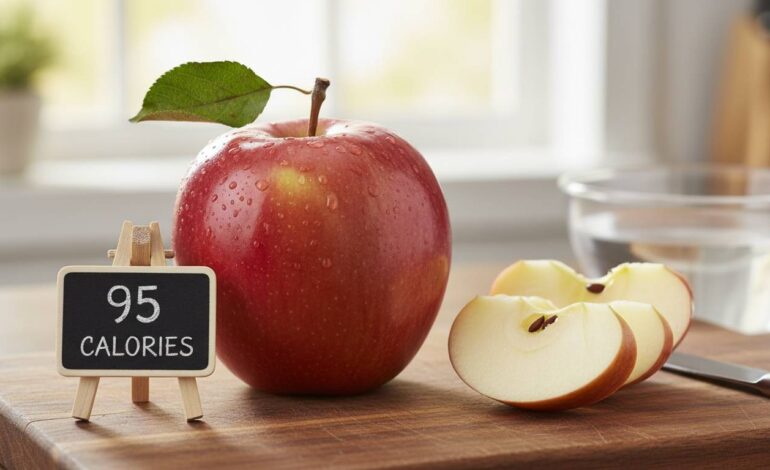
A medium raw apple contains roughly 95 calories. That means if you’re tracking energy intake or just curious, one regular apple is under 100 calories. It’s low enough to fit into most diets, yet it delivers fiber, vitamins, and natural sweetness.
Why Apples Are Calories-Wise Friendly
Apples come in different sizes—small, medium, large—but most fall in the 90–105 calorie range. A standard medium apple weighing around 182–200 grams typically provides about 95 calories . Slight variations in data exist: one source lists 104 calories for a 200 g apple , and others note between 94 and 100 calories . The takeaway? Expect around 95 calories on average.
Small vs Medium vs Large
- Small apple (≈114 g): about 60–65 calories .
- Medium apple (≈182 g): typically 95 calories .
- Large apple (≈223–242 g): closer to 115–126 calories .
So portion size matters—smaller apples can be great for a light snack, while larger ones give more calories but still remain a wholesome choice.
Nutrients Hidden in Those Calories
Apples are mostly water and carbohydrates. But here’s the cool part—they pack fiber, vitamins, and antioxidants in that modest calorie count.
Carbs, Fiber & Sugar
- Carbs: around 25 g per medium apple, of which fiber is 4–5 g and natural sugars about 18–20 g .
- Fiber: key for satiety and gut health. Medium apple: ~4.4 g fiber .
- Glycemic index is low to moderate (~34–44), meaning apples don’t spike blood sugar too quickly .
Fat & Protein
Negligible. Apples typically have under 0.5 g protein and minimal fat (~0.3 g) .
Vitamins & Minerals
- Vitamin C: about 8–14 % of Daily Value .
- Potassium: roughly 170–215 mg, about 5–6 % DV .
- Other micronutrients (A, K, some B vitamins, antioxidants like quercetin/polyphenols) present in small amounts but contribute to overall health .
Health Benefits Beyond the Calorie Count
Beyond being low-cal and satisfying, apples offer measurable health value:
- Satiety & digestion: High fiber helps you feel full longer, which may support weight control. Apples slow sugar absorption, so blood sugar stays steadier .
- Heart & cholesterol: Soluble fiber like pectin lowers LDL cholesterol. Antioxidants reduce inflammation and support arterial health .
- Hydration: Apples are mostly water—around 85–86 %—so they help you stay hydrated too .
- Chronic disease prevention: Quercetin and polyphenols may guard against cancer, type 2 diabetes, and cognitive decline .
“Apples pack a surprising nutritional punch for their calorie count—fiber, antioxidants, vitamin C and hydration all wrapped in a sweet, crispy snack.”
Practical Ways to Use Apples Nutritionally
Here’s how apples fit into real life:
- Snacking smart: Eating an apple whole gives you the full benefit of fiber and nutrients. Wash, don’t peel—peeling shaves off much of the fiber and antioxidants .
- Versatile in meals: Chop into oatmeal or salad, bake in dishes, pair with protein like nut butter or cheese for hunger satisfaction.
- Processed forms differ: Apple juice (≈115 calories per cup) lacks fiber. Unsweetened applesauce has ~100 calories and less fiber. Baked apples with sugar or butter can climb to 150–250 calories .
- Weight-loss friendly: Two apples can replace higher-calorie snacks, helping manage intake without sacrificing fullness .
Quick Comparison: Apple vs Other Fruits
| Fruit | Calories | Fiber | Notable Nutrients |
|————|———–|———–|———————————-|
| Apple | ~95 cal | ~4–5 g | Vitamin C, potassium, antioxidants |
| Banana | ~105 cal | ~3 g | High potassium, vitamin B6 |
| Orange | ~62 cal | ~3 g | Very high vitamin C |
Apples offer a balance of fiber, hydration, and nutrients with moderate calories. Bananas pack more potassium and energy but slightly more calories; oranges have fewer calories and tons of vitamin C .
Summary
Apples are light on calories but rich in fiber, water, vitamins, and antioxidants. A medium apple typically contains around 95 calories—perfect for snacking or topping meals. Their low calorie density and high nutrient density make them a smart, satisfying choice.
FAQs
How many calories in a small apple?
A small apple (about 114 g) contains approximately 60–65 calories .
Does peeling the apple change calories?
Peeling doesn’t significantly affect calories but removes fiber and antioxidants, reducing nutritional value .
What about applesauce or juice?
Apple juice (~115 cal) and unsweetened applesauce (~100 cal) have more calories and much less fiber. Baked apples with added sugar or fat can be 150–250 calories .
Can apples help me lose weight?
Yes—because they’re low in calories and high in filling fiber, apples are excellent for satiety and can support weight management .
What nutrients do apples offer beyond calories?
They provide fiber, vitamin C, potassium, water, and antioxidants like quercetin. These contribute to digestion, immune support, hydration, and chronic disease protection .
Why do calorie counts vary by source?
It depends on apple size, type, and measurement method. USDA-based sources average 95 cal for a medium apple, but some list 104 cal for a larger 200 g one, while smaller examples may show 72 cal—size matters .
Key Takeaway: An apple isn’t just about calories—it’s a compact package of hydration, fiber, micronutrients, and goodness. At around 95 calories, it’s a snack that fills you up and feeds you well. Want ways to weave more apples into your habits? Just ask!