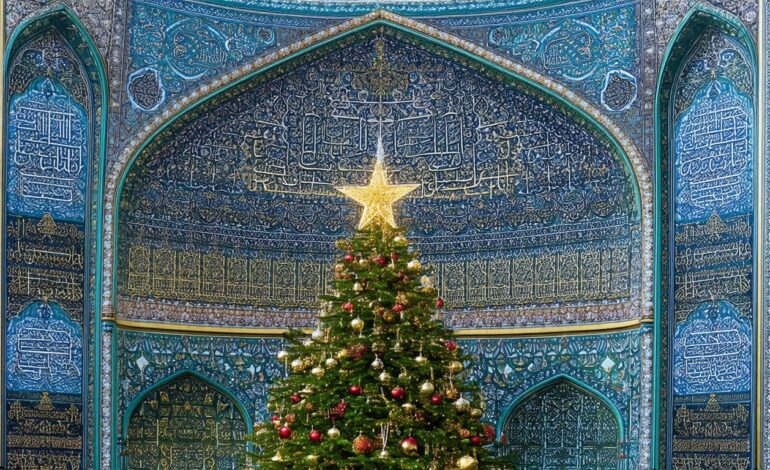
Christmas, celebrated by billions worldwide, dominates the winter landscape with its symbols, traditions, and spirit of giving. Yet for the world’s nearly two billion Muslims, the question frequently arises: Do Muslims celebrate Christmas? The answer threads through complex intersections of faith, culture, identity, and modern societal norms. Exploring Islamic views on Christmas reveals nuanced perspectives, shaped by religious teachings, lived experiences, and the evolving realities of multicultural societies.
Islamic Beliefs About Christmas: Theological Foundations
At the heart of the discussion lies Islam’s core theological principles. The observance of religious holidays in Islam is rooted in guidance from the Qur’an and the teachings of the Prophet Muhammad. Two annual festivals, Eid al-Fitr and Eid al-Adha, are explicitly ordained in Islamic tradition. Christmas, however, does not hold religious significance in Islam.
The Status of Jesus in Islam
Muslims hold Jesus (known as Isa in Arabic) in profound respect and recognize him as one of the greatest prophets. However, the narrative diverges from Christian doctrine. In Islam, Jesus is neither divine nor the son of God, but a revered messenger.
According to Dr. Yasir Qadhi, an American Islamic scholar:
“While Muslims deeply respect Jesus as a beloved prophet, the religious framework of Islam differs sharply from Christianity in its understanding of his divinity and mission.”
This distinction influences Muslim perspectives on Christmas, which for Christians marks both the birth of Jesus Christ and the theological affirmation of his divinity.
Traditional Islamic Guidance on Non-Islamic Holidays
Mainstream Islamic jurisprudence typically advises Muslims not to engage in religious celebrations outside Islam, emphasizing the distinct identity of the Muslim faith. Prominent religious scholars tend to discourage participation in rituals or practices viewed as exclusive to other religions. This guidance is grounded in the principle of maintaining religious clarity and avoiding syncretism.
Still, a significant spectrum of interpretation exists, particularly in diverse or secular societies.
Muslim Experiences: Living Among Christmas Celebrations
Beyond doctrine, the reality for many Muslims—especially those residing in predominantly Christian-majority countries—differs from formal religious guidance. Daily life exposes Muslims to the public celebration of Christmas, from festive decorations to school events and public festivities.
Navigating Social and Cultural Pressures
In North America, Europe, and parts of Asia, countless Muslims face invitations to Christmas parties, workplace Secret Santa exchanges, or neighbors’ holiday gatherings. The response varies widely. Some choose to participate out of respect or camaraderie, while others politely decline, mindful of their religious convictions. Many families find a middle ground, emphasizing the universal values of generosity and community without engaging in religious rituals.
A University College London study on minority traditions found that “a significant number of Muslims reported participating in non-religious aspects of Christmas, such as giving gifts to neighbors or sharing in communal meals, seeing these as gestures of goodwill rather than religious observance.”
Diverse Global Practices
- In Turkey and Lebanon, Muslims may enjoy festive lights and participate in New Year’s celebrations that overlap with Christmas traditions, though these are regarded as secular.
- In Indonesia and Malaysia, countries with substantial Muslim populations, some people adopt elements of the season—such as shopping sales or communal festivities—without religious connotations.
- In the Middle East and North Africa, Christmas is typically observed only by Christian minorities, with limited to no participation from Muslims.
Social Media, Identity, and Modern Trends
The global reach of social media further blurs the boundaries between cultural and religious practices. Hashtags like #Ramadan and #Christmas often trend side by side, while influencers from Muslim backgrounds sometimes share holiday-themed content, sparking lively debates in comment sections.
A 2021 Pew Research Center report noted an increasing openness among younger Muslims, particularly in the West, to acknowledging Christmas as a cultural—rather than religious—occasion. Online platforms have amplified conversations around identity, belonging, and interfaith respect.
Case Study: Muslim Families in London
Consider the example of the Khan family in London. While they do not celebrate Christmas as a religious holiday, they engage in neighborhood gift exchanges and put up winter lights as a gesture of communal harmony. Their approach reflects a pragmatic balance: honoring their faith while building bridges in a multicultural setting.
The Debate Within Muslim Communities
The question of Christmas observance continues to spark reflection. Some community leaders strictly caution against any involvement, arguing this could erode Islamic identity or blur religious distinctions. Others advocate for engagement with non-religious aspects, highlighting social harmony and the Islamic principle of kindness to neighbors.
Prominent Islamic jurist Dr. Ingrid Mattson, for example, notes:
“Building mutual respect in pluralistic societies sometimes means participating in our neighbors’ festivities—not as a religious rite, but as a sign of friendship and shared humanity.”
In practice, how Muslims navigate Christmas often reflects the diversity within Islam and the complexity of modern life.
FAQ: Addressing Common Misconceptions
Confusion persists around what participation in Christmas might mean for Muslims. Buying a Christmas tree, attending a holiday dinner, or exchanging gifts—are these innocuous gestures, or do they cross a doctrinal line? Islamic scholars generally distinguish between attending an event as a secular social occasion versus performing Christian religious rituals, with the latter being clearly discouraged.
Conclusion: Identity, Respect, and a Changing World
The question of whether Muslims celebrate Christmas resists a simple yes or no. Theological boundaries remain clear: for Muslims, Christmas is not a religious holiday. Yet realities on the ground are shaped by community context, personal interpretation, and the shared spaces of increasingly interconnected societies. Many Muslims navigate these waters by upholding their faith while practicing kindness, respect, and social cohesion. As perceptions shift and the world grows more pluralistic, these conversations continue, guided by core values of integrity and empathy.
FAQs
Do Muslims celebrate Christmas as a religious holiday?
No, Christmas is not a religious holiday in Islam. Muslims typically do not observe Christmas in a religious sense, as it does not align with Islamic teachings or festivals.
Is it permissible for Muslims to attend Christmas parties?
Most Islamic scholars advise caution, distinguishing between engaging in religious rituals—which is generally discouraged—and participating in social gatherings for reasons of friendship or community. Context and intention matter, and interpretations can vary.
Can Muslims exchange gifts or participate in holiday customs?
While exchanging gifts as a sign of goodwill is permitted in Islam, participating in religious customs unique to Christianity is typically avoided. Muslims may share non-religious celebrations to foster good relationships.
How do Muslim children cope with Christmas in schools?
Many Muslim parents use the season as an opportunity for dialogue, explaining the differences and similarities between faith traditions. Some children may join in school activities, such as plays or holiday lunches, in a cultural—not religious—context.
Are there Muslim-majority countries that celebrate Christmas?
Generally, Christmas is not a national celebration in Muslim-majority countries, though there are exceptions in places with significant Christian minorities. Festive public displays may occur in more secular or multicultural cities.
How do Muslims respond to Christmas greetings?
Responding with kindness is common. Some Muslims respond to “Merry Christmas” with a neutral greeting or well wishes, focusing on goodwill rather than religious affirmation.