Did Phil See His Shadow? Groundhog Day Prediction Explained

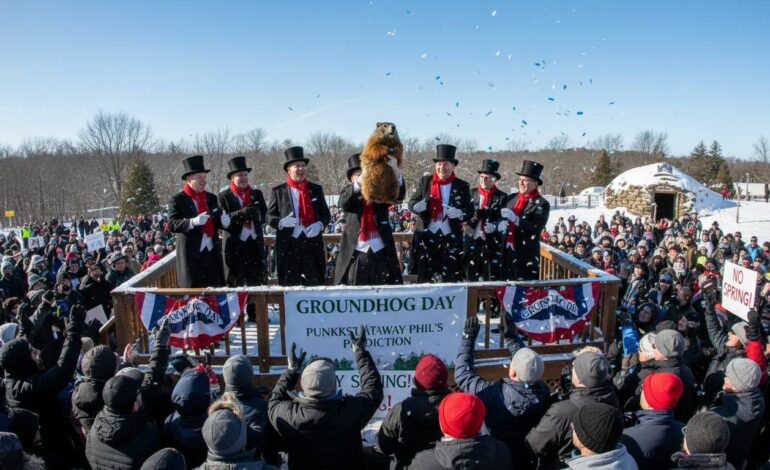
Yes—on February 2, 2026, Punxsutawney Phil indeed saw his shadow, signaling six more weeks of winter, according to Groundhog Day tradition. The news was confirmed by multiple sources, including The Independent and the Old Farmer’s Almanac .
What Happened On Groundhog Day 2026?
Punxsutawney Phil emerged from his burrow at Gobbler’s Knob under clear skies and promptly spotted his shadow—triggering the annual “six more weeks of winter” forecast . The tradition unfolded in frigid conditions—temperatures plunged into single digits (°F), and while the crowd cheered and booed, Phil’s usual post-prediction photo op was canceled because of the extreme cold .
Why Its Meaning Goes Beyond the Shadow
Groundhog Day is more cultural than scientific. It has roots in European traditions like Candlemas and Imbolc, marking February 2 as a midpoint between the winter solstice and spring equinox . The modern form of the holiday took shape when German settlers in Pennsylvania substituted hedgehogs with groundhogs, with Punxsutawney Phil becoming the most famous of these weather-predicting critters .
The Record: How Often Has Phil Seen His Shadow?
Since modern record-keeping began, Phil has seen his shadow more often than not. In 2026 alone, this marks around the 109th or 110th time—depending on the source—of such a prediction . The Economic Times states Phil has done so 108 times out of 129 total appearances (84%) , while the Almanac mentions 109 shadow sightings .
How Accurate Are These Predictions?
Not very. NOAA and other analyses place Phil’s accuracy at around one-third—30 to 35%—which is worse than a coin flip . For example, from 2013 to 2023, the groundhog was right only once when predicting spring based on his shadow behavior . While NOAA ranked him 17th among 19 animal forecasters, Staten Island Chuck, General Beauregard Lee, and even a prairie dog statue had much better records .
“Although he is not the most accurate seasonal prognosticator, we would be remiss not to honor the longest‑running weather‑forecasting groundhog in the United States…” — NOAA
Dr. Alan Black, a geography expert, notes that while the tradition is fun, it’s scientifically unreliable—and goes on to highlight the surprising variety of animal stand-ins used around the U.S. .
Around the Country: Other Predictions Aligned
Beyond Phil, other regional animal forecasters joined the “predict more winter” prediction:
- In Manchester, Connecticut, Chuckles XI of the Lutz Children’s Museum also saw his shadow and forecasted six more weeks of winter .
- In Michigan, Woody the Woodchuck stayed outside for less than 30 seconds—a sign used locally to predict continued winter—thus matching Phil’s prediction .
What This Really Means
At the end of the day, this tradition is mostly lighthearted folklore tied to community and regional pride. Meteorologists will continue to rely on data like satellite imagery and atmospheric models—not shadows—to forecast the weather. But Groundhog Day brings people together, adds whimsy to midwinter, and keeps folklore alive.
Conclusion
Punxsutawney Phil saw his shadow on February 2, 2026—foretelling six more weeks of winter. The event, more cultural tradition than meteorological forecast, drew frigid crowds and continued a longstanding and beloved ritual. Though his predictive accuracy hovers around 30–35%, Phil remains the iconic symbol of seasonal hope (or dread). So, whether you believe in his shadow’s power or just enjoy the spectacle, one thing’s sure: winter’s not over yet.
FAQs
Did Phil actually see his shadow?
Yes. On February 2, 2026, under clear skies, Punxsutawney Phil saw his shadow, signaling six more weeks of winter. This was confirmed by multiple reliable sources like AP News and The Independent .
What does seeing his shadow mean?
According to folklore, seeing the shadow means six more weeks of winter. It’s an old tradition, not based on science, and stems from European Candlemas and Imbolc customs .
How accurate are these predictions?
Poorly. Groundhog Day predictions are right only about 30–35% of the time. NOAA ranks Phil among the least accurate animal forecasters .
Is Phil the only one doing this?
No. Other towns have their own forecasters. In 2026, Chuckles XI in Connecticut and Woody in Michigan both mirrored Phil’s prediction of extended winter .
Why does Groundhog Day still matter?
It’s a cultural marker—a mix of local pride, humor, and folklore that breaks up the winter monotony. It’s not meteorological, but it brings communities together and adds a bit of unpredictable fun.