Connections Hint Today: Solve Fast with Pro Tips

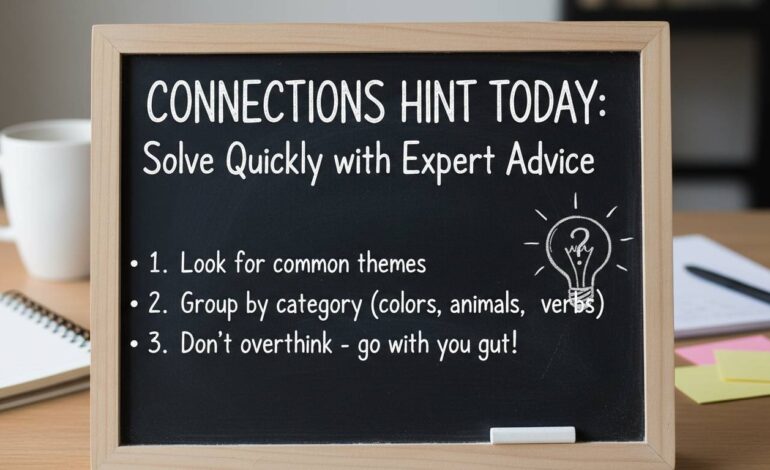
If you’re stuck on today’s Connections puzzle, here’s what you need to know to crack it without spoiling the answers.
What Is Connections?
Connections is a daily word puzzle from the New York Times that dropped in June 2023 and quickly became a mainstay for puzzle fans. You get sixteen words in a four-by-four grid, and your job is to sort them into four groups of four related words. It’s not about finding individual answers—it’s about spotting hidden connections between terms that might seem random at first glance.
The appeal is strange and specific: it’s accessible enough that anyone can play, but the deduction element keeps you thinking. One day you’ll group four obvious colors in seconds; the next, you’ll stare at words like “SAGE,” “ROSEMARY,” “THYME,” and “BAY” and realize too late they’re not herbs but something else entirely.
You select four words, hit submit, and the game tells you whether you’re right. Correct guesses disappear and reveal a colored banner showing your category. Wrong guesses cost you one of four lives. The categories range from straightforward (yellow) to genuinely tricky (purple), giving you a sense of where you stand as you work through the puzzle.
One thing players miss: you can rearrange your guesses before submitting. Tap words to select or deselect them—experiment freely until you’ve committed to an answer.
How to Solve Connections Faster
The best approach is boring but effective: scan all sixteen words before making your first guess. Don’t jump at the first grouping that looks promising. Look at the whole landscape first. You might spot an obvious category that saves your guesses for harder groupings.
Think about connections in layers. Some are surface-level—words that share a property like color or length. Others require lateral thinking: words in the same dictionary section, words that form common phrases with the same anchor, or words with hidden double meanings.
Here’s the thing about lives: don’t burn them early. Most expert players wait until they’re confident about at least three of four words before guessing. The exception is when you’ve eliminated all obvious possibilities and are essentially guessing anyway—but that should happen rarely if you’ve done your initial scan properly.
Working backward from solved categories helps too. Once you’ve cracked one or two groups, look at what’s left. Often, words that seemed confusing suddenly make sense in context of what you already know.
And honestly? Step away if you’re stuck. Go make coffee. Come back in ten minutes. Your brain keeps working on it unconsciously, and solutions often click into place with fresh eyes.
Hints for Today’s Puzzle
If you want help without full spoilers, try these progressive clues:
Easiest category: Think kitchen storage—things you might use to hold ingredients or prepared food.
Medium category: Entertainment-related—types of performances or the people who create them.
Hard category: These words relate to stages or phases of something. Consider progression over time.
Hardest category: Lateral thinking required. Look beyond obvious meanings—these might relate to similar-sounding words or hidden double meanings.
Category Types You’ll See
After a few dozen puzzles, you start recognizing patterns. Some categories are semantic—obvious groupings like animals, colors, or food. Others are structural: words with the same number of letters, words containing a specific letter, or words that can all pair with the same prefix or suffix.
Pop culture and history show up regularly too. You might get four movies from the 90s or four presidents. The challenge is that your success depends partly on what you already know—but even when you don’t recognize the theme, you can often work it out through elimination.
The trickiest categories involve wordplay: homophones, similar-sounding words, or idioms. These are the ones that make you feel smart when you crack them and frustrated when you don’t.
The best Connections solvers hold multiple possibilities in their head at once and abandon assumptions when the evidence doesn’t support them.
Mistakes That Kill Your Progress
People get stuck for predictable reasons. First: fixating on one interpretation of a word. If “BARK” means tree covering to you, you might miss that it could mean a dog’s sound. Stay flexible.
Second: guessing too fast. The excitement of thinking you’ve spotted a connection is real, but jumping early burns lives fast. Analyze the full grid first.
Third: ignoring feedback. After a wrong guess, the game shows you which words would have formed correct groups. That information is gold—use it.
And finally, don’t overthink. Sometimes a category is exactly what it appears to be, and hunting for complexity that isn’t there wastes your time.
Connections vs. Other NYT Games
If you already play Wordle, here’s how Connections differs: Wordle is elimination-based (narrow down one word through repeated guesses), while Connections asks you to juggle relationships between sixteen words simultaneously. Both are satisfying, but the mental muscle is different.
The Crossword leans on vocabulary knowledge and cryptic-style clue solving. Spelling Bee rewards vocabulary breadth and obscure word finding. Connections sits somewhere in between—language-based, but really about categorization and pattern recognition.
What makes Connections special is its balance. Easy to start, harder to master. You can improve over time, and there’s always a fresh puzzle tomorrow.
Getting Better Over Time
You build skills through practice, obviously, but deliberate practice helps more than random play. After each puzzle, think about what worked and what didn’t. Which categories clicked instantly? Which ones beat you? This reflection builds self-awareness about your solving process.
Playing older puzzles is underrated. The Times archives them, so you can practice without daily pressure. It’s great for building confidence after a brutal puzzle wipes you out.
The community exists too—Reddit threads, YouTube explanations, hint websites. Not everyone’s cup of tea, but if you enjoy comparing notes, there’s plenty of company.
Most importantly, stay curious. Every puzzle is a small mental workout, and even the failures build something. The improvement journey is part of the fun.
Bottom Line
Connections works because it’s accessible, rewarding, and different every day. Scan before guessing, think flexibly about word relationships, and don’t waste lives on speculation. The strategies here will help you approach today’s puzzle with a plan—and maybe shave some time off your solve.
Now go crack that grid.
Quick Answers:
- What is Connections? A daily NYT puzzle where you group sixteen words into four categories of four related words.
- Lives: Four. Incorrect guesses cost one each.
- Colors: Yellow = easiest, green = medium, blue = hard, purple = hardest.
- Older puzzles? Yes, the Times archives them.
- Best strategy? Scan all words first, work from obvious to subtle connections, and save guesses until you’re confident.