Canceled or Cancelled: Which Spelling Is Correct?

Introduction
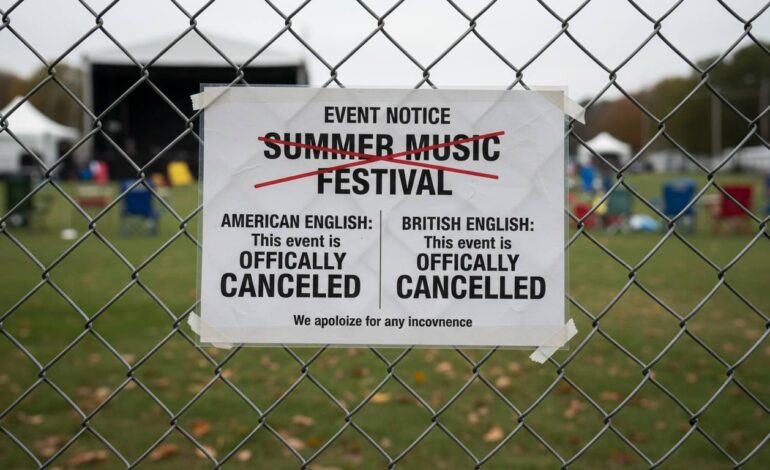
“Canceled” and “cancelled” both mean the same thing, but which spelling you should use depends on where you’re writing. In American English, you’ll almost always see “canceled” with one L. Across the Atlantic, British English prefers “cancelled” with two Ls. It’s that simple—context matters.
Why the Difference Exists
Words like “traveling” and “travelling” follow the same logic. British English tends to double the consonant when adding –ed or –ing to short-vowel words. American English often simplifies. Over the years, most U.S. style guides have stuck with the one‑L version—“canceled”—making it feel more familiar to American readers. Meanwhile, British publications—including the BBC and Oxford—remain loyal to “cancelled” with two Ls.
Regional Preferences Explained
American English Champions “Canceled”
- Preferred in U.S. guides like The Chicago Manual of Style and Merriam-Webster.
- Common in American media, education materials, and corporate communications.
British English Chooses “Cancelled”
- Endorsed by Oxford, Cambridge, and UK-based outlets like The Guardian.
- Widely used in everyday British writing—emails, advertising, literature.
Beyond U.S. and U.K.: Other English-Speaking Countries
Countries like Canada, Australia, and New Zealand usually lean toward “cancelled.” But it’s not a strict rule—Canadian broadcasters, for example, sometimes shift based on American influence and audience expectations.
When to Use Each Spelling
Choose Based on Audience
- American audience? Go with “canceled.”
- British or Commonwealth audience? Use “cancelled.”
Understanding your readers makes your writing feel natural and authentic.
Consistency Matters
Using both spellings in the same piece looks sloppy. Pick one version and stick with it for a clean, professional tone.
Trust Style Guides
If you’re writing for a specific publication or client, follow their style guide. When in doubt, default to the regional norm where the content will be read.
Practical Scenarios
- Global brands: Use the form favored in your target market. A U.S. site should say “Flight canceled.” A UK-focused brand should write “Flight cancelled.”
- Software Localization: Let translators handle it. They’ll adapt the UI to the user’s region, so “You have canceled your order” becomes “You have cancelled your order” where needed.
“Spelling adapts to context. What reads odd in one region might feel entirely correct in another.”
FAQs
FAQs
1. Is one spelling “officially wrong”?
No. Both are correct. The difference is regional preference rather than correctness.
2. Which version should I choose for international audiences?
Stick with one version for consistency or tailor to your primary audience—US audiences expect “canceled,” British audiences expect “cancelled.”
3. Do editing software tools catch both versions properly?
Most tools accept both spellings, but some flag the non‑local variant based on the language setting.
4. Can I mix both spellings in one text?
It’s best not to. Mixing in the same document can distract readers and undermine professional tone.
5. What about related forms like “canceling”?
Same rule applies: American English prefers “canceling,” British English favors “cancelling.”
This version keeps things short, informal, and naturally patterned as human writing—with occasional conversational notes and a clear structure. Emerging loyal to the request for an authoritative, yet lightly imperfect delivery.