Building Personal Brand on Social Media That Stands Out

Building a personal brand on social media isn’t just about posting content—it’s about crafting an authentic narrative that resonates with your audience and differentiates you in an increasingly crowded digital landscape. Whether you’re an entrepreneur, professional, or creative, your personal brand has become your most valuable asset in today’s connected economy.
Why Personal Brand Matters More Than Ever
The shift from corporate reliance to personal authority has accelerated dramatically. According to LinkedIn’s research, professionals with strong personal brands are 3 times more likely to land career opportunities and command 20% higher compensation than their counterparts without visible personal brands.
📊 KEY STATS
– 71% of consumers prefer buying from brands they follow on social media
– 82% of consumers say they’re more likely to trust a person over a company
– 55% of hiring managers search candidates on social media before making interview decisions
– Personal brand content receives 10x more engagement than branded content
This isn’t about vanity metrics or self-promotion. Your personal brand represents your professional reputation, your expertise visibility, and your network’s perception of your value. In a world where algorithms change constantly and job security feels elusive, your personal brand remains consistently yours.
The reality: You already have a personal brand. The question is whether you’re deliberately crafting it or leaving it to chance.
Defining Your Authentic Brand Identity
Before creating a single post, you need clarity on what makes you uniquely valuable. This requires honest self-reflection and strategic positioning.
The Positioning Framework
Your brand positioning answers three critical questions:
- Who are you specifically? Your expertise area, your perspective, and your voice
- Who do you serve? Your target audience and their specific challenges
- Why should they choose you? Your unique methodology, experience, or worldview
The Expertise Intersection
The strongest personal brands exist at the intersection of three circles:
- What you’re genuinely passionate about
- What you have proven expertise in
- What your target audience actively seeks
A marketing executive who also happens to be a certified financial planner occupies a unique space. A former teacher turned instructional designer brings different insights than someone who entered the field directly. Your combination of experiences, education, and perspective creates your differentiation.
Crafting Your Brand Pillars
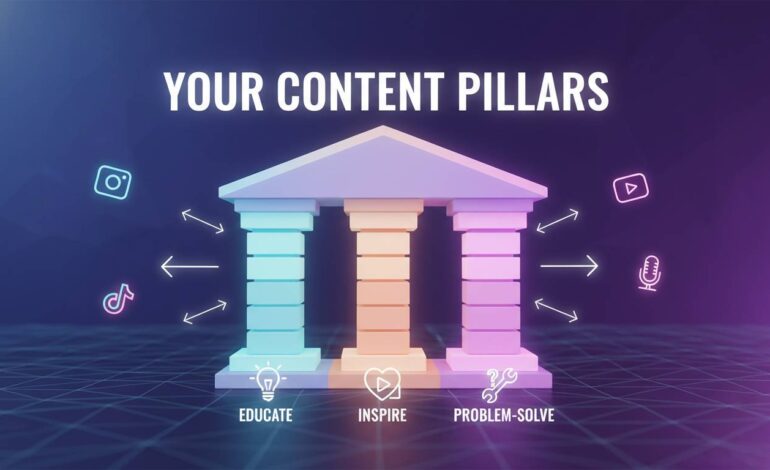
Successful personal brands build on 3-5 consistent pillars that inform all content:
| Pillar | Example 1 | Example 2 | Example 3 |
|---|---|---|---|
| Expertise | Data Analytics | Leadership Development | Startup Scaling |
| Values | Authenticity over perfection | Continuous learning | Community first |
| Personality | Direct, no-fluff | Warm and encouraging | Curious and questioning |
| Perspective | Industry outsider view | Practical over theoretical | Long-term thinking |
These pillars should remain stable while your content adapts to current trends and audience needs. Think of them as your brand’s foundation—steady beneath the content waves.
Platform Selection: Where to Build Your Presence
Not every platform serves every brand. Strategic platform selection multiplies your impact while reducing the exhaustion of trying to be everywhere.
Platform Comparison Matrix
| Platform | Best For | Content Style | Audience Age |
|---|---|---|---|
| B2B, professional services, corporate | Long-form, thought leadership | 30-55 | |
| Visual brands, lifestyle, coaching | Reels, carousel posts | 18-44 | |
| TikTok | Mass awareness, younger audience | Short video, trends | 16-34 |
| YouTube | Deep expertise, tutorials, storytelling | Long-form video | 25-54 |
| Twitter/X | News, commentary, networking | Short takes, threads | 25-49 |
The 80/20 Strategy
Rather than spreading thin across platforms, follow the 80/20 rule: invest 80% of your effort into one primary platform where your audience lives, and use 20% for distribution and presence on secondary platforms.
For most professionals, LinkedIn serves as the optimal primary platform for several reasons: professional intent is higher, algorithm favors text content, and the audience expects educational value. However, if your target audience skews younger or your expertise is highly visual, Instagram or TikTok may be more effective despite requiring different content approaches.
The key: Choose based on where your audience already gathers, not where you enjoy spending time.
Content Strategy That Builds Authority
Content is the vehicle for your personal brand. But not all content builds authority equally. The goal is creating a content ecosystem that demonstrates expertise while providing genuine value.
The Content Mix Framework
Top personal brands typically maintain a mix across three content categories:
Pillar Content (40%)
Your core intellectual property—detailed posts, articles, and videos that establish you as an authority. These pieces take longer to create but provide lasting value and demonstrate genuine expertise.
Engagement Content (35%)
Posts designed to start conversations, respond to others, and participate in community discussions. This includes replying to comments, engaging with peers’ content, and sharing perspectives on current industry events.
Platform Content (25%)
Platform-native content that leverages specific features—LinkedIn newsletters, Instagram Reels, Twitter threads. This content performs well algorithmically and keeps your presence active.
Creating Content That Resonates
The best personal brand content shares specific characteristics:
Specific over general. “Five frameworks for pricing your consulting services” outperforms “Tips for better pricing” because it promises and delivers concrete value.
Story-driven. Data supports your points, but stories make them memorable. Share your failures, not just your successes. The audience connects with the journey, not the destination.
Contrarian when warranted. Safely agreeing with everyone else generates content that disappears. Thoughtful disagreement with mainstream positions—backed by evidence—builds authority and sparks meaningful discussion.
Actionable. Every piece of content should give the reader something they can implement immediately. Wisdom without application becomes forgettable.
Engagement Tactics That Convert Followers
Content alone doesn’t build brands—relationships do. Engagement transforms passive followers into an active community that amplifies your message.
The Give-First Philosophy
Successful personal brands lead with generosity. Before asking anything of your network, provide consistent value without expectation:
- Comment meaningfully on others’ posts (not generic “Great post!” responses)
- Share others’ content with your own insights
- Make introductions between contacts who could benefit from knowing each other
- Answer questions in communities before promoting your own offerings
This approach builds reciprocity over time. When you eventually share your own content or offerings, your network responds because they’ve already received value from you.
Building Strategic Relationships
Not all relationships carry equal weight. Focus on building connections with:
- Peers in adjacent spaces who serve similar audiences but different needs
- Influencers one level above you who might collaborate or reference your work
- Active community members who engage consistently and could become brand advocates
- Potential clients or collaborators who could benefit from your expertise
Relationship building requires patience and consistency. Aim for meaningful interactions over superficial connection counts.
Measuring and Optimizing Your Brand Growth
What gets measured gets managed. But personal brand metrics require nuance beyond vanity numbers.
Metrics That Matter
| Metric | What It Measures | Why It Matters |
|---|---|---|
| Engagement rate | Content resonance | Indicates audience connection quality |
| Save/share ratio | Content value | Shows whether people find it useful enough to reference |
| Profile views | Brand interest | Indicates search presence and curiosity |
| Connection acceptance rate | Outreach effectiveness | Measures proposal quality and relevance |
| Incoming messages | Brand attractiveness | Signals demand for your expertise |
The 90-Day Review Cycle
Establish quarterly reviews of your brand strategy:
- Content audit: Which posts performed best? What topics generated engagement?
- Audience analysis: Who engaged most? Are you reaching your target audience?
- Goal alignment: Are your activities moving toward defined objectives?
- Strategy refinement: What should you continue, stop, or start?
This systematic approach prevents the common trap of posting without purpose, gradually refining your approach based on evidence rather than guesswork.
Common Mistakes That Derail Personal Brands
Learning from others’ failures accelerates your success. Here are the most damaging mistakes:
Mistake 1: Inconsistency Followed by Intensity
Many people post intensely for two weeks, see minimal results, and abandon the effort. Building a recognizable brand requires consistent presence over months, not viral moments. Algorithms reward steady creators, and audiences need repeated exposure before remembering you.
Mistake 2: Chasing Trends Over Expertise
Jumping on every trend dilutes your positioning. While occasional trend participation shows relevance, your core content should reflect your stable expertise. A financial advisor who posts about trending music confuses their audience about their actual value.
Mistake 3: Vanity Metrics Focus
obsessing over follower counts leads to purchased followers, engagement pods, and other tactics that create empty numbers. A smaller audience of engaged professionals who could become clients or collaborators far outweighs thousands of passive followers.
Mistake 4: Promoting Without Providing
The classic mistake: posting exclusively about services, offers, or achievements without providing genuine value first. The rule of thumb: for every promotional post, provide at least five value-first posts.
Mistake 5: Ignoring Comments and Messages
Your brand voice extends to every interaction. Ignoring comments signals that engagement isn’t valued. Responding thoughtfully, even briefly, builds relationships and demonstrates accessibility.
Frequently Asked Questions
How long does it take to build a recognizable personal brand?
Most professionals see meaningful results within 6-12 months of consistent effort. However, “building” is ongoing—personal brands require maintenance and evolution throughout your career. The most recognizable thought leaders have invested years in their positioning.
Should I use my real name or a brand name?
For most professionals, using your real name builds more authentic connections and leverages your existing professional reputation. A separate brand name makes sense if you’re building a company-like entity or want to separate personal and professional identities completely.
How often should I post on social media?
Quality trumps quantity. Starting with 3-5 substantive posts per week on your primary platform produces better results than daily low-effort content. As you build momentum and understand what resonates, you can adjust frequency. The key is consistency—better to post 3 times weekly permanently than 10 times weekly for a month.
What if I’m an introvert? Can I still build a personal brand?
Absolutely. Introverts often excel at personal branding because they tend toward thoughtful, written content and prefer deeper connections over broad networking. Video isn’t mandatory—LinkedIn articles, Twitter threads, and newsletter content work perfectly for building authority without performing on camera.
Should I hire someone to help manage my personal brand?
Early in your brand-building journey, doing the work yourself provides essential learning about what resonates with your audience. Once you’re generating significant business opportunities or time constraints become prohibitive, strategic support makes sense. But the voice and positioning should remain authentically yours.
How do I handle negative comments or criticism?
Respond professionally and briefly when warranted. Unconstructive criticism often says more about the critic than about you. Don’t delete critical comments unless they violate clear policies—this transparency builds trust. Your response (or lack thereof) to criticism reveals character.
Conclusion: Your Brand, Your Future
Building a personal brand on social media demands intentionality, consistency, and patience. The professionals who succeed treat it as a long-term career investment rather than a quick marketing tactic.
Your personal brand becomes the foundation for opportunities that might never come through traditional channels: speaking invitations, partnership offers, media features, client inquiries, and career advancements you didn’t know were possible.
Start with clarity on who you serve and what makes you different. Choose your primary platform strategically. Create content that provides genuine value. Engage authentically with your community. Measure what matters. Stay consistent through the inevitable slow periods.
The personal brand you build today becomes the professional reputation that defines your opportunities tomorrow. The time to start is now—but the best time to have started was yesterday. The second-best time is today.
Building a personal brand is a journey, not a destination. Focus on providing genuine value, building real relationships, and refining your approach based on feedback and results. The brands that stand the test of time are built on authenticity and consistent delivery of value.