Best Time to Post on TikTok for Maximum Views & Engagement

TikTok’s algorithm doesn’t play favorites—it rewards content that keeps viewers engaged. But here’s what most creators miss: when you publish matters just as much as what you publish. Posting at the right time means your content lands in front of more eyes during those critical first hours, signaling to TikTok’s system that your video deserves wider distribution.
Studies consistently show that posting during peak engagement windows can increase view counts by 20-40% compared to off-peak times. The platform’s algorithm weighs early performance heavily, making timing a strategic lever every serious TikTok creator should master.
How TikTok’s Algorithm Weighs Timing
Understanding why timing impacts reach requires examining how TikTok’s recommendation system actually works. Unlike older platforms that primarily consider follower counts, TikTok evaluates each video independently through a process known as the “For You Page evaluation system.”
The First Hours Matter Most
When you upload a video, TikTok initially shows it to a small audience—typically between 100 to 500 users—based on factors including video information, device and account settings, and past engagement patterns. This is called the “cold start” phase. If this initial audience watches your video fully, likes it, comments, and shares it, TikTok interprets these signals as quality indicators and expands distribution to larger audience pools.
This is where timing becomes critical. Posting when your target audience is most active increases the likelihood that enough viewers engage within that first hour. Higher early engagement rates tell the algorithm your content is worth promoting, creating a snowball effect that can dramatically expand your reach.
Audience Activity Patterns Drive Success
TikTok’s system tracks when users are most likely to open the app and engage with content. These patterns vary by demographics, day of week, and even seasonal factors. The platform’s internal data, as noted in various industry analyses, shows clear usage peaks that smart creators leverage to their advantage.
General Best Times to Post on TikTok
Research from multiple social media analytics platforms has identified consistent patterns for TikTok posting windows. While individual results vary based on your specific audience, these general guidelines provide a strong starting point.
Peak Engagement Windows
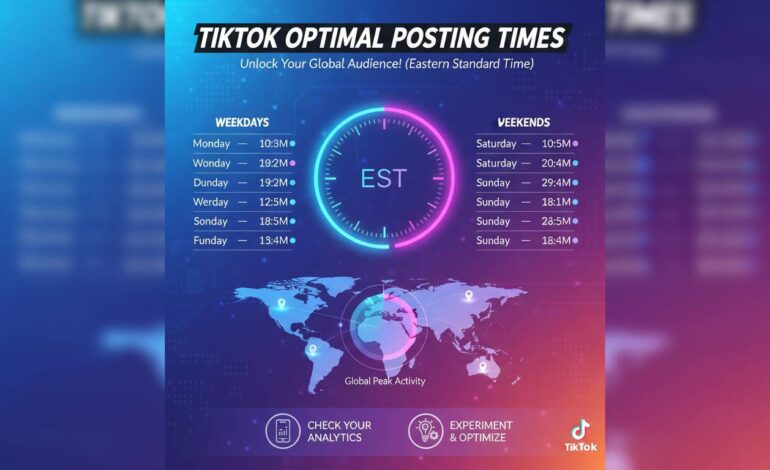
| Day | Best Time Window (ET) | Why It Works |
|---|---|---|
| Monday | 6:00 AM – 10:00 AM | Morning routine scrolling, commute |
| Tuesday | 2:00 PM – 4:00 PM | Afternoon break browsing |
| Wednesday | 5:00 PM – 7:00 PM | Post-work relaxation |
| Thursday | 3:00 PM – 5:00 PM | Pre-weekend anticipation |
| Friday | 1:00 PM – 3:00 PM | Friday afternoon momentum |
| Saturday | 10:00 AM – 12:00 PM | Weekend leisure time |
| Sunday | 7:00 PM – 9:00 PM | Sunday evening prep for week |
Key Finding: According to Hootsuite’s 2024 social media research, the single highest-engagement window across all days is between 6 PM and 10 PM Eastern Time, with Tuesday through Thursday showing the strongest cumulative performance during evening hours.
The Magic Hours: 6 PM to 10 PM
Multiple independent studies confirm that evening hours consistently outperform other posting windows. This时间段 aligns with when the largest number of TikTok users are actively scrolling after work or school responsibilities end. During these hours, users have more free time, are in a relaxed mindset, and are more likely to consume content deeply rather than quickly scrolling past.
Day-by-Day Posting Strategy
Each day of the week presents unique opportunities based on how users interact with the platform. Understanding these nuances helps you develop a more sophisticated posting schedule.
Weekdays: Capitalize on Routine
Monday mornings start with users checking their phones during commutes and early work hours. Content posted between 6 AM and 10 AM catches viewers in transition periods, making educational and motivational content particularly effective.
Tuesday and Wednesday mid-afternoon slots (2 PM – 4 PM) work well because users often take mental breaks during work hours and scroll through TikTok. This is when entertainment, trending challenges, and quick-hitting content tends to perform exceptionally well.
Thursday marks a shift in user behavior as people begin anticipating the weekend. Posting during the 3 PM to 5 PM window catches users in a more playful mood, making this an ideal time for humor, behind-the-scenes content, and personality-driven videos.
Friday afternoons represent a transition point. Users are in weekend-preparation mode, often checking TikTok while wrapping up work tasks. The 1 PM to 3 PM window captures this mixed attention state effectively.
Weekends: Different Rules Apply
Weekend usage patterns differ significantly from weekdays. Saturday mornings see heavy usage starting around 10 AM as people enjoy lazy morning routines. Sunday evenings, particularly between 7 PM and 9 PM, show a distinct spike as users mentally prepare for the upcoming week.
Weekend Strategy Adjustment: Since weekend screen time tends to be more relaxed and prolonged, longer-form content (60-90 seconds) often performs better than quick 15-second clips. Users have more patience for storytelling and deeper content during these periods.
Finding Your Optimal Posting Time
While general guidelines provide a foundation, the most effective TikTok strategy requires understanding your specific audience. Every creator’s follower base has unique behavioral patterns based on demographics, geographic distribution, and content niche.
Analyze Your TikTok Analytics
TikTok provides native analytics for accounts in good standing. Access these through your Pro account settings by tapping “Profile,” then the three-line menu, selecting “Analytics,” and exploring the “Followers” tab. This data reveals exactly when your followers are most active on the platform.
Look for patterns in the “Followers” dashboard showing peak activity hours. If your audience primarily consists of college students, you might see spikes at different times than if your audience skews toward working professionals.
Test and Iterate
The only way to definitively determine your best posting time is through systematic experimentation. Here’s a practical approach:
- Establish a baseline: Post at consistent times for two weeks while tracking engagement metrics
- Variable testing: Shift posting times by 2-3 hour blocks each week
- Measure results: Track not just views but completion rates, likes, comments, and shares
- Identify patterns: Look for which time slots produce the highest engagement-to-view ratios
Pro Tip: Keep a spreadsheet logging posting times against performance metrics. Over time, clear patterns will emerge that reveal your unique optimal windows.
Time Zone Considerations for US Creators
If you’re targeting a US audience, time zone strategy becomes crucial. The US spans multiple time zones, and your posting time should account for where your audience actually lives.
Eastern Time as Default
Most TikTok best-time research defaults to Eastern Time because it captures the largest US population concentration. If your audience is nationally distributed, posting according to Eastern Time peak hours generally makes the most sense.
However, if you know a significant portion of your audience lives in a specific region, adjust accordingly. A creator based in Los Angeles might initially think to post at “evening” hours their time, but if their audience is majority East Coast, they’re actually posting in the middle of the night for their viewers.
Tools for Time Zone Management
Several scheduling tools help automate this process:
- TikTok’s native scheduler: Allows scheduling posts up to 10 days in advance
- Later: Provides multi-platform scheduling including TikTok
- Buffer: Offers analytics-informed scheduling recommendations
- Hootsuite: Enterprise-level scheduling with team collaboration
These tools let you schedule content for optimal times regardless of when you’re actually available to post.
Industry and Niche Variations
Your content category significantly influences optimal posting times. Different niches attract audiences with distinct daily rhythms.
Entertainment and Comedy
Comedy content performs best during stress-relief periods—typically evening hours after work or school. The 7 PM to 10 PM window captures viewers seeking entertainment and mood improvement.
Educational and How-To Content
Educational content sees higher engagement during “learning moods”—morning hours during the week and late morning on weekends. Users in information-gathering mode respond better to instructional content during these periods.
Beauty and Fashion
This vertical shows strong performance during “planning” periods—early evening for next-day preparations and Sunday evening for weekly planning. The 5 PM to 8 PM window works particularly well.
Business and Tech
Professional content performs during work-adjacent hours. Early morning (7 AM – 9 AM), lunch breaks (12 PM – 1 PM), and after-work hours (5 PM – 7 PM) catch professionals in content-consumption mode.
Fitness and Health
Morning posting (6 AM – 9 AM) captures users in motivation mode, while evening posts (6 PM – 8 PM) reach those in workout recovery or planning mode. Both windows serve different audience segments within this niche.
Common TikTok Posting Mistakes to Avoid
Even experienced creators fall into timing traps that limit their reach. Recognizing these pitfalls helps you avoid wasting potential engagement.
Mistake #1: Posting and Disappearing
Many creators post content and immediately stop engaging with the app. TikTok’s algorithm rewards active engagement after posting. Stay online for at least 30-60 minutes after publishing to respond to comments, engage with other creators, and signal that your account is actively maintained.
Mistake #2: Ignoring Trending Sounds
Timing extends beyond hour-of-day to include trending audio. Posting with trending sounds during their peak popularity window dramatically increases discovery potential. Use TikTok’s Creative Center to track trending sounds and their projected longevity.
Mistake #3: Inconsistent Scheduling
Random posting times confuse your audience and make it harder to build habitual viewership. Establish a consistent posting schedule that your followers can anticipate. Whether it’s daily at 7 PM or every Tuesday and Thursday at noon, regularity builds audience expectations and loyalty.
Mistake #4: Ignoring Real-Time Events
Major news events, holidays, and cultural moments impact TikTok usage patterns. During major events, overall platform usage may spike but attention gets divided across relevant content. Sometimes this works in your favor (relevance boosts engagement), other times it works against you (your content gets buried in volume).
Expert Insights on TikTok Timing
Industry professionals who work with TikTok accounts at scale offer valuable perspective on timing strategy.
Jonah Paransky, CEO of NinjaPromo, notes: “We’ve seen client accounts experience 30-50% increases in engagement simply by shifting posting times to align with audience activity peaks. The algorithm responds dramatically to early engagement velocity.”
Social media strategist Sarah Lee emphasizes consistency: “The best posting time only matters if you post consistently. Many creators obsess over the perfect hour while ignoring the importance of regular, reliable content schedules.”
TikTok marketing expert Marcus Chen advises: “Use analytics to confirm general guidelines for your specific audience. What works for a national brand may not work for a local creator, and vice versa. Let data guide your decisions.”
Conclusion
Mastering TikTok posting times requires combining general research with personalized data. Start with the established peak windows—particularly evenings between 6 PM and 10 PM Eastern—and then systematically test to find what works for your specific audience.
Remember that timing is just one piece of the algorithm puzzle. Even perfect timing can’t compensate for content that fails to engage. Use these insights to maximize your reach once you have compelling content ready to share.
The most successful TikTok creators treat posting time as a strategic asset, constantly monitoring results and adjusting based on performance data. Your optimal posting time will evolve as your audience grows and changes, so make analytics review a regular habit.
Frequently Asked Questions
Does posting more frequently improve my TikTok algorithm ranking?
Posting frequency helps but quality matters more. TikTok’s algorithm evaluates each video individually based on engagement signals, not account-wide posting volume. Posting 3-5 times per week with high-quality content typically outperforms posting daily with lower-effort videos.
What time should I avoid posting on TikTok?
Avoid posting between 2 AM and 5 AM Eastern Time when US user activity is at its lowest. Also be cautious about posting during major breaking news events when content volume spikes dramatically.
Does my timezone or my audience’s timezone matter more?
Your audience’s timezone matters more for reach. If your followers are primarily on the East Coast, post according to Eastern Time. If you’re creating content for a national audience, Eastern Time serves as the default baseline.
Can I post the same content at different times to test performance?
Yes, this is actually recommended. Many creators post variations of successful content types at different times to identify their true optimal windows. Just ensure you’re not posting identical content simultaneously, which can divide engagement.
Do TikTok’s “Best Times” recommendations in the app matter?
TikTok’s native analytics sometimes show “Suggested Post Times” based on your account’s specific audience activity. These recommendations are personalized to your followers and should be weighted alongside general research findings.
How long does it take to see results from changing my posting time?
Give any timing adjustment at least 1-2 weeks before evaluating results. TikTok’s algorithm needs time to recalibrate, and short-term variations can be misleading. Track metrics over multiple posting cycles before drawing conclusions.