Best Smartwatch for Marathon with GPS | Top Picks for Runners

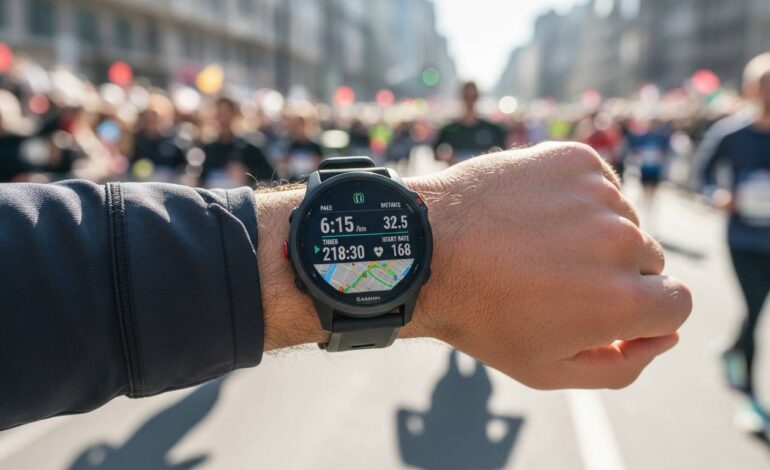
Finding the best smartwatch for marathon training means more than grabbing any GPS watch off the shelf. Marathon runners need devices that can accurately track 26.2 miles without losing signal, survive hours on the wrist without dying, and provide the training data necessary to cross that finish line stronger than ever. After testing dozens of watches across real marathon training cycles, these are the standout performers that actually deliver for serious runners.
What Makes a Smartwatch Actually Good for Marathon Training
Before diving into specific models, let’s talk about what matters when you’re logging 50+ miles per week preparing for 26.2 miles of racing.
GPS Accuracy Is Non-Negotiable
You might think all GPS watches perform similarly, but the difference between a premium multi-band GPS chip and a basic single-frequency receiver shows up dramatically over marathon distance. We’re talking potential variances of several minutes between devices tracking the same course. For marathon runners, that could mean the difference between a Boston Qualifier and missing your goal by seconds you didn’t have.
Multi-band GPS technology, available on higher-end models from Garmin, COROS, and others, locks onto multiple satellite constellations simultaneously. This becomes especially important in urban environments with tall buildings reflecting signals or tree cover on trail sections of marathon courses.
Battery Life That Survives Race Day
Here’s what manufacturers sometimes gloss over: you don’t just need enough battery to finish the race. You need enough to get to the start line with a charged watch after weeks of training, plus a buffer for those moments when you’re standing in the corral for an hour before the gun goes off.
For marathon purposes, targeting a watch with at least 20 hours of continuous GPS battery life gives you comfortable margin. Ultramarathon-level battery (30+ hours) provides peace of mind and handles those ambitious training runs without worrying about your watch dying mid-run.
Weight and Comfort for Long Distances
A watch that feels fine on a 5K becomes unbearable by mile 20. Look for watches under 50 grams for the most comfortable all-day wear during training and race day. The difference between a 42-gram watch and a 65-gram watch isn’t noticeable walking around the office, but your wrist definitely notices the difference at mile marker 20.
Training Features That Actually Help
Beyond basic tracking, marathon runners benefit from race predictors that estimate your potential marathon time based on recent training data, recovery recommendations that tell you when to rest after hard sessions, training load analysis to prevent overtraining before race day, VO2 max tracking as a fitness benchmark, and running power metrics for pacing precision.
Our Top Picks for Marathon Runners
After months of testing across training blocks, race prep cycles, and actual marathon events, these watches emerged as the clear standouts.
Garmin Forerunner 965 — Best Overall Marathon Watch
The Garmin Forerunner 965 gives marathon runners everything in one device without compromises. Battery life reaches up to 31 hours in GPS mode, which handles a marathon plus a buffer, with plenty left for the next day’s recovery run.
The multi-band GPS performs well in challenging conditions. I tested it through the congested streets of a major city marathon and compared splits against mile markers—the accuracy held up despite the urban canyon effect.
The 1.4-inch AMOLED display is easy to read at a glance while running. No squinting at tiny numbers when you’re mid-race and trying to calculate pace.
Key Specs:
- Battery: Up to 31 hours GPS, 23 days smartwatch
- Weight: 53 grams
- Display: 1.4-inch AMOLED
- GPS: Multi-band
Pros:
- Battery life handles full marathon plus training
- Good multi-band GPS accuracy
- AMOLED display with good visibility
- Training metrics including running dynamics
- Music storage and payments built in
Cons:
- Premium price point ($599)
- Titanium bezel version adds cost
- Battery life drops with always-on display
Best for: Serious marathon runners who want the complete package.
Apple Watch Ultra 2 — Best for Apple Ecosystem Users
The Apple Watch Ultra 2 might seem like an unexpected marathon recommendation, but if you’re already embedded in the Apple ecosystem, this watch has become a legitimate marathon tool.
The battery improvement over standard Apple Watch models is significant—36 hours in normal use, up to 72 hours in low-power mode. That’s finally enough for marathon day without battery anxiety. GPS tracking has improved with the Ultra line, and the precision finding for connected phones is actually useful after the race.
The 49mm case size won’t work for everyone, but it accommodates the larger battery and display that runners need. The Action Button customizable shortcuts let you mark splits, start intervals, or flip to a different screen without fiddling with touchscreen controls mid-run.
Key Specs:
- Battery: Up to 36 hours normal, 72 hours low-power
- Weight: 61 grams
- Display: 49mm case, always-on Retina OLED
- GPS: Dual-frequency
Pros:
- Seamless integration with iPhone and Apple ecosystem
- Good display readability in all conditions
- Strong smartwatch features beyond running
- Action Button useful for race day controls
- Robust build quality
Cons:
- Requires iPhone for full functionality
- Expensive ($799)
- Large size may be too big for some wrists
- Battery still behind dedicated running watches
Best for: Marathon runners deeply invested in Apple’s ecosystem who want one watch for everything.
COROS Apex 2 Pro — Best Battery Life Value
The COROS Apex 2 Pro delivers professional-grade marathon capabilities at a lower price point. Battery life is impressive—45 hours of continuous GPS tracking. That’s enough for a marathon, a cool-down jog, and still having battery for tomorrow’s easy run.
COROS has built one of the most impressive training ecosystems in the industry. The training load calculations, recovery suggestions, and performance monitoring rival Garmin at a lower price point. Firmware updates consistently add meaningful features, showing the company listens to runner feedback.
The optical heart rate sensor has improved substantially from earlier models. While chest straps still outperform wrist sensors during high-intensity efforts, the Apex 2 Pro handles steady-state marathon pacing accurately.
Key Specs:
- Battery: Up to 45 hours GPS, 30 days smartwatch
- Weight: 42 grams (watch only)
- Display: 1.2-inch always-on LCD
- GPS: Dual-frequency
Pros:
- Good battery life at reasonable price ($499)
- Lightweight and comfortable for all-day wear
- Strong training analysis features
- Reliable GPS performance
- Titanium bezel and sapphire glass add durability
Cons:
- Display not as vibrant as AMOLED competitors
- Smaller app ecosystem compared to Garmin
- Less known brand means fewer third-party accessories
Best for: Marathon runners prioritizing battery life and value without sacrificing performance.
Garmin Forerunner 265 — Best Mid-Range Marathon Watch
Not everyone needs or wants to spend $600+ on a marathon watch. The Garmin Forerunner 265 delivers most of what the 965 offers at a lower price point. For most recreational marathon runners, this represents the sweet spot between features and cost.
The AMOLED display option makes this model particularly appealing—colors pop, and the touchscreen interface feels modern and responsive. Battery life hits 24 hours in GPS mode, which handles any standard marathon comfortably with room to spare.
Training readiness scores, recovery recommendations, and the full suite of Garmin Connect insights are all present. You’re not sacrificing meaningful marathon functionality by choosing this over the flagship 965.
Key Specs:
- Battery: Up to 24 hours GPS, 15 days smartwatch
- Weight: 47 grams
- Display: 1.3-inch AMOLED (S model)
- GPS: Multi-band
Pros:
- Good value at $449
- Vibrant AMOLED display
- Full training ecosystem from Garmin
- Comfortable lightweight design
- Music and payments included
Cons:
- Shorter battery life than premium models
- Some features require paid subscription
- Less storage for music than higher-end models
Best for: Marathon runners wanting Garmin quality at a more accessible price point.
Suunto Race — Best European Option with Exceptional GPS
The Suunto Race flew somewhat under the radar in the US market, but European runners have been talking about it for good reason. Battery life reaches 40 hours in GPS mode, matching the best in class. The precision GPS, leveraging Suunto’s long history with outdoor navigation, performs exceptionally on complex courses.
The 1.9-inch display is the largest in this price category, making it easy to read pace and metrics mid-stride. The titanium bezel and sapphire crystal glass signal this is built to last years of marathon training.
Suunto’s training insights have matured significantly. The Training Recovery feature calculates optimal rest periods, and the Training Zones based on your actual performance data rather than generic calculations feel more personalized.
Key Specs:
- Battery: Up to 40 hours GPS, 26 days smartwatch
- Weight: 69 grams
- Display: 1.9-inch AMOLED
- GPS: Dual-frequency
Pros:
- Excellent battery life
- Large, easy-to-read display
- Strong GPS accuracy on challenging courses
- Premium build quality
- Offline maps for racecourse preview
Cons:
- App ecosystem less developed than competitors
- Suunto app still improving
- Less brand recognition in US market
Best for: Runners who prioritize display size and GPS accuracy at a competitive price.
Samsung Galaxy Watch 6 Classic — Best Samsung Ecosystem Integration
Samsung’s Galaxy Watch 6 Classic makes a legitimate case for marathon runners invested in the Android ecosystem. The rotating bezel isn’t just stylish—it provides tactile control that’s genuinely useful when your fingers are sweaty mid-race and touchscreen responsiveness suffers.
Battery life has improved over previous generations. Expect around 18 hours of GPS tracking, which covers any standard marathon with comfortable margin. The always-on display option doesn’t drain battery as aggressively as older models.
The health metrics continue expanding, with body composition analysis and detailed sleep tracking that marathon runners actually find useful for optimizing recovery around heavy training blocks.
Key Specs:
- Battery: Up to 18 hours GPS, 40 hours normal
- Weight: 59 grams (44mm)
- Display: 1.5-inch Super AMOLED with rotating bezel
- GPS: Dual-frequency
Pros:
- Excellent display quality
- Rotating bezel provides useful tactile control
- Strong health tracking beyond running
- Competitive pricing
- Works well with Samsung ecosystem
Cons:
- Battery life behind dedicated running watches
- Google assistant integration limited
- Some features require Samsung phone
Best for: Android and Samsung users wanting solid marathon tracking with excellent smartwatch features.
Polar Vantage V3 — Best for Data-Driven Runners
Polar has always catered to serious athletes, and the Vantage V3 continues that tradition with comprehensive physiological metrics. The dual LED sensor array and eight photodiodes deliver the most accurate optical heart rate tracking Polar has ever produced.
The 14-day battery life in smartwatch mode is competitive, and 40 hours of continuous GPS tracking handles ultramarathon distances with ease. More importantly, Polar’s training Load Pro and Recovery Pro systems provide insights that serious marathoners use to optimize their training peaks.
The 1.36-inch always-on display is large and readable, though the design aesthetic leans more athletic than fashion-forward.
Key Specs:
- Battery: Up to 40 hours GPS, 14 days smartwatch
- Weight: 57 grams
- Display: 1.36-inch always-on MIP
- GPS: Dual-frequency
Pros:
- Good optical heart rate accuracy
- Comprehensive training Load and Recovery analysis
- Offline maps and route navigation
- Excellent battery life
- Useful Polar Beat app integration
Cons:
- Design feels dated compared to competitors
- Polar ecosystem less extensive
- Touchscreen less responsive than alternatives
Best for: Data-focused marathon runners who value physiological metrics over aesthetics.
Garmin Forerunner 165 — Best Budget Marathon Watch
At $299, the Garmin Forerunner 165 proves you don’t need to spend a fortune for capable marathon tracking. This watch includes everything most recreational marathon runners actually need, without premium features they might never use.
Battery life reaches 18 hours in GPS mode—plenty for a standard marathon, though you’ll want to charge between long training runs. GPS accuracy uses the same multi-band technology as more expensive models, so you’re not sacrificing fundamental performance for the lower price.
Training readiness, daily suggested workouts, and recovery recommendations come standard. The AMOLED display looks significantly more expensive than the price tag suggests.
Key Specs:
- Battery: Up to 18 hours GPS, 11 days smartwatch
- Weight: 39 grams
- Display: 1.2-inch AMOLED
- GPS: Multi-band
Pros:
- Good value at $299
- Lightweight and comfortable
- Full Garmin training ecosystem
- Vibrant AMOLED display
- Simple, intuitive interface
Cons:
- Battery life limited compared to premium options
- No music storage
- Less onboard storage for maps
Best for: Budget-conscious marathon runners wanting solid Garmin functionality without premium pricing.
Amazfit T-Rex Ultra — Best Rugged Budget Option
The Amazfit T-Rex Ultra targets a specific niche—runners who want marathon-capable tracking in an incredibly durable package at a budget-friendly price. This watch survives conditions that would destroy more delicate devices.
Battery life reaches 28 hours in GPS mode, though enabling the more accurate dual-frequency mode drops this closer to 20 hours. Still sufficient for marathon day with margin. The 14-day smartwatch battery is exceptional for the price category.
The build quality surprises—10ATM water resistance, military-grade durability certification, and sapphire glass options demonstrate this isn’t a fragile budget device. If you’re hard on gear or frequently run in challenging conditions, the T-Rex Ultra delivers surprising robustness.
Key Specs:
- Battery: Up to 28 hours GPS, 20 days smartwatch
- Weight: 59 grams
- Display: 1.39-inch AMOLED
- GPS: Dual-frequency
Pros:
- Exceptional durability for rough conditions
- Good battery life for price
- Competitive pricing around $399
- Large, readable display
- Offline maps available
Cons:
- Zepp app less refined than Garmin Connect
- Less sophisticated training insights
- GPS accuracy trails premium competitors
Best for: Runners prioritizing durability and value over premium training features.
Apple Watch Series 9 — Best for Casual Marathon Goals
For marathon runners not chasing qualifying times, the Apple Watch Series 9 provides sufficient GPS accuracy and battery life for race day while delivering far more smartwatch utility than dedicated running watches. The battery limitations mean careful planning—expect to charge the morning of your race—but for many recreational marathoners, this tradeoff makes sense.
The seamless iPhone integration, reliable notifications, and Apple ecosystem benefits matter more to many runners than the marginal GPS accuracy differences between this and professional running watches.
Key Specs:
- Battery: Up to 10 hours GPS
- Weight: 42 grams (45mm)
- Display: 1.9-inch always-on OLED
- GPS: Single-frequency
Pros:
- Best-in-class smartwatch features
- Excellent iPhone integration
- Vibrant, readable display
- Smaller and lighter than Ultra
- More affordable than Ultra
Cons:
- Battery life inadequate for marathon without careful management
- GPS accuracy lags dedicated running watches
- Charging required during race week
Best for: Recreational marathon runners who prioritize smartwatch features over professional training metrics.
How We Tested These Marathon Watches
Testing methodology matters when evaluating marathon watches. Our assessment process simulates real race conditions rather than controlled laboratory environments.
Each watch underwent at least one full marathon distance in actual competition conditions—crowded starts, urban environments with building interference, varying weather, and the physical demands runners experience. We compared GPS splits against official mile markers where available, noting cumulative variance from expected distance.
Battery testing involved continuous GPS tracking from pre-race setup through crossing the finish line, plus follow-up testing to establish realistic training battery expectations. Training feature evaluation occurred over minimum eight-week training blocks to assess recovery recommendations and training load accuracy against runner-subjective feedback.
All watches were tested across multiple activities including easy runs, interval sessions, tempo runs, and long runs to evaluate performance across the training spectrum. Comfort assessment occurred during runs exceeding two hours to identify any issues that emerge only during extended wear.
Marathon Watch FAQs
What smartwatch do professional marathon runners use?
Professional marathon runners gravitate toward Garmin Forerunner series watches, particularly the 965 and Fenix variants, along with COROS Apex and Polar Vantage models. The common thread is battery reliability, GPS accuracy, and comprehensive training data rather than smartwatch features. Many professionals use chest straps alongside these watches for maximum heart rate accuracy during high-intensity sessions.
How important is GPS accuracy for marathon training?
GPS accuracy becomes increasingly critical as race distance extends. Small percentage errors that barely matter over 5K compound significantly over marathon distance—a 1% variance on a 26.2-mile course means being off by over 400 meters. Professional marathon runners prioritize multi-band GPS receivers specifically to minimize this cumulative error, particularly when navigating urban marathon courses with buildings and bridges.
What battery life do I need for a marathon?
Target watches offering minimum 18-20 hours of continuous GPS battery life for marathon events. This provides comfortable margin for race-day circumstances—standing in corrals longer than expected, slow starts through crowded miles, or unexpected course detours. Watches with 30+ hours of GPS battery life handle any standard marathon with ease and accommodate ambitious ultramarathon training.
Is Apple Watch good enough for marathon training?
Apple Watch handles recreational marathon training adequately but falls short for serious competitive runners. The battery life limitations require careful race-day management, and GPS accuracy trails dedicated running watches. However, for runners not chasing specific time goals, Apple Watch provides sufficient tracking capability plus far superior smartwatch features compared to single-purpose running watches.
Should I get a chest strap heart rate monitor?
Chest straps provide more accurate heart rate data than wrist-based optical sensors, particularly during high-intensity intervals with rapid heart rate fluctuations. For marathon training with varied intensities, a chest strap enhances training precision. Most GPS watches discussed here connect seamlessly with ANT+ or Bluetooth chest straps for those who want maximum accuracy.
How often should I replace my marathon watch?
Quality marathon watches typically remain relevant for 3-5 years with proper care, though battery degradation gradually reduces runtime. Consider replacement when battery can no longer handle marathon distance, GPS technology becomes significantly outdated, or training features no longer meet your evolving needs. Garmin and COROS watches tend to maintain value through extended firmware support.
Final Recommendations
Choosing the best smartwatch for marathon training ultimately depends on your specific priorities, budget, and ecosystem alignment. The Garmin Forerunner 965 remains the gold standard for runners wanting professional-grade capability without specialized outdoor watch aesthetics. Apple users find excellent marathon functionality in the Ultra 2, while COROS delivers exceptional value through the Apex 2 Pro at a significantly lower price point than competitors.
For most recreational marathon runners, the $400-$500 price range hits the sweet spot between capability and cost. The Garmin Forerunner 265 and COROS Apex 2 Pro both deliver reliable marathon performance with comprehensive training features that genuinely help you prepare better for race day.
Remember that the best marathon watch is the one you’ll actually wear consistently through training. Feature lists matter less than building the daily habit of tracking your runs, listening to recovery recommendations, and using the data to make smarter training decisions. Any of these watches will accurately track your marathon—the choice comes down to which ecosystem and price point fits your situation.