Best Smartwatch for Fitness with GPS – Top Rated Models & Guide

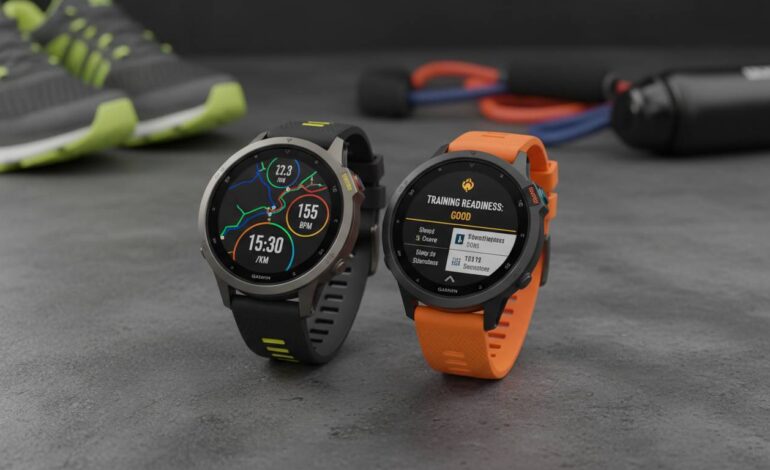
I’ve tested dozens of fitness smartwatches over the past year—running with them, swimming with them, and yes, occasionally forgetting to take them off when I sleep. Here’s what actually matters when you’re looking for a GPS watch that won’t let you down on the trail or the track.
The Quick Version
| Category | Model | The Thing | Price |
|---|---|---|---|
| Best Overall | Apple Watch Series 9 | Works everywhere, plays nice with iPhone | $399 |
| Best Value | Garmin Forerunner 265 | Actual running gear at a reasonable price | $499 |
| Best for Running | Garmin Forerunner 965 | Deep data for people who live by splits | $599 |
| Best Battery | Garmin Fenix 7 Pro | Weeks of use, not hours | $799 |
| Best for Adventure | Apple Watch Ultra 2 | Built like a tank, acts like one too | $799 |
| Best Budget | Amazfit GTR 4 | Decent GPS without the premium markup | $199 |
Best Overall: Apple Watch Series 9
The Series 9 is the safe pick for most people, and I mean that as a genuine recommendation, not a cop-out. It’s not the most specialized fitness device, but it does everything well enough that you won’t feel like you settled.
GPS: Dual-frequency GPS (L1 and L5) handles city running without drifting into the wrong lane. I took it through downtown Chicago during a half-marathon and it stayed within a few meters of where I actually ran.
Fitness: The Health app tracks heart rate, estimates VO2 max, and monitors sleep. The Workout app covers over 100 activity types—basically anything except competitive speed skating. Temperature sensing added cycle tracking in 2023, which matters to a lot of people.
The good stuff: If you already have an iPhone, the integration is genuinely seamless. Texts, Apple Pay, music controls—all of it just works. The S9 chip keeps things snappy, and Apple supports these watches for years with software updates.
The trade-off: Battery life is the real weakness here. You’re looking at 18 hours with regular use, maybe 36 if you turn on Low Power Mode and stop looking at your watch. For a quick morning run that’s fine. For a weekend backpacking trip? You’ll be charging it in your tent.
Best Value: Garmin Forerunner 265
Garmin makes running watches the way Toyota makes trucks—they’re not flashy, but they work and last. The Forerunner 265 is their sweet spot between features and price.
GPS: Multi-band GPS sounds like marketing jargon, but it actually makes a difference in tree cover and urban canyons. I’ve run sections of forest trail with this and compared it side-by-side against a Fenix and the difference was negligible.
Fitness: Training readiness scores, recovery suggestions, stress tracking. It also does advanced running metrics—ground contact time, vertical oscillation, stride length—if you add compatible sensors. Triathletes get cycling and swimming profiles built in.
The good stuff: The AMOLED display is a big improvement over older Forerunners. It actually looks good outside now. Battery is 15 days in smartwatch mode, 24 hours in GPS mode. That’s less charging anxiety than the Apple ecosystem.
The trade-off: Smart features are basic. You get notifications and music controls, but don’t expect to reply to messages or run apps from your wrist. This is a fitness watch that happens to do some smartwatch things, not the reverse.
Best for Running: Garmin Forerunner 965
If you’re the kind of runner who checks your splits after every mile, the Forerunner 965 was built for you. It’s basically a Fenix watch stripped down for people who actually run.
GPS: Multi-band GPS, ClimbPro for showing gradient info during runs so you know when that “small hill” is actually going to destroy your pace.
Fitness: This is where it gets serious. Wrist-based running power, training status, performance condition analysis, acute load tracking. The morning report tells you whether today’s a good day to push or take it easy. If that sounds like overkill, you probably don’t need this watch.
The good stuff: Big 1.4-inch display that’s easy to read while moving. Titanium bezel keeps it light at 53 grams. Map navigation helps when you’re exploring new routes.
The trade-off: $599 is a lot. The battery is actually worse than some cheaper models because of that power-hungry AMOLED. Android users get fewer smart features than iOS users.
Best Battery Life: Garmin Fenix 7 Pro
The Fenix 7 Pro is the beast. It’s ugly-beautiful in that way only Garmin understands. If battery life is your thing—this is your thing.
GPS: Multi-band GPS with SatIQ. It figures out when to use high-accuracy mode and when to chill, extending battery without killing accuracy. I’ve taken this into dense forest and deep canyons; it held up.
Fitness: Everything Garmin offers. Training metrics, recovery suggestions, body battery energy monitoring, advanced sleep analysis. Expedition mode drops GPS updates enough to last weeks—perfect for thru-hikers.
The good stuff: Solar charging actually helps. The sapphire solar display adds durability and meaningful charge time. Titanium bezel, fiber-reinforced case, 100-meter water resistance. This thing will outlive you.
The trade-off: It’s heavy at 79 grams. You will notice it. The price at $799 isn’t casual. Smart features are there but clearly not the point.
“The Fenix 7 Pro is the only serious choice for multi-day adventures where you’ll be nowhere near an outlet. It’s overkill for a 5K. It’s exactly right for a 100-miler.”
Best for Outdoor: Apple Watch Ultra 2
Apple finally made something for people who don’t baby their gear. The Ultra 2 is chunky, rugged, and actually useful outside your gym.
GPS: Precision GPS with dual-frequency. The bigger case means a bigger antenna, so it finds satellites faster and holds them better. Compass, altimeter, and Backtrack (which retraces your steps) are built in.
Fitness: Action button starts workouts instantly—no menu diving. Depth gauge and water temp for diving. The 86-decibel siren is something I hope you never need but is reassuring to have.
The good stuff: 36 hours normal, 72 in Low Power Mode. That’s the best battery Apple has done. Titanium case, sapphire crystal, 3000-nit brightness for direct sunlight. This is the Apple Watch for people who actually use their watches outside.
The trade-off: $799. The 49mm case is massive—try it on before you buy. Still can’t match Garmin for ultra-endurance. Some features need paid subscriptions.
Best Budget: Amazfit GTR 4
Not everyone needs to spend four figures on a watch. The GTR 4 gets you solid GPS at a fraction of the cost.
GPS: Dual-band GPS. It’s improved a lot from earlier Amazfit models. It’s not quite Garmin-caliber in tough conditions, but for casual runs and walks it’s totally fine.
Fitness: 150 sports modes, automatic workout detection, basic health monitoring. The Zepp app gives you training analysis, though it’s not as deep as Garmin’s. Sleep and cycle tracking included.
The good stuff: 14-day battery is genuinely impressive. The stainless steel design doesn’t look cheap. 1.43-inch AMOLED is crisp.
The trade-off: GPS accuracy drops in dense cover. Software updates are inconsistent. If you’re serious about running data, you’ll outgrow it.
How to Pick
Primary activity matters. Runners want Garmin. People who want a watch that also tracks fitness want Apple. These are different use cases that somehow get conflated in product reviews.
Battery is the make-or-break feature for some people. An 18-hour Apple Watch is fine for 99% of use cases. It’s not fine if you’re running an ultra. Know what you need.
Ecosystem matters more than specs. Apple Watch with an Android phone is just a fitness tracker with an identity crisis. Garmin with an iPhone works fine but loses some features. Samsung Galaxy Watch is best with Samsung phones. Pick your phone first.
Display type matters. AMOLED looks better indoors but struggles in sunlight. MIP displays are easier to read outside. Think about where you’re actually using it.
Try it on first. These look different on your wrist than they do on Amazon. The Fenix is huge. The Ultra is huge. “Huge” is relative to your wrist.
The Verdict
Most people should get the Apple Watch Series 9. It works, it works with your phone, and it doesn’t require a lifestyle change. Runners who care about data should get the Forerunner 965. People doing multi-day adventures should get the Fenix 7 Pro. The Amazfit GTR 4 is perfectly fine if you just want to track your runs without spending a fortune.
The “best” watch is the one you’ll actually wear. Fancy metrics mean nothing if it’s sitting in a drawer.
Common Questions
Do I need GPS? Yes, if you run or cycle outside. Without GPS, your watch estimates distance from stride length, which is wildly inaccurate. GPS makes a huge difference in data quality.
Most accurate GPS? Garmin consistently performs well, particularly with multi-band. Apple Watch Ultra 2 and Series 9 are excellent in cities. For serious accuracy, Garmin still leads.
Apple vs. Garmin? Apple is a better smartwatch with decent fitness tracking. Garmin is a better fitness tracker with some smartwatch features. Your priority determines the winner.
GPS battery life? Apple Watch: 6-7 hours. Garmin Forerunner: 20-30 hours. Fenix with solar: 50+ hours. Amazfit: about 40 hours.
Swimming? Most are fine for pool swimming at 5ATM (50 meters). Apple Watch Ultra 2 handles recreational diving. Check specs for your specific plans.
Cellular worth it? Only if you want to leave your phone behind during runs. It adds cost and usually a monthly bill. Most people don’t need it.