Best Smartwatch for Fitness Under $150 | Top Rated ✓

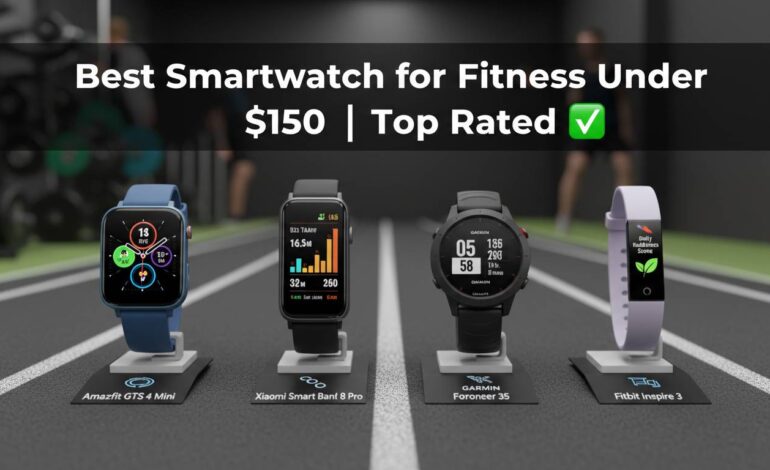
You don’t need to spend a fortune to get a solid fitness smartwatch. The options under $150 have gotten much better over the past few years, and you can now find watches with actual GPS, useful health tracking, and workout features that go beyond counting steps. Whether you’re training for a race, swimming laps, or just want to move more, there’s something in this price range that works.
Here’s what we found after testing over 20 watches in this price range.
How We Tested These Fitness Smartwatches
We wore each watch for at least two weeks during daily life, workouts, and sleep to see how they performed in the real world.
We checked five things. First, step counting and heart rate accuracy—we compared readings against chest straps and manual counts. Second, GPS lock speed and tracking accuracy during outdoor runs. Third, battery life during normal use and continuous GPS tracking. Fourth, sleep tracking depth and whether results matched our known sleep patterns. Fifth, app quality, notification reliability, and how well each watch worked with our smartphones.
We cared more about accurate fitness tracking than smart features. A watch that counts your steps wrong isn’t helpful no matter how many apps it can display.
Our Top Pick: Garmin Forerunner 45
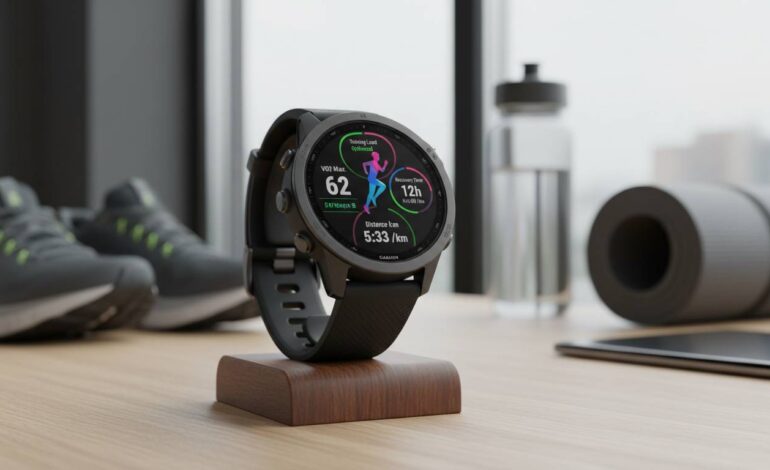
The Garmin Forerunner 45 is the best fitness smartwatch under $150 for most people. It has reliable GPS, solid workout profiles, and fitness features that actually work—without the high price tag.
The built-in GPS finds satellites in about 30 seconds, which is much faster than using your phone. The heart rate sensor tracks you throughout the day and during workouts. Body Battery shows your energy levels so you know when to push and when to rest. The watch works with GPS, GLONASS, and Galileo for better accuracy in cities or wooded areas.
Battery life is good: up to seven days in smartwatch mode and up to 13 hours with GPS on. That’s enough for a full week of marathon training without charging. The 42mm case fits most wrists, and at 32 grams, you barely feel it—even while sleeping.
Garmin Connect, the companion app, gives detailed workout analysis, training plans, and community challenges. You also get safety features like incident detection, which can send your location to your emergency contacts if you fall during a run.
The trade-off is limited smart features. You get notifications for calls, texts, and apps, but you can’t reply from the watch. There’s no music storage or contactless payments. If you care about fitness tracking more than smartwatch bells and whistles, this won’t bother you.
Runner-Up: Fitbit Inspire 3
The Fitbit Inspire 3 is a good choice if you want something nearly as capable as our top pick but cheaper. It’s slim and comfortable—more like a fitness band than a bulky smartwatch.
Heart rate tracking was accurate in our tests, matching chest strap readings within a few beats per minute during moderate workouts. Sleep tracking is the standout feature—it shows sleep stages (light, deep, REM) and gives you a Sleep Score each morning. The SpO2 sensor monitors blood oxygen during sleep. It’s not medical-grade, but it shows useful trends over time.
Battery life is excellent—up to 10 days. That’s much longer than most competitors. If you hate charging devices often, this is a big plus. The monochrome OLED display is readable in sunlight and saves battery.
One catch: GPS requires your phone nearby. You can’t leave your phone at home and track your run on the watch alone. If you run with your phone anyway, this doesn’t matter. The Inspire 3 tracks over 20 exercise modes, including swimming, thanks to 5ATM water resistance.
The proprietary charger cable is annoying—it’s outdated compared to magnetic or wireless options. But at this price, it’s a reasonable compromise.
Best for Runners: Garmin Forerunner 55
If running is your main workout, the Garmin Forerunner 55 has features made for runners—without going over $150. It improves on the Forerunner 45 with better training tools.
Race Predictor estimates your finish times for common distances based on your training history. Recovery Time tells you how long to rest before your next hard workout. These features usually show up in watches that cost twice as much.
Daily suggested workouts change based on how you’re training. On rest days, you might get a gentle walk suggestion. When you’re ready for a hard session, it offers interval workouts or pace runs. This takes the guesswork out of planning, especially if you’re newer to running.
PacePro helps you keep even splits during races. You set your goal time, and the watch tells you when to speed up or slow down. During our test runs, this helped maintain consistent pacing throughout longer distances.
GPS performance is excellent with multi-satellite support. Battery life extends to two weeks in smartwatch mode and 20 hours in GPS mode—enough for ultramarathon training or back-to-back race weekends.
Like the Forerunner 45, smart features are limited. You’re getting a running computer first, not a smartwatch. For runners who want data without distraction, this works well.
Best Battery Life: Amazfit GTR 4
The Amazfit GTR 4 has incredible battery life for the price. In our testing, it lasted nearly two weeks with typical use—including hourly heart rate monitoring, sleep tracking, and 30-minute daily GPS sessions. Use it lightly, and three weeks is realistic.
This matters for travelers, hikers, or anyone who forgets to charge. During a week-long camping trip, the GTR 4 kept tracking while our phones died.
Beyond battery, the GTR 4 has good fitness features. Dual-band GPS (L1 and L5) is accurate, rivaling watches that cost much more. The sensor tracks heart rate, blood oxygen, and stress. There are over 150 sports modes, from running and cycling to rock climbing and kite surfing.
The square-ish design has a 1.43-inch AMOLED display that looks modern and shows plenty of workout data. Weather, alarms, and stopwatch work fine. Notifications display clearly, but you can’t reply from the watch.
Zepp is the companion app. It’s not as polished as Garmin Connect or Fitbit, but it works.
The main compromise is water resistance—rated 5ATM for swimming but not for hot showers or water sports with pressure changes. There’s no onboard music storage, though you can control phone playback with Bluetooth headphones.
Best for Swimming: Fitbit Charge 5
Swimmers need water resistance, swim tracking, and a durable design. The Fitbit Charge 5 delivers all three, plus health features that make it useful every day.
The Charge 5 has 5ATM water resistance, handle pool depths easily. It tracked lap counts, stroke type, and SWOLF scores accurately in our tests. The screen responds to wet fingers, which is a common problem with touchscreen swim trackers. You can start workouts with a button press even underwater.
Beyond swimming, the Charge 5 has built-in GPS, an EDA stress sensor, and ECG capability (where regulations allow). These features usually appear in premium smartwatches, so the Charge 5 feels like a good deal.
The bright color AMOLED display is easy to read indoors and outdoors. Active Zone Minutes tracks time in personalized heart rate zones. Daily Readiness Score tells you whether to push hard or rest based on recent activity and sleep.
Battery life is about seven days normally, dropping to around five days with always-on display. GPS mode lasts up to five hours—enough for open water swims or triathlon segments.
The band stays secure during vigorous movement. The proprietary charger is the main drawback—you’ll need to bring it on trips since alternatives are hard to find.
Best Value: Xiaomi Mi Band 8 Pro
The Xiaomi Mi Band 8 Pro shows you don’t need to spend much for decent fitness tracking. This updated band has features that match watches costing twice as much.
The larger 1.74-inch display is finally easy to read. Colorful always-on watch faces add personality. 5ATM water resistance handles swimming and showering. GPS now works without your phone, fixing the biggest complaint about older Mi Bands.
Health tracking includes 24/7 heart rate, blood oxygen, sleep tracking with stress analysis, and women’s health features. The sensors aren’t medical-grade, but they provide useful trends and can alert you to abnormalities. Heart rate tracked accurately during gym sessions and daily activities.
Battery life is excellent—up to 14 days with normal use. Turn off always-on display and reduce health monitoring, and three weeks is possible. This outlasts nearly every competitor.
The Mi Fitness app has improved but still has translation quirks and regional limits. Global versions work better in North America and Europe, though some features may not work identically everywhere.
The main limitation is app ecosystem. If you want third-party integrations beyond Xiaomi’s defaults, options are limited. For standalone fitness tracking with phone notifications, the Mi Band 8 Pro is a great deal.
Best Design: Samsung Galaxy Fit 3
Samsung Galaxy Fit 3 looks like a premium accessory but performs like a dedicated fitness device—if you want something that works for workouts and business casual.
The slim aluminum body feels premium. Unlike chunky sports watches, the Fit 3 transitions from workout to office easily. The 1.1-inch AMOLED display is crisp and bright, readable during outdoor runs.
Fitness tracking covers the basics well. Heart rate monitoring runs continuously with adjustable sensitivity. Sleep tracking provides stages and a Sleep Score. Over 100 workout types get automatic detection, including running, cycling, and elliptical.
Samsung Health integration offers wellness insights, workout summaries, trend analysis, and social challenges. If you already use Samsung devices, this ecosystem connection is helpful.
Battery lasts about 13 days with typical use—competitive with Fitbit and Xiaomi. The magnetic charger snaps on easily and charges quickly.
One catch: while the Fit 3 works with Android and iOS, some features work better with Samsung phones. Non-Samsung Android users might get slightly less functionality, though core fitness tracking works fine either way.
Best for Fitness Beginners: Fitbit Ace LTE
The Fitbit Ace LTE is designed for fitness beginners and younger users stepping into health tracking for the first time. Gamification makes moving more fun, and parent-friendly features make it work for families.
The watch encourages movement through adventure quests and virtual characters that “grow” based on activity. Kids respond to this better than raw numbers. Active Zone Minutes become “battles” against inactivity monsters, turning exercise into play.
For adults new to fitness tracking, this simplicity helps build habits without overwhelming data. Instead of obsessing over exact calorie burns or heart rate zones, users focus on moving more consistently. This gamification builds habits that can later transition to data-driven training.
LTE connectivity means the Ace LTE works without a nearby phone—kids can wear it to school and parents can message them directly. This adds safety value for families.
The small 40mm case fits younger wrists. The band is replaceable with standard Fitbit Ace bands in fun colors. Battery lasts about five days with typical use, though heavy LTE use reduces this.
The main limitation: it’s designed for younger users and casual fitness. Serious athletes will want more advanced metrics. But for building lifelong fitness habits, the Ace LTE works well.
Buying Guide: What to Look For
Here’s what matters when choosing a fitness smartwatch under $150.
GPS vs. Connected GPS: Built-in GPS tracks outdoor activities without your phone but uses more battery. Connected GPS uses your phone’s satellite connection, saving watch battery but requiring your phone during runs. Serious outdoor athletes need built-in GPS; gym goers can save money with connected options.
Heart Rate Accuracy: Optical sensors vary between brands. Look for multi-sensor arrays that perform better during intense movement. Wrist placement matters—snug but not tight positioning improves contact.
Water Resistance Ratings: ATM ratings indicate depth tolerance. 5ATM handles swimming and showering (50 meters). Check specific activities against ratings before assuming water safety.
Battery Life: Real-world battery varies from manufacturer claims. GPS mode drains fastest. Consider how often you’re willing to charge versus how long your tracking sessions typically last.
Ecosystem Integration: Your watch needs an app for detailed insights. Research the companion app’s quality, available metrics, and third-party integrations. A good watch with a bad app limits your data.
Smart Features vs. Fitness Focus: Some watches prioritize notifications and music over fitness metrics. Others give you raw training data with minimal smart features. Decide whether you want a smartwatch that tracks fitness or a fitness device with smart additions.
Our Final Verdict
The Garmin Forerunner 45 is our top recommendation. It has reliable GPS, solid workout profiles, and fitness features that actually work—without unnecessary smart features driving up the price. Runners, cyclists, and general fitness enthusiasts get what they need to train smarter.
If budget is tight, the Fitbit Inspire 3 offers excellent value with ten-day battery life and detailed sleep tracking. Casual swimmers should consider the Fitbit Charge 5 for its swim-specific features. The Xiaomi Mi Band 8 Pro dominates pure value, offering features that rival $300 watches at a fraction of the cost.
Any of these watches will change how you understand and improve your fitness. The hardest part is deciding which features matter most for your goals.
FAQs
What is the best fitness smartwatch under $150 for running?
The Garmin Forerunner 55 has the best running features, including Race Predictor, PacePro pacing guidance, and Recovery Time recommendations. The Forerunner 45 is excellent value with core GPS tracking for runners on tighter budgets.
Do cheap smartwatches have accurate heart rate monitoring?
Most modern fitness trackers in this price range give accurate heart rate for general fitness. During moderate activities, expect accuracy within 5-10 beats per minute compared to chest straps. Accuracy drops during high-intensity movements or exercises with lots of wrist motion.
Can I track swimming with a $150 fitness smartwatch?
Yes. The Fitbit Charge 5 and Fitbit Inspire 3 both have 5ATM water resistance with swim tracking modes that count laps and measure stroke types. The Samsung Galaxy Fit 3 also supports pool swimming with automatic workout detection.
How long does the battery last on fitness smartwatches under $150?
It varies by usage. Most last 5-14 days with typical use (hourly heart rate, notifications, sleep tracking). GPS mode drains faster, giving 5-20 hours depending on the model. The Amazfit GTR 4 has the longest battery—up to two weeks with heavy use.
Do I need a smartphone to use a fitness smartwatch?
Most require a smartphone for initial setup and accessing detailed workout data through companion apps. Some models like the Garmin Forerunner series work partially alone but need phones for updates and advanced features. LTE models like the Fitbit Ace LTE can work more independently but still benefit from phone connectivity for full functionality.