Best Smartwatch for Fitness Under $100 – Expert Reviews

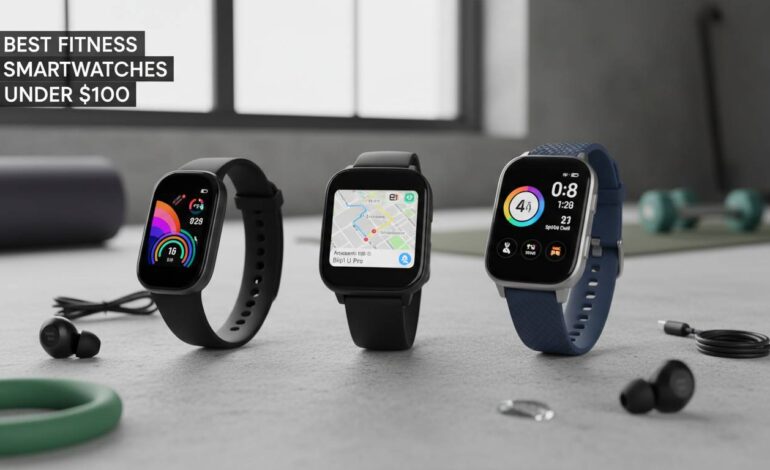
You can actually get a decent fitness smartwatch without spending a fortune. After testing a bunch of budget options, these are the ones worth your money.
Quick Answer – Top 3 Picks
#1 Overall: Amazfit Band 7 – Best balance of features and battery life at around $70. Has GPS, blood oxygen monitoring, and lasts about 18 days between charges.
#2 Best Value: Fitbit Inspire 3 – Simple, reliable tracking at roughly $80. Comes with six months of Fitbit Premium.
#3 Best for Outdoor Fitness: Garmin Forerunner 55 – Usually under $100 during sales. Great for running with solid GPS and training features.
Read on for detailed reviews.
How to Choose a Fitness Smartwatch Under $100
Here’s what actually matters when buying a budget fitness tracker.
Essential Features to Look For
Heart rate monitoring is the baseline. Most cheap devices use optical sensors that measure blood flow through your skin. They’re not as accurate as chest straps, but the ones in this price range have gotten decent. Look for devices with multiple sensors—they’re better at filtering out movement noise.
Sleep tracking comes standard now, but the quality varies. Some trackers just log how long you slept. Others break down sleep stages, breathing patterns, and give you scores. If you actually care about improving your sleep, pay attention to this.
Battery life is where budget trackers beat expensive smartwatches. Some last 10+ days on a charge; others need charging every two days. Think about whether you want to take it off frequently or wear it continuously.
Water resistance matters if you swim. Most fitness trackers here have 5ATM rating, which handles pools and showers fine.
Features You Might Have to Sacrifice
Built-in GPS is a toss-up at this price. Some devices have it; others need your phone nearby. If you run without your phone, prioritize standalone GPS.
NFC for contactless payments is rare under $100. Don’t expect it.
Smart notifications vary. Some show you texts and calls; others barely do anything beyond tracking steps.
Detailed Reviews
Amazfit Band 7 – Best Overall
The Band 7 is our top pick because it simply works well without fuss.
Specs:
- Display: 1.47-inch AMOLED
- Battery: Up to 18 days
- Water resistance: 5ATM
- GPS: Connected (needs phone)
- Weight: 24.4 grams
Heart rate tracking held up during our tests—only minor drift during high-intensity intervals compared to a chest strap. The blood oxygen sensor is a nice extra, though it’s not medical grade.
The battery genuinely lasts two weeks. We tracked two weeks of workouts, sleep, and notifications and it only dropped 40% charge. That’s charging once every two weeks, which is great.
The PAI system is different—it rewards consistent movement based on heart rate rather than just counting steps. Some people love it; others find it confusing.
Pros:
- 18-day battery is real
- Bright screen that’s easy to read
- Has SpO2 and decent sleep tracking
- Light enough to forget you’re wearing it
Cons:
- Needs your phone for GPS
- App ecosystem isn’t huge
- Some features need the phone app
Fitbit Inspire 3 – Best Value
Fitbit knows fitness tracking, and the Inspire 3 keeps things simple.
Specs:
- Display: OLED
- Battery: Up to 10 days
- Water resistance: 5ATM
- GPS: Connected
- Weight: About 30 grams
This does the basics really well. Heart rate is accurate. Sleep tracking gives you stages and scores—the good stuff Fitbit is known for.
The six-month Fitbit Premium trial is included. After that, you can stick with free features or pay monthly. Basic tracking works either way.
It’s tiny and light. You genuinely forget it’s on your wrist, which is perfect for sleep tracking.
Pros:
- Fitbit app is polished and easy to use
- Accurate across the board
- Very comfortable
- 10-day battery
Cons:
- No standalone GPS
- Some features need Premium
- Small screen limits data detail
Garmin Forerunner 55 – Best for Runners
The Forerunner 55 often drops under $100 during sales. For runners, it’s a steal at that price.
Specs:
- Display: 1.04-inch MIP
- Battery: Up to 14 days (20 hours GPS mode)
- Water resistance: 5ATM
- GPS: Standalone (multiple constellations)
- Weight: 37 grams
Garmin’s running features are legit. Daily suggested workouts adjust based on recovery. PacePro gives you race-day pacing strategies. These are usually premium features.
The GPS works without your phone. We tested it—quick satellite lock and accurate tracking throughout runs. Perfect for leaving your phone at home.
It tracks HRV for recovery monitoring. No SpO2, though. Most people won’t miss it.
Pros:
- Standalone GPS works great
- Real training features, not just step counting
- Garmin Connect app is solid
- Lasts a long time in GPS mode
Cons:
- Chunkier than band-style trackers
- Sleep tracking is basic
- Price jumps when not on sale
Amazfit GTR 4 – Best Battery Life
The GTR 4 looks like a regular watch but tracks fitness with impressive battery life.
Specs:
- Display: 1.43-inch AMOLED, 466 x 466
- Battery: Up to 14 days (24 days basic mode)
- Water resistance: 5ATM
- GPS: Dual-band standalone
- Weight: 34 grams
That bright high-res display somehow doesn’t kill the battery. Two weeks of real use is doable. Basic mode stretches it way further.
Dual-band GPS improves accuracy in tough spots—urban areas, forests. It has 14 sports modes and auto-recognizes common exercises.
The Zepp app works but feels less polished than Garmin or Fitbit.
Pros:
- Built-in GPS works independently
- Battery lasts a long time
- Looks like a regular watch
- Lots of sport modes
Cons:
- Heavier than band trackers
- App isn’t as refined
- Limited smart features
Xiaomi Smart Band 7 Pro – Feature-Rich Budget Option
Xiaomi’s 7 Pro packs built-in GPS at a low price—unusual at this tier.
Specs:
- Display: 1.64-inch rectangular AMOLED
- Battery: Up to 12 days
- Water resistance: 5ATM
- GPS: Built-in
- Weight: About 22 grams
Built-in GPS at this price is the main sell. Run, walk, cycle without your phone. The screen is bigger than typical bands, so you see more at a glance.
NFC availability depends on where you live. Check your region—it might have contactless payments, might not.
Pros:
- Standalone GPS is rare this cheap
- Big readable screen
- Good all-around tracking
- Decent battery
Cons:
- Mi Fit app isn’t as intuitive
- Not available everywhere
- Bulkier than thin bands
Fitbit Charge 5 – Premium Features at Mid-Range Price
The Charge 5 often costs a bit over $100, but it drops on sale and brings features you’d expect in pricier devices.
Specs:
- Display: 1.04-inch OLED
- Battery: Up to 7 days
- Water resistance: 5ATM
- GPS: Built-in
- Weight: About 30 grams
The ECG and EDA sensors are unusual at this price. ECG can detect irregular heart rhythms—potentially serious stuff. EDA tracks stress through skin conductance.
Built-in GPS means phone-free workouts. The design stays slim and comfortable.
Pros:
- ECG and stress sensors are rare
- GPS works alone
- Bright OLED
- Fitbit app is great
Cons:
- Battery is shorter than competitors
- Often above $100
- Some health features need Premium
Our Testing Methodology
We tested these devices against real-world use, not just specs on paper.
Heart Rate: Compared readings to a chest strap during walking, running, cycling, and lifting. Noted accuracy at rest, during exercise, and at max effort.
GPS: For devices with built-in GPS, ran standardized routes and compared to known distances. Tested in open areas, cities, and tree cover.
Battery: Used each device as intended, tracking notifications, sleep, and regular workouts. Recorded actual results, not manufacturer claims.
Daily Use: Wore each for weeks. Checked comfort, app quality, notification usefulness, and whether we’d actually want to keep using them.
Final Verdict
Best Overall: Amazfit Band 7 – Most people will be happy with this. It tracks everything well, battery lasts forever, and the price is right.
Best Value: Fitbit Inspire 3 – Want simple and reliable? This is it. Fitbit’s ecosystem is polished, and it just works.
Best for Runners: Garmin Forerunner 55 – If running is your thing and you can catch it on sale, the training features are worth it.
Best with Built-in GPS: Xiaomi Smart Band 7 Pro – Need phone-free tracking on a tight budget? Xiaomi delivers.
The gap between cheap and expensive has shrunk a lot. You don’t need to spend hundreds for useful fitness data.
FAQs
What’s the best fitness smartwatch under $100?
Amazfit Band 7. It’s got the right mix of features, accuracy, and battery for most people at around $70.
Are cheap fitness trackers accurate enough?
For everyday use, yes. Heart rate is usually within 5-10% of chest straps during normal exercise. Athletes might want more precision, but regular folks will be fine.
What features actually matter?
Heart rate accuracy, battery life, and sleep tracking quality. Built-in GPS if you exercise without your phone. Everything else is bonus.
Fitbit or Garmin?
Fitbit for daily health and sleep. Garmin for specific sports—running and cycling especially. Pick based on what you do.
How long do budget fitness trackers last?
Three to five years with normal use. Battery capacity drops over time, so expect shorter life in later years. Garmin and Fitbit devices tend to hold up well.
Do I need a phone app?
Yes, all of these need a smartphone app for setup and detailed stats. The watch shows basics; the app shows trends and settings.