# Best Smartwatch for Fitness: Complete Comparison

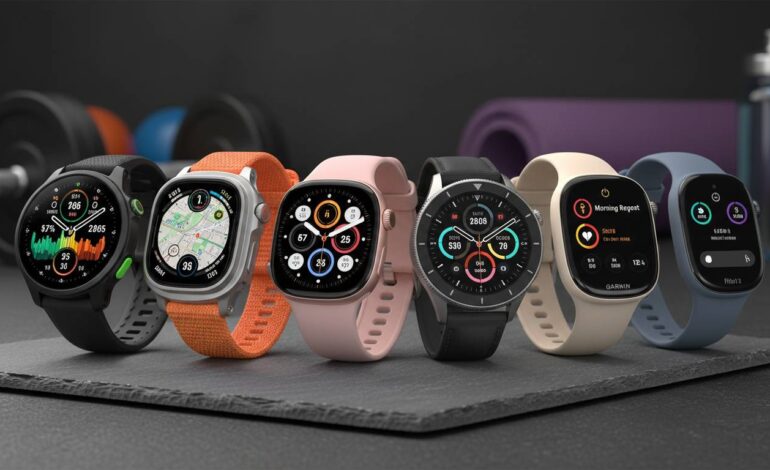
Finding the best smartwatch for fitness isn’t a one-size-fits-all decision. The right device depends on your workout habits, health goals, and budget. Whether you’re training for a marathon, lifting weights, or simply want to move more throughout the day, this guide compares the top fitness-focused smartwatches available in 2024.
Why a Fitness-Focused Smartwatch Matters
Regular smartwatches offer notifications, apps, and basic tracking, but fitness-focused devices go much deeper. They provide accurate biometric measurements, sport-specific metrics, recovery insights, and training load analysis that casual trackers simply cannot match.
The global wearable fitness market has grown significantly as consumers prioritize health monitoring over traditional smartwatch features. This shift pushed manufacturers to improve sensor technology, battery efficiency, and algorithmic analysis.
Choosing a dedicated fitness smartwatch gives you access to data that can genuinely improve your training. You’ll see your heart rate zones, track VO2 max estimates, monitor sleep quality, and get actionable insights instead of just raw numbers. For anyone serious about improving their fitness, this technology provides a real advantage.
Key Features to Look for in a Fitness Smartwatch
Heart Rate Monitoring Accuracy
Modern fitness smartwatches use optical heart rate sensors with multiple LEDs and photodiodes to measure blood flow through the skin. The best devices offer continuous monitoring with minimal lag during high-intensity movements.
Chest straps remain the gold standard for heart rate accuracy, but flagship watches have narrowed the gap significantly. Look for devices that support heart rate variability (HRV) tracking, since this metric provides insights into recovery status and nervous system stress.
Garmin usually leads in heart rate accuracy during intense activities, while Apple and Samsung have improved substantially in recent generations. If precise heart rate data forms the foundation of your training, testing the device during your specific activities matters more than marketing claims.
GPS and Location Tracking
Built-in GPS eliminates the need to carry your phone during outdoor workouts. This matters enormously for runners, cyclists, and hikers who want freedom of movement without sacrificing distance and pace tracking.
Multi-band GPS (L1 and L5 frequencies) improves accuracy in challenging environments like dense urban areas or tree cover. Samsung’s Galaxy Watch series and Garmin’s entire lineup include dual-frequency capabilities in their mid-range and premium models.
Consider whether you need offline maps, course navigation, or breadcrumb trails. Some fitness watches store maps directly on the device, while others require phone connectivity for navigation features.
Battery Life
Battery life varies dramatically between fitness smartwatches. Apple Watch users charge daily, while Garmin users might see two weeks or more between charges depending on usage.
GPS mode particularly impacts battery drain. A watch delivering 20+ hours of GPS tracking suits ultra-endurance athletes, while fitness trackers with 6-8 hour GPS capacity work fine for most recreational runners and cyclists.
Consider your charging habits and whether you’re willing to top up during travel. Some devices offer battery-saver modes that extend life by limiting features.
Water Resistance and Swim Tracking
Water resistance ratings indicate depth and duration capabilities. ATM ratings (5ATM = 50 meters) typically suffice for pool swimming and showering, though ocean swimming demands higher specifications.
Beyond basic splash resistance, serious swim tracking requires metrics like stroke detection, lap counting, SWOLF efficiency scores, and automatic rest detection. Not all fitness smartwatches offer comprehensive swim features, so verify capabilities if aquatic training matters to you.
Health Monitoring Features
Beyond heart rate, modern fitness watches track blood oxygen saturation (SpO2), skin temperature, stress levels, and menstrual cycles. Some devices add electrocardiogram (ECG) capabilities for detecting irregular heart rhythms.
These features vary by manufacturer and region due to regulatory approval processes. ECG has received clearance in more countries over time, so checking local availability matters.
Sleep tracking has become increasingly sophisticated, with some devices providing sleep stages, HRV trends, and sleep score recommendations. If recovery monitoring drives your training decisions, sleep data quality deserves careful comparison.
Top Fitness Smartwatches in 2024
Apple Watch Series 9
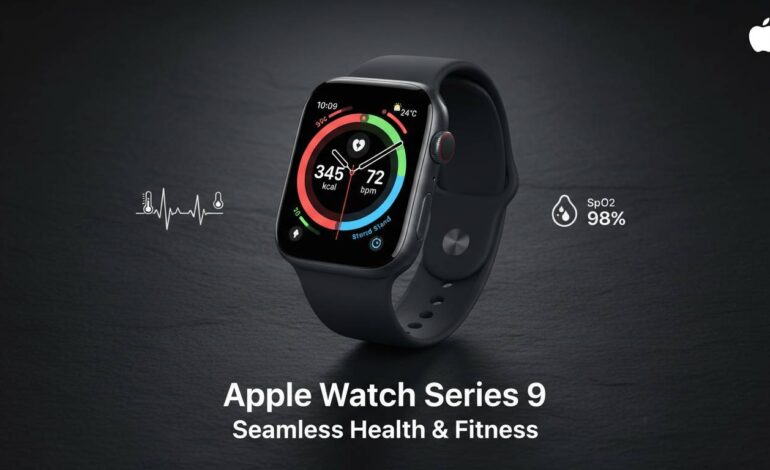
Apple’s latest flagship integrates the S9 SiP chip with enhanced health sensors. The device delivers comprehensive fitness tracking across activities ranging from casual walks to high-intensity interval training.
The Series 9 introduces double-tap gesture control, allowing one-handed operation during workouts. This addition proves surprisingly useful when mid-run adjustments become necessary.
Apple Fitness+ provides guided workouts with metrics displayed on the watch face, though this subscription service adds ongoing costs. The Activity rings motivate daily movement through customizable goals, and the social competition features encourage accountability among friends.
Health features include blood oxygen monitoring, ECG, temperature sensing for cycle tracking, and fall detection. The precision finding capability helps locate a misplaced iPhone, a practical everyday feature.
Battery life remains the primary limitation. Most users charge daily, which works for routine use but creates challenges during extended trips or multi-day adventures without charging access. The always-on display drains battery faster than alternatives with simpler screens.
The Apple Watch integrates seamlessly with iPhones, making it the obvious choice for users invested in Apple’s ecosystem. Android users cannot use Apple Watch, eliminating this option for roughly half the smartphone market.
Samsung Galaxy Watch 6
Samsung’s Galaxy Watch 6 balances comprehensive fitness tracking with traditional smartwatch functionality. The BioActive sensor combines optical heart rate, electrical heart (ECG), and bioelectrical impedance analysis for body composition metrics.
Body composition tracking provides estimates of body water, skeletal muscle mass, and fat percentage. While not medical-grade measurements, these trends help users understand composition changes beyond scale weight.
Sleep tracking has improved substantially, with the Galaxy Watch 6 offering sleep scores, blood oxygen monitoring during rest, and snoring detection via the phone’s microphone. The sleep coaching program guides users through personalized improvements.
GPS performance satisfies most runners and cyclists, though some users report occasional accuracy issues compared to Garmin devices. Samsung includes route tracking with turn-by-turn directions, useful for exploring new areas without phone navigation.
The rotating bezel provides tactile control that many users prefer over touchscreen navigation. This design element distinguishes Samsung watches from competitors and aids operation during sweaty workouts.
Battery life falls between Apple and dedicated fitness brands. Expect roughly two days of mixed use, dropping to a single day with always-on display enabled. GPS tracking drains the battery faster than competitors, typically lasting 4-6 hours depending on settings.
Galaxy Watch works best with Samsung phones but functions adequately with other Android devices. iPhone users cannot pair Galaxy Watch, limiting adoption to the Android ecosystem.
Garmin Forerunner 265
Garmin dominates the dedicated fitness watch market, and the Forerunner 265 represents the company’s commitment to serious athletes. This GPS running watch includes comprehensive training features that justify its premium positioning.
The 265 introduces a vibrant AMOLED display previously reserved for Garmin’s flagship Fenix series. Color screens improve readability during outdoor activities while maintaining battery efficiency.
Training readiness scores analyze sleep, recovery, HRV, and recent exercise to recommend optimal workout intensity each day. This guidance helps prevent overtraining while ensuring productive training sessions.
Garmin’s Body Battery metric aggregates stress, rest, and activity data into a single recovery indicator. Many users find this simplified view more actionable than raw biometric data.
VO2 max estimates update regularly with continued use, providing fitness trend monitoring without laboratory testing. The performance condition feature analyzes real-time metrics against baseline capabilities during activity.
Multi-GNSS support (GPS, GLONASS, Galileo) ensures reliable tracking in challenging environments. Garmin’s satellite acquisition speed typically outperforms competitors, getting you started faster.
Battery life stands out dramatically. The Forerunner 265 delivers up to 15 days in smartwatch mode and 24 hours in GPS mode, easily covering ultramarathons and extended adventures.
Workout recommendations adapt based on training history and recovery status. Daily suggested workouts adjust intensity based on previous performances, providing personalized coaching without subscriptions.
Music storage and payment capabilities add convenience without compromising core fitness functionality. The watch stores up to 500 songs, eliminating phone dependency during runs.
Fitbit Charge 6
Fitbit’s flagship fitness tracker balances comprehensive health monitoring with accessible pricing. The Charge 6 brings Google’s Tensor chip processing power to Fitbit’s established tracking foundation.
Google integration introduces YouTube Music controls, Google Maps navigation, and Google Wallet payments. These additions address previous limitations while maintaining Fitbit’s intuitive tracking experience.
Heart rate tracking has improved through algorithmic refinements, providing accurate measurements during most activities. The device includes 24/7 heart rate monitoring with resting rate trends and zone tracking.
GPS connects to phone GPS for route mapping during outdoor activities. Unlike dedicated GPS watches, the Charge 6 requires phone proximity for satellite tracking, which some users find limiting.
Sleep tracking remains Fitbit’s strength, with detailed sleep stages, nightly sleep score, and personalized insights. The Sleep Profile analysis provides monthly assessments of sleep habits, identifying improvement opportunities.
Stress management scores and guided breathing sessions help users manage daily tension. This holistic approach to wellness distinguishes Fitbit from purely performance-focused alternatives.
Battery life reaches approximately seven days under typical use, significantly longer than Apple or Samsung watches. This endurance suits users who dislike daily charging routines.
The Charge 6 represents excellent value for users prioritizing health tracking over advanced training features. Casual athletes and general fitness enthusiasts find everything they need without premium pricing.
Google Pixel Watch 2
Google’s second-generation Pixel Watch integrates Fitbit’s health expertise with Google’s software capabilities. The custom Tensor chip enables on-device processing for faster, more private health analysis.
Fitbit’s premium subscription comes included for the first six months, providing detailed health insights and guided programs. After the trial, users decide whether to continue the subscription.
Safety features include crash detection, fall detection, and emergency location sharing. These additions provide peace of mind during solo workouts or travel.
The compact, elegant design appeals to users wanting a watch that transitions seamlessly from gym to office. This aesthetic focus distinguishes Pixel Watch from purpose-built fitness devices.
Battery life remains challenging, typically requiring daily charging. The small form factor limits battery capacity, forcing users to choose between functionality and longevity.
GPS performance has improved over the first generation but still trails dedicated fitness watches. The Pixel Watch 2 requires phone connection for GPS tracking, reducing standalone capability.
The watch works with Android phones, prioritizing integration with Pixel devices. iPhone users cannot use Pixel Watch, maintaining ecosystem exclusivity.
Whoop 4.0
Whoop takes a fundamentally different approach, prioritizing physiological strain monitoring over traditional watch features. The 4.0 lacks a display entirely, delivering insights through smartphone app connections.
The strain coach analyzes cardiovascular load from heart rate variability, providing daily strain recommendations. This data-driven approach helps users balance training stress with recovery.
Sleep tracking includes sleep stages, efficiency, and recovery scoring. Whoop’s sleep analysis emphasizes HRV and respiratory rate trends rather than simple duration metrics.
The subscription model includes the physical device plus ongoing access to insights and coaching. Annual subscriptions reduce monthly costs while committing users to the platform.
Battery life reaches approximately five days, requiring charging roughly twice weekly. The charging puck makes topping up straightforward despite the different charging approach.
Whoop’s bicep band and other accessories allow placement options beyond the wrist. Some users prefer upper arm positioning during activities where wrist movement might affect accuracy.
The absence of GPS means outdoor activities require phone tracking or additional accessories. This limitation disqualifies Whoop as a primary device for runners and cyclists wanting standalone tracking.
For users focused on strain management, recovery optimization, and physiological metrics rather than traditional watch features, Whoop provides unique value unavailable elsewhere.
How to Choose the Right Fitness Smartwatch
Define Your Primary Use Cases
Start by identifying which activities matter most. A marathon runner needs GPS accuracy and battery life; a casual walker might prioritize sleep tracking and notifications.
Consider whether you want workout guidance or primarily data collection. Some devices provide daily suggested workouts; others simply record whatever activity you choose.
Think about ecosystem compatibility. iPhone users naturally gravitate toward Apple Watch, while Android users choose between Samsung, Google, Garmin, and Fitbit. Cross-ecosystem use often loses features.
Establish Budget Parameters
Fitness smartwatches range from approximately $150 to over $1,000. Premium pricing typically delivers better sensors, longer battery life, and more sophisticated software.
Mid-range options ($250-400) often provide sufficient capability for most users. The Apple Watch SE, Galaxy Watch FE, and Garmin Forerunner 55 offer solid fundamentals without flagship pricing.
Consider subscription costs beyond the device. Fitbit Premium, Whoop, and Apple Fitness+ add ongoing expenses that factor into total ownership costs.
Prioritize Which Metrics Matter Most
If heart rate accuracy drives your training, dedicated fitness brands like Garmin typically outperform consumer electronics companies. The difference narrows annually but remains noticeable during high-intensity activities.
Recovery-focused athletes should emphasize HRV tracking, sleep analysis, and training readiness features. These capabilities vary substantially across devices.
Battery life matters enormously for endurance athletes. Ultramarathoners and bikepackers need devices capable of multi-day GPS tracking without charging.
Test Before Committing
Whenever possible, borrow or try devices before purchasing. Wrist size, weight, and interface preferences are highly personal and difficult to assess from specifications alone.
Consider return policies when ordering online. A two-week trial period allows genuine assessment of daily use rather than just initial impressions.
Conclusion
The best smartwatch for fitness ultimately depends on your specific needs, preferences, and circumstances. Garmin’s Forerunner 265 offers the most comprehensive training features with outstanding battery life, making it ideal for serious athletes. Apple Watch Series 9 provides the complete smartwatch experience with excellent fitness integration for iPhone users. Fitbit Charge 6 delivers remarkable value with Google’s processing power behind proven health tracking. Samsung Galaxy Watch 6 balances fitness and everyday functionality within the Android ecosystem.
No single device excels at everything. Your decision should prioritize the features most relevant to your training goals while fitting within your budget and ecosystem. The fitness tracking differences between top devices have narrowed considerably, so user experience, battery life, and ecosystem integration often prove decisive.
FAQs
Which smartwatch has the best battery life for fitness tracking?
Garmin watches consistently deliver the longest battery life, with models like the Forerunner 265 offering up to 24 hours in GPS mode and 15 days in smartwatch mode. This significantly exceeds Apple Watch and Samsung Galaxy Watch, which typically require daily charging.
Is Apple Watch good for fitness tracking in 2024?
Yes, Apple Watch Series 9 provides comprehensive fitness tracking with accurate heart rate monitoring, GPS, blood oxygen sensing, and detailed workout metrics. The main limitation is battery life, requiring daily charging for most users.
Do I need GPS built into my fitness smartwatch?
If you run, cycle, or hike outdoors without your phone, built-in GPS is essential. If you primarily use your phone for tracking or exercise indoors, a fitness tracker without built-in GPS can save significant cost.
Which fitness smartwatch is best for runners?
Garmin Forerunner 265 excels for runners, offering exceptional GPS accuracy, detailed running dynamics, training readiness scores, and excellent battery life. Apple Watch provides a solid alternative for casual runners embedded in the Apple ecosystem.
Can I swim with any of these fitness smartwatches?
Most fitness smartwatches rated 5ATM (50 meters) are suitable for pool swimming and showering. Garmin models typically offer more advanced swim tracking features, including stroke detection and lap counting, while Apple Watch provides solid basic swim tracking.
What’s the difference between a fitness tracker and a fitness smartwatch?
Fitness trackers typically prioritize health monitoring in a slim, affordable form factor with basic notifications. Fitness smartwatches add full smartwatch capabilities (apps, payments, voice assistants) while maintaining comprehensive fitness features, usually at higher price points with larger displays.