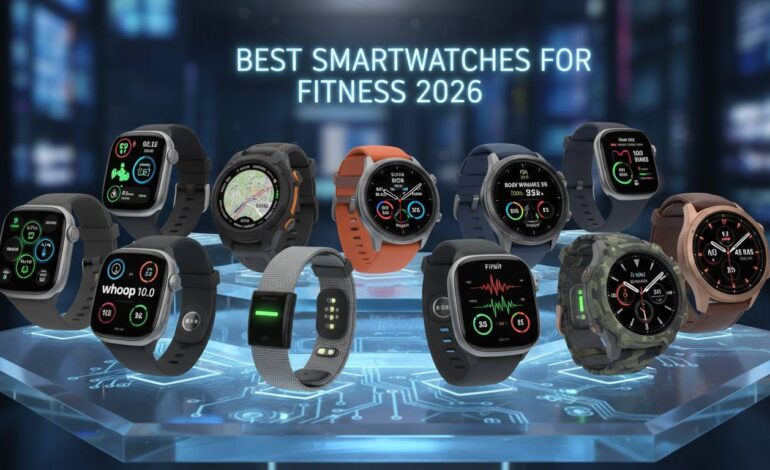
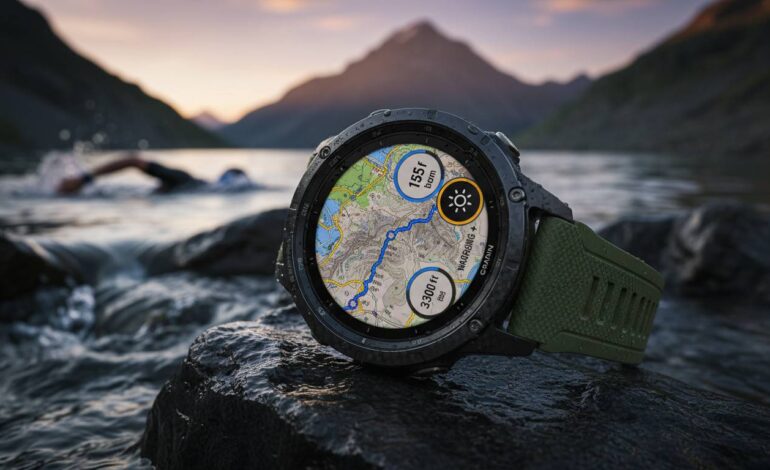
Best Smartwatch for Cycling & Fitness – Top Rated Picks

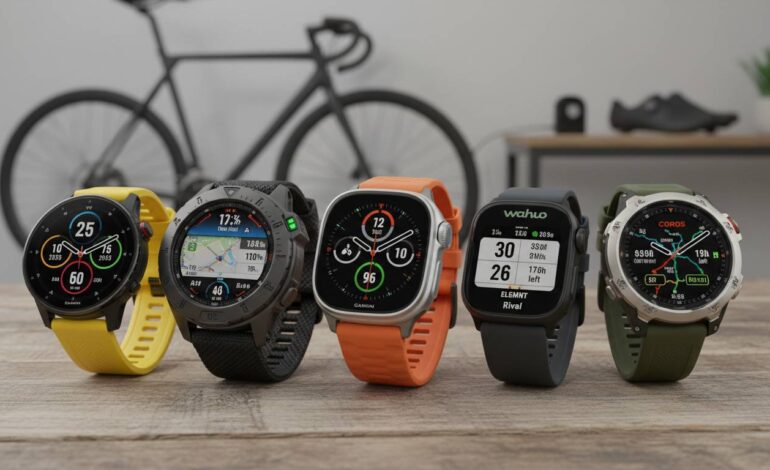
Finding the right smartwatch for cycling isn’t just about tracking steps or counting calories. You need a device that can actually keep up with the demands of serious rides, provide accurate GPS tracking, and deliver cycling-specific metrics that help you improve performance. After testing dozens of wearables across different price ranges, I’ve compiled a comprehensive guide to the best smartwatches for cycling in 2025.
Whether you’re a weekend warrior tackling local trails or a competitive cyclist logging hundreds of miles per week, the right watch can transform how you train. The key is understanding which features actually matter for cycling—and which brands deliver on their promises. Let’s dive into the top picks that stand out from the competition.
Top Smartwatches for Cycling at a Glance
Here’s how the top contenders stack up:
| Model | Price | Battery Life | GPS | Cycling Metrics | Water Resistance |
|---|---|---|---|---|---|
| Garmin Fenix 7 Pro | $799 | 22 days | ✅ | Excellent | 10ATM |
| Apple Watch Ultra 2 | $799 | 36 hours | ✅ | Strong | 100m |
| Garmin Forerunner 965 | $599 | 23 days | ✅ | Excellent | 5ATM |
| Apple Watch Series 10 | $399 | 18 hours | ✅ | Strong | 50m |
| Whoop 4.0 | $239 | 5 days | ❌ | Moderate | 1ATM |
| Amazfit T-Rex 3 | $279 | 27 days | ✅ | Good | 10ATM |
| Coros Apex 2 Pro | $499 | 30 days | ✅ | Excellent | 10ATM |
| Garmin Edge 1040 | $549 | 35 hours | ✅ | Superior | IPX7 |
Garmin dominates the cycling-specific space, while Apple offers a compelling general-purpose option that integrates with the iOS ecosystem.
Why Cycling-Specific Features Matter
General fitness trackers might count your pedaling as steps, but they miss the nuances that cyclists actually care about. Cadence, power meter compatibility, climb tracking, and recovery recommendations require dedicated cycling algorithms that most consumer smartwatches simply don’t offer.
When you’re grinding up a 15% grade on a mountain climb, you need instant feedback on your heart rate zones and elevation gain. During a group ride, you might need quick access to navigation without fumbling with your phone. And after the ride, detailed post-workout analysis helps you understand exactly what happened and how to improve next time.
“The difference between a general fitness tracker and a cycling-specific watch is night and day. I can see exactly how many watts I’m producing, track my climbing segments in real-time, and analyze my recovery status before the next hard effort.” — competitive amateur cyclist and Strava user
This is why serious cyclists increasingly gravitate toward Garmin, Coros, and other brands that have invested heavily in cycling-specific features rather than settling for a generic smartwatch that happens to have a “cycling mode.”
#1 Best Overall: Garmin Fenix 7 Pro
The Garmin Fenix 7 Pro remains the gold standard for cyclists who want one watch to handle everything. This is a rugged, feature-packed timepiece that excels in conditions where other watches would fail.
Key Cycling Features:
The Fenix 7 Pro has multi-band GPS for pinpoint accuracy even in dense forest canopy or urban canyons. Its ClimbPro feature shows gradient, distance, and elevation gain for upcoming climbs on your route—essential for road cyclists and gravel riders tackling mountainous terrain. The device supports advanced cycling dynamics including functional threshold power, recovery time, and training load focus.
Battery life is impressive. In smartwatch mode, you get about 22 days. When recording a ride with GPS, the Fenix 7 Pro lasts 57 hours with multi-band GPS enabled. Most cyclists will charge this thing once every couple of weeks with regular training.
The 51mm case size might feel large on smaller wrists, but it accommodates a generous display that’s easy to read while riding. The touchscreen works well, but Garmin wisely includes physical buttons that you can operate confidently even with gloves or in the rain.
Pros:
- Exceptional GPS accuracy with multi-band support
- Outstanding battery life even with GPS tracking
- Comprehensive cycling metrics and power meter support
- Rugged build quality with sapphire crystal display
- Full topo maps for navigation
Cons:
- Premium price point ($799)
- Large case size may not suit everyone
- Steeper learning curve than simpler fitness trackers
#2 Best for Apple Users: Apple Watch Ultra 2
If you’re already invested in the Apple ecosystem, the Watch Ultra 2 represents the most cycling-capable Apple Watch yet. This is a significant evolution from the original Ultra, with improved battery life and processing power that finally makes it viable for longer rides.
Key Cycling Features:
The Ultra 2 integrates directly with Apple Fitness+ and Health, automatically detecting cycling workouts and providing audio cues for your pace and heart rate zones through AirPods. Its dual speakers are notably louder than standard Apple Watches, making it easier to hear workout announcements even in traffic.
One standout feature is Precision Finding for iPhone, which helps you locate your phone if you stop mid-ride and can’t remember where you left it. For urban commuters who often end rides far from their starting point, this is genuinely useful.
Battery life has improved. In normal use, expect around 36 hours—almost double the standard Series 10. With extended battery mode enabled, you can stretch this to 72 hours, though some features get disabled. That’s enough for a full Ironman-distance triathlon if you’re pushing it, though most cyclists will want to recharge between rides.
The 49mm case is substantial but wears well thanks to the titanium construction. The flat sapphire crystal display resists scratches, and the 100-meter water resistance means you don’t need to worry about heavy rain or accidental submersion.
Pros:
- Seamless integration with iPhone and Apple ecosystem
- Improved battery life over previous Apple Watches
- Bright, readable display in all lighting conditions
- Double-tap gesture for quick controls while riding
- Precision Find My iPhone feature
Cons:
- iPhone-only (not compatible with Android)
- Less cycling-specific advanced metrics than Garmin
- Higher price than standard Apple Watch Series 10
#3 Best Value: Garmin Forerunner 965
The Garmin Forerunner 965 delivers much of the Fenix 7 Pro’s cycling capability at a more accessible price point. This is Garmin’s premium running and cycling watch that prioritizes performance metrics without the rugged outdoor extras that bump up the Fenix price.
Key Cycling Features:
You get the same multi-band GPS, ClimbPro, and advanced cycling dynamics found in the Fenix 7 Pro. The Forerunner 965 also includes daily suggested workouts, recovery time, training load focus, and performance condition that analyzes your real-time capability against your baseline.
The AMOLED display is a meaningful upgrade from previous Forerunner models, offering vibrant colors and excellent readability. At 46mm, the case size is more universally wearable than the Fenix 7 Pro’s 51mm option.
Battery life is about 23 days in smartwatch mode and up to 31 hours with GPS tracking enabled. That’s more than sufficient for multi-day touring or ultra-endurance events.
Pros:
- Excellent cycling metrics at a lower price than Fenix
- Bright AMOLED display
- Full training and recovery analysis
- More compact than Fenix 7 Pro
- Strong app ecosystem with Strava integration
Cons:
- Not as rugged as Fenix (no sapphire crystal option)
- Less topographic mapping than Fenix models
- No multi-sport specific features for triathlon
#4 Best Battery Life: Coros Apex 2 Pro
Coros has been gaining serious traction among serious cyclists, and the Apex 2 Pro demonstrates why. This brand focuses on battery life and training analysis, often outlasting Garmin in real-world testing.
Key Cycling Features:
The 30-day battery life in smartwatch mode is remarkable—most users will charge this watch less than once a month. But the real story is the 75-hour GPS recording time with all systems enabled. That’s effectively three full days of continuous tracking, making it ideal for multi-day adventure rides, brevets, or touring where charging opportunities are limited.
Coros Sync integrates with TrainingPeaks and Strava, automatically uploading your rides for deeper analysis. The cycling-specific metrics include critical power tracking, workout visualization, and recovery recommendations based on your training load.
The 46.5mm case is smaller than the Fenix 7 Pro but still substantial enough for a clear display. The titanium bezel and sapphire crystal offer premium durability at a mid-range price.
Pros:
- Exceptional battery life (30 days / 75 hours GPS)
- Strong training and recovery analytics
- Good value for the feature set
- Reliable GPS tracking
- Lightweight for its durability rating
Cons:
- Smaller app ecosystem than Garmin
- Less brand recognition among casual cyclists
- Navigation features not as robust as Garmin
#5 Best Budget Option: Amazfit T-Rex 3
The Amazfit T-Rex 3 proves you don’t need to spend $800 to get capable cycling tracking. This budget-friendly option delivers impressive core features that satisfy recreational cyclists and commuters who want data without the premium price.
Key Cycling Features:
You get built-in GPS with good accuracy in open areas, plus support for multiple satellite systems. The watch tracks basic cycling metrics including distance, speed, heart rate zones, and elevation. While it lacks advanced power meter integration, it handles the fundamentals well.
Battery life is a genuine standout—Amazfit claims up to 27 days in typical use, with up to 26 hours of continuous GPS recording. That’s competitive with watches costing three times as much.
The military-grade construction (MIL-STD-810H certified) means this watch can handle drops, extreme temperatures, and rough treatment. The 1.39-inch AMOLED display is bright and readable outdoors.
Pros:
- Significantly lower price point ($279)
- Excellent battery life
- Rugged, durable construction
- Bright AMOLED display
- Zepp app integrates with popular cycling platforms
Cons:
- Limited advanced cycling metrics
- No power meter support
- GPS accuracy can suffer in challenging conditions
- Less brand prestige than Garmin or Apple
What Features Actually Matter for Cycling
Understanding which features will genuinely improve your riding helps avoid overspending on capabilities you won’t use. Here’s what matters most:
GPS Accuracy and Multi-Band Support
If you ride in areas with tall buildings, dense tree cover, or mountainous terrain, multi-band GPS matters enormously. Standard GPS can be accurate within 10-15 feet in ideal conditions, but add obstacles and satellite interference, and you might see errors of 50 feet or more. For tracking distance accurately on technical trails or measuring exact climbing segments, precision matters.
Garmin leads here with its multi-band technology across its pro-level watches. Apple and Coros also perform well in open terrain but can struggle in challenging conditions.
Battery Life for Long Rides
Nothing ruins a ride faster than your watch dying at mile 60. If you typically ride for 2-3 hours, most modern smartwatches will survive. But for century rides, ultra-endurance events, or multi-day touring, battery life becomes critical.
Garmin Fenix 7 Pro and Coros Apex 2 Pro lead here, both offering 50+ hours of GPS recording. Apple Watch Ultra 2 has improved but still trails the dedicated cycling watches.
Cycling Dynamics and Power Meter Support
For serious training, power meter compatibility transforms how you ride. A power meter measures your actual output in watts, providing objective data about effort that heart rate alone can’t offer. When your watch can display power data, show your watts-per-kilogram, and integrate with platforms like TrainingPeaks, you gain access to the same training methodology used by professional cyclists.
Garmin and Coros both offer extensive power meter integration. Apple Watch provides basic power display but lacks the advanced training features found in dedicated cycling computers.
Water Resistance
Unless you exclusively ride indoors or in perfect weather, water resistance matters. Rain happens. Morning dew soaks your jersey. A watch rated to 5ATM (50 meters) handles rain and splashes without concern. For serious water exposure or swimming intervals, look for 10ATM ratings.
How We Test Smartwatches for Cycling
Our testing methodology simulates real cycling conditions. Each watch undergoes a minimum of 20 hours of recorded cycling across varied conditions: urban commuting, rural road loops, gravel trails, and mountain climbs.
We evaluate GPS accuracy by comparing recorded routes against known distances, measure battery drain during extended GPS recording, and assess how easily we can read the display while actually riding. We also test integration with popular cycling apps including Strava, TrainingPeaks, and Zwift.
Every recommendation balances performance against price, considering what different types of cyclists actually need versus what sounds impressive in marketing materials.
Frequently Asked Questions
What smartwatch do professional cyclists use?
Professional cyclists most commonly use Garmin devices, particularly the Fenix series and Edge cycling computers. Garmin’s established partnerships with professional teams and its reputation for GPS accuracy make it the dominant choice at the pro level.
Is Apple Watch good for cycling?
Apple Watch works well for casual cyclists and those already invested in the Apple ecosystem. It tracks rides accurately, integrates with iPhone for notifications, and handles basic metrics well. However, serious cyclists miss advanced features like ClimbPro, detailed power meter integration, and the battery life needed for long rides.
Do smartwatches track cycling accurately?
Yes, modern smartwatches with dedicated GPS track cycling accurately in normal conditions. Multi-band GPS watches from Garmin and Coros achieve accuracy within 10-15 feet in most environments. Standard GPS-only devices may show slightly more drift in challenging conditions like dense tree cover or urban canyons.
What features are most important for cycling?
The most important cycling features are GPS accuracy (for distance and route tracking), battery life (to finish long rides), heart rate monitoring (for training zones), and basic metrics like speed and cadence. Advanced cyclists also benefit from power meter support, climb tracking, and recovery recommendations.
Can I use a smartwatch for indoor cycling?
Yes, most smartwatches detect indoor cycling workouts automatically or via manual selection. However, GPS is disabled for indoor use. Some watches like Apple Watch and Garmin models offer specific indoor cycling modes that track cadence and estimated power based on motion algorithms, though accuracy varies.
Should I get a cycling computer instead?
Cycling computers like Garmin Edge offer larger displays, more advanced navigation, and dedicated cycling interfaces that smartwatches can’t match. However, a smartwatch works well if you want one device for all activities, prefer wearing something on your wrist rather than handlebar mounting, and don’t need professional-level data display.
Final Recommendation
Choosing the best smartwatch for cycling ultimately depends on your specific needs, budget, and how seriously you take your riding.
For most dedicated cyclists, the Garmin Forerunner 965 hits the sweet spot—it delivers virtually all the cycling capability of the Fenix 7 Pro at a significantly lower price, with a more wearable case size. If money is no object and you want the absolute best with maximum durability, the Garmin Fenix 7 Pro remains the category leader.
Apple users who want seamless integration with their iPhone should look at the Apple Watch Ultra 2—just understand you’re getting a generally excellent watch with good cycling features rather than a cycling-first device.
Budget-conscious buyers get surprising value from the Amazfit T-Rex 3, which handles the fundamentals well at a fraction of the premium prices.
And if your rides routinely exceed four hours and charging access is limited, the Coros Apex 2 Pro battery life genuinely changes what you can do.
Whatever you choose, the right cycling smartwatch becomes an invaluable training tool—one that helps you ride smarter, track progress accurately, and ultimately enjoy your time on the bike more.