Best Fitness Smartwatches: Our Top Picks

Finding the right fitness smartwatch can feel like searching for a needle in a haystack. With dozens of options hitting the market each year, each promising better metrics, longer battery life, and sleeker designs, it’s easy to get overwhelmed. Whether you’re training for your first 5K, tracking recovery between heavy lifting sessions, or simply want to move more throughout the day, the best fitness smartwatch for you depends on your specific goals, budget, and ecosystem preferences. After researching the current landscape and testing numerous models, we’ve compiled our top picks to help you make an informed decision.
What Makes a Smartwatch Great for Fitness
Before diving into specific models, it’s worth understanding the key features that separate a decent fitness tracker from a genuinely useful training companion. The most important metrics typically include accurate heart rate monitoring, built-in GPS for tracking outdoor activities without your phone, robust workout detection, and detailed sleep tracking for recovery insights.
Beyond hardware, the software ecosystem matters enormously. A smartwatch that integrates well with your preferred fitness apps, provides clear data visualizations, and offers customizable training plans will serve you far better than one with more impressive hardware but clunky software. Water resistance is another consideration—if you swim, you’ll need at least 5ATM rating. Battery life can be a deciding factor too, especially if you tend to forget to charge devices regularly or want continuous overnight tracking.
Price points vary dramatically, from budget fitness bands under $100 to premium multisport watches costing $800 or more. Understanding what you actually need versus what sounds nice on paper will save you money and ensure you get a device you’ll actually use.
Apple Watch Series 9: The All-Rounder
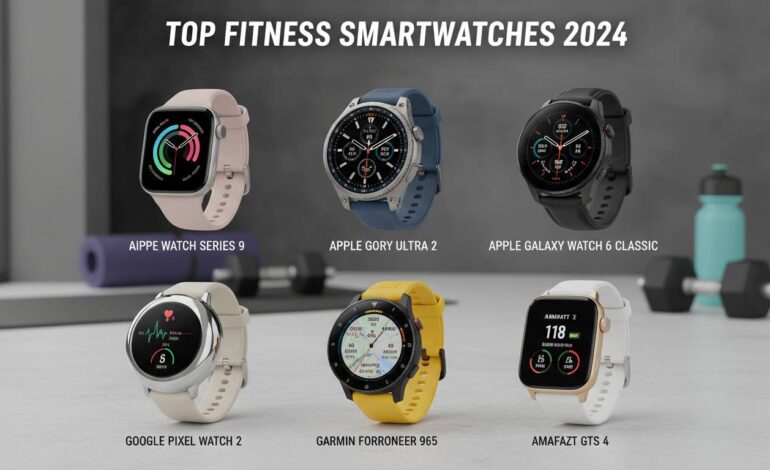
The Apple Watch Series 9 remains the most polished smartwatch for fitness enthusiasts who already live within Apple’s ecosystem. While it’s not specifically a “fitness” device in the traditional sports-watch sense, its fitness capabilities have matured considerably over nine generations.
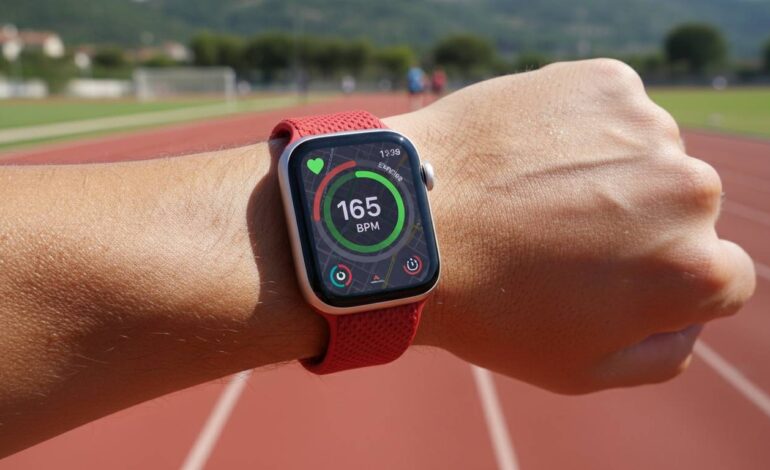
The S9 chip enables on-device Siri processing, meaning you can start workouts with voice commands—a handy feature when your hands are occupied. The bright always-on Retina display makes checking metrics during outdoor activities straightforward, even in direct sunlight. Apple has continued improving its Workout app, adding support for more exercise types and providing detailed post-workout analysis including cadence, ground contact time, and vertical oscillation for runners.
One standout feature is the temperature sensing capabilities introduced with the Series 8 and refined in the Series 9. This enables retrospective ovulation estimation and more accurate basal body temperature tracking during sleep, features that have proven valuable for users focused on overall health monitoring. The sleep tracking, while not as detailed as dedicated sleep-focused devices, has improved significantly and now provides sleep stages rather than just duration.
The main limitation for serious athletes remains battery life. You’ll need to charge the watch daily if you track multiple workouts, which can be inconvenient for those long weekend rides or overnight hiking adventures. The 45mm case is also on the larger side, though the smaller 41mm option works well for those with smaller wrists.
For most people seeking a versatile fitness companion that handles notifications, calls, and apps alongside workout tracking, the Series 9 delivers an excellent experience. The Double Tap gesture introduced with this generation adds convenience for one-handed operation during workouts.
Garmin Forerunner 265: The Serious Runner’s Choice
Garmin has built its reputation on GPS sports watches, and the Forerunner 265 represents a sweet spot for runners who want serious training features without the bulk and complexity of flagship multisport watches.
The most significant upgrade in the 265 series is the AMOLED display—a departure from Garmin’s traditional memory-in-pixel screens. This makes the watch look more like a conventional smartwatch while maintaining Garmin’s excellent battery life. You can expect around 10-11 days in smartwatch mode and up to 24 hours in GPS mode, which is impressive for a color-display watch.
The training readiness score analyzes your sleep, recovery, and recent training load to tell you whether you’re ready for a hard workout or should take it easy. This feature, previously reserved for Garmin’s higher-end Fenix and Epix models, provides genuine value for runners following structured training plans. The morning report gives you a quick snapshot of how you should approach the day based on your recovery status.
GPS accuracy has always been a Garmin strength, and the Forerunner 265 continues this tradition with multi-band GPS technology for improved precision in challenging environments like dense urban areas or tree cover. The widget-based interface takes some learning if you’re coming from Apple Watch, but it keeps essential training data easily accessible once configured.
One minor drawback is the lack of onboard music storage in the base 265 model—you’ll need to pair Bluetooth headphones to your phone for music during runs. The 265 Music version adds storage but at a premium. Also, third-party app support is more limited than Apple or Google ecosystems, though the essentials like Strava and training apps are well-represented.
For runners who want training analytics, recovery guidance, and excellent GPS tracking without a separate chest strap, the Forerunner 265 is difficult to beat in its price range.
Samsung Galaxy Watch 6: The Android Fitness Standard
Samsung’s Galaxy Watch 6 (and now the 7, though the 6 remains excellent value) offers the most comprehensive fitness experience for Android users who want something closer to a full smartwatch than a dedicated sports watch.
The BioActive sensor combining optical heart rate, electrical heart (ECG), and bioelectrical impedance analysis enables body composition measurement—something unique among mainstream smartwatches. This gives you metrics including skeletal muscle mass, body fat percentage, and body water levels, providing a more complete picture of your fitness journey than step counts alone.
Samsung Health offers robust workout tracking with automatic detection for common exercises. The running coach feature provides real-time audio coaching through the built-in speaker, which can be helpful for interval training or maintaining pace goals. The swim tracking is well-implemented with stroke detection, making it a solid choice for pool swimmers.
The rotating bezel, now digital on the 6 but still tactile in feel, provides an intuitive way to navigate menus without smudging the display. This design element continues to set Samsung apart from competitors and makes using the watch during workouts less frustrating than touchscreen-only alternatives.
One consideration is that some features, particularly the body composition analysis and ECG, work only with Samsung phones. If you’re using a non-Samsung Android device or an iPhone, you’ll lose these capabilities and should evaluate whether the remaining features justify the price. Battery life typically runs 1-2 days with always-on display, dropping to under a day if you enable the power-saving workout mode with GPS.
For Android users who want a do-everything device that excels at fitness tracking while maintaining smartphone functionality, the Galaxy Watch 6 remains a top contender.
Fitbit Charge 6: Best Fitness Band Experience
Not everyone wants a full smartwatch. The Fitbit Charge 6 bridges the gap between basic fitness bands and premium smartwatches, offering excellent fitness tracking in a compact, comfortable form factor.
The Charge series has always prioritized all-day wearability, and the Charge 6 continues this tradition with a slim profile that disappears under sleeves. Yet it packs meaningful upgrades over previous generations, including a brighter display with always-on capability and integrated Google apps including YouTube Music and Google Maps navigation.
Fitness tracking is where Fitbit excels. The heart rate zones feature provides clear guidance on whether you’re in fat burn, cardio, or peak zones, useful for those following specific training approaches. The Daily Readiness score evaluates your readiness for physical activity based on resting heart rate, sleep, and activity levels. This summary helps prevent overtraining while ensuring you don’t miss opportunities for productive workouts.
Sleep tracking remains a Fitbit strength, with detailed sleep stages, sleep score, and SpO2 monitoring providing insights that help optimize recovery. The 7-day battery life means you can track sleep every night without the anxiety of daily charging that plagues smartwatches.
The main limitations are the smaller display making detailed data review less comfortable and the lack of onboard GPS—you’ll need your phone nearby for route tracking during outdoor activities. However, the connected GPS feature works well for runs where carrying a phone isn’t inconvenient.
For fitness-focused users who prioritize activity and sleep tracking over smartphone notifications and apps, the Fitbit Charge 6 delivers exceptional value.
Garmin Fenix 7 Pro: The Multisport Flagship
Serious athletes and outdoor enthusiasts who demand the most comprehensive fitness tracking available should look at the Garmin Fenix 7 Pro. This is a tool for people who compete in triathlons, tackle ultra-marathons, or spend weekends mountaineering.
The Fenix 7 Pro builds on the already excellent Fenix 7 with enhanced sensor technology including a brighter MIP display and improved optical heart rate sensor. The battery life is extraordinary—you can get over 20 days in smartwatch mode or 75 hours in GPS mode. This endurance means you can track multi-day adventures without carrying chargers.
The training readiness score, performance condition, and recovery time recommendations provide the kind of analysis typically requiring separate sports science software. The real-time stamina feature shows how much energy you have left during long efforts, helping you avoid blowing up in the final miles of a race. ClimbPro provides real-time gradient information during ascents, essential for cyclists and trail runners tackling variable terrain.
Map support is another area where the Fenix shines. TopoActive maps provide navigation for hiking and cycling, with course mapping showing your position relative to planned routes. The ABC sensors (altimeter, barometer, compass) add redundancy for outdoor navigation when GPS signal is unreliable.
The premium price tag means this isn’t a first smartwatch for most people. If you’re just getting into fitness or primarily want basic activity tracking, the Fenix 7 Pro is overkill. But for dedicated athletes seeking the most capable fitness tool available, nothing else comes close to matching its combination of features, durability, and battery life.
Google Pixel Watch 2: The Clean Android Experience
Google’s Pixel Watch 2 represents the company’s refined vision for a fitness-focused smartwatch, building on the first generation’s foundation with meaningful improvements.
The most significant upgrade is the sensor package. The Pixel Watch 2 introduces continuous skin temperature tracking and improved heart rate accuracy through a multi-path optical heart rate sensor. Google’s Fitbit-powered health tracking provides comprehensive metrics including cardio fitness scores, sleep tracking with sleep stages, and detailed workout summaries.
The compact, clean design remains distinctive. Unlike most smartwatches that look like digital timepieces, the Pixel Watch’s round face with curved glass looks more like a traditional watch. This aesthetic appeals to those who want fitness tracking without sacrificing style, though it does mean the screen real estate is slightly smaller than competitors.
The lighter weight compared to the first generation makes the Pixel Watch 2 comfortable for overnight wear during sleep tracking. The 24-hour battery life is adequate for most users but requires daily charging, which can interrupt continuous health monitoring if you’re not diligent.
One advantage of the Pixel Watch 2 is its deep integration with Google services. If you use Google Calendar, Google Maps, and other Google products, the seamless integration provides a more cohesive experience than competing platforms. The Fitbit Premium subscription, while required for the deepest insights, provides genuinely useful analysis for those serious about their fitness journey.
For Android users who want a stylish, capable fitness companion with clean software and Google’s health expertise behind it, the Pixel Watch 2 delivers a compelling package.
Whoop 4.0: The Recovery Specialist
Whoop occupies a unique niche in the fitness tracking world. Rather than traditional watch-style displays, the Whoop 4.0 is a wrist-worn sensor primarily focused on recovery and strain optimization.
The core value proposition centers on the Strain Coach and Recovery Score features. Whoop analyzes your heart rate variability (HRV), resting heart rate, and sleep quality each morning to generate a recovery score telling you how hard you should train that day. The Strain Coach provides real-time feedback during workouts, helping you hit target intensity levels without overexerting.
The form factor is different from conventional smartwatches. The Whoop is smaller and lighter, designed to be worn 24/7 without interfering with daily activities. It lacks a display entirely—interactions happen through your phone. This minimalism appeals to those who find traditional smartwatches distracting or uncomfortable.
The battery lasts approximately 5 days, longer than most smartwatches but requiring weekly charging. The included charging cradle makes this painless. The lack of built-in GPS means you’ll need your phone for outdoor activity tracking, though the Whoop does provide excellent post-workout analysis.
The subscription model has generated mixed reactions. Whoop requires a monthly or annual subscription to access full features and insights. While this adds ongoing cost, the detailed analytics and personalized coaching some users find valuable can justify the expense for those committed to data-driven training.
Whoop appeals most to athletes focused on optimizing recovery and avoiding overtraining. If you prefer a simple device that handles the analytical heavy lifting through your phone, the Whoop 4.0 offers a distinct approach to fitness tracking.
Making Your Final Decision
Choosing the right fitness smartwatch ultimately comes down to matching your specific needs and preferences with the right feature set. Consider whether you prioritize comprehensive training analytics, all-day wearability, ecosystem integration, or battery life. Your smartphone platform significantly impacts which options will work seamlessly, so start there if you’re invested in Apple, Samsung, or Google services.
Think about how you’ll actually use the device day-to-day. The most feature-rich watch means nothing if you leave it in a drawer because it’s too bulky or requires too much maintenance. A simpler fitness band you consistently wear will outperform an advanced multisport watch you only use occasionally.
Budget matters, but remember that the cheapest option isn’t always the best value if it lacks features you’ll actually use. Mid-range options often provide the best balance of capability and cost for most users.
Conclusion
The fitness smartwatch market has matured to the point where nearly all major options provide solid core functionality. Your ideal choice depends on whether you’re a data-hungry athlete needing advanced training metrics, a casual user wanting basic activity tracking, or someone seeking the best possible integration with your existing technology.
For most people, the Apple Watch Series 9 or Samsung Galaxy Watch 6 offer the most complete packages. Runners will find excellent value in the Garmin Forerunner 265, while fitness-focused users preferring simplicity over smartwatch features should consider the Fitbit Charge 6. Whatever you choose, consistent use will provide more benefit than any individual feature set.
FAQs
What is the best fitness smartwatch for beginners?
The Fitbit Charge 6 offers the best balance of simplicity and functionality for beginners. It provides clear fitness metrics without overwhelming users with complex features, and the battery lasts up to 7 days, reducing charging anxiety for new users.
Do I need built-in GPS on my fitness smartwatch?
Built-in GPS is essential if you want to track outdoor activities like running or cycling without carrying your phone. If you primarily workout indoors or don’t mind bringing your phone for tracking, you can save money by choosing a model without built-in GPS.
How accurate are heart rate monitors on fitness smartwatches?
Modern optical heart rate sensors provide accuracy within a few beats per minute of chest strap monitors during steady-state activities. Accuracy can decrease during high-intensity interval training or activities with significant arm movement. For competitive training, a chest strap remains the gold standard.
Which fitness smartwatch has the longest battery life?
The Garmin Fenix 7 Pro offers the longest battery life among mainstream options, with up to 22 days in smartwatch mode and 75 hours in GPS mode. Basic fitness bands like the Fitbit Charge 6 also excel, offering about 7 days of battery life.
Can I swim with my fitness smartwatch?
Most modern fitness smartwatches offer at least 5ATM water resistance, meaning they’re suitable for swimming in pools. However, water resistance can degrade over time, and you should check your specific model’s rating before aquatic use. Some models include dedicated swim tracking features.
Do I need a subscription to use a fitness smartwatch?
Basic functionality works without subscriptions for most brands. However, Fitbit Premium, Garmin Connect, and Whoop require subscriptions for full features and detailed insights. Apple and Samsung offer basic services free with their watches.