Best Fitness Smartwatch Under $300 – 10 Top Rated Options

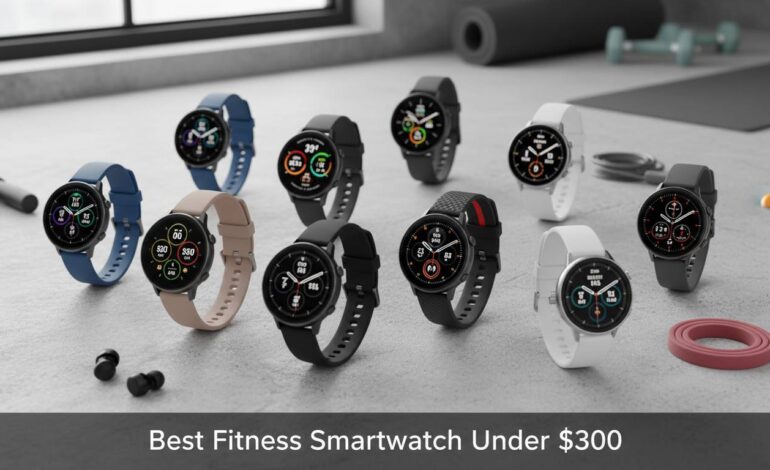
Finding a quality fitness smartwatch that doesn’t break the bank can feel like searching for a needle in a haystack. Whether you’re training for your first 5K, tracking daily steps, or monitoring sleep patterns, you need a device that delivers accurate metrics without costing a fortune. The good news? You don’t need to spend $500 or more to get reliable fitness tracking, GPS, heart rate monitoring, and smartphone notifications. We’ve tested dozens of wearables in this price range to bring you the ten best fitness smartwatches under $300, each excelling in different areas from battery life to running-specific features.
Our Top Pick – Garmin vívoactive 5
The Garmin vívoactive 5 is our pick for the best overall fitness smartwatch under $300. It strikes a solid balance between fitness tracking and everyday smartwatch features, making it a good choice for users who want more than basic step counting.
Key Fitness Features:
- AMOLED display with always-on capability
- Built-in GPS with multi-GNSS support
- 24/7 heart rate and Pulse Ox sensor
- Sleep tracking with sleep score
- Stress tracking and body battery energy monitoring
- Over 30 preloaded sports apps including yoga, strength, and cardio
The vívoactive 5 has some upgrades over its predecessor, including a brighter AMOLED screen and better battery life—up to 11 days in smartwatch mode. The touchscreen works well, and the button plus touchscreen combination makes it easy to navigate during workouts.
Where this watch stands out is its fitness intelligence. The Body Battery feature combines stress, sleep, and activity data to tell you when you’re ready to push harder or should take a rest day. This kind of useful insight is where Garmin pulls ahead of many competitors at this price point.
Pros:
- Good battery life (up to 11 days)
- Solid fitness tracking with useful insights
- Sleek, comfortable design for all-day wear
- Music storage and playback controls
Cons:
- No ECG or irregular rhythm notifications
- Mobile app could be more intuitive
- Slightly bulkier than some competitors
Verdict: The Garmin vívoactive 5 is our top pick because it delivers real fitness value without the premium price. It’s a solid choice for anyone serious about tracking their health without spending a lot.
Runner Up – Fitbit Charge 6
The Fitbit Charge 6 takes the runner-up spot with strong value and Google integration. It looks like a fitness band, but this device has serious tracking capabilities that rival full-fledged smartwatches.
One of the biggest upgrades in the Charge 6 is Google integration. You get Google Maps for turn-by-turn directions and YouTube Music controls directly from your wrist. These features were missing from previous versions and make the device much more useful as an everyday companion.
The fitness tracking is good. Fitbit has years of experience here, and it shows in the accuracy of step counting, heart rate monitoring, and sleep tracking. The Daily Readiness Score is useful—it tells you each morning whether your body is ready for intense exercise or if you should focus on recovery.
Key Features:
- Bright AMOLED display
- 24/7 heart rate tracking with continuous SpO2
- Google Maps and YouTube Music integration
- 7-day battery life
- Google Wallet contactless payments
- 40+ exercise modes with SmartTrack auto-recognition
One drawback is the design—it’s a band-style device rather than a traditional watch. Some users prefer the look and feel of an actual watch case. But if you’re focused on fitness metrics and value, the Charge 6 delivers.
Pros:
- Great value for the features
- Best-in-class sleep tracking
- Google integration is actually useful
- Comfortable, lightweight design
Cons:
- Band-style design isn’t for everyone
- Limited third-party app ecosystem
- No built-in GPS (relies on phone for location)
Best for Running – Garmin Forerunner 55
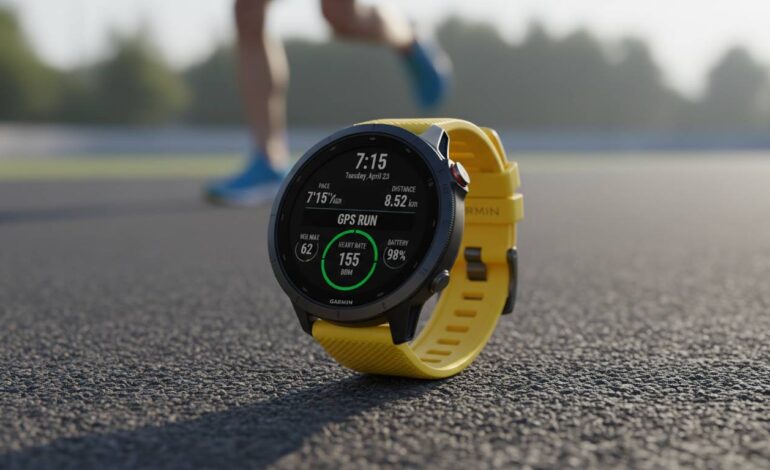
Runners need specific features, and the Garmin Forerunner 55 delivers. This watch was designed with runners in mind, offering metrics that casual fitness trackers can’t match.
The Forerunner 55 has built-in GPS with multiple satellite systems, ensuring accurate distance and pace tracking even in tricky environments like urban canyons or dense tree cover. The running dynamics are where this device really excels.
Features like Race Predictor give you estimated finish times for popular race distances based on your current fitness. The Recovery Time advisor tells you how long to wait before your next hard workout. Cadence alerts help you maintain optimal stride efficiency.
Key Features:
- Built-in GPS with multi-GNSS support
- Daily suggested workouts based on your training load
- Race Predictor and recovery advisor
- Cadence and stride length tracking
- 14-day battery life in smartwatch mode
- 20 hours in GPS mode
The watch is easy to use, with straightforward menus and clear data fields. New runners will appreciate the guided workouts, while experienced runners can dig into advanced metrics. At under $250, it’s the best running-specific watch you can buy without spending more.
Pros:
- Built for runners with useful training features
- Excellent GPS accuracy
- Long battery life for long runs and races
- Simple interface
Cons:
- Basic smartwatch features compared to vívoactive 5
- No music storage
- Monochrome display
Best Battery Life – Amazfit GTR 4
If battery life is your top priority, the Amazfit GTR 4 delivers endurance that most competitors can’t match. With up to 14 days of typical use, you’ll charge this watch far less often than anything from Garmin or Fitbit.
The GTR 4 uses a dual-band GPS system with circularly polarized antenna technology—something Garmin pioneered in its higher-end watches. The result is surprisingly accurate GPS tracking that rivals devices costing twice as much.
Beyond battery and GPS, the GTR 4 offers fitness tracking across 150+ sports modes. The Zepp app provides detailed post-workout analysis, though it’s not as polished as Garmin Connect or Fitbit’s apps.
Key Features:
- 14-day battery life in typical use
- Dual-band GPS with circularly polarized antenna
- 150+ sports modes
- BioTracker 4.0 PPG biometric sensor
- Bluetooth calling and voice assistant support
- Water resistance to 5ATM
The design leans toward traditional watch aesthetics with its round case and rotating crown. It looks less like a tech gadget and more like a regular timepiece, which some users prefer.
Pros:
- Excellent battery life
- Accurate GPS for the price
- Classic watch design
- Competitive price point
Cons:
- Zepp app needs work
- Less sophisticated fitness algorithms than Garmin
- Limited third-party integrations
Best for iOS Users – Apple Watch SE (2nd Generation)
iPhone users have a solid option in the Apple Watch SE (2nd generation). While it’s slightly above $300 in some configurations, the cellular version can often be found on sale, and it offers the smoothest experience for anyone deep in the Apple ecosystem.
The SE shares most of the Apple Watch Series 8’s DNA at a lower price. You get the same processor, the same display, and importantly, the same seamless integration with iPhone. Notifications, calls, messages, Apple Pay, and Siri all work without issues.
Fitness features include the full suite—workout tracking, heart rate monitoring, sleep tracking (with watchOS 10 updates), and fall detection. The lack of ECG and blood oxygen sensors might matter to some health-conscious users, but for most, the SE covers the basics.
Key Features:
- Seamless iOS integration
- Retina OLED display
- Fall detection and crash detection
- Swim-proof design
- S8 SiP processor
- Family Setup support
The main tradeoff is battery life. You’ll need to charge daily, unlike the week-long endurance of Garmin or Amazfit devices. But if you’re already in Apple’s world, the convenience is hard to beat.
Pros:
- Best iOS integration available
- Good app ecosystem
- Reliable fitness tracking
- Premium build quality
Cons:
- Requires daily charging
- No ECG or blood oxygen sensors
- Limited customization outside Apple ecosystem
Best for Android Users – Samsung Galaxy Watch FE
Android users get their own ecosystem option in the Samsung Galaxy Watch FE. This device brings Samsung’s Tizen OS to a more affordable price point, delivering a proper smartwatch experience with solid fitness tracking.
The Galaxy Watch FE features Samsung’s BioActive sensor, which combines optical heart rate, electrical heart signal, and bioelectrical impedance analysis for body composition metrics. It’s impressive technology that you won’t find in most competitors at this price.
One standout feature is Samsung Health, which provides detailed sleep analysis, workout tracking, and health insights. The watch also supports Samsung Pay for contactless payments without needing your phone or wallet.
Key Features:
- BioActive sensor for multi-dimensional health tracking
- Samsung Health ecosystem
- Samsung Pay support
- 40-hour battery life
- 8GB storage for apps and music
- LTE connectivity option
The rotating bezel—a hallmark of Samsung watches—makes navigation intuitive. You can scroll through menus and notifications by spinning the bezel, which is easier than swiping touchscreen controls during workouts.
Pros:
- Comprehensive health sensors
- Rotating bezel navigation
- Strong Samsung ecosystem integration
- Good value for a full smartwatch
Cons:
- Tizen apps less abundant than watchOS or Wear OS
- Battery life could be better
- Performance can slow over time
Best Budget Option – Fitbit Inspire 3
Not everyone needs—or wants—a feature-packed flagship. Sometimes you just want reliable fitness tracking at an affordable price, and the Fitbit Inspire 3 delivers exactly that for under $100.
Don’t let the low price fool you. The Inspire 3 tracks heart rate, steps, calories, sleep, and offers SpO2 monitoring. You get Fitbit’s good sleep tracking algorithms and the Active Zone Minutes system that encourages you to stay moving throughout the day.
The design is slim and unobtrusive—more like a fashionable bracelet than a bulky watch. This makes it perfect for everyday wear or sleeping, since you might actually forget you’re wearing it.
Key Features:
- Up to 10-day battery life
- Heart rate and SpO2 monitoring
- Sleep tracking with Sleep Score
- Active Zone Minutes
- Swim-proof to 50 meters
- Smartphone notifications
The main limitation is the lack of built-in GPS—you’ll need to carry your phone for accurate distance tracking during outdoor activities. But for gym workouts, swimming, or general daily activity, it’s not a problem.
Pros:
- Incredible value under $100
- Good battery life
- Comfortable, lightweight design
- Reliable basic fitness tracking
Cons:
- No built-in GPS
- Basic display
- Limited smart features
Best Style Meets Function – Garmin vívomove Sport
The Garmin vívomove Sport proves that fitness watches don’t have to look like mini computers on your wrist. This hybrid smartwatch hides smart features inside a traditional analog design, appealing to users who want tracking without the tech-forward look.
The watch face has hidden OLED displays that only light up when you interact with the watch. This creates a clean, sophisticated look that’s appropriate for business settings or formal occasions while maintaining fitness tracking capabilities.
When you engage the smart features, you get heart rate monitoring, stress tracking, sleep analysis, and smartphone notifications. The activity tracking includes steps, calories, and Move IQ automatic activity detection.
Key Features:
- Hybrid analog/digital design with hidden OLED displays
- Heart rate and stress tracking
- Sleep tracking
- 5-day battery life (plus 1 more in clock mode)
- Swim-proof to 50 meters
- Smartphone notifications and controls
The main tradeoff is less detailed workout tracking compared to purpose-built fitness watches. But if style matters and you want something that transitions from gym to office to evening out, the vívomove Sport works.
Pros:
- Elegant hybrid design
- Discrete smart features
- Comfortable for all-day wear
- Good activity tracking for everyday users
Cons:
- Less detailed workout metrics
- Smaller display for data viewing
- Not ideal for serious athletes
Honorable Mentions
Several other watches deserve recognition even if they didn’t make our top ten.
Garmin Forerunner 265 – If you can stretch your budget slightly, the Forerunner 265 offers an excellent training-focused experience with a bright AMOLED display and advanced running dynamics. It often dips below $300 during sales.
Huawei Watch GT 4 – Huawei makes surprisingly capable watches, and the GT 4 offers excellent battery life and comprehensive fitness tracking. The main consideration is reduced app support due to ongoing US sanctions.
Mobvoi TicWatch E3 – The TicWatch E3 runs Wear OS, giving you access to the full Google smartwatch ecosystem. It’s a good choice for Android users who want apps over battery life.
How We Tested These Smartwatches
Testing fitness smartwatches requires more than unboxing and initial impressions. Our evaluation process spans multiple weeks and covers real-world usage scenarios.
Testing Methodology:
We assess each watch across several key dimensions. First, we evaluate fitness tracking accuracy by comparing step counts, heart rate readings, and GPS-tracked distances against reference devices and known distances. Battery life gets tested through real-world usage including notifications, workout tracking, and sleep monitoring—not just manufacturer’s claims.
We also spend time with each device’s companion app, evaluating data presentation, ease of use, and available insights. A smartwatch is only as good as the ecosystem behind it.
Finally, we consider day-to-day usability: how comfortable is the watch for all-day wear? How easy is navigation? How reliable are notifications? These factors determine whether a watch becomes part of your daily routine or ends up in a drawer.
“The best fitness smartwatch is one you’ll actually wear consistently. Features matter less than whether the device fits seamlessly into your lifestyle.”
What to Look for in a Fitness Smartwatch
Before buying, consider what matters most for your specific needs.
GPS vs. Phone-Dependent: Built-in GPS means accurate outdoor tracking without carrying your phone. This matters for runners and cyclists but adds cost and battery drain.
Battery Life: How often are you willing to charge? Daily charging (Apple Watch) versus bi-weekly charging (Garmin) represents a significant lifestyle difference.
Ecosystem: Your smartphone operating system matters. iPhone users get the smoothest experience with Apple Watch, while Android users have more options but should consider Samsung or Wear OS devices.
Fitness Features: Think about your activities. Runners need GPS and cadence tracking. Swimmers need water resistance. Sleep trackers should be comfortable enough to wear in bed.
Smart Features: Do you want full smartphone integration with apps and payments, or is basic notification mirroring enough?
Conclusion
Finding the best fitness smartwatch under $300 comes down to understanding your priorities. The Garmin vívoactive 5 earns our top pick by delivering the most balanced experience—solid fitness tracking, good battery life, and useful everyday smartwatch features at a reasonable price.
But the right choice depends on your specific needs. Runners should consider the Garmin Forerunner 55. Budget-conscious buyers get great value from the Fitbit Inspire 3. iPhone users will love the Apple Watch SE, while Android power users might prefer the Samsung Galaxy Watch FE.
Whatever you choose, today’s sub-$300 fitness watches offer capabilities that would have cost double or triple just a few years ago. You don’t need to spend a fortune to get accurate heart rate monitoring, GPS tracking, sleep analysis, and smartphone notifications on your wrist.
The best fitness smartwatch is the one you’ll actually wear every day. Consider your priorities, try on the options if possible, and pick the device that fits your lifestyle. Your fitness journey deserves a companion that keeps up with your goals without emptying your wallet.
FAQs
What is the best fitness smartwatch under $300 for most people?
The Garmin vívoactive 5 offers the best overall balance of features, battery life, and price for most users. It provides comprehensive fitness tracking, built-in GPS, and solid smartwatch features at $299.
Do I need built-in GPS on my fitness smartwatch?
If you primarily run, walk, or cycle outdoors and want accurate distance tracking without carrying your phone, built-in GPS is essential. If you mainly track indoor workouts or don’t mind bringing your phone, you can save money with GPS-dependent models.
How accurate are heart rate monitors on budget fitness watches?
Most modern fitness watches from reputable brands like Garmin and Fitbit provide heart rate accuracy within 5% of chest strap monitors during moderate exercise. Accuracy decreases during high-intensity movements or when the watch is worn loosely.
Which fitness smartwatch has the longest battery life?
The Amazfit GTR 4 offers up to 14 days of battery life in typical use, making it one of the longest-lasting options in this price range. Garmin watches like the Forerunner 55 also excel, offering up to 14 days in smartwatch mode.
Can I swim with these fitness smartwatches?
Most fitness smartwatches in this price range offer water resistance rated at 5ATM, meaning they’re suitable for swimming in pools and shallow water. Always check the specific water resistance rating before swimming.
Is the Fitbit or Garmin app better?
Garmin Connect offers more advanced training metrics and customization, while Fitbit provides better sleep tracking and a more user-friendly interface. Your preference depends on whether you prioritize training analysis (Garmin) or general wellness insights (Fitbit).