Best Electric Toothbrushing Technique for a Cleaner, Healthier Smile

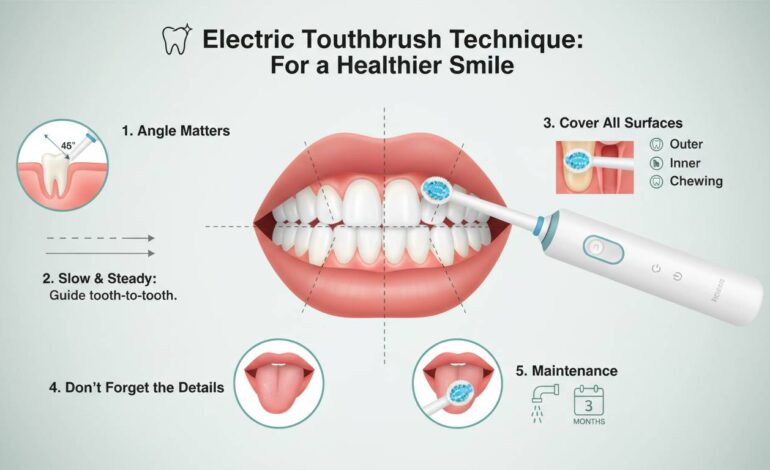
If you’re looking to get the cleanest, healthiest smile with an electric toothbrush, the key is using the right technique: That means brushing twice a day for two minutes, holding the brush at a 45-degree angle, letting it do the work, and moving slowly from tooth to tooth while covering all surfaces.
Why Technique Beats Technology Alone
Electric toothbrushes outperform manual ones in removing plaque, reducing gingivitis, and improving gum health—thanks to their oscillating or high-speed motions. One source notes they achieve superior cleaning even after a single use, thanks to strokes reaching hard-to-reach areas and more thoroughly removing surface stains . Another review confirms powered brushes consistently reduce plaque and gingivitis more than manual brushes over time .
But even the best brushes can’t make up for poor habits. Dr. Anne Clemons of Cleveland Clinic explains it depends more on how you brush than on the device itself. A two-minute session can be effective—if done thoughtfully—but flossing and cleaning between teeth remains essential .
Core Principles of Electric Toothbrushing
1. Stick to the Two-Minute Rule, Twice Daily
Almost everyone underestimates brushing time—which should be two minutes per session. Most electric toothbrushes come with built-in timers or quadrant pacers that alert you every 30 seconds . Dividing your mouth into four sections helps ensure even coverage .
2. Hold at a 45-Degree Angle to Gumline
Position the brush so bristles meet both tooth and gum. That angle helps clean where plaque often gathers. It’s a common recommendation across sources .
3. Let the Brush Do the Work — Don’t Scrub
One frequent mistake is over-brushing or scrubbing like a manual brush. Electric brushes are designed to move bristles rapidly—apply light guidance, not force .
4. Take It Slow, Tooth by Tooth
Pause on each tooth surface for a couple of seconds rather than rushing across. This method—like “parking, not sweeping”—maximizes contact and cleaning power .
5. Cover All Surfaces: Front, Back & Chewing
Ensure every surface gets attention:
– Outer (cheek-facing)
– Inner (tongue-facing)
– Chewing surfaces
Missing inner surfaces is one of the most common oversight patterns .
6. Rinse, Dry, Replace
Rinse your brush head after each use, store it upright to dry, and avoid closed containers that trap moisture . Replace the head every three months—or sooner if bristles fray .
Tweaks for Different Toothbrush Types and Needs
Sonic vs. Oscillating Brushes
Sonic models vibrate at high frequency; they’re gentler and produce fluid cleaning beyond direct contact. Oscillating-rotating models spin on each tooth and may remove slightly more plaque—but technique matters more than type .
Sensitive Gums or Teeth
Use extra-soft brush heads and minimal pressure. Slow down further to avoid aggravation .
Braces, Crowns, Implants
Move slowly around these areas. Angle the brush to reach above and below wires or jewelry. Interdental tools help complement brushing .
Kids and Dexterity Challenges
Guide their hand and focus on maintaining placement and timing over speed or coverage .
Building Good Oral Care Habits
Electric brushes can include coaching features: pressure sensors, timers, and apps with feedback . These tools help reinforce proper habits over time.
Still, toothpaste and brushing won’t replace flossing or cleaning between teeth—integrate interdental care daily .
Occasionally, cleaning your brush—rinsing bristles or soaking weekly—can limit bacteria buildup .
Quote from an Expert
“Electric toothbrushes support better results, but they’re only part of the toolbox. Brushing intentionally and thoroughly matters most.” — Dr. Anne Clemons, Cleveland Clinic
Real-World Examples: Small Changes, Big Smiles
- Thoughtful Timing: Setting your phone timer and dividing brushing into quadrants helped a busy parent go from 60-second sessions to full coverage.
- Switching to Soft Brush Heads: One user with receding gums found relief and more effective cleaning switching brands and brushing softer, slower.
- Kids’ Routine Win: Timing brushing as a game—“press the buzzer before two minutes”—turned brushing into a playful habit.
These aren’t flashy habits—but they lead to consistent, lasting improvement.
Summary & Next Steps
To master electric toothbrushing, follow these steps:
– Brush twice daily for two minutes with timer or quadrant pacing.
– Hold at 45° to gumline, and let the brush work—no scrubbing.
– Move slowly, parking on each tooth surface.
– Cover front, back, chewing surfaces.
– Rinse, air dry, and replace heads regularly.
– Tailor approach for sensitivity, braces, or kids.
– Support with flossing and interdental care.
– Use built-in guides and keep brush hygienic.
Your smile will get cleaner, your gums healthier—and over time, it becomes second nature.
FAQs
What angle should I hold my electric toothbrush at?
Hold it at roughly a 45-degree angle to your gumline. That way, the bristles reach plaque at the gum edge without overly rubbing—it’s widely recommended by dentists and guides.
How long should I brush with my electric toothbrush?
Brush for two full minutes, twice daily. Many brushes beep or pause every 30 seconds—use that to switch quadrants and ensure even brushing.
Can I scrub harder with an electric brush?
No need. Electric brushes do the motion—too much pressure can wear enamel or harm gums. Gentle guidance gives the best clean.
How often do I need to replace the brush head?
Replace it every three months, or sooner if bristles fray. Worn heads clean poorly and harbor bacteria.
Are sonic and oscillating brushes different in technique?
Only slightly. Sonic models vibrate and benefit from gentle sweeping, while oscillating ones work tooth by tooth. But correct, slow technique matters more than type.
Is flossing still needed with an electric toothbrush?
Absolutely. Brushing—even electric—won’t reach between teeth. Daily flossing or interdental cleaning is essential to remove hidden plaque.
Putting a little mindfulness into your electric toothbrushing routine makes all the difference. Play your timer, slow down, be intentional, and keep things fresh—your smile will thank you.