World Protein Day: Why Protein Matters for Your Health

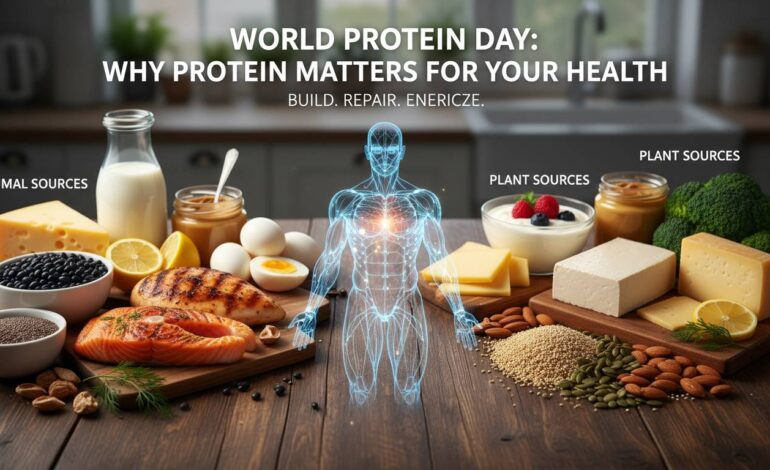
Every cell in your body contains protein. It’s what keeps you alive and moving—your muscles, your immune system, your skin, all of it runs on this stuff. That’s why people call it the building block of life, and it’s not an exaggeration.
March 20 is World Protein Day, a day dedicated to raising awareness about protein and its role in human health. Whether you’re trying to build muscle, you’re a parent worried about your kids’ growth, or you just want to stay healthy as you age, protein matters. This guide covers what the day is about, why protein is so important, and how you can take part.
Understanding World Protein Day
World Protein Day shows up every year on March 20. It’s a chance for nutritionists, health professionals, food scientists, and regular people to talk about protein—why we need it, where to get it, and who’s not getting enough.
Here’s the thing: a lot of people around the world don’t get enough protein, especially in developing countries. The point of World Protein Day is to change that. Advocates hope that by having this conversation every year, more people will pay attention to protein in their diets and push for better food policies.
The History and Purpose Behind World Protein Day
The idea for World Protein Day grew out of concerns about global nutrition. Researchers noticed that protein—one of the three macronutrients humans need to survive—was getting less attention than carbs and fats in public health conversations.
Food and agricultural organizations started pushing for change. They wanted protein to become a priority in global health discussions. The goal was (and still is) simple: get individuals and policymakers to take protein nutrition seriously.
Beyond awareness, World Protein Day tries to tackle the gap between rich and poor countries when it comes to protein access. It also looks at sustainability—how we produce and eat protein affects the environment, and that’s worth thinking about.
“Protein is fundamental to human health, yet millions of people around the world still lack access to adequate protein sources. World Protein Day reminds us that addressing protein security is not just a nutritional issue but a matter of global equity,” notes the Food and Agriculture Organization in their nutritional guidance documents.
Why Protein Is Essential for Your Body
Protein does more in your body than any other nutrient. Here’s a breakdown of what it actually does.
Muscle Building and Maintenance
Your muscles are made of protein. When you work out— especially with weights—you’re actually tearing muscle fibers. Protein provides the amino acids that repair those tears, which is how muscles get bigger and stronger over time. This process is called muscle protein synthesis, and it needs protein to work.
If you’re an athlete or you exercise regularly, you need more protein than someone who sits all day. Your body burns through amino acids faster when you’re active.
Enzyme and Hormone Production
Enzymes are proteins that speed up chemical reactions—digestion, energy production, all of that. Hormones, many of which are protein-based, control your metabolism, growth, stress response, and reproduction.
Without enough protein, your body can’t make enough enzymes and hormones. That throws everything out of balance and causes health problems.
Immune Function
Your immune system depends on proteins to fight off infections. Antibodies are specialized proteins that identify and neutralize harmful pathogens. If you’re not eating enough protein, your body can’t produce enough antibodies, and your immune system weakens.
This is why people who are malnourished get sick more often. It’s not complicated—your body needs protein to defend itself.
Skin, Hair, and Nail Health
Collagen and keratin are proteins that keep your skin, hair, and nails healthy. Without enough protein, your nails become brittle, your hair thins, and your skin looks dull or ages faster.
Dermatologists often check protein intake when patients come in with hair or nail problems. Sometimes that’s the missing piece.
How to Celebrate World Protein Day
You don’t have to do anything dramatic. Here are some ideas that actually make a difference.
Explore High-Protein Recipes
Cook something new. Try a lentil soup you’ve never made, grill some chicken differently, or experiment with tofu if you usually don’t. Every year, nutrition organizations and food bloggers share World Protein Day recipes—there’s no shortage of ideas.
Learn About Protein Sources
Take some time to understand where protein comes from. Animal products like meat, fish, eggs, and dairy give you complete proteins with all nine essential amino acids. Plant sources—beans, nuts, seeds, grains—often need combining to get the full amino acid profile.
This matters if you’re vegetarian or vegan. It’s not hard to get enough protein from plants, but you have to pay attention.
Calculate Your Protein Needs
Figure out if you’re eating enough. The general guideline is about 0.8 grams of protein per kilogram of body weight for adults. But athletes need more. Older adults need more. People recovering from surgery need more.
Online calculators can give you a rough idea. A registered dietitian can do better.
Share Knowledge With Others
Tell someone about what you learned. Talk to your family, your friends, your coworkers. Organize a dinner where everyone brings a protein-rich dish. The more people think about protein, the better.
Best High-Protein Foods to Include in Your Diet
Here’s what to eat if you want more protein.
Animal-Based Protein Sources
Chicken breast has about 31 grams of protein per 100 grams. Turkey breast is similar but with fewer calories.
Fish is great. Salmon gives you around 25 grams per 100 grams plus omega-3s, which are good for your heart and brain. Tuna, cod, shrimp—pick your favorite.
Eggs are cheap and nutritious. One large egg has about 6 grams of protein. Greek yogurt has roughly 10 grams per 100 grams—good for breakfast or a snack.
Plant-Based Protein Sources
You can get plenty of protein without meat. Lentils have about 9 grams per 100 grams cooked. Beans and chickpeas work too.
Soy products—tofu, tempeh, edamame—are complete plant proteins. Tofu has around 8 grams per 100 grams, and it takes on whatever flavor you cook it with.
Nuts and seeds are higher in fat but they still pack protein. Almonds have about 21 grams per 100 grams. Pumpkin seeds have around 30 grams.
Quinoa is unusual among grains because it’s a complete protein. It has about 4 grams per 100 grams cooked.
Conclusion
World Protein Day on March 20 is worth paying attention to. Protein keeps your muscles working, your immune system fighting, and your whole body functioning. It’s not optional—it’s essential.
You don’t need to make a big deal out of it. Just eat enough protein, try some new recipes, maybe tell someone about what you learned. That’s enough.
As conversations about nutrition security and sustainable food keep growing, days like this help keep protein in the picture. Your body will thank you.
FAQs
When is World Protein Day observed?
March 20 every year.
What is the recommended daily protein intake for adults?
About 0.8 grams per kilogram of body weight, though athletes and older adults often need more.
Can you get enough protein from plant-based sources alone?
Yes, if you eat a varied diet with beans, grains, nuts, and seeds. Just make sure you’re getting all essential amino acids throughout the day.
What are the signs of protein deficiency?
Fatigue, weak muscles, hair loss, brittle nails, getting sick often, and slow healing wounds. Severe deficiency causes swelling and can be life-threatening, especially in children.
How does protein help with weight management?
Protein keeps you fuller longer and takes more energy to digest. Eating more protein often means eating less overall without trying as hard.
Is it possible to eat too much protein?
For healthy people, eating more protein than needed isn’t dangerous. But very high intakes can stress kidneys in people who already have kidney problems.