Atal Setu Toll Rates 2024 | Complete Fare & Payment Guide

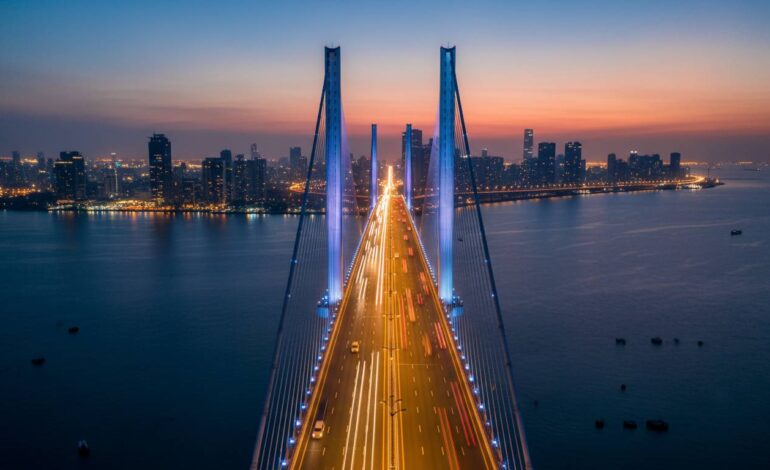
Atal Setu, also called the Mumbai Trans Harbour Link (MTHL), is India’s longest sea bridge at 21.8 kilometers. The bridge opened in January 2024, connecting Mumbai with Navi Mumbai and cutting travel time between the two cities from about two hours to around 20 minutes. This guide covers toll rates, payment methods, and practical information for your trip.
About Atal Setu
The six-lane bridge is a major infrastructure project for Mumbai. It connects Mumbai’s side at Sewri to Navi Mumbai’s side at Shivaji Nagar. The project cost around ₹18,000 crore.
The bridge is managed by the Mumbai Trans Harbour Link Company Limited (MTHCL), which falls under the National Highways Authority of India (NHAI). The toll plaza is at Shivaji Nagar in Navi Mumbai.
Commuters use the bridge to travel between south Mumbai and the Navi Mumbai airport area. Logistics vehicles also use it frequently to move between the two regions.
Atal Setu Toll Rates
NHAI fixed these toll rates before the bridge opened:
One-way tolls:
- Car/Jeep/Van: ₹250
- Light Commercial Vehicle: ₹400
- Bus (2-axle): ₹800
- Truck (3-axle): ₹800
- Multi-axle Vehicle (4-6 axles): ₹1,200
- Motorcycle: ₹150
Round trip (return within 24 hours):
- Car/Jeep/Van: ₹375
- Light Commercial Vehicle: ₹600
- Bus (2-axle): ₹1,200
- Truck (3-axle): ₹1,200
- Multi-axle Vehicle (4-6 axles): ₹1,800
The round trip discount saves you about 25-33% compared to two one-way trips. This works well for same-day return journeys.
Toll rates may change over time based on government notifications. Check the official MTHL website before your trip. Rates include all applicable taxes.
FASTag Requirements
FASTag is mandatory for all vehicles on Atal Setu. NHAI requires electronic toll collection to keep traffic moving. If your vehicle doesn’t have FASTag, buy one from any authorized bank before entering the bridge.
Benefits of using FASTag:
- Faster transit through dedicated lanes (under 10 seconds typically)
- Automatic deduction from your linked bank account
- Cashback offers from some banks (1-2.5% on tolls)
- SMS alerts for every transaction
Before your trip, check that your FASTag is affixed to the windshield and has enough balance. For cars, keep at least ₹250 in your FASTag account to avoid issues at the toll plaza.
Payment Methods
The toll plaza accepts several payment options:
- FASTag (recommended): All lanes support automatic deduction. This is the fastest option.
- Cash: Counters exist but expect longer queues. Carry exact change.
- Credit/Debit Cards: Available at some lanes, but slower than FASTag.
- UPI/QR Code: Some lanes support digital payments through UPI apps.
FASTag is definitely the smoothest choice. Dedicated lanes let you pass through without stopping.
Travel Time
The main reason to use Atal Setu is the time savings:
| Route | Distance | Time |
|---|---|---|
| Via Atal Setu | 21.8 km | 20-25 minutes |
| Via Mumbai Sea Link | 18 km | 30-35 minutes |
| Via Eastern Freeway | 22 km | 35-45 minutes |
| Via Old Routes | 35+ km | 60-90 minutes |
The bridge is open 24 hours. Peak hours mean more traffic—early morning (before 7 AM) and late evening (after 9 PM) are usually clearest. Saturday mornings and Sunday afternoons get busy with people trying out the new route.
Speed limits are 100 km/h for cars and 60-80 km/h for heavier vehicles. Speed cameras are active, and fines apply. During heavy monsoon rain, speed limits may drop temporarily for safety.
Atal Setu vs Other Routes
Whether to use Atal Setu depends on where you’re going:
Choose Atal Setu when:
- Traveling between South Mumbai and Navi Mumbai areas (Vashi, Sanpada, or the airport)
- Carrying heavy luggage or traveling with family
- Heading to the Mumbai-Pune Expressway
- Wanting to skip traffic bottlenecks in Kurla, Ghatkopar, or Vashi
Choose other routes when:
- Traveling within South Mumbai or to Western Suburbs (Andheri, Bandra)
- Trying to save on toll costs
- Other routes are faster during off-peak hours
- Your destination is closer to the Western Express Highway
The Mumbai Coastal Road, also open since early 2024, works well for Western Suburbs. Many people combine Atal Setu with the Coastal Road depending on their specific route.
Tips for Using Atal Setu
Before you go:
- Check your FASTag balance
- Check traffic on Google Maps or the MTHL app
- Know your entry and exit points—wrong turns add distance
- Fill up fuel before entering; rest areas are limited on the bridge
During your journey:
- Maintain consistent speed
- Keep distance from the vehicle ahead, especially in fog
- Don’t stop on the bridge for photos—it’s dangerous and illegal
- Use emergency phones every 500 meters if needed
Saving money:
- Return within 24 hours for the discounted rate
- Carpool to split toll costs
- Some credit cards offer rewards on toll payments
Emergency ambulance and mechanic services are available. If your vehicle breaks down, move to the shoulder if possible and call the emergency hotline.
Conclusion
Atal Setu has changed how people move between Mumbai and Navi Mumbai since opening in January 2024. At ₹250 for a one-way car trip, it’s not cheap, but the time savings (over an hour in typical traffic) can be worth it for many commuters.
Make sure your FASTag is working and has balance before your trip. Consider round trips to save money, and avoid peak hours if possible.
FAQs
What is the toll for a car on Atal Setu?
One-way is ₹250; round trip (within 24 hours) is ₹375.
Does Atal Setu accept FASTag?
Yes, FASTag is mandatory. All lanes support electronic toll collection.
How much time does Atal Setu save?
It cuts travel time from about 60-90 minutes to 20-25 minutes in normal traffic.
Is Atal Setu open 24 hours?
Yes, it’s open 24/7 like other National Highways.
Can I pay cash at Atal Setu?
Yes, but FASTag lanes are much faster. Exact change helps if paying cash.
How long is Atal Setu?
21.8 kilometers—India’s longest sea bridge and the 12th longest in the world.