Hyundai Motors India Share Price Today | Live Stock Updates

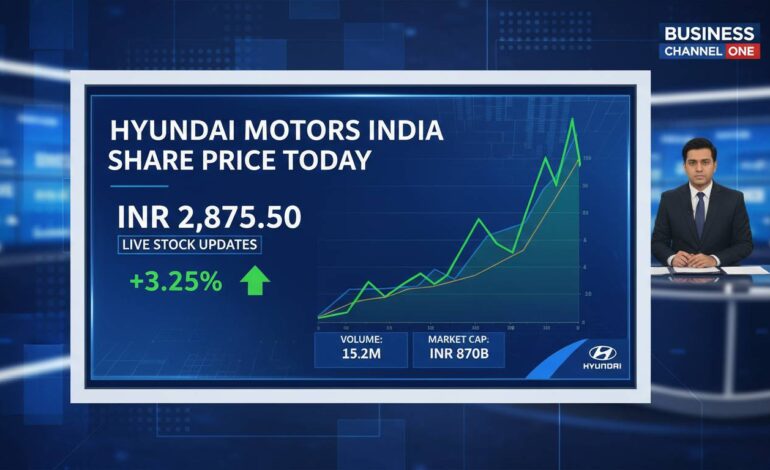
Hyundai Motors India Ltd (HMIL) trades on the National Stock Exchange (NSE: HYUNDAI) and BSE (BSE: 544274) following its IPO in October 2024. As one of India’s largest automobile manufacturers, tracking Hyundai Motors India share price matters for investors looking at the automotive sector. The stock draws significant market attention—Hyundai is India’s second-largest passenger vehicle maker after Maruti Suzuki. This guide covers current trading details, fundamental metrics, and investment considerations for Hyundai Motors India stock.
Understanding Hyundai Motors India’s Stock Listing
Hyundai Motors India debuted on Indian stock exchanges in October 2024. The IPO was the largest in India that year and one of the biggest automotive public offerings in the country’s history. The company chose to list in India rather than its home market of South Korea, reflecting the growing importance of the Indian automotive market and investor demand for quality manufacturing stocks.
The IPO drew strong interest from institutional and retail investors, with the issue being oversubscribed multiple times. The response reflected confidence in Hyundai’s brand presence in India, where the company has operated for nearly three decades through its subsidiary. The listing gave Indian investors a chance to directly own shares in one of the world’s largest automotive company’s Indian operations.
For current and prospective shareholders, understanding the dual listing on NSE and BSE matters. Both exchanges provide real-time price discovery, though slight variations in trading volumes and prices may occur throughout the trading day. Most investors prefer NSE because of its higher liquidity and tighter bid-ask spreads.
Current Trading Information and Price Discovery
To find today’s Hyundai Motors India share price, check reliable financial portals such as Moneycontrol, Screener.in, or the official NSE/BSE websites. These platforms provide real-time or delayed price updates along with comprehensive trading data. The stock trades under the ticker symbol “HYUNDAI” on NSE and scrip code 544274 on BSE.
Indian stock markets operate from 9:15 AM to 3:30 PM IST, Monday through Friday, excluding market holidays. During market hours, the price moves based on buying and selling pressure, corporate developments, broader market sentiment, and macroeconomic factors affecting the automotive sector.
Investors watching intraday price movements should pay attention to pre-market trading sessions, which begin at 9:00 AM. Early trading activity often sets the tone for the day’s price action. Understanding how global cues—particularly from Asian markets and the auto sector—influence price movements helps in making informed trading decisions.
Key Stock Metrics and What They Mean
Several fundamental metrics help investors evaluate whether Hyundai Motors India share price is fairly valued. These metrics matter for both short-term traders and long-term investors.
Market Capitalization: This represents the total market value of the company’s outstanding shares, calculated by multiplying the current stock price by the total number of shares. Market cap indicates the company’s size within the Indian stock market and determines whether it falls into large-cap, mid-cap, or small-cap categories.
P/E Ratio (Price-to-Earnings): This metric compares the current stock price to the company’s earnings per share, showing how much investors are willing to pay for each rupee of earnings. A high P/E might suggest expected future growth, while a lower P/E could indicate the stock is undervalued or facing challenges.
52-Week High/Low: These figures show the highest and lowest prices at which the stock has traded over the past year, providing context for current price levels and potential support or resistance zones.
Volume and Delivery Percentage: Trading volume indicates how actively the stock is traded, while delivery percentage shows what portion of traded shares were actually delivered for settlement. High delivery percentages often indicate genuine investment interest rather than speculative trading.
Book Value and ROE: Return on Equity (ROE) measures how efficiently the company generates profits from shareholder capital, while book value per share indicates the underlying asset value backing each share.
Company Overview and Business Fundamentals
Hyundai Motors India operates as a wholly-owned subsidiary of Hyundai Motor Company, the world’s third-largest automotive manufacturer by sales. The company makes passenger vehicles including hatchbacks, sedans, and SUVs, serving various price segments of the Indian market.
The product portfolio includes popular models like the Creta SUV, Venue, i20, Verna, and electric and hybrid vehicles launched recently. This diverse lineup helps Hyundai address different consumer segments and adapt to shifting market preferences toward SUVs and green mobility solutions.
Hyundai operates manufacturing facilities in Sriperumbudur, Tamil Nadu, with annual production capacity exceeding 800,000 units. The company has invested significantly in expanding production capabilities and the supplier ecosystem to meet growing domestic demand and explore export opportunities to neighboring markets.
The Indian automotive industry faces several dynamic factors affecting company performance, including government policies on electric vehicles, emission standards (BS6 Phase 2 implementation), input costs (steel, aluminum, semiconductors), and consumer financing conditions. These sector-specific factors directly influence Hyundai Motors India’s revenue projections and profitability.
Performance Analysis and Historical Context
Since its IPO, Hyundai Motors India share price has experienced typical post-IPO volatility as the market established fair value for the stock. The performance reflects broader market conditions, automotive sector trends, and investor sentiment toward new listings.
Comparing Hyundai’s performance with sector peers like Maruti Suzuki, Tata Motors, and Mahindra & Mahindra provides useful context. Each company occupies different market positions and growth strategies—while Maruti dominates the mass-market segment, Hyundai focuses more on the premium and SUV categories where margins tend to be higher.
Industry analysts track monthly sales data, export figures, and dealer inventory levels to gauge company health. Understanding these operational metrics helps connect stock price movements to actual business performance rather than speculation alone.
The company’s ability to maintain market share, launch new products successfully, and navigate the transition to electric vehicles will likely drive long-term stock performance. Investors should consider these fundamental factors alongside price movements when evaluating the stock.
How to Buy and Sell Hyundai Motors India Shares
Investing in Hyundai Motors India share price requires a demat account and trading account with a registered brokerage firm. Indian residents can open these accounts with banks, brokerage houses, or online trading platforms that provide access to NSE and BSE.
For those new to stock market investing, understanding order types matters. Market orders execute immediately at the current market price, while limit orders let investors specify the maximum purchase price or minimum selling price. Stop-loss orders help manage risk by automatically triggering a sale if the price falls to a predetermined level.
Systematic Investment Plans (SIPs) in stocks offer a disciplined approach for building positions over time, reducing the impact of market volatility through rupee-cost averaging. This approach works well for long-term investors who want to accumulate shares without timing the market.
Foreign institutional investors (FIIs), domestic institutional investors (DIIs), and retail investors all trade Hyundai Motors India shares. Monitoring institutional holding patterns provides insights into how sophisticated investors view the stock’s potential.
Investment Considerations and Risk Factors
Before investing in Hyundai Motors India share price, consider several risk factors specific to the automotive sector and Indian market conditions.
Competitive Pressures: The Indian automotive market remains intensely competitive, with domestic manufacturers and global brands continuously launching new products. Maintaining market share requires ongoing investment in product development and brand building.
Regulatory Changes: Government policies regarding electric vehicle promotion, emission standards, and import duties significantly impact automotive companies. Changes in regulations could affect production costs and competitive positioning.
Economic Sensitivity: Automobile purchases are sensitive to economic conditions, interest rates, and consumer confidence. Economic downturns typically reduce discretionary spending on new vehicles, affecting company revenues.
Supply Chain Risks: Global supply chain disruptions, semiconductor shortages, and raw material price volatility pose ongoing challenges to automotive manufacturers.
Currency Fluctuations: As an import-dependent industry for certain components, currency movements affect input costs and ultimately profitability.
“Investment decisions should be based on individual risk tolerance, investment horizon, and overall portfolio strategy. Hyundai Motors India offers exposure to India’s growing automotive sector, but like all investments, it carries inherent risks that investors must understand and accept.”
Conclusion
Hyundai Motors India share price represents an investment opportunity in one of India’s largest automotive manufacturers with an established brand presence and market position. The company’s successful IPO and ongoing market engagement reflect investor confidence in India’s automotive growth story.
For prospective investors, understanding the stock’s trading mechanics, fundamental metrics, and business fundamentals provides the foundation for informed decision-making. Regular monitoring of company news, sales performance, and industry developments helps track whether the investment thesis remains valid.
As with any stock investment, thorough research and consideration of personal financial circumstances should precede investment decisions. Consulting with financial advisors can provide personalized guidance based on individual investment goals and risk tolerance.
FAQs
How can I check today’s Hyundai Motors India share price?
Check the current price on financial portals like Moneycontrol, Screener.in, Trendlyne, or directly on the NSE and BSE websites. Most brokerage platforms also provide real-time stock quotes.
What is the NSE ticker symbol for Hyundai Motors India?
Hyundai Motors India trades on NSE under the symbol “HYUNDAI” and on BSE with scrip code 544274.
What factors affect Hyundai Motors India share price movements?
The stock is influenced by monthly sales data, quarterly financial results, government policy changes, competitive developments, global automotive trends, and broader market sentiment.
Is Hyundai Motors India a good stock for long-term investment?
The company has strong fundamentals and market position, but long-term suitability depends on individual research, risk tolerance, and portfolio composition. Consider consulting a financial advisor for personalized advice.
Does Hyundai Motors India pay dividends?
As a newly listed company, dividend policy details should be confirmed from the company’s investor relations communications and annual reports.
What is the market cap of Hyundai Motors India?
Market capitalization fluctuates with stock price. Calculate current market cap by multiplying the live share price with total outstanding shares, or obtain it from financial portals.