Mum vs Cha: Which Tea Reigns Supreme?

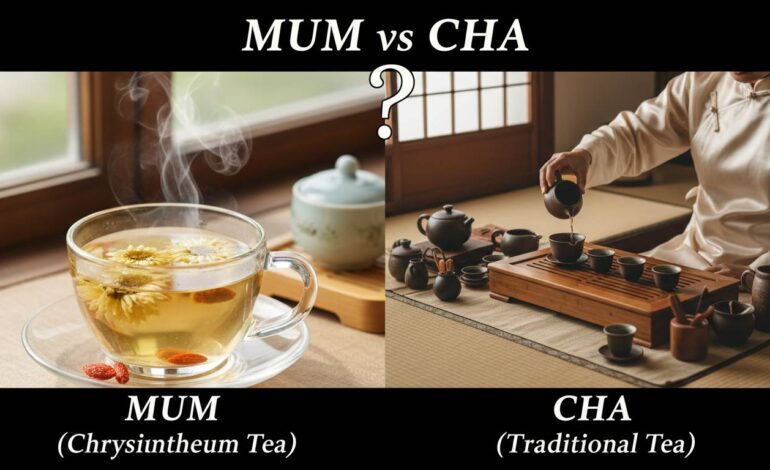
The world of tea can be genuinely confusing. If you’ve ever wondered about the difference between “mum” and “cha,” here’s the short version: “mum” is a specific flower tea, while “cha” is basically the word for tea itself in Mandarin and many other languages. One is an herbal infusion, the other is an entire category. This article breaks down what each one actually is, where they come from, and whether you should bother with either.
What Is “Mum” Tea?
“Mum” is shorthand for chrysanthemum tea—made from dried chrysanthemum flowers, usually Chrysanthemum morifolium or Chrysanthemum indicum. It’s popular in East Asia and has caught on in Western markets as a caffeine-free alternative to regular tea.
The taste is gently sweet and floral, with hints of honey. The flowers are harvested at bloom, then dried to preserve their color and compounds. What you get is a golden cup that’s soothing and light. No caffeine means you can drink it anytime without worrying about sleep.
Origins and Cultural Significance
Chrysanthemum tea has been around in China for over two thousand years. Historical texts mention it as early as the Eastern Han dynasty, where it was valued both for its flavor and its supposed medicinal properties. In Chinese traditional medicine, chrysanthemum was used to “cool” the body and support eye health. The flower also appears in Chinese art and literature as a symbol of longevity.
Japan has its own chrysanthemum traditions, though they’re more ceremonial than culinary. The Kagami Biraki festival celebrates the flower as a symbol of the imperial family. In Korea, chrysanthemum tea shows up in traditional remedies for sore throats and fevers.
Flavor Profile and Brewing
For chrysanthemum tea, use water around 200°F (93°C) and steep for three to five minutes. Water that’s too hot will make it taste astringent and ruin the delicate flavor. The tea turns a beautiful amber-gold and smells like dried flowers with a hint of honey.
White chrysanthemum flowers tend to be sweeter and more delicate; yellow varieties are slightly stronger and more herbaceous. Many people add rock sugar or honey, though traditional preparations often skip sweeteners. The mouthfeel is light and smooth—refreshing without the body you’d get from black tea.
Understanding “Cha”
“Cha” is one of the two main ways the word “tea” is said across the world. In Mandarin, “chá” means the beverage, and this pronunciation shows up in Japanese (ocha), Korean (cha), and many Southeast Asian languages. The other pronunciation—”tea”—came from the Min Chinese dialect in Fujian province and spread to European languages through early trade routes.
It’s worth noting that “cha” doesn’t refer to one specific type of tea. It’s an umbrella term for anything made from Camellia sinensis leaves—green tea, black tea, oolong, white tea, pu-erh, and yellow tea all count. The processing methods differ wildly, but they all come from the same plant. So comparing “mum” to “cha” is a bit like comparing apples to fruit trees.
“The distinction between ‘cha’ and ‘tea’ reflects the historical paths by which the beverage spread across civilizations,” says Dr. Jameson Chen, author of “The Cultural History of Tea in Asia.” “Each term represents different trade routes and cultural exchanges.”
Cha in Global Context
“Cha” shows up everywhere in tea-drinking cultures—China, Japan, Korea, Southeast Asia. Each has developed sophisticated traditions around growing, processing, and preparing Camellia sinensis. Chinese tea culture involves careful attention to water temperature, teaware, and brewing techniques specific to each tea type. Japanese茶道 (sadō) is one of the most formalized tea traditions in the world, with its focus on mindfulness and hospitality.
The spread of “cha” follows historical trade routes pretty closely. Persian, Arabic, and Russian languages all use words derived from “cha,” reflecting overland trade. European languages got “tea” through different pathways—the Portuguese brought “cha” from Macau, while the Dutch picked up “thee” from Fujian.
Types of Cha
There’s a huge range here, and each type tastes very different depending on how it’s processed.
Green tea is barely oxidized, so it stays fresh and vegetal—some are sweet and floral, others are rich and toasted. Black tea is fully oxidized, giving it bold, robust flavors with notes of malt, fruit, and sometimes leather or wood. Oolong is partially oxidized, creating complex flavors that swing anywhere from floral and fruity to toasty and creamy.
White tea is the least processed—just withered and dried buds and young leaves. It’s delicate, sweet, and slightly grassy. Pu-erh goes through microbial fermentation over years or even decades, developing earthy, smooth characteristics that collectors prize.
Mum vs Cha – The Key Differences
Here’s where it gets practical. Chrysanthemum tea comes from flower heads, not tea leaves, so it’s technically an herbal infusion. That matters for caffeine—traditional cha has caffeine (black tea has the most, white tea the least), while chrysanthemum has none. If you’re avoiding caffeine for pregnancy, sensitivity, or sleep reasons, that’s the big difference.
Chrysanthemum contains flavonoids, chlorogenic acid, and antioxidants. Traditional Chinese medicine has used it for cooling effects and eye health. Some modern studies confirm anti-inflammatory and antioxidant activity, though the research is less extensive than for traditional tea.
Green tea has probably been studied more than any other beverage. The catechins—especially EGCG—show strong antioxidant effects in plenty of studies. Regular consumption may support heart health, metabolism, and brain function. Black tea’s theaflavins and thearubigins have their own antioxidant properties. Both categories contribute to hydration and may offer benefits as part of a balanced diet.
Preparation Methods
Brewing mum and cha has some overlap but also important differences. Both need good water and proper timing, but the details vary.
Green tea needs lower temperatures (around 175°F or 80°C) and shorter steeps or it gets bitter. Black tea can handle near-boiling water and longer steeps. Chrysanthemum sits in the middle—around 200°F for three to five minutes.
Gaiwans (lidded bowls) work well for both and let you watch the leaves unfurl. Western teapots and infuser baskets are fine for everyday drinking but won’t give you the same control.
Which Tea Reigns Supreme?
Honestly, it depends on what you want. Chrysanthemum is great if you want something caffeine-free, light, and floral—good for evenings or hot summer days. If you want caffeine and the complex flavors that come from Camellia sinensis, the world of cha has endless options.
Many tea lovers drink both, picking based on the moment. A mild oolong on a cold afternoon feels different from a cup of chrysanthemum in the evening. They’re not competitors—they’re different tools for different occasions.
FAQs
Is chrysanthemum tea the same as regular tea?
No. Chrysanthemum tea is an herbal infusion made from dried flower heads. Regular tea comes from Camellia sinensis leaves. They’re different plants, and chrysanthemum has no caffeine.
Does “cha” always mean tea from Camellia sinensis?
Usually, yes. In most contexts, “cha” implies traditional tea made from tea plant leaves. Some regions might use it more broadly, but that’s the standard meaning.
Which is better for beginners: mum or cha?
Chrysanthemum is pretty approachable—gentle flavor, no caffeine. But traditional teas offer more variety to explore. Starting with a mild green tea or white tea is a good way to see if you like the tea world.
Can I drink chrysanthemum tea every day?
For most adults, moderate daily consumption is fine. But if you’re allergic to plants in the Asteraceae family (which includes ragweed and daisies), you might want to skip it. Check with a doctor if you have specific health concerns.
Which has more health benefits: mum or cha?
Green tea has more scientific research behind it. Chrysanthemum has a longer history in traditional Chinese medicine. Neither is objectively better—they work differently and have different traditional uses.
Does chrysanthemum tea taste like flower arrangements?
Not really. It’s subtle and pleasant—more like light honey than potpourri. Most people find it smooth and refreshing. If you’re not used to floral flavors, it might take a sip or two to adjust, but it’s generally not overpowering.