ODS vs DEL: Key Differences & Which to Choose | 2024 Guide

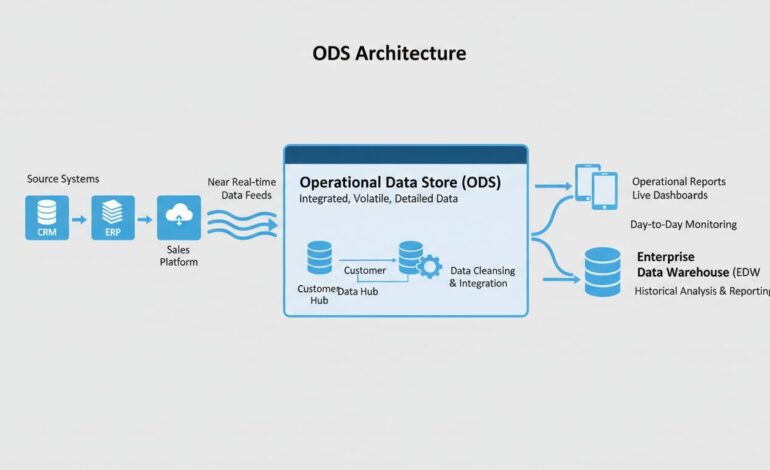
ODS and DEL are fundamentally different concepts in data management—one’s a storage architecture, the other’s a CRUD operation. Comparing them directly feels a bit like comparing a warehouse to a forklift. ODS (Operational Data Store) is a type of database that sits between your transactional systems and data warehouse, capturing current operational data from multiple sources. DEL typically refers to the SQL DELETE command, which removes records from a table.
This distinction matters because they serve completely different purposes. Let me break down what each one actually does and when you’d use them.
What Is an Operational Data Store (ODS)?
An ODS is essentially a midway point between your production databases and your data warehouse. While data warehouses store historical data for analytical reporting, an ODS keeps current or near-real-time operational data. This makes it useful for operational reporting, customer service applications, and situations where you need fresh data for decision-making.
The architecture pulls data from various operational systems—ERPs, CRMs, supply chain tools—and cleans it up, though it typically keeps a more detailed, granular structure than you’d find in a polished data warehouse.
Companies use ODS environments for day-to-day activities like inventory management, order tracking, and customer account lookups. The big benefit is that it takes reporting load off your production transactional systems.
Technically, ODS systems usually run on relational databases like PostgreSQL, Oracle, or SQL Server. They can refresh in batch mode on a schedule or in near-real-time using change data capture (CDC) technologies. The choice depends on how current your data needs to be versus what your system can handle.
Understanding DEL: The DELETE Operation
DEL usually refers to the SQL DELETE statement—one of the basic DML commands for removing records from a table. It’s been around since the earliest relational databases.
The DELETE statement removes rows based on conditions you specify. Run it without a WHERE clause and you’ll remove everything from the table—a mistake nobody wants to make. When properly constrained, it removes only the targeted records while keeping the table structure intact.
Modern databases offer variations: the standard SQL DELETE, TRUNCATE (which removes all rows faster), and transaction-safe DELETE operations that can be rolled back if needed.
One thing to watch: large DELETE operations can impact performance and generate substantial transaction logs. Many DBAs batch their deletions or use partition switching in enterprise environments.
Key Differences Between ODS and DEL
Here’s the thing—these aren’t competing technologies. ODS is a comprehensive data storage approach; DEL is a single database operation. Implementing an ODS requires schema design, integration strategy, and ongoing ETL development. DELETE is just routine maintenance.
ODS supports operational reporting and real-time data access. DELETE maintains data quality by removing outdated or erroneous records. You might use an ODS so customer service reps can see unified customer profiles, while DELETE keeps that ODS from growing indefinitely by purging old transaction records.
The scope difference is massive. An ODS implementation is a significant architectural decision with real infrastructure costs. DELETE operations happen daily in every database environment.
When to Use ODS in Your Architecture
Companies implement ODS when they need fresher data than their traditional data warehouse provides. Retailers use ODS so store managers can see real-time inventory across distribution centers. Banks use them so customer service reps have up-to-the-minute account information.
The driving factor is often performance—when report queries start slowing down production systems, moving those workloads to a dedicated ODS makes sense.
Healthcare organizations are a good example. They need clinical decision support applications that access patient data quickly without disrupting the EHR system.
Cloud platforms have made ODS implementation much easier. AWS DMS, Azure Data Factory, and Google Cloud Dataflow let you build ODS environments without as much specialized expertise as traditional on-prem setups required.
When to Use DELETE Operations
DELETE operations become necessary whenever you need to remove data. Common scenarios include maintaining data retention policies, removing test data from development environments, cleaning up bad imports, and managing workflow states.
Compliance is a huge driver. GDPR, HIPAA, and financial regulations often require deleting data after specific retention periods. Healthcare systems must delete patient data after retention periods expire—which requires careful deletion procedures that respect both regulations and data relationships.
Performance is another reason. As databases grow, queries slow down and storage costs increase. Deleting old log entries, expired sessions, and completed transactions keeps things running efficiently.
Practical Considerations and Best Practices
When designing ODS schemas, think about data expiration from the start. A common mistake is building systems that accumulate data forever without any cleanup strategy.
DELETE operations in ODS environments need extra thought. Since ODS data often flows to data warehouses, understand your data lineage before bulk deletions. Many teams use soft-delete patterns—marking records as deleted without physically removing them—to preserve historical tracking.
Security differs between the two. ODS implementations need access controls, encryption, and audit logging. DELETE operations need their own safeguards—who can execute them, approval workflows for bulk operations, and deletion logs for compliance.
Conclusion
ODS and DEL aren’t competing technologies. They’re complementary pieces of data management. The decision to implement an ODS should be driven by specific business requirements for real-time or near-real-time operational data access. DELETE operations are routine maintenance that keeps databases healthy and compliant.
As data volumes grow, proper ODS implementation becomes more important. Data governance requirements will continue making deletion strategies essential. Building expertise in both areas prepares you for the multifaceted challenges of modern data management.
FAQs
Can an ODS function without DELETE operations?
No. An ODS without any deletion capability would grow unbounded and eventually impact performance. Even read-focused environments need data lifecycle management.
Is DELETE reversible in most database systems?
Standard DELETE can be reversed if executed within an uncommitted transaction. Once committed, recovery usually requires point-in-time recovery or backup restoration.
Which is better for real-time reporting: ODS or data warehouse?
ODS is generally better for real-time reporting because it stores current operational data. Data warehouses typically contain historical data refreshed on scheduled intervals.
Does DEL refer only to SQL DELETE?
In database contexts, DEL most commonly refers to the SQL DELETE statement, though some systems use it as an abbreviation for deletion-related functions.
How often should data be refreshed in an ODS?
It depends on your requirements. Some ODS implementations update every few minutes using CDC, while others refresh hourly or daily in batch mode.
Can DELETE operations impact ODS performance?
Yes. Large DELETE operations can impact performance, especially with extensive indexing. Many organizations schedule deletions during off-peak hours and use batched approaches.