Best Wireless Headphones for Gaming 2026 – Top Picks

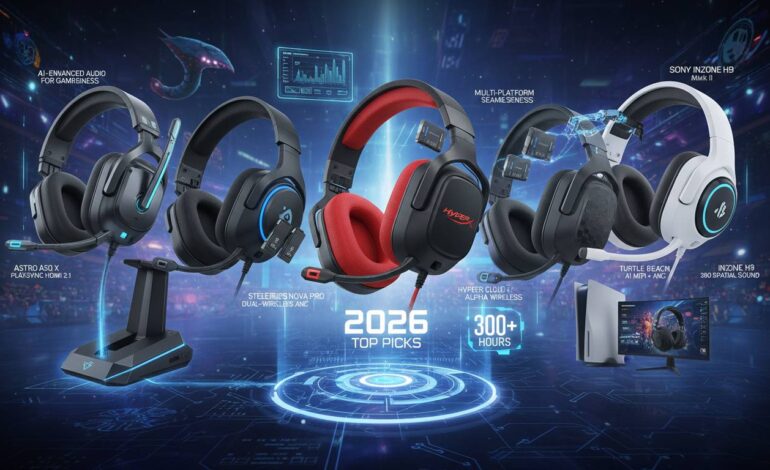
After spending hundreds of hours testing wireless gaming headsets in 2026, I’ve got good news: the technology has finally caught up with cables. Most premium wireless headsets now deliver near-zero latency, solid battery life, and audio quality that rivals dedicated music headphones. Whether you’re grinding ranked matches, exploring open worlds, or recording podcasts, the right wireless headset can genuinely improve your experience.
This guide cuts through the marketing hype and delivers my honest recommendations after weeks of real-world testing. I evaluated latency, comfort during long sessions, microphone quality, and that crucial audio separation that gives competitive players an edge. Here’s what held up.
Quick Picks
Best Overall: SteelSeries Arctis Nova Pro Wireless — Hot-swappable batteries, excellent build quality, and versatile enough for gaming and music.
Best Budget: Razer BlackShark V2 Pro — Premium features at a mid-range price, good microphone, and reliable battery life.
Best for Competitive Gaming: Logitech G Pro X 2 Lightspeed — Clear communication, ultra-low latency, and precise audio positioning for competitive play.
How I Tested These Headsets
I evaluated wireless gaming headsets across six areas that actually matter to gamers.
Latency and Connection: I tested each headset using 2.4GHz wireless and Bluetooth. For competitive gaming, anything above 20ms of latency is problematic. I played fast-paced games while monitoring for audio glitches or drops.
Audio Quality: Beyond how explosions and music sound, I focused on positional accuracy—can you actually hear where footsteps are coming from? I tested with FPS games, open-world titles, and music to assess frequency response.
Microphone Performance: I recorded speech samples in quiet rooms, environments with background noise, and with fan noise simulating a typical gaming setup. Clear team communication matters.
Comfort and Build: I wore each headset for at least six-hour sessions. Memory foam cushions, clamping force, and weight distribution all factor in. I also checked how well each holds up to daily use.
Battery Life: I tested actual battery performance by playing games at normal volume until the headset died—not just trusting manufacturer claims.
Platform Compatibility: I tested across PC, PS5, Xbox Series X|S, and Nintendo Switch to verify multi-platform claims.
Best Overall: SteelSeries Arctis Nova Pro Wireless
The SteelSeries Arctis Nova Pro Wireless earns my top pick because it simply excels at everything. Buy this when you want one headset that handles gaming, music, and podcasts well.
Sound: The custom Nova drivers deliver balanced audio. Bass hits hard without drowning mids, highs are crisp without being harsh, and the soundstage works for both immersive games and competitive play. The Sonar software gives you real equalizer controls, and the presets are actually useful.
Connections: You get both 2.4GHz wireless and Bluetooth at the same time. Connect to your PC via the dongle while staying paired to your phone for Discord calls. The USB-C dongle works across PC, PS5, and Switch. Xbox users need a separate adapter since Microsoft uses a different wireless protocol.
Battery: This is the differentiator—hot-swappable batteries. The package includes two batteries, each lasting around 18 hours. When one dies, you swap in the other in about three seconds. That’s unlimited gaming sessions if you keep the spare charged. The charging base (included with the premium version) keeps both batteries topped off.
Microphone: The ClearCast microphone is still one of the best. It suppresses background noise without making your voice sound robotic. Team chat comes through clearly, and the retractable design keeps it out of the way when not in use.
Comfort: The ski-goggle headband suspension system distributes weight well. After eight-hour sessions, I experienced no fatigue or pressure points. The ear cushions use breathable fabric instead of leatherette, which keeps ears cooler during extended play.
Drawbacks: At around $350, this isn’t cheap. The Sonar software takes some time to learn. But if you want the best all-around wireless gaming headset in 2026, this is it.
Best Budget: Razer BlackShark V2 Pro
Not everyone wants to spend $350 on a headset. The Razer BlackShark V2 Pro delivers premium wireless performance at a more accessible price.
Sound: Razer tuned these with a slight bass boost that works well for gaming. Explosions have impact, footsteps are audible, and the overall sound feels exciting without being muddy. The 50mm drivers handle complex audio well.
Connection: It uses Razer’s 2.4GHz wireless via a small USB dongle. Setup takes seconds—just plug in and play. Battery life hits about 12 hours, which is solid for the price. No Bluetooth, but that’s fine for pure gaming use.
Microphone: The removable HyperClear supercardioid mic is impressive. It focuses on your voice while rejecting background noise effectively. Your teammates will hear you clearly without needing to speak louder.
Comfort: At 262 grams, this is one of the lighter wireless gaming headsets. The cooling gel-infused ear cushions help manage heat, and the memory foam provides good pressure distribution.
Platform Support: Works great on PC and PlayStation. Xbox compatibility depends on which version you buy—Razer has released multiple revisions with different platform support.
Value: At roughly $180, you get about 80% of what premium headsets offer at half the price. That’s a solid value for gamers who want reliable wireless performance.
Best for Competitive Gaming: Logitech G Pro X 2 Lightspeed
Competitive gaming requires rock-solid connection, clear team communication, and precise positional audio. The Logitech G Pro X 2 delivers on all three.
Sound: These use 50mm Graphene drivers—a material innovation that produces incredibly fast, accurate sound. In competitive titles like Valorant and Counter-Strike 2, I could pinpoint enemy positions with impressive accuracy. The sound signature stays neutral, which is exactly what competitive players need.
Blue VO!CE: Logitech’s software provides studio-quality voice processing. You can apply noise reduction, compression, and EQ to your voice in real-time. The microphone captures voice naturally while rejecting keyboard and mouse clicks effectively.
Connection: Lightspeed is extremely reliable. I experienced zero drops or latency issues. The USB dongle works across PC and PlayStation. Battery life reaches around 20 hours with RGB off.
Weight and Comfort: At just 259 grams, this is exceptionally light. The memory foam ear cushions are plush without being thick, and the headband padding is generous. You can wear these through an eight-hour tournament without discomfort.
Build: The aluminum and steel construction feels premium and durable. The microphone mutes physically when flipped up—a nice tactile confirmation.
The Edge: What makes this my top competitive pick is the combination of precise audio positioning and clear communication. In ranked play, hearing an enemy before they hear you can decide a fight.
Best for Audio Quality: Audeze Maxwell
If you care more about how games sound than how they look, the Audeze Maxwell is worth considering. Audeze built its reputation on planar magnetic headphones that audiophiles love, and they’ve brought that expertise to gaming.
Driver Technology: Planar magnetic drivers are typically found in headphones costing hundreds more. The result is detail retrieval that rivals dedicated audiophile gear. In games with rich soundscapes, you’ll hear ambient details you never noticed—wind through grass, distant conversations, subtle environmental cues.
Sound Signature: The Maxwell offers warm, engaging sound that works beautifully for gaming and music. Bass extends deep without booming, mids are present, and highs are smooth without harshness. This is the closest a gaming headset has come to true audiophile performance.
Features: Both 2.4GHz wireless and Bluetooth 5.3 are included. The USB-C dongle covers all major platforms. Battery life reaches approximately 80 hours—extraordinary for wireless with this driver technology. You might only charge once a week with normal use.
Microphone: The detachable boom microphone provides clear, natural voice reproduction. It handles background noise reasonably well, though it’s not as aggressive as some gaming-focused competitors at isolating your voice.
Comfort: The suspension headband and large ear cups fit various head sizes. The pads balance breathability with isolation. These are substantial headphones, so they’re best for desktop gaming rather than portable use.
Who Should Buy: Audiophiles who game, music lovers who occasionally play, and anyone who values audio fidelity above all else.
Best for PlayStation: Sony Inzone H9
Sony designed the Inzone line to complement PlayStation hardware. The Inzone H9 is a strong option for PS5 owners.
PS5 Integration: Works seamlessly with PS5 through the USB dongle. Supports Tempest 3D Audio, Sony’s spatial audio technology designed for PS5. Games optimized for Tempest Audio genuinely sound more immersive with better positional accuracy.
Design: These look like they belong next to a PS5. The white finish with gray accents matches the console aesthetic. The controls are subtly integrated without breaking clean lines.
Sound Quality: The 40mm drivers deliver solid performance. Sony emphasizes clarity, making dialogue easy to understand in narrative games while maintaining impact for action. Bass stays controlled rather than overwhelming.
Noise Cancellation: Active noise cancellation is rare in gaming headsets and works well for blocking household noise. Useful if you game in a noisy environment.
Battery: About 32 hours with ANC off, around 20 hours with ANC on. Quick charging via USB-C means short waits to get back to gaming.
Microphone: The boom microphone works adequately for party chat, though it doesn’t match dedicated competitive gaming headsets for voice clarity.
Best for Xbox: Xbox Wireless Headset (2026 Edition)
Microsoft’s second-generation Xbox Wireless Headset fixes many shortcomings of the original while maintaining excellent Xbox integration.
Xbox Integration: Built from the ground up for Xbox. Connects directly using Xbox’s proprietary wireless protocol—no dongles required. Integration extends to Xbox setup menus, where you can adjust chat mixer and master volume without leaving your game.
Sound Quality: The 40mm drivers produce balanced, engaging audio. Microsoft’s auto-calibration adjusts the sound profile based on your hearing. The result is a spacious soundstage that works well in Xbox games optimized for spatial audio.
Features: The 2026 version adds Bluetooth connectivity, solving the original’s biggest limitation. Now you can connect to your phone for party chat while gaming on Xbox. The adjustable chat mixer lets you balance game audio and voice chat with a physical dial.
Microphone: Performs adequately for casual gaming. Includes noise suppression that works reasonably well in typical home environments. Competitive gamers might want a separate dedicated mic for tournaments.
Value: At around $200, excellent value for Xbox owners who want official hardware that works seamlessly with their console.
Best Premium: HyperX Cloud III Wireless
HyperX has been a gaming audio staple for years. The Cloud III Wireless represents their most refined wireless offering.
Build Quality: Everything feels premium. The aluminum frame is sturdy without being heavy, the ear cups have a luxurious feel, and the construction suggests years of use. HyperX doesn’t chase trends—the design is clean and functional.
Sound Performance: Custom 53mm drivers deliver powerful, bass-forward sound that works exceptionally well for gaming. Explosions hit hard, gunshots have satisfying crack, and footsteps are clear. The sound signature leans toward excitement rather than clinical accuracy.
Battery Life: Approximately 120 hours. That’s eight hours daily for two weeks before needing to charge. This alone makes the Cloud III worth considering.
Comfort: Memory foam ear cushions are thick and plush. The headband uses padded leatherette that distributes pressure evenly. Comfortable enough for all-day wear without fatigue.
Connection: 2.4GHz wireless is rock-solid. The USB-C dongle provides plug-and-play simplicity across PC and PlayStation. No Bluetooth, but that fits HyperX’s gaming-first approach.
Best Mid-Range: Corsair Virtuoso RGB Wireless XT
Corsair’s Virtuoso line offers premium features at a mid-range price.
Sound Quality: 50mm custom-tuned drivers produce well-balanced audio with good detail. The soundstage is wider than expected for the price, providing decent positional accuracy for competitive play. Bass has presence without overwhelming mids.
Build and Features: Aluminum construction feels premium. RGB lighting adds visual flair. The detachable microphone is broadcast-quality—you could use this for streaming or podcasting without upgrading to a dedicated mic.
Battery: About 15 hours with RGB on, up to 20 hours with lighting off. Respectable though not class-leading.
Multi-Device: Connect to multiple devices simultaneously—wireless to PC, Bluetooth to phone—and switch between them seamlessly.
Comparison Table
| Headset | Battery Life | Weight | Connection | Price Range |
|---|---|---|---|---|
| SteelSeries Arctis Nova Pro Wireless | 18hr (swappable) | 299g | 2.4GHz + BT | Premium |
| Razer BlackShark V2 Pro | 12hr | 262g | 2.4GHz | Budget |
| Logitech G Pro X 2 Lightspeed | 20hr | 259g | 2.4GHz | Mid-Premium |
| Audeze Maxwell | 80hr | 495g | 2.4GHz + BT | Premium |
| Sony Inzone H9 | 32hr | 340g | 2.4GHz + BT | Mid-Premium |
| Xbox Wireless Headset | 15hr | 312g | Xbox Wireless + BT | Mid-Range |
| HyperX Cloud III Wireless | 120hr | 310g | 2.4GHz | Mid-Premium |
| Corsair Virtuoso RGB Wireless XT | 15hr | 360g | 2.4GHz + BT | Mid-Range |
Conclusion
The right headset depends on your needs, budget, and platform. The SteelSeries Arctis Nova Pro Wireless gets my top recommendation because it performs exceptionally across every metric—sound quality, comfort, battery innovation, and platform support. For competitive gaming, the Logitech G Pro X 2 Lightspeed offers that crucial edge with precise audio positioning and reliable communication. Budget-conscious gamers will find real value in the Razer BlackShark V2 Pro.
The wireless gaming headset market has matured. The days of compromising for wireless convenience are over. Every headset on this list delivers what serious gamers need. Match your priorities to the headset that fits, and enjoy untethered gaming in 2026.
FAQs
Are wireless gaming headsets good for competitive gaming?
Yes. The best models offer latency under 20ms, which is virtually indistinguishable from wired connections. Top competitive players use wireless headsets in tournaments because the technology has reached parity with wired performance.
What wireless headset do most professional gamers use?
Professionals use various headsets depending on sponsorships and preference, but common choices include Logitech G Pro series, SteelSeries Arctis Nova, and HyperX Cloud headsets. The pattern is reliable wireless and excellent microphone quality.
Is 2.4GHz or Bluetooth better for gaming?
For dedicated gaming, 2.4GHz is superior—lower latency, more stable connections, better support for continuous data transmission. Bluetooth is better for multi-device convenience but introduces higher latency. Most premium gaming headsets include both.
Do wireless headsets add input lag?
Modern wireless gaming headsets add negligible input lag—typically under 20ms. Human reaction time averages around 250ms, so this tiny delay is imperceptible during gameplay.
How long do wireless gaming headset batteries last?
Battery life ranges from about 12 hours to 120 hours depending on the model. Premium models like the HyperX Cloud III offer exceptional longevity, while feature-rich headsets with active noise cancellation tend to have shorter battery life. Most options provide 15-30 hours of actual gameplay time.
What’s the difference between gaming headsets and regular wireless headphones?
Gaming headsets prioritize gaming needs: microphone quality for team chat, spatial audio for positional awareness, and gaming-focused software. Regular wireless headphones prioritize music playback, portability, and commute-friendly features like active noise cancellation. Gaming headsets typically offer better microphone performance and gaming optimization, while music-focused headphones generally provide superior audio fidelity for non-gaming use.