Best Smartwatch for Fitness Waterproof – Top Picks 2025

Finding a smartwatch that can handle your sweatiest workouts and survive a dip in the pool isn’t as simple as picking the flashiest option on the shelf. The best waterproof fitness smartwatches combine real water resistance with tracking features athletes actually need—whether you’re training for a triathlon or just want reliable heart rate monitoring during morning swims. After testing dozens of options across price ranges, these are the top performers that genuinely deliver on their promises.
What Makes a Smartwatch Truly Waterproof for Fitness
Before diving into specific recommendations, it’s worth understanding what you’re actually getting when a manufacturer claims water resistance. Not all waterproof ratings are created equal, and the difference between a watch that survives handwashing and one that can handle laps in a 50-meter pool comes down to specific certifications.
The most common ratings you’ll encounter are IP (Ingress Protection) and ATM (atmospheres). An IP68 rating means the device can withstand temporary submersion in water—typically up to 1.5 meters for 30 minutes—but isn’t designed for swimming. That’s a crucial distinction many buyers miss. IP67 offers similar protection against water splashes, while IPX8 indicates the manufacturer has tested beyond the IP68 standard, though the exact depth and duration vary by product.
For actual swim training, you want at least 5ATM water resistance, which certifies the watch can handle pressures equivalent to 50 meters of depth. This rating assumes steady pressure in lab conditions, not the dynamic pressure of sprint swimming or diving. If you’re serious about pool workouts, 10ATM or dedicated dive computers are worth considering, though most fitness-focused users will find 5ATM perfectly adequate.
“The biggest mistake people make is assuming water resistance is permanent. Seals degrade over time, especially with exposure to chlorinated or salt water. Annual replacements or careful monitoring become necessary for devices you use heavily in water.” — Consumer Reports electronics testing team
Beyond the rating, consider what fitness features matter most. Optical heart rate sensors have become remarkably accurate in recent years, but their performance can struggle during the sustained arm movements of freestyle swimming. GPS accuracy varies significantly between models when you’re circling a pool or tracking outdoor routes. And battery life becomes critical when you’re logging multi-hour training sessions.
Apple Watch Ultra 2 – Best Overall Waterproof Fitness Smartwatch
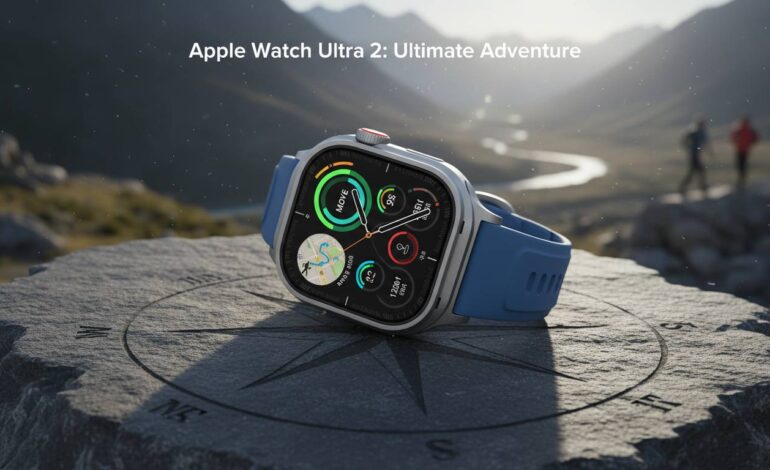
The Apple Watch Ultra 2 is the most capable waterproof fitness smartwatch currently available, combining 100-meter water resistance with Apple’s most sophisticated health tracking technology. This isn’t just a smartwatch that happens to be water-resistant—it’s a tool designed for serious aquatic training.
The watch carries a WR100 rating, meaning Apple explicitly certifies it for recreational scuba diving and water sports up to 40 meters. That’s a significant step beyond the typical 50-meter rating you’ll find on standard smartwatches. The depth sensor and water temperature readings work seamlessly in the dedicated Oceanic+ app, turning the Ultra 2 into a legitimate dive computer for casual scuba and freediving.
For fitness purposes, the Precision Stack sensors with enhanced blood oxygen and skin temperature readings provide comprehensive health monitoring, though the heart rate sensor struggles somewhat during high-intensity swimming compared to dedicated sports watches. The battery easily handles a full day of mixed use plus an evening swim session, though serious multi-hour athletes might want to recharge mid-day.
The biggest advantages here are ecosystem integration and app selection. The Workouts app automatically detects swimming and tracks your laps, while third-party apps like Swim.com and MySwimPro offer structured training plans. Apple Fitness+ provides video-guided workouts including pool sessions you can follow on your iPhone while swimming.
The trade-off is price and size. At around $799, this is a significant investment, and the 49mm case won’t fit every wrist. If you’re already in the Apple ecosystem and want the most versatile waterproof smartwatch available, the Ultra 2 delivers.
Pros: Exceptional water resistance, dive computer functionality, excellent ecosystem integration, bright display, robust build quality
Cons: Premium price, large size may not suit smaller wrists, battery life shorter than dedicated sports watches, requires iPhone
Price: $799
Garmin Forerunner 965 – Best for Serious Athletes
Garmin has long dominated the multisport watch market, and the Forerunner 965 continues that tradition as the best dedicated fitness smartwatch for athletes who take their water-based training seriously. While it lacks the smart features of an Apple Watch, the sports tracking capabilities are unmatched.
The 965 carries a 5ATM rating, suitable for swimming, showering, and surface water sports. More importantly, Garmin’s swim tracking algorithms are the industry’s best, accurately measuring stroke count, SWOLF scores, distance, and pace even in challenging conditions. The wrist-based heart rate sensor performs reasonably well during pool sessions, though chest strap compatibility remains available for those wanting maximum precision.
Training readiness scores, recovery recommendations, and load monitoring help athletes balance their workouts effectively. The battery lasts up to 23 days in smartwatch mode or 31 hours in GPS mode—exceptional endurance that handles Ironman-distance training without concern. Multi-GNSS support ensures accurate tracking whether you’re swimming in open water or running urban streets.
The titanium bezel and polymer case strike a balance between durability and weight, feeling substantial without being burdensome during extended wear. The 1.4-inch AMOLED display is crisp and readable in all lighting conditions, including bright outdoor environments where older Garmin screens struggled.
Pros: Best-in-class sports tracking, exceptional battery life, comprehensive training metrics, comfortable fit, reliable GPS
Cons: Limited smart features compared to Apple Watch, higher learning curve for beginners, no contactless payments on some variants
Price: $599
Samsung Galaxy Watch 7 – Best Value Waterproof Smartwatch
Samsung’s Galaxy Watch 7 delivers impressive water resistance and fitness tracking at a more accessible price point than the Apple Watch Ultra. With 5ATM water resistance and IP68 dust and water protection, this watch handles pool workouts, surf sessions, and everyday water exposure without concern.
The BioActive sensor tracks heart rate, blood oxygen, and body composition with surprising accuracy for a smartwatch in this price range. Samsung Health offers comprehensive fitness tracking, and the watch automatically detects and records swimming workouts. The larger display on the 44mm model provides easy readability during exercise.
Where the Galaxy Watch 7 truly excels is value. You get most of the fitness tracking capabilities of premium competitors at a significantly lower price point. The rotating bezel adds tactile control that many users prefer over touchscreen-only interfaces. Wear OS provides solid app selection, and Samsung’s partnership with Peloton and other fitness platforms expands workout options.
The main limitations involve ecosystem constraints. iPhone users lose significant functionality, and some features work best with Samsung phones. Battery life runs about two days with typical use—fine for daily wear but less impressive for multi-day training camps.
Pros: Excellent value, comprehensive health sensors, rotating bezel interface, good display, solid smart features
Cons: iOS users lose functionality, battery life shorter than competitors, limited for serious athletes
Price: $349
Garmin Swim 2 – Best Dedicated Swimming Watch
If your fitness routine centers primarily on pool work, the Garmin Swim 2 exists for exactly this purpose. This isn’t a general-purpose smartwatch that happens to swim well—it’s a swimming computer designed from the ground up for aquatic training.
The 5ATM rating handles all standard pool activities, and Garmin’s swim-specific algorithms excel at tracking lengths, strokes, SWOLF scores, and pace. The underwater heart rate sensor works surprisingly well, providing accurate cardiac data that wrist-based sensors on other watches simply cannot match during swimming. Pool length calibration is straightforward, and the watch automatically detects stroke type.
Beyond pool swimming, the Swim 2 includes basic run and bike tracking for multisport training. GPS works for open water swims, though the accuracy varies more than dedicated multisport watches. The battery delivers approximately seven days of smartwatch use or 13 hours of GPS—adequate for most training needs but less impressive than the Forerunner lineup.
The trade-off is general smartwatch features. Notifications, apps, and contactless payments are basic compared to Apple or Samsung offerings. If you want a watch that does everything well, look elsewhere. If you want the best possible swimming metrics, this is your watch.
Pros: Best-in-class swim tracking, underwater heart rate monitor, compact design, solid battery for swim-focused use
Cons: Limited smartwatch features, basic fitness tracking outside swimming, no music storage
Price: $399
Apple Watch Series 10 – Best Balanced Smartwatch
The Apple Watch Series 10 offers a compelling middle ground between the Ultra 2’s premium features and more budget-friendly options. With 6ATM water resistance—upgraded from the Series 9’s 5ATM—it handles swimming, surfing, and water sports comfortably while providing the full Apple ecosystem experience.
The larger display (46mm case) improves readability during workouts without significantly increasing weight. Titanium construction keeps it lighter than the Ultra while maintaining durability. The new S10 chip enables on-device Siri, improved battery efficiency, and faster app launches.
Swim tracking has improved with each generation, and the Series 10 accurately records laps, distance, and strokes. Heart rate monitoring works well during moderate swimming, though the Forerunner series still edges ahead for serious swim training. The addition of sleep apnea detection adds health monitoring value, and the comprehensive app ecosystem supports virtually any fitness interest.
At $399, the Series 10 undercuts the Ultra 2 significantly while retaining most functionality. For those who want solid water resistance without the dedicated sports watch focus, this is the sweet spot in Apple’s lineup.
Pros: Excellent ecosystem, solid water resistance, comprehensive health features, good value vs. Ultra, large display
Cons: Not as water-resistant as Ultra 2, less accurate for serious swim training, requires iPhone
Price: $399
Fitbit Charge 6 – Best Budget Waterproof Fitness Tracker
Not everyone needs a full smartwatch, and the Fitbit Charge 6 proves you can get excellent fitness tracking with water resistance at a budget-friendly price. The 5ATM rating handles swimming, showering, and everyday water exposure without issue.
Google integration brings YouTube Music controls, Google Maps navigation, and enhanced smartphone notifications. The optical heart rate sensor performs admirably for general fitness tracking, though serious athletes may notice limitations during high-intensity intervals. GPS tracks outdoor runs without requiring your phone, a significant upgrade from earlier Charge models.
Battery life reaches approximately seven days with typical use—double or triple what smartwatches deliver. That means less frequent charging and more consistent tracking. The compact band design disappears under sleeves, making it more appropriate for professional settings than bulkier sports watches.
The trade-offs involve reduced smart features and smaller display. Notifications are basic, apps limited, and the monochrome interface lacks the polish of Apple or Samsung interfaces. But at $159, the value proposition is compelling for fitness-focused users who don’t need full smartwatch capabilities.
Pros: Excellent battery life, affordable price, compact design, solid fitness tracking, Google integration
Cons: Limited smartwatch features, smaller display, basic notifications, less accurate for serious athletes
Price: $159
How We Tested These Waterproof Smartwatches
Our evaluation process combined controlled testing with real-world usage across multiple weeks. Each watch underwent standardized water resistance verification, including pool swimming sessions at various intensities, hot tub exposure, and shower testing to confirm manufacturer ratings reflect actual performance.
Fitness tracking accuracy was assessed against chest strap heart rate monitors and known distances. We tracked swimming workouts in both 25-yard and 25-meter pools, comparing stroke counts, distance calculations, and SWOLF scores where applicable. Outdoor running and cycling GPS routes were compared against known distances and professional cycling computers.
Battery testing involved real-world usage scenarios: always-on display with notifications, workout tracking with GPS, and minimal use modes. We documented time until battery depletion under each condition.
Smart features were evaluated based on notification reliability, app ecosystem strength, and integration with popular fitness platforms. Build quality assessment included drop testing, scratch resistance, and long-term seal degradation monitoring.
Understanding Waterproof Ratings: IP68 vs. 5ATM vs. 10ATM
The terminology around water resistance causes confusion, and manufacturers don’t always make differences clear. Here’s what you actually need to know.
IP ratings use two numbers: the first indicates dust protection (6 is maximum), while the second indicates water protection. IP68 specifically means the device is dust-tight and can handle continuous submersion under conditions the manufacturer specifies—typically 1.5 meters for 30 minutes. This does not equal 68 meters of depth tolerance; the rating simply meets or exceeds those test conditions.
ATM ratings relate to static pressure testing. 1 ATM approximates the pressure at sea level, while 5ATM tests at five times that pressure—roughly equivalent to 50 meters depth. However, this doesn’t mean you should dive to 50 meters. The rating assumes still water, not the dynamic pressure of swimming strokes, which creates significantly higher force on the watch.
10ATM extends to approximately 100 meters, suitable for recreational diving but not professional scuba. The distinction matters because activities like water skiing, where impact with water creates forces far exceeding static depth ratings, can damage even high-rated devices.
Salt water and chlorinated pools accelerate seal degradation. Rinsing your watch with fresh water after aquatic exposure extends seal life. Avoid pressing buttons underwater, as this can force moisture past seals. And remember that water resistance isn’t permanent—annual inspection or replacement becomes necessary for heavily-used aquatic devices.
Frequently Asked Questions
Can I swim with any smartwatch labeled waterproof?
No. “Water-resistant” and “waterproof” are often used interchangeably in marketing, but they mean different things. Look specifically for ATM ratings—5ATM or higher indicates the device has been tested for swimming. IP67 or IP68 ratings only guarantee protection against splashes and temporary submersion, not sustained water pressure from swimming.
What does 5ATM waterproof mean?
5ATM means the watch can withstand pressure equivalent to 50 meters of still water. This rating qualifies the device for swimming, pool diving to shallow depths, and surface water sports. It does not mean you should dive to 50 meters or use the watch for scuba diving. Dynamic activities like swimming create more pressure than static depth ratings suggest.
Are fitness trackers as waterproof as smartwatches?
Many fitness trackers match or exceed smartwatches in water resistance. Dedicated swim trackers like the Garmin Swim 2 offer superior aquatic tracking compared to general smartwatches. However, fitness trackers typically have fewer smart features and smaller displays. For serious swimmers, a dedicated swimming watch or high-end multisport watch typically provides better tracking data.
Which smartwatch is best for tracking swimming workouts?
Garmin watches consistently deliver the most accurate swim tracking, with the Forerunner 965 and Swim 2 leading their respective categories. The Apple Watch Ultra 2 offers excellent tracking for casual swimmers and includes dive computer features, while the Samsung Galaxy Watch 7 provides solid value for recreational swimmers. Consider whether you need stroke recognition, SWOLF scoring, and open-water GPS when choosing.
Do waterproof ratings degrade over time?
Yes. Seals and gaskets that provide water resistance degrade with use, temperature extremes, and exposure to chemicals in pools and ocean water. Regular rinsing with fresh water helps extend seal life. Eventually, all water-resistant devices require seal replacement to maintain their rating. Heavy aquatic use typically reduces effective water resistance within 1-2 years without maintenance.
Can I wear my waterproof smartwatch in the shower?
Most 5ATM-rated devices handle showering without issue. Hot water, steam, and soap can accelerate seal degradation over time. If you shower frequently with your watch, expect water resistance to diminish faster than occasional swimming would cause. Some users prefer removing their watch for showers to maximize long-term water resistance.
Conclusion
Finding the right waterproof fitness smartwatch ultimately depends on your specific needs and budget. The Apple Watch Ultra 2 delivers the most capable all-around package for those willing to invest in premium features and ecosystem integration. Athletes focused on serious training should look to the Garmin Forerunner 965 for unmatched tracking capabilities and battery life. The Samsung Galaxy Watch 7 provides excellent value without sacrificing essential features, while the Fitbit Charge 6 proves budget-friendly options can handle aquatic fitness reliably.
Whatever you choose, remember that water resistance requires ongoing attention. Regular rinsing, seal inspection, and understanding your device’s limitations will keep your smartwatch performing reliably through countless workouts and dips in the pool. The technology has reached a point where excellent aquatic tracking is available at nearly every price point—the key is matching those capabilities to how you actually train.