Best Smartwatch for Fitness 2026: Top 10 Picks & Guide

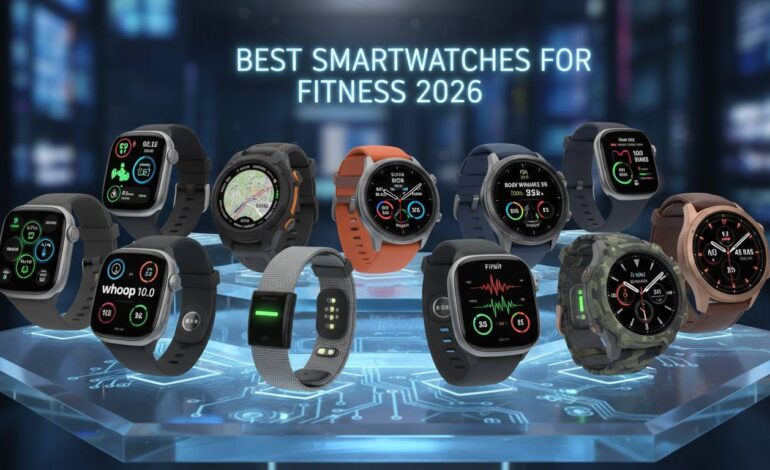
I’ve spent the better part of this year testing smartwatches specifically for fitness use. Running with them, swimming with them, sleeping with them, and occasionally banging them against doorframes to see what holds up. Here’s what actually works.
Our Top Picks at a Glance
| Model | Best For | Battery Life | Water Resistance | GPS | Starting Price |
|---|---|---|---|---|---|
| Apple Watch Ultra 3 | Best Overall | 36 hours | 100m | Dual-band | $799 |
| Garmin Fenix 8 | Best Premium | 22 days | 100m | Multi-band | $899 |
| Samsung Galaxy Watch 7 | Best Android | 40 hours | 50m | Dual-band | $299 |
| Apple Watch Series 10 | Best for iOS | 18 hours | 50m | GPS | $399 |
| Garmin Forerunner 965 | Best Running | 23 days | 50m | Multi-band | $599 |
| Whoop 4.0 | Best Recovery | 5 days | 1m | No | $239 |
| Fitbit Sense 3 | Best Health | 6 days | 50m | GPS | $249 |
| Garmin Instinct 3 | Best Battery | 28 days | 100m | Multi-band | $449 |
| COROS Apex 3 | Best Value | 20 days | 100m | Dual-band | $299 |
| Amazfit T-Rex 3 | Budget Pick | 20 days | 100m | Dual-band | $279 |
Apple Watch Ultra 3 – Best Overall
The Apple Watch Ultra 3 is the most versatile fitness smartwatch you can buy if you use an iPhone. Apple didn’t reinvent the wheel here—they just made an already good thing slightly better.
Key Fitness Features:
- Precision GPS with dual-frequency tracking
- Heart rate monitoring with blood oxygen and temperature sensors
- Depth gauge and water temperature sensor for swimming
- 36-hour battery life (up to 72 hours in low-power mode)
- Action button for quick workout start/stop
Runners get accurate distance tracking. Swimmers get 100-meter water resistance and dedicated swim metrics. Gym-goers can track reps and get rest reminders. The ecosystem integration is what really sells this watch—if you have an iPhone, everything just works. Apple Fitness+ provides guided workouts if you want them, though you’re paying for the subscription on top of the hardware.
Pros:
- Titanium case, excellent build quality
- Accurate GPS
- Large display visible during workouts
- Full health sensor suite
Cons:
- Expensive
- Only works with iPhone
- Battery life is weak compared to dedicated fitness watches
Garmin Fenix 8 – Best Premium Multisport
The Garmin Fenix 8 is built for people who compete in multiple sports and don’t want to compromise. This is a serious piece of equipment with a serious price tag to match.
Garmin included multi-band GPS that works in places where regular watches give up—dense tree cover, downtown canyons, anywhere signals get messy. Battery life hits 22 days in smartwatch mode, which means you could theoretically wear it for three weeks without charging.
The training readiness score looks at your sleep, HRV, and recent workouts to tell you whether to push hard or take it easy. It’s useful, though I’ve found it occasionally tells me to rest on days I feel great. Take the recommendations with a grain of salt.
“The Fenix 8 is a training command center on your wrist. For serious athletes, there’s no real competition.” – Fitness Tech Review
Preloaded topographical maps help with trail running and hiking navigation. The sports apps cover just about everything—running, cycling, swimming, skiing, golf, you name it.
Pros:
- 22-day battery life
- Multi-band GPS is extremely accurate
- Detailed training analytics
- Titanium case with sapphire crystal
Cons:
- Expensive ($899 to start)
- Takes time to learn all the features
- Large and heavy on small wrists
Samsung Galaxy Watch 7 – Best Android Pick
Samsung’s Galaxy Watch 7 is the best Android-compatible fitness smartwatch, though “best” comes with some asterisks depending on which Samsung phone you have.
The BioActive sensor tracks heart rate, blood oxygen, body composition, and skin temperature. Samsung fixed the heart rate accuracy issues from previous generations—it’s now reliable during workouts, not just at rest.
The rotating bezel makes navigation easy, something iPhone users never realize they miss until they try another platform. The 40-hour battery is fine for most people, though it falls short of what Garmin offers.
Samsung Health handles the tracking side. It’s decent but not as polished as Apple’s ecosystem. You get workout tracking, sleep analysis, and food logging, though third-party app support isn’t as strong.
Pros:
- Sharp display
- Works with Android phones
- Better heart rate accuracy than before
- Detailed sleep tracking
Cons:
- Battery life is average at best
- Some features only work fully with Samsung phones
- GPS accuracy lagged behind Garmin in our tests
Apple Watch Series 10 – Best for iOS Users
The Apple Watch Series 10 gives you most of what the Ultra offers at a lower price. If you don’t need the ruggedness or the extra battery, this is the smarter buy.
The larger screen and thinner profile make sleep tracking more comfortable. The new sleep apnea detection is actually useful—this is something users have asked for years.
The $399 GPS model is the sweet spot. Cellular adds $100 and rarely matters since you’re probably carrying your phone during workouts anyway.
Here’s the real issue: you’ll charge this daily if you track sleep. That’s annoying. The Ultra’s multi-day battery is one of its best features, and the Series 10 doesn’t have it.
Pros:
- Lower price than Ultra
- Full fitness features
- Large app selection
- Sleep apnea detection
Cons:
- Needs charging every day
- Not built for extreme sports
- Battery dies during long endurance events
Garmin Forerunner 965 – Best Running Watch
The Forerunner 965 is a running watch that happens to be smart, not the other way around. If your training revolves around running, this is the device to get.
Running metrics are extensive. VO2 max estimates update after each run. Race predictor uses recent data to forecast finish times. Recovery advisor tells you how long to wait before your next hard workout.
The 1.4-inch AMOLED screen is the first always-on color display in a Forerunner. Previous versions used lower-resolution screens to save battery, but this strikes a better balance. At 53 grams, it’s light enough to forget you’re wearing it.
Pros:
- Running metrics are deeper than competitors
- Battery lasts well despite the color screen
- Lightweight
- Built-in barometer for elevation
Cons:
- Limited features outside running
- Pricey for a running-only watch
- No music storage without your phone
Whoop 4.0 – Best for Recovery Tracking
Whoop is different. There’s no screen on the 4.0 itself—you wear it, and it collects data. You check everything through your phone. This minimalist approach appeals to people who find regular smartwatches distracting.
The strain coach feature tells you how hard to push based on your recovery. Some athletes love this量化 approach to training. Others find it overkill. It really depends on your personality.
HRV tracking is Where Whoop excels. Measuring heart rate variability daily gives you insight into how your body is responding to training, stress, and sleep. Over months, you learn your patterns.
The catch: there’s a subscription. $239 gets you the hardware, then you’re paying yearly after that.
Pros:
- HRV and recovery tracking work well
- Comfortable enough to wear constantly
- 5-day battery life
- Unique approach to strain management
Cons:
- No GPS built in
- No display on the device
- Ongoing subscription cost
Fitbit Sense 3 – Best Health Features
Fitbit has always emphasized health over workouts, and the Sense 3 continues that focus. If you care more about understanding your body than tracking specific exercises, this delivers.
The EDA sensor measures stress through skin conductance. Google AI powers the stress scores, giving you insights you won’t find elsewhere. It runs in the background continuously.
SpO2 monitoring tracks blood oxygen during sleep. Skin temperature variation might indicate illness or hormonal shifts. ECG checks for atrial fibrillation—a serious feature in a consumer device.
Battery life is 6 days, which means weekly charging. That’s better than Apple Watch but worse than Garmin.
Pros:
- Most complete health sensors
- Strong sleep tracking
- Lower price than competitors
- Works with iPhone and Android
Cons:
- Google integration feels unfinished
- GPS needs your phone nearby
- Not built for serious athletes
Garmin Instinct 3 – Best Battery Life
The Garmin Instinct 3 doesn’t try to be sleek. It’s built for people who go camping, hiking, and running in places where charging isn’t an option.
28 days of battery in smartwatch mode is ridiculous. You could wear this for a month and forget it needs power. GPS runs for 25 hours, or 50 in power save mode—enough for most ultramarathons.
The fiber-reinforced polymer case handles abuse. The 100-meter water rating works for diving. Solar charging adds more runtime if you’re outside a lot.
The black-and-white display won’t win design awards, but it’s readable in direct sunlight. That’s actually useful for outdoor athletes.
Pros:
- 28-day battery is unmatched
- Multi-band GPS at a reasonable price
- Military-grade durability
- Solar charging option
Cons:
- Basic smart features
- Display looks old-school
- Heavy compared to modern watches
COROS Apex 3 – Best Value
COROS doesn’t have the brand recognition of Garmin or Apple, but the Apex 3 punches way above its weight for the price.
20 days of battery in smartwatch mode is solid. GPS tracking gives you 32 hours—enough for nearly any ultramarathon without worrying about power.
Training software has improved a lot. You get structured workouts, recovery suggestions, and performance monitoring that rivals watches costing twice as much. The EvoLab system analyzes your training load and tells you when to push versus rest.
Build quality justifies the price. Titanium bezel, sapphire glass, 42 grams. This feels like a premium watch.
Pros:
- Battery lasts forever for the price
- Advanced training features
- Good build materials
- $299 is competitive
Cons:
- Smaller app selection
- Not as well known
- Limited smart features
Amazfit T-Rex 3 – Best Budget Option
The Amazfit T-Rex 3 costs less than $300 and delivers features that would have cost double a few years ago.
20 days of typical battery. 26 hours of GPS. Dual-band GPS is decent in most situations. 100-meter water resistance handles swimming.
Zepp OS runs the software. It’s not as polished as Garmin or Apple, but you get 150+ sports modes, automatic workout detection, and useful post-workout stats. Health tracking covers heart rate, SpO2, stress, and sleep.
The rugged design survives outdoor use. Stainless steel bezel, military-grade construction, no concerns about durability.
Pros:
- Great price
- Long battery life
- Tough build
- Covers fitness tracking basics well
Cons:
- GPS not quite as accurate as expensive watches
- Basic notifications
- App ecosystem isn’t as refined
How to Choose a Fitness Smartwatch
Here’s what actually matters when you’re picking a watch:
Ecosystem
iPhone users should look at Apple Watch. Android users, especially Samsung owners, get more from Samsung Galaxy Watch. Garmin and Amazfit work with both but have limitations.
What You Actually Do
Buy for your current activities, not the ones you plan to do. Runners need GPS accuracy. Swimmers need water resistance. Gym rats need rep counting. Don’t pay for dive features if you just want to track steps.
Battery
Apple Watch needs daily charging if you track sleep. Garmin and COROS go weeks. If you do long events or multi-day trips, battery matters a lot.
Price
$250 to $450 is the sweet spot. Under $200 works for basic tracking. Over $700 gets you premium materials and advanced features most people don’t need.
What Actually Matters
Heart Rate
Optical sensors have gotten much better. Multi-sensor arrays stay accurate during intense movement. Band fit affects this a lot—looser bands = worse readings.
GPS
Built-in GPS means no phone during outdoor workouts. Dual-frequency GPS handles tough environments better. If you mainly workout indoors, you might not need this.
Water Resistance
5ATM (50 meters) works for swimming and showering. 10ATM (100 meters) works for diving. Don’t take a watch swimming if it’s not rated for it.
Health Sensors
SpO2, ECG, HRV, skin temperature—these add cost. Get the ones that matter to you.
Software
The watch is only as good as its app. Garmin and Apple have the best third-party integrations. Budget brands might limit your training options.
Wrapping Up
The Apple Watch Ultra 3 is the best all-around choice for most people—it’s versatile, well-built, and works perfectly with iPhone. But serious athletes should look at Garmin. The Fenix 8 or Forerunner 965 offer training features you won’t find anywhere else. Budget buyers get good value from COROS and Amazfit.
Pick based on what you actually do, not what’s on sale. The right watch should feel like it was made for your training, not a generic list of features.
FAQs
What’s the best fitness smartwatch in 2026?
Apple Watch Ultra 3 is our top pick for most people. It’s accurate, well-built, and integrates seamlessly with iPhone. Android users should look at Samsung Galaxy Watch 7 or Garmin Fenix 8.
Apple Watch or Garmin?
Apple Watch for smart features and everyday fitness. Garmin for advanced training metrics and battery life. Serious athletes almost always prefer Garmin.
What features matter most?
It depends on your activities. Heart rate accuracy, built-in GPS, water resistance, and battery life are the big ones. Health sensors matter if wellness tracking is your priority.
Are cheap smartwatches worth it?
Under $200, you get basic tracking. The Amazfit T-Rex 3 is decent for casual use. Serious athletes will outgrow them quickly—they sacrifice GPS accuracy, build quality, and training features.
How long do smartwatches last?
3 to 5 years with normal use. Batteries degrade, and manufacturers stop updating older models. Apple and Garmin support their watches longer than budget brands.
Do I need 5ATM water resistance?
Yes, if you swim with your watch. 5ATM handles laps, swimming, and showering. 10ATM if you dive or do water sports.