Best Smartwatch for Fitness & Health Tracking – Top Picks

Picking the right smartwatch for fitness and health tracking is genuinely overwhelming. There are tons of options claiming to do everything from heart rate monitoring to sleep analysis and blood oxygen sensing—and most of them oversell what they can actually deliver. I’ve spent years testing fitness wearables across every price range, and this guide is meant to cut through the noise.
This covers everything from premium flagships to budget options that still give you the health features that matter. Whether you’re training for something specific, just want to move more, or are curious about how you sleep, there’s something here that fits.
How We Test Smartwatches for Health Tracking
Here’s the testing process so you know where these recommendations come from.
Heart Rate Monitoring Accuracy: I test heart rate sensors across different activities—resting, moderate exercise, high-intensity intervals, and recovery. I compare readings against chest strap monitors to see how each device performs in different heart rate zones.
Sleep Tracking Reliability: Wearing the smartwatch overnight alongside sleep lab equipment gives me real data on how well each device detects sleep stages, awakenings, and overall sleep quality.
GPS and Activity Recognition: I test built-in GPS during runs, rides, and walks, comparing distance and pace against known routes and phone GPS.
Battery Life Under Real Conditions: I measure actual battery life during typical use—not the optimistic numbers companies advertise. This means always-on display, workout tracking with GPS, and continuous health monitoring.
Health Sensor Suite: I check what sensors each device actually has—optical heart rate, ECG, SpO2, skin temperature—and how well they work in daily use, not just on paper.
Best Overall Smartwatch for Fitness: Apple Watch Series 9
The Apple Watch Series 9 is the default choice for most people, and for good reason. It’s designed for iPhone users, but its fitness and health capabilities hold up against dedicated sports watches.
Health and Fitness Features: The Series 9 has an optical heart rate sensor, blood oxygen sensor, ECG app, temperature sensor for cycle tracking, and tight integration with Apple’s Health app. It automatically detects workouts—walking, running, swimming, cycling, even dance. The Activity rings give you clear daily goals, and they’ve actually helped a lot of people move more.
What Sets It Apart: Apple’s health ecosystem is well-connected. The Health app pulls data from the watch and other sources into one dashboard. The S9 chip lets Siri process requests on-device, and the double-tap gesture makes it easier to interact during workouts without stopping.
Battery Life Consideration: The tradeoff is battery life. You’ll charge it daily if you use always-on display and track workouts regularly. Dedicated fitness watches like Garmin last a week or more between charges, which is a big difference.
Price: Starts at $399 for the 45mm GPS model, with cellular options at $499.
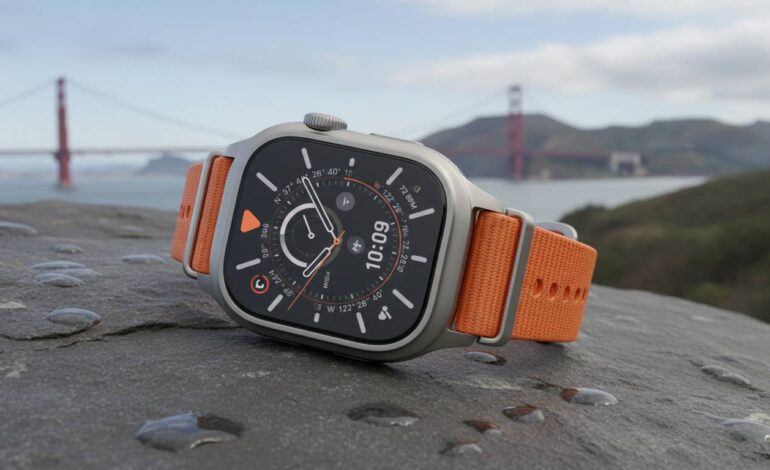
Best Premium Fitness Watch: Apple Watch Ultra 2
For serious athletes who want the most complete fitness smartwatch, the Ultra 2 is worth a look. This rugged thing was built for endurance sports and tough conditions.
Durability and Design: The Ultra 2 has a titanium case, sapphire crystal display, and water resistance to 100 meters. It’s meant to survive conditions that would kill a regular smartwatch. The larger 49mm case fits a bigger battery and the Precision Finding feature.
Advanced Fitness Features: Beyond standard heart rate and GPS, the Ultra 2 has dual-frequency GPS for better accuracy in tricky environments, a depth sensor for diving, and temperature sensing for improved sleep and recovery tracking. The Action button gives you quick access to workouts, waypoints, and other functions.
Battery Life: The Ultra 2 runs about 36 hours normally, up to 72 hours in Low Power Mode. That’s a real improvement over the regular Apple Watch and practical for multi-day adventures or ultramarathons.
Price: Starts at $799—the most expensive Apple Watch, but the features make sense if you’re serious about fitness.
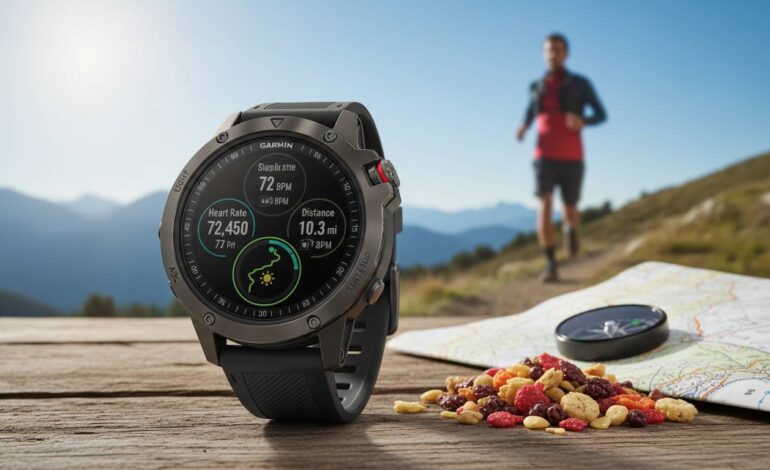
Best Dedicated Fitness Watch: Garmin Forerunner 965
Apple makes a great general smartwatch with fitness features. But the Garmin Forerunner 965 is built specifically for runners and triathletes who want detailed training data.
Running-Specific Features: The Forerunner 965 gives you advanced running dynamics—ground contact time, vertical oscillation, stride length—when paired with compatible accessories. It offers race predictions, training readiness scores, and recovery recommendations based on your training load and sleep.
Mapping and Navigation: Unlike most fitness watches, the Forerunner 965 has full-color topographic maps with course mapping. That’s huge for trail runners and anyone exploring new routes. Turn-by-turn navigation keeps you from getting lost on long runs or rides.
Battery Life: This is where Garmin wins. The Forerunner 965 lasts up to 23 days in smartwatch mode and up to 31 hours in GPS mode. Even with music and maps running, you can get through a full Ironman-distance triathlon.
Health Tracking: Garmin’s Elevate V5 heart rate sensor is reliable. The device has pulse ox, stress tracking, and detailed sleep analysis. Body Battery combines multiple metrics to tell you how recovered you are each morning.
Price: Starts at $599—premium pricing for serious athletes.
Best for Sleep Tracking: Fitbit Charge 6
If sleep tracking matters most to you, the Charge 6 gives the most detailed, easy-to-understand sleep analysis without a crazy price tag. Fitbit’s been investing in sleep science for years, and it’s paid off.
Sleep Tracking Quality: The Charge 6 provides a Sleep Score based on heart rate variability, breathing rate, and movement. It tracks time in each sleep stage—light, deep, REM—and offers a Sleep Profile with monthly trends. Sleep Window helps you set consistent bedtimes.
Health Sensors: Beyond sleep, the Charge 6 has 24/7 heart rate monitoring, continuous SpO2, and skin temperature tracking. Built-in GPS means you don’t need your phone for outdoor activities.
Value: At $159, the Charge 6 delivers sleep tracking that competes with watches costing three times as much. Battery lasts about seven days, so you can wear it continuously without daily charging.
Integration: Fitbit now works with Google services—Google Maps, YouTube Music. The Fitbit app is one of the most comprehensive health dashboards out there, with trends, insights, and social features that actually help motivation.
Best Budget Fitness Smartwatch: Amazfit Band 7
You don’t need to spend hundreds to get solid health tracking. The Band 7 proves that.
Core Health Features: For under $60 usually, you get 24/7 heart rate monitoring, blood oxygen, stress tracking, and sleep analysis. It tracks over 100 sports modes and has built-in GPS.
Battery Life: The Band 7 lasts up to 18 days with typical use. That’s way more than most competitors and means you can track sleep continuously without charging every night.
Limitations: It’s a fitness band, not a full smartwatch—no apps, no voice assistants, no premium materials. The Zepp app works but isn’t as polished as Apple Health or Garmin Connect. But for pure health tracking value, it’s hard to beat.
Who Should Buy: Anyone who wants basic fitness tracking without spending much. It’s also a good starter device if you’re new to wearables and not sure you want to invest more.
Best Samsung Smartwatch for Android: Galaxy Watch 6
Android users aren’t stuck with Apple, and the Galaxy Watch 6 is the best health-focused option.
Health Features: Samsung’s BioActive sensor combines optical heart rate, electrical heart (ECG), and bioelectrical impedance analysis (BIA) for body composition. It tracks blood pressure in supported countries with calibration, blood oxygen, and offers sleep tracking with snore detection.
Software Experience: Running Samsung’s One UI on Wear OS, the Galaxy Watch 6 gets thousands of apps through the Play Store while keeping Samsung’s design feel. Samsung Health provides solid fitness tracking and social features.
Performance: The new processor is smooth, and the Super AMOLED display is easy to read in sunlight. The rotating bezel on the classic model makes menu navigation intuitive.
Battery Life: Expect 1-2 days with always-on display—same territory as Apple Watch. The 44mm version lasts a bit longer than the 40mm.
Price: Starts at $299 for the 44mm Bluetooth model, LTE at $349.
Best for Outdoor Adventures: Garmin Fenix 7 Pro
The Fenix 7 Pro is for outdoor people who want the toughest construction and best navigation tools.
Built for Extremes: Titanium bezel, fiber-reinforced polymer case, sapphire crystal. Water-rated to 10 ATM (100 meters) and tested to military standards for thermal, shock, and water resistance.
Mapping and Navigation: Detailed topographic maps with Multi-GNSS support (GPS, GLONASS, Galileo). ABC sensors—altimeter, barometer, compass—give essential navigation data. Create courses, follow breadcrumb trails, get turn-by-turn directions.
Training Features: Beyond basic fitness tracking, the Fenix 7 Pro has training readiness, recovery recommendations, heat and altitude acclimation, and performance metrics like VO2 max and training status. Stamina prevents burnout during long efforts.
Solar Charging: The Solar version adds a transparent charging lens that extends battery life significantly. In good conditions, you can get weeks in smartwatch mode.
Price: Starts at $799 for the 47mm Solar model, with larger sizes and more features at higher prices.
How to Choose the Right Fitness Smartwatch
Picking the best smartwatch comes down to what matters most for your goals and lifestyle.
Prioritize Your Health Goals
Weight Loss and General Fitness: Look for all-day activity tracking, heart rate zones, and calorie accuracy. Apple Watch and Fitbit do well here with daily metrics and social motivation.
Marathon and Running: Advanced running dynamics, precise GPS, training load analysis. Garmin Forerunner and Fenix lead here.
Sleep Improvement: Proven sleep staging, sleep score algorithms, comfortable overnight wear. Fitbit and Apple Watch have the most detailed sleep analysis.
General Health Monitoring: ECG, blood oxygen, blood pressure where available. Apple Watch, Samsung Galaxy Watch, and Garmin all offer solid health sensor suites.
Consider Your Ecosystem
Your phone matters. Apple Watch only works with iPhones. Samsung and Garmin work with both Android and iPhone but work better with their native platforms.
Battery Life Requirements
If you hate daily charging, Garmin and Amazfit give 7+ days. If you want the latest features and don’t mind charging every day, Apple Watch and Samsung have more advanced smart features.
Common Health Tracking Metrics Explained
Understanding what each metric measures helps you pick a device with the features you actually need.
Heart Rate Monitoring: Optical sensors use LED lights to detect blood flow through your skin. Better devices use multiple LEDs and green/red light combinations for better accuracy during movement.
Blood Oxygen (SpO2): Measures oxygen-saturated hemoglobin percentage. Useful for detecting breathing disorders, checking altitude acclimation, and identifying potential health issues.
Electrocardiogram (ECG): Available on Apple Watch, Samsung Galaxy Watch, and some Garmin models. Can detect irregular heart rhythms like atrial fibrillation. Not a replacement for medical devices but can provide early warnings.
Sleep Stages: Advanced sleep tracking categorizes your night into light, deep, and REM. Each stage serves different recovery functions—knowing your pattern helps optimize sleep habits.
HRV (Heart Rate Variability): Variation in time between heartbeats, indicating your nervous system state and recovery. Higher HRV generally means better recovery and training readiness.
Conclusion
The best smartwatch for fitness and health tracking depends on your needs, budget, and ecosystem. Apple Watch Series 9 is the most complete package for most people—great health tracking without losing smartwatch features. Serious athletes will appreciate Garmin Forerunner 965’s running metrics and battery life. If budget matters, Fitbit Charge 6 and Amazfit Band 7 deliver real health tracking at accessible prices.
One thing: no device replaces professional medical advice. Smartwatches give useful health insights, but they’re not diagnostic tools. Use the data to understand your patterns, set goals, and track progress—but talk to healthcare professionals for medical concerns.
FAQs
Which smartwatch has the most accurate heart rate monitoring?
Garmin devices with the Elevate sensor consistently rank among the most accurate during exercise. Apple Watch Series 9 and Ultra 2 also perform well—accuracy close to chest strap monitors for most activities.
Do I need ECG on my smartwatch?
ECG is worth it if you’re concerned about heart rhythm irregularities or want early detection of conditions like atrial fibrillation. If heart rhythm hasn’t been a concern for you, it’s probably not necessary.
Can smartwatches accurately track sleep?
Modern smartwatches track sleep reasonably well for most people. They’re good at detecting total sleep time, bedtime consistency, and sleep stages. They’re not as accurate as professional sleep studies for specific sleep disorders.
How long should smartwatch battery last?
Varies a lot by device and how you use it. Fitness bands like Fitbit Charge 6 and Amazfit Band 7 last 5-7 days. Apple Watch and Samsung need daily charging. Garmin lasts 7 days to several weeks depending on the model and features.
Is a fitness tracker better than a smartwatch for health tracking?
Depends on your priorities. Fitness trackers are good at health and activity tracking, with longer battery life and lower prices. Smartwatches have more features—apps, notifications, voice assistants—but shorter battery life and higher prices. For pure health tracking, fitness trackers often give better value.
Do I need GPS in my smartwatch?
Built-in GPS matters if you want accurate distance tracking for outdoor activities without carrying your phone. If you mostly do indoor workouts or don’t mind your phone for GPS, you can save money with a device without built-in GPS.