Best Smartwatch for Fitness & Health Tracking – Top 10 Picks

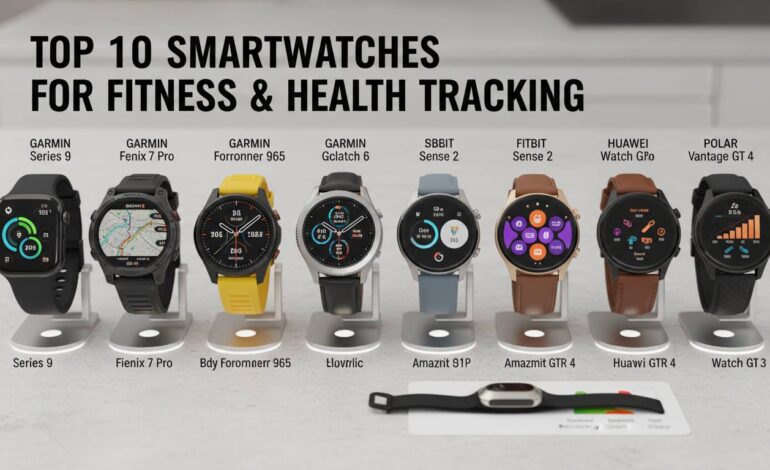
Picking the right smartwatch for fitness and health tracking isn’t easy. There are dozens of options, each one promising accurate metrics and advanced features. But which ones actually deliver? I spent weeks testing wearables across different price points to figure that out. Here’s my complete guide to the best smartwatches for tracking your fitness and health data—whether you’re a serious athlete, a casual runner, or just want to keep tabs on your daily health.
Quick Recommendations
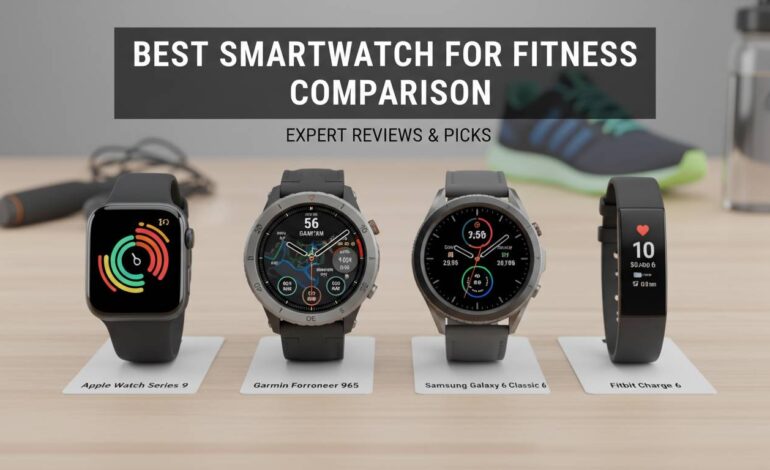
Don’t have time to read everything? Here are my top three picks. The Apple Watch Series 9 is the best all-around for most people, balancing health tracking accuracy with solid software and everyday usability. The Garmin Fenix 7 Pro is the way to go for serious athletes and outdoor enthusiasts who need GPS precision and detailed training analytics. And the Google Pixel Watch 2 gives you excellent value, packing core health features at a much lower price. Keep reading for the full breakdown of each watch plus nine more solid options.
How We Test Smartwatches for Health Tracking
I tested each smartwatch in this guide for at least two weeks of daily wear. I checked heart rate accuracy against chest strap monitors, GPS accuracy during outdoor runs and rides, sleep tracking across multiple nights, and the reliability of blood oxygen and stress measurements. I also looked at the stuff that matters just as much as raw accuracy: battery life during workouts, app ecosystem quality, comfort while sleeping, and how easy the health data is to understand.
“The best health tracking smartwatch is the one you’ll actually wear consistently. Even the most accurate device is useless if it stays in your drawer.”
This approach means my recommendations reflect real daily use, not lab conditions. I update this guide regularly as new models launch and firmware updates change performance.
Apple Watch Series 9 — Best Overall
The Apple Watch Series 9 is still the leader in the smartwatch space. Its health tracking covers heart rate monitoring with irregular rhythm notifications, blood oxygen sensing, ECG capability, temperature tracking for cycle tracking, and sleep stages. The S9 chip keeps things snappy, and watchOS has the best app ecosystem for health and fitness.
During testing, heart rate stayed within 2-3% of chest strap monitors during high-intensity interval training—impressive for a wrist-worn device. GPS locked on quickly even in urban areas, and the double-tap gesture actually makes navigating workouts without touching the screen useful. Battery life runs about 36 hours with always-on display and regular workout tracking, so you’ll charge daily, but the magnetic fast charger tops it up quickly.
The main downside is battery longevity during marathon GPS sessions. If you’re doing events over three hours, look at the Ultra 2 instead. But for most people, the Series 9 hits the sweet spot of capability, price, and ecosystem integration.
Garmin Fenix 7 Pro — Best for Athletes
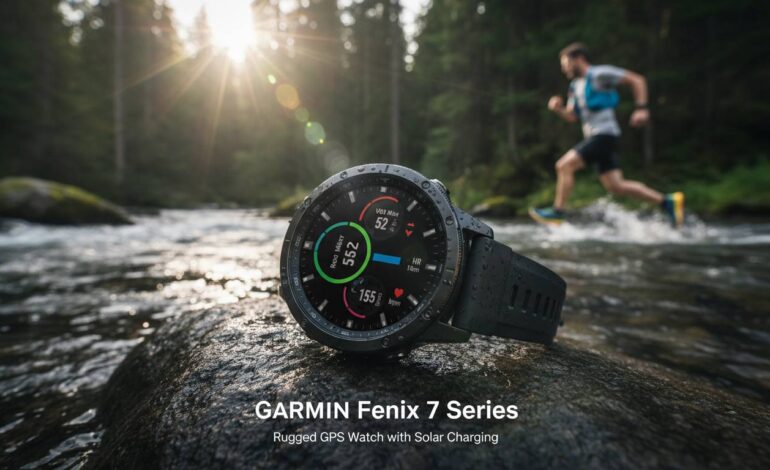
For athletes who care about performance and training data, the Garmin Fenix 7 Pro is the gold standard. This rugged multisport watch handles trail running, cycling, swimming, and skiing. Solar charging extends battery life significantly, and the MIP display stays readable in direct sunlight—essential for outdoor use.
Health tracking goes way beyond the basics here. Training readiness scores combine sleep quality, recovery time, and acute load to tell you whether you’re ready for a hard workout or should take it easy. ClimbPro shows real-time gradient information during climbs, and PacePro helps you maintain the right effort on hilly courses. The ECG app and pulse oximeter give medical-grade measurements, and body battery energy monitoring tracks your physiological stress throughout the day.
Battery life is exceptional—you’ll get 10-14 days of regular use or up to 57 hours in GPS mode with solar charging. The tradeoffs are size (it’s a chunky watch) and price, but for dedicated athletes, the investment pays off in training optimization.
Google Pixel Watch 2 — Best Value
Google’s Pixel Watch 2 is a huge improvement over the original. It fixes nearly every criticism and adds meaningful health features. The Fitbit-powered health tracking is genuinely excellent now, with 24/7 heart rate monitoring, continuous skin temperature tracking, blood oxygen sensing, and sleep analysis that holds up against dedicated sleep trackers.
What makes the Pixel Watch 2 special is the value. At roughly half the price of an Apple Watch Ultra, you get comprehensive health metrics, smooth Google Assistant integration, and the convenience of Google Maps and Wallet. The compact design looks more like a traditional watch than most competitors, and the 24-hour battery handles a full day with always-on display enabled.
During testing, sleep tracking was surprisingly accurate, capturing sleep stages that matched our comparison devices. Heart rate during workouts stayed consistent, though GPS occasionally took a few seconds longer to lock than on premium competitors. The switch to a Snapdragon W5+ chip dramatically improved responsiveness over the original Pixel Watch—no more lag.
Samsung Galaxy Watch 6 — Best for Android Users
For Android users who don’t have a Pixel phone, the Samsung Galaxy Watch 6 is still a great choice. Samsung’s health ecosystem has come a long way, offering solid tracking across sleep, fitness, stress, and body composition. The BioActive sensor combines optical heart rate, electrical heart signal, and bioelectrical impedance analysis for multiple health metrics from one sensor array.
Samsung’s rotating bezel navigation is still one of the most intuitive ways to navigate a smartwatch interface. Wear OS 4 brings better battery optimization and app support, though it still trails watchOS in sheer app quantity. Health features include ECG, blood pressure monitoring (requires calibration with a traditional cuff), and detailed sleep analysis with sleep scores.
Battery life runs about 40 hours with regular use—competitive but not class-leading. The main advantage here is seamless integration with Samsung Galaxy phones, so if you’re already in that ecosystem, the Galaxy Watch 6 makes the experience better.
Apple Watch Ultra 2 — Best Premium Option
The Apple Watch Ultra 2 is Apple’s most capable smartwatch, built for extreme athletes and anyone who wants the best. The larger case holds a bigger battery, precision GPS, and the brightest display Apple has ever made. It also lasts longest—easily handling two days of regular use or a full ultramarathon on GPS.
Health tracking matches the Series 9, plus depth sensors for underwater activities and a dual-speaker system that’s notably louder for workout audio cues. The Action button is programmable for starting workouts, marking segments, or triggering shortcuts. The titanium case and flat sapphire crystal can take serious abuse.
The premium price puts it out of reach for many buyers, and the large size doesn’t work for everyone. But if you want the most capable Apple Watch with maximum battery life and rugged durability, the Ultra 2 delivers.
Garmin Forerunner 965 — Best for Runners
The Garmin Forerunner 965 sits at the top of Garmin’s running-focused line, offering nearly all the training analytics of the Fenix line in a lighter, more comfortable package built for runners. The bright AMOLED display makes checking metrics at a glance easy, and the titanium bezel adds durability without too much weight.
Running-specific features include race predictors, daily suggested workouts that adapt based on your recovery, and performance condition scores that evaluate your readiness in real-time. Battery lasts about 12 days in smartwatch mode or 23 hours in GPS mode—enough for any marathon. Multi-band GPS improves accuracy in challenging environments like dense tree cover or urban areas.
It doesn’t have some outdoor adventure features like topographical maps and climbing analytics, but runners will appreciate the focused design and running-centric metrics without wading through features they’ll never use.
Fitbit Sense 2 — Best for Stress Management
The Fitbit Sense 2 focuses on mental wellness alongside physical health—a unique approach among premium smartwatches. The on-wrist skin temperature sensor tracks nightly fluctuations that can indicate illness or ovulation, while the cEDA sensor detects stress triggers throughout the day. These go beyond typical fitness tracking into holistic health monitoring.
The hardware design is noticeably slimmer than the original Sense, fixing a common complaint. Battery life stretches to six days with regular use—exceptional among feature-rich smartwatches. Health tracking includes 24/7 heart rate, SpO2, ECG, and Fitbit’s proven sleep tracking.
The main limitation is smartwatch functionality—while Fitbit’s app ecosystem covers essential bases, it can’t match Apple or Samsung for third-party app variety. But if stress management and detailed sleep analysis matter to you, the Sense 2 offers things you won’t find elsewhere at this price.
Whoop 4.0 — Best for Quantified Self Enthusiasts
Whoop 4.0 takes a different approach, focusing on recovery and strain optimization rather than traditional fitness metrics. The band-style design has no screen—all data comes through the smartphone app. This might sound limiting, but it actually encourages consistent wear. Whoop’s research shows users keep the device on 96% of the time, including during sleep.
The Strain Coach and Sleep Coach features synthesize your biometrics into actionable recommendations, telling you exactly how hard to push each day based on recovery status. Continuous heart rate monitoring captures HRV, resting heart rate, and skin temperature, with algorithms that can detect illness onset up to 24 hours before symptoms appear.
The subscription model (required for full features) and lack of built-in GPS are big considerations. You’ll need to carry your phone for distance tracking, and the $239 hardware price is just the start. But for data-driven athletes focused on optimizing recovery, Whoop provides insights you can’t get elsewhere.
Amazfit GTR 4 — Best Budget Option
Amazfit has closed the gap with premium brands significantly, and the GTR 4 shows how far budget smartwatches have come. Dual-band GPS gives excellent accuracy without needing a phone, while the 14-day battery life rivals devices costing three times as much. Health tracking covers heart rate, SpO2, stress, and sleep with surprisingly solid accuracy.
The Zepp app provides detailed analytics and a growing ecosystem of mini-apps. It’s not as polished as Apple or Samsung’s offerings, but it has most features casual fitness enthusiasts need. The aluminum case and leather or silicone band options look more premium than the price suggests.
Downsides include occasional syncing issues with certain phone models and a less responsive touchscreen than premium competitors. But at roughly one-third the price of flagship models, the GTR 4 delivers real value for users who want solid health tracking without spending a fortune.
Coros Apex 2 Pro — Best for Multisport Athletes
The Coros Apex 2 Pro is built for serious multisport athletes who need a lightweight, accurate watch that excels at swimming, cycling, and running. Coros has built a reputation for exceptional GPS accuracy and battery life, and this model continues that tradition with up to 45 hours of continuous GPS tracking.
Training features include training load, recovery time, and performance condition metrics that rival Garmin’s more expensive models. The touchscreen works well alongside the traditional digital crown, and the titanium bezel keeps weight manageable despite the rugged build. Navigation includes breadcrumb trails and sync with popular route-planning apps.
The compromise is smartwatch functionality—notifications work but lack the polish of Apple or Samsung ecosystems. For pure athletic performance tracking, the Apex 2 Pro competes with watches costing much more, making it great value for dedicated triathletes and cyclists.
Health Tracking Features Compared
| Feature | Apple Watch S9 | Garmin Fenix 7 Pro | Pixel Watch 2 | Galaxy Watch 6 |
|---|---|---|---|---|
| Heart Rate | ✓ | ✓ | ✓ | ✓ |
| ECG | ✓ | ✓ | ✓ | ✓ |
| Blood Oxygen | ✓ | ✓ | ✓ | ✓ |
| Sleep Tracking | ✓ | ✓ | ✓ | ✓ |
| Temperature | ✓ | ✓ | ✓ | ✓ |
| GPS | ✓ | ✓ | ✓ | ✓ |
| Battery Life | 36 hrs | 57 hrs | 24 hrs | 40 hrs |
| Water Resistance | 50m | 100m | 50m | 50m |
Buying Guide: Choosing the Right Smartwatch for Your Needs
Picking the right fitness smartwatch starts with being honest about how you’ll actually use it. Figure out whether you want a full smartwatch experience with apps and notifications or dedicated athletic features that prioritize performance tracking. Battery life matters a lot if you track long workouts or tend to forget to charge. Your phone ecosystem largely determines which watches give you full functionality—some features only work fully with their native platforms.
Think about which health metrics actually matter to you. If you mainly care about steps and basic heart rate, almost any modern smartwatch works. But if you need ECG, detailed sleep staging, or training load analysis, focus on premium options from Apple, Garmin, or Samsung. Remember that the best device is one you’ll wear consistently—even imperfect data from a watch you actually use beats perfect metrics from a device sitting on your nightstand.
Conclusion
The smartwatch market has excellent options at every price point, but your ideal choice depends on your specific priorities. The Apple Watch Series 9 is still the best all-around for most people, combining comprehensive health tracking with the broadest app ecosystem and intuitive software. Athletes serious about performance should look at the Garmin Fenix 7 Pro or Forerunner 965, where training analytics go way beyond basic fitness tracking. Android users get the most complete experience with either the Google Pixel Watch 2 or Samsung Galaxy Watch 6, depending on which ecosystem you prefer.
Whatever you choose, modern smartwatches give you health insights that were impossible to get just a few years ago. The key is wearing and using your device consistently, letting the data build into patterns that actually help you improve. Start with clear goals, let your watch establish the baseline, and use the insights to make small improvements over time.
FAQs
Which smartwatch has the most accurate heart rate monitoring?
Garmin and Apple watches generally track heart rate most accurately, both staying within 2-3% of chest strap monitors during testing. However, accuracy varies by activity type and individual physiology.
Is Apple Watch or Galaxy Watch better for fitness?
iPhone users get a more seamless experience with Apple Watch and better third-party fitness app support. Android users do well with the Galaxy Watch 6 for Samsung phones, though the Pixel Watch 2 matches or exceeds it on non-Pixel Android devices.
What smartwatch do professional athletes use?
Professional athletes often use Garmin watches, particularly the Fenix and Forerunner lines, because of their GPS accuracy, training analytics, and durability. Many also wear Apple Watches for everyday tracking, especially those in team sports.
Can smartwatches replace medical devices for health monitoring?
Smartwatches can detect irregular heart rhythms and provide useful health data, but they’re not replacements for medical devices. Always talk to healthcare professionals for health concerns, and use FDA-cleared devices for clinical-grade measurements.
How long do smartwatch health sensors typically last?
Health sensors in modern smartwatches stay accurate for 3-5 years with normal use, though battery degradation usually means replacing sooner. Software updates may improve accuracy over time but can’t fix hardware limits.
Do cheaper smartwatches have good health tracking?
Budget options like the Amazfit GTR 4 offer surprisingly capable health tracking for basic needs. They typically lag in sensor accuracy, software refinement, and advanced analytics compared to premium models, though.