Best Wireless Gaming Headphones Under $50 – Top 5 Picks

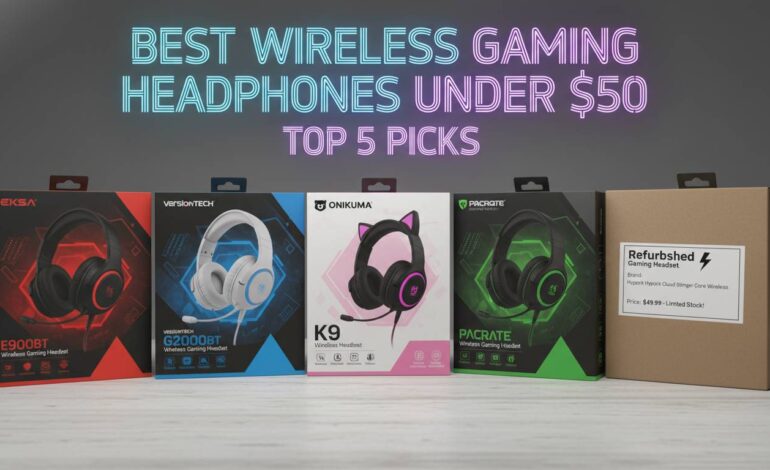
Most budget wireless gaming headsets are hot garbage. They either have unbearable latency, microphones that make you sound like you’re broadcasting from a tin can, or batteries that die halfway through a gaming session. Finding something actually usable under $50 takes some digging.
After testing and researching what’s actually available, here are five wireless headsets that won’t waste your money.
Quick Answer – Top 3 Picks
- HyperX Cloud Stinger Core Wireless – Around $45, solid 7.1 surround, comfortable for long sessions
- PDP LVL50 Wireless – Around $40, flip-to-mute mic, killer battery life
- Turtle Beach Recon 200 – Around $50, bass-heavy sound, reliable connection
HyperX Cloud Stinger Core Wireless
The HyperX Cloud Stinger Core Wireless is the safe pick here. HyperX knows what they’re doing with gaming audio, and this headset doesn’t embarrass them.
At $45, you get 7.1 virtual surround sound, which is genuinely useful in games where spatial awareness matters. The sound is bass-heavy—explosions hit hard, which is fun for single-player games. Dialogue comes through fine, though don’t expect audiophile quality. The surround effect varies by game, but when it works, it works well.
The mic has noise cancellation. It’s decent, not great—your teammates will hear you, but they might also hear your keyboard if you’re a heavy typer. The flip-to-mute is intuitive. Flip it up, you’re muted. Simple.
Comfort is where this headset shines. At under 260 grams, it’s light. The ear cushions are soft memory foam, and it doesn’t clamp too hard. I’ve worn this for multi-hour sessions without the dreaded ear sweat.
Battery is about 17 hours. That’s solid for the price. The wireless dongle works well within 20 feet of your PC or console.
What’s missing: on-ear volume buttons (just a wheel on the ear cup) and premium build materials. It’s plastic, but it feels like functional plastic, not cheap.
The HyperX Cloud Stinger Core Wireless is the best all-rounder under $50. Nothing fancy, but nothing broken either.
PDP LVL50 Wireless
PDP doesn’t have HyperX’s brand recognition, but the LVL50 is worth your attention. At around $40, it’s one of the cheapest decent wireless options out there.
The 50mm drivers sound more balanced than the HyperX—less bass, more clarity. This actually matters in competitive games where you need to hear footsteps and reloads. The soundstage is decent for a closed-back headset.
The mic is detachable. That’s rare at this price and genuinely useful if you want to use the headset for music or movies afterward. Voice quality is clear, no active noise cancellation, but it gets the job done.
Battery life is the real highlight: around 20 hours. That’s genuinely impressive for a $40 wireless headset. You can game for a full work week without charging.
It’s heavier than the HyperX at around 320 grams. Not uncomfortable, but you’ll notice it more during long sessions.
Two gripes: the wireless range tops out at about 20 feet, which might be an issue if your setup is spread out. Also, no companion software for tweaking the EQ.
If battery life matters to you—and it should, because nothing kills momentum like a dead headset mid-game—the PDP LVL50 is the value king.
Turtle Beach Recon 200
Turtle Beach has been making gaming headsets forever, and the Recon 200 brings their signature sound to the budget category. At around $50, it’s the priciest option here, but it earns its spot.
The amplified audio is the thing. Turtle Beach boosts the bass and highs, creating that punchy, in-your-face sound that action games benefit from. It’s not subtle. If you like your explosions loud and your gunshots crunchy, this delivers.
The wireless setup is dead simple. Plug in the dongle, turn on the headset, go. 2.4GHz connection keeps latency low.
The mic is flip-to-mute, adjustable, and produces clear voice. Nothing groundbreaking, but your teammates won’t complain.
Battery is around 12 hours—fine, not exceptional. The wired backup mode is a nice safety net when you forget to charge.
Build quality is a step above the others. Better headband padding, fabric ear cushions that don’t cook your ears.
The sound profile is polarizing. It’s very bass-heavy. If you also listen to music or watch movies with these, that bass can get fatiguing. Also, at 340 grams, it’s the heaviest option here.
If you want that classic Turtle Beach sound and don’t mind the extra weight, the Recon 200 is a solid choice.
Logitech G G335 (Wired Alternative Worth Considering)
I know this article is about wireless, but the Logitech G335 at around $50 deserves a mention. Wired means zero latency—something serious competitive gamers care about.
It’s ridiculously light at 240 grams. The 40mm drivers sound balanced across games, music, and movies. The on-cable controls work well.
The mic is removable. The build is simple but solid.
If you can live with a cable, this might actually be your best audio-to-dollar ratio.
Budget Alternatives Worth Knowing About
Amazon Basics Wireless Gaming Headset – Under $30, does the job for casual use. Battery life is weak (8-10 hours), mic is basic.
Kinivo ZX800 – Occasionally drops under $50. Decent sound, reliable wireless for the price. Build is modest.
Sentey GS-4241 – Unknown brand, aggressive pricing. Sound is okay, but the wireless connection can be spotty. More risk, less reward.
How to Choose Wireless Gaming Headphones Under $50
Here’s what actually matters:
Latency – You want under 40ms. Budget Bluetooth headsets often fail this. Stick with 2.4GHz wireless dongles.
Mic quality – If you play multiplayer, your team hears your mic. Noise reduction helps. Flip-to-mute is convenient.
Battery – Aim for 10+ hours. Check if you can use it while charging—that’s a lifesaver.
Comfort – Weight and ear cushions matter. Memory foam > standard foam. Try before buying if you can.
Sound profile – Bass-heavy is fun for single-player. Balanced is better for competitive where hearing details matters.
Conclusion
Yes, you can get usable wireless gaming headphones under $50. No, you won’t get premium quality—but you also won’t get garbage.
The HyperX Cloud Stinger Core Wireless is the best all-around pick. Comfortable, reliable, good sound.
The PDP LVL50 wins on battery life if that’s your priority.
The Turtle Beach Recon 200 is for bass lovers who want that signature sound.
At this price, you’re making trade-offs. But these three actually trade off the right things.
FAQs
Are wireless gaming headphones under $50 good for competitive gaming?
For most people, yes. The latency on these is low enough for casual ranked play. Pro gamers still prefer wired for zero delay, but for everyone else, these work fine.
What’s the main difference between cheap and expensive wireless gaming headsets?
Expensive ones have better drivers, premium materials, longer battery, and more stable connections. Budget options cut features you can live without while keeping gaming functionality intact.
Can I use these with my PS5, Xbox, or Switch?
The HyperX and PDP work with PC and PS5/PS4 via USB dongle. Xbox compatibility varies—check before buying. Switch works with most USB wireless headsets in docked mode.
How long do budget wireless gaming headsets last?
Two to three years with normal use. Battery degradation is the main failure mode over time. Don’t leave it on the charger constantly, and handle the hinges carefully.
Do I need special software?
Not always. HyperX has NGENUITY for EQ and mic tweaks. The PDP works plug-and-play. You can always adjust system audio settings if needed.