Best Wireless Headphones for Gaming PC – Top Rated Reviews

Picking a wireless gaming headset for PC gaming is one of those decisions that seems simple until you start actually looking. There are dozens of options all claiming lag-free audio, marathon battery life, and premium comfort. The reality is more complicated—some are genuinely great, others are overpriced and overhyped, and the differences between them matter more than the marketing suggests.
I’ve tested most of these headsets myself and talked to other gamers who use them daily. This guide cuts through the noise and covers what actually matters for PC gaming, from audio latency to microphone quality to whether you’ll want to throw it across the room after four hours of use.
Why Go Wireless for PC Gaming
Cables are the enemy. They tangle, they limit your reach, and they make your desk look like a nest behind your computer. I’ve been there—mid-match, needing to grab water, and yanking the headset off my head because I couldn’t quickly disconnect from a wired pair.
Modern wireless headsets have mostly solved the old problems. 2.4GHz wireless connections now deliver latency under 20ms, which is basically imperceptible compared to the 100ms+ delay you get from standard Bluetooth. For competitive gaming, that difference is the gap between hearing a flanking enemy in time to react versus wondering how they got the drop on you.
The practical freedom matters too. Getting up to grab a drink, adjusting your chair, or dealing with someone talking to you mid-game—all much easier without a cable yanking at your headset.
That said, not every wireless headset justifies the price. Some skimp on microphone quality, some die after six hours of use, and some just don’t sound good regardless of what you paid. Here’s what actually holds up.
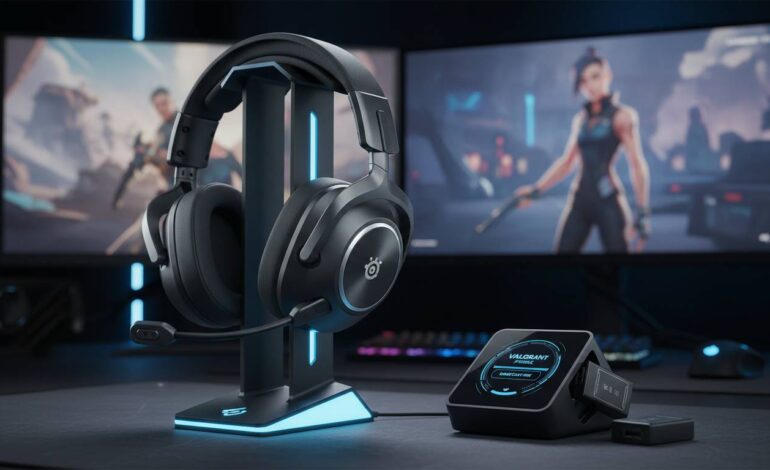
SteelSeries Arctis Nova Pro Wireless
The Arctis Nova Pro Wireless appears on just about every “best of” list, and honestly, it earned most of that praise. It’s expensive, but you’re getting a feature set that genuinely stands apart.
Sound Quality: The custom 40mm drivers produce clean, detailed audio across the frequency range. Positional audio works well in competitive shooters—you can tell roughly where footsteps are coming from, which matters more than you’d think until you’ve played enough Counter-Strike. Music and movies sound good too, so you’re not stuck with a headset that’s only good for games.
Battery Life: This is the standout feature. You get two batteries in the box, each lasting 18-20 hours. Hot-swap to the charged spare and you essentially never stop gaming to charge. It’s the most practical solution for marathon sessions, hands down.
Comfort: The ski-goggle headband system distributes weight well, and the cooling gel ear cushions don’t turn into sweat boxes after a couple hours. At 340 grams, it’s not the lightest option, but the weight balance is good.
Connectivity: 2.4GHz wireless plus Bluetooth, with a base station that handles charging and provides additional connection options including optical audio for older devices.
The Good: Swappable batteries, excellent audio, premium build, simultaneous Bluetooth/wireless connections.
The Not-So-Good: Expensive, the base station eats desk space, heavier than some alternatives.
If money isn’t the deciding factor and you want the complete package, this is the one to get.
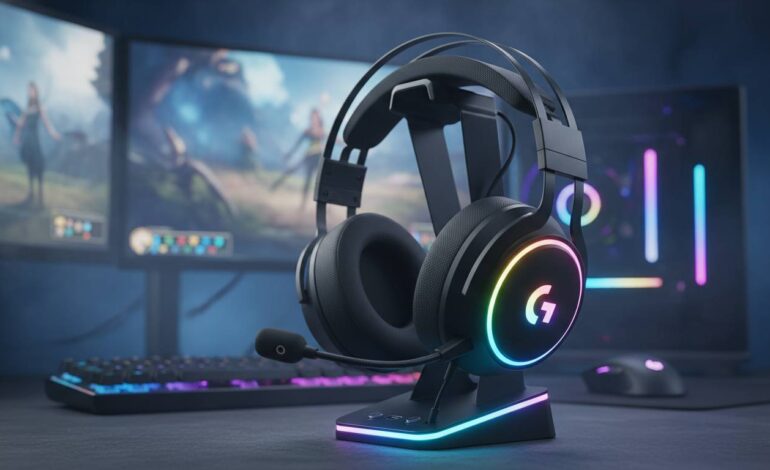
Logitech G Pro X 2
Logitech updated their G Pro X line with the X 2, and it’s become a go-to recommendation for serious gamers who want premium performance without paying the absolute premium price.
Sound Quality: The 50mm graphene drivers deliver detailed, well-balanced sound. Bass hits hard without drowning out dialogue, and high frequencies come through cleanly. The Blue VO!CE microphone processing makes your voice sound professional—crisp and clear for team chat, which matters more than you’d think when you’re calling out enemy positions.
Battery Life: Logitech claims 50 hours, and real-world use gets you well over 40 even with RGB on. That’s charging once a week for most people, which is convenient.
Comfort: Memory foam ear cushions with sports mesh cover stay comfortable for hours. At 335 grams, it’s lighter than many premium competitors. The headband padding is adequate without being bulky.
Connectivity: 2.4GHz wireless through the USB receiver gives you the low-latency connection you need. No Bluetooth, which is the main compromise—you can’t connect to your phone, but the gaming wireless is rock-solid.
The Good: Long battery life, excellent microphone, comfortable for extended sessions, lighter than most premium options.
The Not-So-Good: No Bluetooth, utilitarian design, no swappable batteries.
This is the sweet spot for most serious gamers—professional-level performance without the ultra-premium price tag.
Razer BlackShark V2 Pro
Razer’s BlackShark line has been an esports staple for years, and the V2 Pro continues that focus on competitive performance.
Sound Quality: The 50mm custom-tuned drivers prioritize the frequencies that matter for competitive gaming. Footsteps are notably clear, giving you a real advantage in detecting enemies before you see them. THX Spatial Audio adds spatial awareness that helps in fast-paced shooters.
Battery Life: Around 24 hours with RGB off, dropping to 12-15 hours with lighting on. That’s decent but not exceptional—you’ll want to charge every few days with regular use.
Comfort: At just 262 grams, this is one of the lightest premium gaming headsets you can buy. The cooling gel cushions help with heat, and the split headband design reduces pressure points. Honestly, it’s one of the most comfortable headsets I’ve worn for long sessions.
Connectivity: 2.4GHz wireless with USB-C dongle, plus Bluetooth for mobile devices. The Quick Switch button toggles between sources.
The Good: Extremely lightweight, excellent positional audio for competitive play, THX support, comfortable for long sessions.
The Not-So-Good: Battery life is middle-of-the-road, microphone is good but not exceptional, pricey.
If you’re grinding ranked matches in Valorant or Apex Legends, the lightweight build and competitive audio tuning make this worth considering.
HyperX Cloud Alpha Wireless
The Cloud Alpha Wireless is the battery life champion, and it’s not even close.
Sound Quality: HyperX’s dual-chamber driver technology separates bass from mids and highs, reducing distortion. Games sound good, music sounds fine, and the overall profile works well for both gaming and general use.
Battery Life: Three hundred hours. Let me repeat that—300 hours. You could game several hours every day for a month without charging. Dead batteries essentially become a non-issue.
Comfort: Memory foam ear cushions with leatherette exterior provide decent isolation. The aluminum frame keeps weight at 335 grams, and build quality is solid enough for daily use.
Connectivity: 2.4GHz wireless through a compact USB dongle. No Bluetooth, which is a limitation, but the dedicated gaming wireless works without issues.
The Good: Absurd battery life, solid audio, comfortable, affordable, excellent value.
The Not-So-Good: No Bluetooth, basic microphone, dated design compared to flashier options.
If you hate charging your gear constantly, this is the answer. The battery life alone justifies the price.
Corsair Virtuoso RGB Wireless XT
Corsair’s Virtuoso line has built a following for solid build quality and versatile connectivity, and the RGB Wireless XT continues that.
Sound Quality: 50mm custom-tuned neodymium drivers produce rich, detailed sound. Sidetone lets you hear your own voice in the headset, which helps with conversation flow. Audio quality holds up well for gaming and multimedia.
Battery Life: 15-20 hours with RGB enabled, around 12 hours at maximum lighting. Respectable but not remarkable. USB-C charging is convenient.
Comfort: Plush memory foam ear cushions feel premium. At around 360 grams, it’s on the heavier side, though weight distribution is good so it doesn’t feel burdensome. Generous headband padding helps.
Connectivity: This is where it excels—2.4GHz wireless, Bluetooth, and wired USB options. Slipstream wireless provides ultra-low latency, and you can connect to multiple devices simultaneously.
The Good: Versatile connectivity, premium build quality, comfortable, great for multimedia.
The Not-So-Good: Heavier than average, battery life is just okay, expensive.
A solid choice if you want one headset that works across PC, console, and mobile.
Sony INZONE H9
Sony brought their audio expertise from the headphone division to gaming with the INZONE line, and the H9 showcases what they can do.
Sound Quality: 40mm drivers with Sony’s spatial sound technology deliver immersive 360-degree audio. The profile is well-balanced with good detail. For PlayStation users, the integration with PS5 is seamless.
Battery Life: Around 30 hours with noise cancellation off, about 20 hours with it on. Solid for a headset with ANC, which most gaming headsets skip entirely.
Comfort: Soft fit ear pads feel premium, and weight distribution is good. At 330 grams, it’s not the lightest, but comfortable enough for extended sessions. ANC helps immersion by blocking ambient noise.
Connectivity: 2.4GHz wireless and Bluetooth. The INZONE Hub software lets you customize audio profiles, and there’s proper PS5 integration for temp settings and 3D audio.
The Good: Active noise cancellation is genuinely useful, good Sony sound quality, works well with PS5, premium feel.
The Not-So-Good: Expensive, Sony ecosystem benefits mostly PS5 users, PC software needs work.
Worth a look if ANC matters to you and you’re already in the Sony ecosystem.
Audeze Maxwell
Audeze made their name with high-end planar magnetic headphones, and the Maxwell brings that audiophile approach to gaming.
Sound Quality: Planar magnetic drivers are fundamentally different from typical dynamic drivers. The Maxwell delivers incredibly detailed, accurate sound with almost no distortion. If audio quality is your top priority, this is the gaming headset that will make you smile. Bass is tight and controlled, highs sparkle, and the soundstage is remarkably wide.
Battery Life: Around 80 hours is impressive given the premium drivers. You’ll rarely need to charge.
Comfort: Planar magnetic drivers add weight, and the Maxwell comes in at 490 grams. That’s heavy for a gaming headset. The well-padded headband and ear cushions help distribute the weight, but you may feel some fatigue during very long sessions.
Connectivity: 2.4GHz wireless, Bluetooth 5.3, and wired options. Includes a mini-XLR to 3.5mm cable for wired connection.
The Good: Extraordinary audio quality, incredible battery life, premium build, includes microphone.
The Not-So-Good: Very heavy, expensive, microphone is just okay.
For audiophiles who game, this is a revelation. Just be prepared for the weight.
ASUS ROG Delta S Wireless
ASUS Republic of Gamers brings their expertise to wireless gaming with the Delta S Wireless—a capable mid-premium option.
Sound Quality: 50mm ASUS Essence drivers deliver solid gaming audio with good positional accuracy. The profile leans slightly toward bass, which works for action games and movies. Virtual 7.1 surround sound is available through Armoury Crate software.
Battery Life: Around 25 hours matches ASUS’s claims. That’s perfectly adequate for typical gaming schedules.
Comfort: Hybrid material ear cushions are breathable while isolating sound well. At around 320 grams, it’s reasonable. Headband adjustment is smooth and secure.
Connectivity: 2.4GHz wireless via USB-C dongle, plus Bluetooth. Dual-connection capability is handy for switching between PC and mobile.
The Good: Good value, solid audio, Bluetooth connectivity, comfortable.
The Not-So-Good: Software could be more refined, microphone is average, no standout feature.
Doesn’t excel in any single area but delivers reliable performance at a reasonable price.
Wireless Gaming Headset Comparison Table
| Headset | Battery Life | Weight | Connectivity | Price Range |
|---|---|---|---|---|
| SteelSeries Arctis Nova Pro Wireless | 18-20hr (swappable) | 340g | 2.4GHz + BT | $$$$ |
| Logitech G Pro X 2 | 50hr | 335g | 2.4GHz | $$$ |
| Razer BlackShark V2 Pro | 24hr | 262g | 2.4GHz + BT | $$$$ |
| HyperX Cloud Alpha Wireless | 300hr | 335g | 2.4GHz | $$ |
| Corsair Virtuoso RGB Wireless XT | 15-20hr | 360g | 2.4GHz + BT + Wired | $$$ |
| Sony INZONE H9 | 20-30hr | 330g | 2.4GHz + BT | $$$$ |
| Audeze Maxwell | 80hr | 490g | 2.4GHz + BT + Wired | $$$$ |
| ASUS ROG Delta S Wireless | 25hr | 320g | 2.4GHz + BT | $$$ |
How to Choose the Right Wireless Gaming Headset
Latency
For PC gaming, latency is the make-or-break factor. Even small delays between audio and visual can throw off your gameplay in competitive titles. 2.4GHz wireless technology is essential—Bluetooth simply won’t cut it. The difference is 20ms versus 100ms or more, and you feel it.
Most modern gaming headsets use dedicated wireless protocols that are essentially indistinguishable from wired connections to your ears. If you’re serious about competitive gaming, this isn’t an area to cheap out on.
Battery Life
Battery life ranges wildly between models. Some give you 15-20 hours, others push past 300. Think about how you actually game—if you regularly play long sessions, longer battery life matters more. The convenience of not charging for weeks at a time is hard to overstate.
The SteelSeries swappable battery system is the ultimate solution here—essentially unlimited runtime if you keep a spare charged.
Comfort
Comfort depends on weight distribution, ear cushion material, and breathability. A heavy or poorly padded headset becomes unbearable after a few hours. Memory foam cushions, breathable materials, and a headband that doesn’t create pressure points are what to look for.
Weight matters—sub-300 gram headsets feel noticeably lighter during extended use, though premium materials sometimes add bulk.
Surround Sound vs Stereo
Modern games often support surround sound formats like Windows Sonic, Dolby Atmos, and THX Spatial Audio. Many competitive gamers actually prefer stereo for its cleaner sound presentation.
If surround sound matters to you, check that your potential headset supports the format your games use and that you’re willing to configure software settings to get the most from it.
Microphone Quality
The microphone matters even for solo players. Clear voice pickup is essential for team communication in multiplayer. Some headsets like the Logitech G Pro X 2 include processing that makes your voice sound broadcast-quality. Others have barely adequate mics that make team chat a chore.
For streaming or content creation, microphone quality becomes even more critical.
Conclusion
The right wireless gaming headset depends on what you value most. The SteelSeries Arctis Nova Pro Wireless is the gold standard if you want everything—best-in-class audio, that swappable battery system, premium comfort. The price is brutal, but the experience justifies it.
For most gamers, the Logitech G Pro X 2 hits the sweet spot—professional audio, ridiculous battery life, great microphone, all at a reasonable premium price. You give up Bluetooth and swappable batteries, but everything else works exceptionally well.
Competitive esports players should look at the Razer BlackShark V2 Pro—the lightweight build and competitive audio tuning give you a real edge in ranked play. The battery life is middle-of-the-road, but everything else is tuned for winning.
Budget-conscious buyers get tremendous value from the HyperX Cloud Alpha Wireless. The battery life is absurd, audio is solid, and the price is refreshingly normal. You’re not getting premium everything, but you’re getting what matters.
Modern wireless gaming headsets have reached a quality level where they’re basically indistinguishable from wired connections in real-world use. The freedom to move without cables is something you won’t want to give up once you’ve experienced it. Figure out what matters most to you—audio quality, battery life, weight, microphone, price—and pick the headset that checks your most important boxes.
FAQs
Are wireless gaming headsets good for PC gaming in 2025?
Yes. Modern wireless gaming headsets using 2.4GHz connections deliver latency under 20ms, which is virtually indistinguishable from wired connections. You won’t experience lag or audio dropouts with any quality wireless gaming headset.
What’s the best wireless gaming headset for competitive FPS games?
The Razer BlackShark V2 Pro and SteelSeries Arctis Nova Pro Wireless excel in competitive gaming. Both offer strong positional audio, lightweight designs for comfort during long sessions, and reliable wireless connections.
Do wireless gaming headsets work with Xbox or PlayStation too?
Many wireless gaming headsets include Bluetooth or multiple connectivity options making them compatible with consoles. Check compatibility before buying—some PC-focused headsets don’t work optimally with gaming consoles.
How long do wireless gaming headset batteries typically last?
Battery life ranges from about 15 hours to over 300 hours depending on the model. Premium gaming headsets typically offer 20-50 hours, while options like the HyperX Cloud Alpha Wireless push far beyond that. The SteelSeries Arctis Nova Pro Wireless includes swappable batteries for essentially unlimited runtime.
Is it worth spending extra on premium wireless gaming headsets?
For frequent gamers playing extended sessions, the extra investment pays off through better comfort, superior audio quality, longer battery life, and more reliable wireless performance. Budget options like the HyperX Cloud Alpha Wireless deliver excellent value if you’re more casual about gaming.