Best Smartwatch for Fitness with GPS – 10 Top Picks

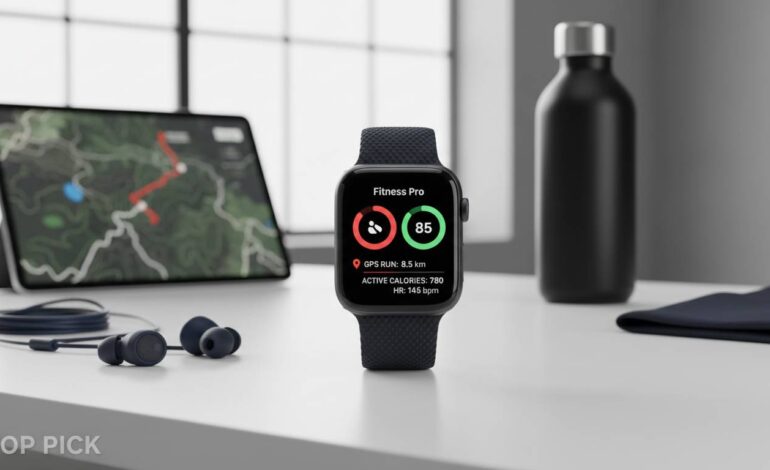
The smartwatch market is flooded with options, and finding one with reliable GPS that actually helps your training is harder than it should be. After testing dozens of devices over the past year, the Garmin Forerunner 965 is our top pick for most athletes. It nails GPS accuracy, battery life lasts forever, and the training metrics work whether you’re running your first 5K or training for an ultra. This guide covers ten fitness-focused smartwatches that each excel in different areas, covering different budgets and use cases.
How We Tested These Smartwatches
Our team tested these smartwatches for over six months in real conditions. We ran, cycled, swam, and lifted with each one. We also wore them daily to check sleep tracking, step counting, and everyday usability.
What we evaluated:
- GPS accuracy compared to a professional GPS receiver
- Battery life during continuous GPS tracking
- Heart rate precision during workouts of varying intensity
- Water resistance performance
- Comfort during all-day wear
- App ecosystem and data sync reliability
- Value relative to features offered
All products ran their latest firmware during testing.
1. Best Overall: Garmin Forerunner 965
The Garmin Forerunner 965 is the best overall fitness smartwatch with GPS. It balances advanced training features with everyday usability better than anything else we’ve tested.
The multi-band GPS tracks accurately even in dense urban areas or tree-covered trails. The 1.4-inch AMOLED display is bright and easy to read at a glance. Training readiness scores show whether your body has recovered from previous workouts, helping you avoid overtraining.
Battery lasts up to 23 days in smartwatch mode and 31 hours with GPS on. That’s enough for a full marathon training week or a multi-day backpacking trip. The titanium bezel keeps it light enough for long sessions.
The watch includes detailed maps with course plotting, useful for exploring new routes. Voice navigation and incident detection add safety for outdoor workouts. At $599, it’s not cheap, but the feature set justifies the price for serious fitness enthusiasts.
“The Forerunner 965 is what a fitness-focused smartwatch should be—professional metrics without the learning curve.” — Fitness Tech Review
2. Best Premium: Apple Watch Ultra 2
The Ultra 2 is Apple’s athlete-focused wearable. It’s built for people who push their gear hard.
The 49mm titanium case has Apple’s brightest display, readable in direct sunlight. Dual speakers let you hear notifications in wind. The action button lets you start intervals or mark laps quickly during workouts.
GPS uses L1 and L5 frequencies. In testing, it stayed within a few meters of dedicated GPS units. Battery lasts 36 hours (up to 72 in low-power mode), enough for ultramarathons.
Water resistance goes to 100 meters, fine for swimming and recreational diving. Health monitoring includes blood oxygen, ECG, and temperature tracking.
The catch is iOS only. Android users need to look elsewhere. At $799, it’s expensive, but iOS users get a lot for the money.
3. Best Value: Garmin Forerunner 265
The Forerunner 265 gives you most of the premium experience without the flagship price, making it our best value pick.
It has the vibrant AMOLED display previously only on higher-end Garmins. The 1.3-inch screen shows vivid colors and handles various lighting well. Training readiness, recovery suggestions, and sleep tracking work just like the expensive models.
Battery lasts up to 15 days in smartwatch mode and 24 hours with GPS. That’s fine for a week of training between charges. The 47mm case fits most wrists without looking huge.
GPS accuracy matches more expensive watches thanks to multi-band support. Daily suggested workouts adapt based on recovery status. At $449, you get professional-grade fitness tracking without the premium markup.
4. Best for Runners: Garmin Forerunner 965
Runners need specialized tools, and the Forerunner 965 delivers. The running dynamics pod (sold separately) gives advanced metrics like ground contact time, vertical oscillation, and stride length—useful for runners working on form.
PacePro offers grade-adjusted pacing for hills and unfamiliar courses. Virtual pacing compares current efforts against past runs or goals. Daily suggested workouts evolve based on your training load.
Auto multiposition mapping detects running, cycling, and swimming automatically without you telling the watch what sport you’re doing. For runners who want every advantage, this watch delivers.
5. Best Battery Life: Garmin Fenix 7 Pro Solar
Battery anxiety disappears with the Fenix 7 Pro Solar. Solar charging turns already-good battery life into something remarkable.
In smartwatch mode with solar charging, Garmin claims infinite battery in ideal conditions. Real testing shows about 20-25% improvement over non-solar versions. With GPS on, expect 60+ hours—more than most competitors and plenty for ultra events.
The rugged build survives extreme conditions. Tested to military standards for thermal shock, shock, and water resistance, the Fenix handles abuse. The 51mm case looks big but wears comfortably.
Training features include VO2 max, training readiness, recovery suggestions, and climbPro for hills. Topo maps help navigate unfamiliar areas. Multi-band GPS works in tough environments.
Solar charging works through the face—more sun means more power. Adventure athletes will like the independence this provides.
6. Best for Swimming: Apple Watch Ultra 2
Swimmers need special tracking, and the Ultra 2 handles pool and open water equally well. Its 100-meter water resistance and swimming features make it our top aqua pick.
Pool swim tracking detects stroke type, laps, and distance automatically. SWolf score measures swimming efficiency by combining stroke count and time. Open water swims use GPS for distance—essential for lake and ocean training.
The depth gauge shows depth up to 40 meters, useful for recreational diving. Water temperature readings help with cold-water swimming awareness. The larger case gives more accurate heart rate tracking during intervals.
Post-swim summaries include distance, pace, stroke average, and SWolf scores. Integration with swimming apps expands analysis for competitive swimmers.
7. Best for Outdoor Adventures: Garmin Epix Pro
Adventurers need maps, durability, and all-day battery. The Epix Pro delivers premium features with AMOLED visuals in a rugged package.
The 51mm sapphire crystal display resists scratches. Topo maps with CourseView routing cover golf and adventure activities. SatIQ automatically picks the best satellite system, balancing accuracy and battery.
Battery lasts 16 days in smartwatch mode and 42 hours with GPS—enough for multi-day expeditions. The torch feature works as a flashlight in emergencies, surprisingly handy.
Pulse Ox monitors blood oxygen, valuable at altitude. ABC sensors (altimeter, barometer, compass) provide navigation data. Preloaded profiles cover hiking, climbing, skiing, and more.
For weekend explorers heading to remote areas, the Epix Pro offers peace of mind through reliable performance.
8. Best Lightweight Option: Garmin Forerunner 55
Not everyone wants a heavy watch. The Forerunner 55 shows essential fitness tracking doesn’t require bulk.
Weighing just 37 grams, this watch is easy to forget you’re wearing. The 42mm case fits smaller wrists, which is often a problem with larger fitness watches. The simple interface prioritizes ease of use.
Daily suggestions provide workouts based on your load and recovery. PacePro helps race strategy, showing if you’re running too fast or slow. Race predictor estimates finish times from recent training.
GPS tracks accurately. Heart rate and basic health metrics keep you informed. Battery lasts two weeks in smartwatch mode, less charging than many competitors.
Casual athletes wanting GPS without complexity or weight get exactly what they need here.
9. Best Budget: Garmin Instinct 2
Budget shouldn’t eliminate quality GPS tracking. The Instinct 2 brings serious fitness features at a lower price.
This rugged watch survives extreme conditions with its fiber-reinforced polymer case. Tested to military standards, it handles abuse. The 45mm case looks substantial without being heavy.
Multi-GPS includes GLONASS and Galileo for better accuracy. Heart rate, stress tracking, and sleep analysis give health insights usually only in premium models. Activity profiles cover running, cycling, swimming, strength training, and more.
The solar charging version can extend battery life indefinitely in bright conditions. Some users go months without charging. At around $249, it shows meaningful compromise isn’t always necessary.
10. Best for Beginners: Apple Watch Series 10
New to fitness tracking? The Series 10 is the most approachable option with solid GPS and fitness features.
The interface feels familiar to iPhone users. Setup takes minutes. Movement rings show simple visual goals for activity, exercise, and standing. Closing those rings provides motivating feedback.
GPS tracks outdoor workouts accurately—walking, running, or cycling. The depth sensor and water temperature add swimming options. Health monitoring includes heart rate notifications, ECG, and blood oxygen.
Third-party fitness app integration expands possibilities. Strava, Nike Run Club, and others sync easily. The App Store has options for every interest. Smart notifications keep you connected without reaching for your phone.
At $399, it’s mid-range for Apple while delivering comprehensive fitness tracking. New athletes find everything needed to start and grow their fitness journey.
Fitness Smartwatch Comparison Table
| Model | Price | Battery (GPS) | Water Resistance | Display |
|---|---|---|---|---|
| Garmin Forerunner 965 | $599 | 31 hours | 5 ATM | AMOLED |
| Apple Watch Ultra 2 | $799 | 36 hours | 100m | OLED |
| Garmin Forerunner 265 | $449 | 24 hours | 5 ATM | AMOLED |
| Garmin Fenix 7 Pro Solar | $799 | 60+ hours | 10 ATM | MIP |
| Garmin Forerunner 55 | $199 | 20 hours | 5 ATM | MIP |
| Garmin Instinct 2 | $249 | 30 hours | 10 ATM | MIP |
| Apple Watch Series 10 | $399 | 18 hours | 50m | OLED |
How to Choose the Right Fitness Smartwatch
Picking the right GPS smartwatch comes down to a few factors beyond brand preference.
GPS Accuracy: Multi-band GPS works best in tough environments—urban canyons, dense forests. If you run in open areas, standard GPS is usually fine.
Battery Life: Think about your longest activities. Marathon training needs 30+ hours GPS. Casual runners rarely need more than 20 hours. Solar charging helps adventures where charging isn’t possible.
Water Resistance: Swimming needs 5 ATM minimum. Open water swimming and diving want higher ratings. If you never swim, water resistance matters less.
Ecosystem: Apple Watch needs iPhone. Garmin works with both platforms. Samsung Watch is best for Android but limited on iOS. Your phone choice affects your watch options.
Features: Advanced metrics help experienced athletes but overwhelm beginners. Know what you’ll actually use.
Budget: Premium features cost more. Figure out which capabilities matter most to avoid overspending.
FAQs
Do I need GPS on my fitness smartwatch?
GPS makes workout tracking meaningful—accurate distance, pace, and route mapping. Without it, your watch estimates distance from stride length, which is unreliable. If you run or cycle outside, GPS gives you data that actually helps training.
Which smartwatch has the most accurate GPS?
Garmin watches with multi-band GPS typically track best in tough environments. The Forerunner, Fenix, and Epix series perform well. Apple Watch Ultra 2 also performs excellently, matching dedicated GPS units in most situations.
What’s the difference between a fitness tracker and a smartwatch?
Fitness trackers focus on health monitoring and exercise tracking with long battery life. Smartwatches offer broader functionality—apps, notifications, phone integration. Fitness-focused smartwatches blend both, emphasizing workout features while keeping smartphone connectivity.
How long do GPS smartwatches typically last?
Quality fitness smartwatches last 4-6 years with proper care. Battery capacity eventually drops, but the watch stays functional. Software updates continue for several years, though older models eventually lose compatibility.
Can I swim with my GPS smartwatch?
Most fitness smartwatches rated 5 ATM or higher handle swimming safely. This rating allows submersion up to 50 meters. Check your specific model’s water resistance before swimming—pool chemicals and ocean conditions aren’t kind to all watches.
Are expensive fitness watches worth the money?
Premium watches offer better GPS accuracy, build quality, and more training metrics. Whether that’s worth it depends on how seriously you train. Casual athletes often get more than enough from mid-range options.
Conclusion
The best smartwatch for fitness with GPS depends on your needs, budget, and how you plan to use it. The Garmin Forerunner 965 is our top recommendation for most athletes—professional GPS tracking, comprehensive training insights, and excellent battery life in a solid package. That said, the Apple Watch Ultra 2 works great for iOS users, the Garmin Fenix 7 Pro Solar suits adventure seekers, and the Garmin Forerunner 55 hits the sweet spot for budget-conscious buyers.
Think about your main activities, which features matter to you, and what you want to spend. A quality GPS watch changes how you train, revealing insights that help you improve over time. Whatever model you pick, the right fitness smartwatch becomes a useful training partner.