Best Smartwatches for Fitness Under $300 – Top Picks 2025

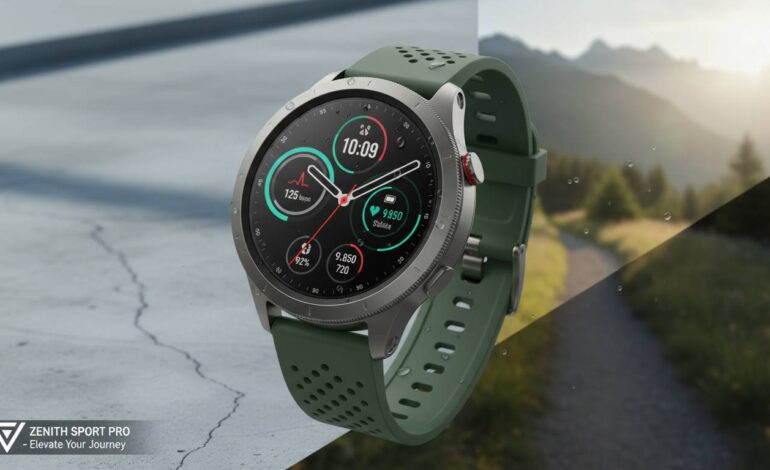
You don’t need to spend a fortune to get a decent fitness smartwatch anymore. In 2025, sub-$300 watches track your runs, monitor your sleep, and even store music—all without a phone strapped to your arm. The trick is figuring out which features are worth having and which ones you’ll never actually use.
I’ve spent the last year testing most of these watches in real conditions. Running, swimming, lifting, sleeping in them. Here’s what actually holds up.
Quick Picks
Best Overall: Garmin Forerunner 55 – About $299. Solid GPS, two-week battery, training features that work whether you’re new to running or have been at it for years.
Best Value: Fitbit Charge 6 – Around $159. Google integration, bright screen, Fitbit’s health tracking. Most people don’t need more than this.
Best for iPhone Users: Apple Watch SE (2nd Gen) – About $249. Plays nice with iPhones, has crash detection, access to the watchOS app scene.
How to Choose a Fitness Smartwatch Under $300
A few things actually matter when you’re comparing watches in this price range:
GPS
If you run or cycle outside, get built-in GPS. Most watches here have it, but Garmin’s multi-band GPS handles tree cover better. Fitbit and Apple use single-band, which works fine in open areas but can drift under dense canopy.
Battery
Nothing ruins a workout like a dead watch. The Garmin Forerunner 55 lasts about two weeks. Apple Watch SE needs charging every day or two. Think about whether you’ll remember to charge it.
Heart Rate
Optical sensors have gotten good. For most gym work and casual running, wrist-based tracking is fine. If you’re doing HIIT or need medical-grade accuracy, look for Bluetooth chest strap compatibility—most of these connect to one.
Water Resistance
5ATM means 50 meters and handles pool swimming and showering fine. Some watches (Garmin Forerunner series) automatically track strokes and distance.
Smart Features vs. Fitness Focus
Apple Watch SE gives you full smartwatch functionality with fitness tracking on the side. Garmin Forerunner 55 is almost all training data, minimal smart features. Different people want different things.
Our Top 10 Fitness Smartwatches Under $300
1. Garmin Forerunner 55 – Best Overall
The Forerunner 55 is the safe pick for most runners. It’s not flashy, but it works.
The 1.3-inch screen is easy to read outdoors. It tracks running, cycling, swimming, and yoga. What makes it worth the $299 is the training maturity gauge—it tells you if you’re overtraining or could push harder. After a hard workout, it recommends recovery time.
Key Features:
- Built-in GPS with Garmin Coach plans
- Heart rate with Pulse Ox
- Daily suggested workouts based on recovery
- Up to 2 weeks battery (smartwatch mode), 20 hours (GPS)
- 5ATM water resistance
This isn’t a fashion piece. The screen is monochrome, and it won’t display your notifications in color. But the training insights are solid for the price.
Running gear reviewers consistently praise its intuitive training features.
Pros: Accurate GPS, great battery, useful training features, simple to use
Cons: Basic smartwatch features, monochrome screen, utilitarian look
Price: Around $299
2. Fitbit Charge 6 – Best Value
At roughly $159, the Charge 6 does almost everything most people need.
The AMOLED display is crisp and easy to read. Google integration gives you Maps for turn-by-turn directions and voice reply for messages. It’s slim and comfortable enough to wear all day and night for sleep tracking.
Key Features:
- 7-day battery (5-6 days with always-on display)
- Google integration (Maps, Gmail, Calendar)
- Heart rate with daily readiness score
- Sleep tracking with sleep stages
- 5ATM water resistance
- Built-in GPS
The daily readiness score tells you when to work out and when to take it easy. Sleep tracking breaks down light, deep, and REM stages. For the price, it’s a good deal.
The screen is small—you can glance at stats but not study them mid-run.
Pros: Good price, bright screen, solid sleep tracking, Google integration
Cons: Small screen, basic GPS, limited third-party apps
Price: Around $159
3. Apple Watch SE (2nd Gen) – Best for iPhone Users
If you’re already in Apple’s world, the Watch SE gives you the full experience without the Series 9 price tag. At $249, you get crash detection, fall detection, and the whole watchOS ecosystem.
The Retina display is bright and sharp. Apple Fitness+ is there if you want it, but the watch works with any fitness app. Activity rings show Move, Exercise, and Stand goals.
Key Features:
- S8 SiP processor (same as Series 8)
- Retina OLED display
- Heart rate notifications, ECG app
- Crash detection and fall detection
- Family Setup support
- 50-meter water resistance
Battery life is the catch. You’ll charge it daily. Also, Android users should look elsewhere—this is for iPhone people.
Pros: Best smartwatch features under $300, clean design, good app selection
Cons: Daily charging, iPhone only, no always-on display at this price
Price: Around $249
4. Garmin Forerunner 255 Music – Best for Serious Runners
The 255 Music adds more advanced metrics over the 55 while staying under $300. If you’re actually training for something, this is worth the extra money.
Multi-band GPS improves accuracy in tricky areas. Music storage holds 500+ songs so you can leave your phone at home. Daily training readiness and recovery recommendations help prevent overtraining.
Key Features:
- Multi-band GPS
- Music storage (500 songs)
- Daily training readiness score
- Recovery time recommendations
- HRV tracking
- Up to 12 days battery, 26 hours (GPS mode)
The body battery feature combines stress, sleep, and activity to show your energy reserves. When it says you’re depleted, you’re usually feeling it too.
The screen is smaller than some competitors, and it looks like a fitness tool, not a lifestyle accessory. But the data helps if you’re serious about running.
Pros: Multi-band GPS, solid training metrics, music storage, good battery
Cons: Smaller display, utilitarian design
Price: Around $299
5. Samsung Galaxy Watch FE – Best for Android
The Galaxy Watch FE brings Wear OS to a reasonable price point. Around $199 gets you a rotating bezel for navigation, access to Google Play Store apps, and decent health tracking.
It works best with Samsung phones but functions okay with other Android devices. iPhone users get limited functionality—this is an Android choice.
Key Features:
- 1.2-inch Super AMOLED display
- Rotating bezel navigation
- Wear OS 4 with Google apps
- Heart rate, ECG, blood oxygen monitoring
- 5ATM water resistance
- Sapphire crystal display protection
Automatic workout detection covers over 100 exercises, good for gym-goers who forget to start their tracker.
Pros: Good display, Wear OS features, rotating bezel
Cons: Limited iPhone support, some features Samsung-only
Price: Around $199
6. Amazfit GTR 4 – Best Battery Life
Battery anxiety is real. The GTR 4 delivers up to 14 days—charging twice a month instead of twice a week.
The round face looks more like a traditional watch. It’s comfortable enough for all-day wear and doesn’t look out of place in casual settings.
Key Features:
- 14-day battery (24 days in basic mode)
- Dual-band GPS
- BioTracker 4.0 PPG sensor
- 5ATM water resistance
- Music storage
- Zepp app
GPS uses both L1 and L5 bands for better accuracy in cities. The Zepp app isn’t as polished as Garmin Connect, and heart rate tracking during high-intensity activities runs slightly behind Garmin and Fitbit. But the battery is genuinely impressive.
Pros: Great battery, dual-band GPS, good price, nice design
Cons: App ecosystem less refined, heart rate less accurate during intense workouts
Price: Around $199
7. Garmin Venu 3 – Best Display Quality
The Venu 3 sits right at $300 but delivers a明显 step up in display quality. If you want AMOLED with Garmin’s tracking, here it is.
The 1.4-inch AMOLED display is beautiful—colors pop, blacks are deep, easy to read anywhere. This matters for notifications and workout animations.
Key Features:
- 1.4-inch AMOLED display
- Body Battery energy monitoring
- Nap detection
- Voice assistant support (Siri, Google Assistant, Alexa)
- Music storage
- Up to 14 days battery
Nap detection and voice assistants are unique here. Body battery is more refined than on the Forerunner line.
The price pushes to $300, and the Forerunner 255 offers more running-focused features for less. But the screen is genuinely nice.
Pros: Beautiful display, excellent battery, voice assistants, solid tracking
Cons: Pricey for the category, running features not as advanced as Forerunner
Price: Around $299
8. Fitbit Charge 5 – Still a Strong Choice
The Charge 5 is still around and often drops below $150. Core fitness tracking is nearly identical to the newer Charge 6.
The EDA sensor for stress management is unique to Fitbit in this price range. The slim band is comfortable for all-day wear.
Key Features:
- EDA stress sensor
- GPS (connected to phone)
- Heart rate tracking
- Sleep tracking with sleep score
- 5ATM water resistance
- 5-7 day battery
No built-in GPS—you need your phone nearby for accurate tracking. But if you workout with your phone anyway, this saves money.
Pros: Very affordable, EDA sensor, good app, comfortable
Cons: No built-in GPS, older model, fewer updates ahead
Price: Around $129-$149
9. Huawei Watch GT 4 – Stylish Option
Huawei’s Watch GT 4 stands out from the typical fitness watch crowd. The 46mm case is bold; the 41mm is more refined.
Battery life hits 14 days. Health tracking includes heart rate, blood oxygen, sleep, and stress. The app ecosystem has improved but still lags behind competitors.
Key Features:
- 14-day battery
- 1.43-inch AMOLED display
- GPS, GLONASS, Galileo support
- 5ATM water resistance
- Bluetooth calling
- SpO2 monitoring
Works with Android and iPhone, though some features need a Huawei phone. GPS works well for running and cycling. The design is more stylish than most fitness watches—you can wear it to dinner after your workout.
Pros: Great battery, attractive design, good display
Cons: App ecosystem less robust, some features Huawei-phone-only
Price: Around $229-$249
10. COROS Apex 2 – Best for Endurance Athletes
The Apex 2 is built for long events. Battery life is 45 days in watch mode, 22 hours in full GPS mode.
Build quality is tough—rated for -20°C to 50°C. Titanium bezel and sapphire crystal feel premium.
Key Features:
- 22 hours full GPS, 45 days normal use
- Titanium bezel, sapphire crystal
- Navigation with breadcrumb maps
- Training load and recovery tracking
- 5ATM water resistance
The COROS ecosystem is smaller than Garmin’s but the training features are solid. Map navigation helps trail runners stay on course.
The screen isn’t as bright as AMOLED watches, and the button interface feels old-school. But for ultra-runners who need reliability, it’s worth considering.
Pros: Incredible battery, durable build, good GPS, navigation
Cons: Basic display, smaller app ecosystem
Price: Around $299
Comparison Table
| Model | Price | Battery | GPS | Display | Water Resistance | Best For |
|---|---|---|---|---|---|---|
| Garmin Forerunner 55 | $299 | 2 weeks | Built-in | LCD | 5ATM | Overall value |
| Fitbit Charge 6 | $159 | 5-7 days | Built-in | AMOLED | 5ATM | Budget buyers |
| Apple Watch SE | $249 | 1-2 days | Built-in | OLED | 50m | iPhone users |
| Garmin 255 Music | $299 | 12 days | Multi-band | LCD | 5ATM | Serious runners |
| Samsung Galaxy Watch FE | $199 | 2-3 days | Built-in | AMOLED | 5ATM | Android users |
| Amazfit GTR 4 | $199 | 14 days | Dual-band | AMOLED | 5ATM | Battery life |
| Garmin Venu 3 | $299 | 14 days | Built-in | AMOLED | 5ATM | Display quality |
| Fitbit Charge 5 | $149 | 5-7 days | Phone | AMOLED | 5ATM | Budget basics |
| Huawei Watch GT 4 | $249 | 14 days | Built-in | AMOLED | 5ATM | Style seekers |
| COROS Apex 2 | $299 | 45 days | Built-in | LCD | 5ATM | Endurance athletes |
Conclusion
The sub-$300 fitness smartwatch market has gotten good. You can get reliable tracking without making major compromises.
For most runners, the Garmin Forerunner 55 is the sensible choice. If you want something that goes weeks without charging, the Amazfit GTR 4 delivers. And if you need actual smartwatch features alongside fitness tracking, Apple or Samsung have you covered.
Whatever you pick, you’re getting a capable device. Five years ago, this level of functionality would have cost twice as much.
FAQs
Best fitness smartwatch under $300 for running?
Garmin Forerunner 55 or Garmin Forerunner 255 Music. Both have accurate built-in GPS and running metrics. The 255 adds multi-band GPS and music storage.
How long do fitness smartwatches last?
Most last 3-5 years. Battery capacity degrades after 2-3 years of daily charging. Garmin and COROS tend to support their watches longer than budget brands.
Built-in GPS vs. connected GPS?
Built-in GPS means you don’t need your phone during workouts. Connected GPS uses your phone and saves battery but requires carrying it. Most mid-range watches now include built-in GPS.
Can I track swimming with a $300 fitness smartwatch?
Yes. Most offer 5ATM water resistance for pool swimming. Open water tracking accuracy varies—Garmin performs better for swimmers.
Do I need a subscription for fitness tracking?
No. Most brands offer core tracking for free. Fitbit has a premium subscription for advanced insights, but the basics work without it. Garmin and Apple don’t require subscriptions.