Best Wireless Gaming Headphones for Competitive Play

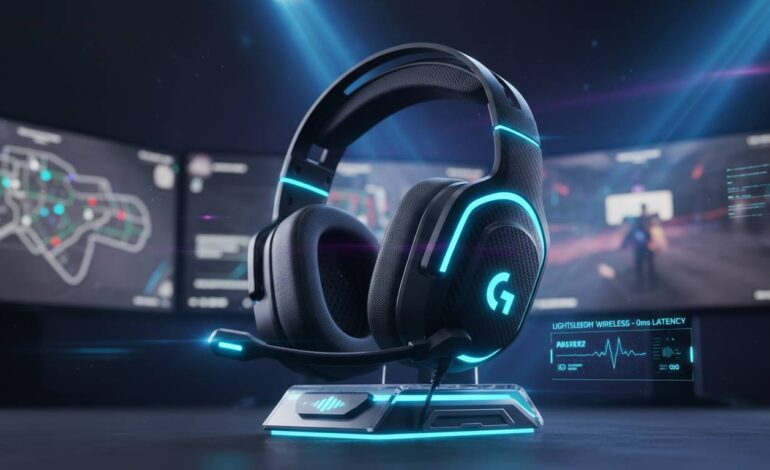
Picking a wireless gaming headset for competitive play isn’t about grabbing whatever has the most RGB lights. If you’re serious about ranked Valorant, clutching in CS2, or third-partying in Apex Legends, you need audio gear that gives you an actual edge. The difference between hearing footsteps a split second before you get pushed and getting flanked with zero warning can literally win or lose rounds. This guide covers the wireless headsets that actually deliver the low latency, positional audio, and comfort you need for hours of fragging.
Why Wireless Headsets Work for Competitive Gaming
Here’s the reality: wired headsets were the standard for competitive play forever because wired meant zero latency. But wireless tech has caught up. Modern wireless gaming headsets hit latency under 20ms—which is faster than your brain processes audio anyway. You literally cannot tell the difference.
The real advantage of going wireless is freedom. No cable snagging on your desk. No getting yanked back when your chair rolls too far. You can spin around, check corners, and move naturally without anything holding you back. For competitive players, that unrestricted movement matters more than you’d think.
Beyond that, wireless means easier setup if you’re LANing or hauling gear to a friend’s place. Fewer cables means fewer things to fail and a cleaner desk. For a lot of competitive gamers, these quality-of-life wins are worth the premium price tag.
What Makes a Gaming Headset Actually Competitive
Not every gaming headset is built for competitive play. You can have an amazing-sounding headset that’s useless for comp because it muddies the details that actually matter. Here’s what separates a casual headset from one that helps you win.
Latency: The Make-or-Break Factor
Latency is how long it takes audio to go from your game to your ears. Wired is essentially zero. Wireless needs to be fast enough that you can’t perceive any delay. Look for headsets using 2.4GHz or Bluetooth 5.0+. The good ones sit in the 15-30ms range—more than fast enough for competitive play. Anything above 40ms starts feeling sluggish in fast FPS games where every millisecond counts.
Soundstage and Positional Audio
This is where competitive headsets diverge from regular music headphones. Soundstage is how wide and spacious audio sounds. Positional audio lets you pinpoint exactly where sounds come from. In competitive FPS, knowing whether someone’s above you, behind you, or to your left can win fights you had no business winning.
The best competitive headsets emphasize footsteps, gunshots, and ability sounds—the cues that matter most. Many support virtual surround like Dolby Atmos or Windows Sonic, which helps. But some pros actually prefer stereo for competitive play because it’s more honest and doesn’t artificially process audio in ways that might hide subtle cues.
Battery Life and Reliability
Nothing kills a gaming session faster than your headset dying mid-match. Comp sessions go for hours, especially during tourneys or late-night grinds. Get at least 20 hours minimum; 30+ is better. Some headsets now offer swappable batteries or fast charging that gives you several hours from a 15-minute charge.
Comfort for Long Sessions
Competitive gaming means long sessions. Uncomfortable headset = distracted player = worse performance. Look for breathable ear cushions (mesh or fabric beats leather for heat), comfortable clamping force, and weight that won’t fatigue your neck. Most competitive headsets land between 300-400 grams; lighter is usually better for marathon sessions.
Top Pick: SteelSeries Arctis Nova Pro Wireless
The SteelSeries Arctis Nova Pro Wireless is the easy top pick if you want the best wireless experience without serious compromises. It delivers the low latency competitive players need, plus premium features that justify the price.
Audio quality is killer. The sound profile highlights details that matter in competitive games—footsteps are crisp and easy to locate, gunshots have punch without drowning everything else, and positional audio lets you find enemies with confidence. SteelSeries includes their Sonar software for fine-tuning and game-specific profiles.
The hot-swappable battery system is the real differentiator. Two batteries come in the box, swap takes three seconds. Infinite battery life—play with one while the other charges in the base station. If you hate getting interrupted mid-session, this is huge.
The 2.4GHz connection stays under 30ms—well within acceptable range for comp play. Rock-solid connection with no dropouts, even with multiple wireless devices around. Mic quality is excellent too; clear voice capture for crisp callouts.
Comfort uses SteelSeries’s ski-goggle headband system that spreads weight evenly. Ear cushions mix fabric and leather—good breathability, solid sound isolation. Around 340 grams, not the lightest here, but weight distribution makes it comfortable for hours.
Downside is the price. It’s expensive. But if you take competitive audio seriously and want the best wireless available, this delivers.
Best for FPS: Razer BlackShark V2 Pro
For competitive FPS, the Razer BlackShark V2 Pro is one of the most popular choices among pro players and serious competitors. The latest version builds on that legacy with improvements that make it even better for comp gaming.
Razer’s 2.4GHz wireless delivers “ultra-low latency”—in practice, you won’t feel any delay between game audio and what you hear. For FPS players who rely on audio for split-second decisions, this is critical.
The 50mm drivers are tuned for competitive gaming. High frequencies are crisp and detailed—footsteps stand out from ambient noise. Mid-range is clear, voice comms come through naturally. Bass is present but controlled—adds impact to explosions and gunshots without muddying the sound.
The HyperClear Supercardioid Mic is one of the better mics on any gaming headset. Focuses on your voice, rejects background noise well. Valuable if you’re gaming in a noisy room or shared space.
At just 262 grams, it’s one of the lighter options. Cooling gel-infused ear cushions prevent heat buildup. Clamping force is firm enough for good seal but not uncomfortable.
Battery life sits around 24 hours—solid, not class-leading. USB-C charging is convenient. Also supports Bluetooth for mobile or console when not PC gaming.
For competitive FPS players, the BlackShark V2 Pro hits the sweet spot of performance, comfort, and price. Not the cheapest, but delivers what competitive gamers need without fluff.
Best Budget Option: HyperX Cloud Alpha Wireless
Not everyone wants to spend $300+ on a headset, and that’s fine. The HyperX Cloud Alpha Wireless shows you don’t need to break the bank for solid competitive wireless performance.
At roughly half the premium price, it makes compromises—but the right ones. Wireless uses 2.4GHz with latency that’s perfectly acceptable for comp play. No fancy audio software or surround processing, but honestly? A lot of competitive gamers prefer straightforward stereo anyway.
Sound signature is tuned for competitive gaming. The 50mm dual chamber drivers separate bass from mids and highs—clearer audio helps you hear footsteps and important cues better. Not the most refined for music or movies, but works well for comp.
Battery life is ridiculous—300 hours, according to HyperX. That’s not a typo. You could game several hours daily for a month before recharging. Worth considering just for this if you’re tired of constantly charging your gear.
Comfort is where this headset excels. HyperX has been making comfortable headsets for years. Memory foam ear cushions are plush, padded leatherette headband distributes weight well. Around 335 grams—not the lightest, but the comfort makes up for it during long sessions.
Microphone is detachable, nice for using the headset for music or videos when not gaming. When attached, provides clear voice for team chat.
Trade-off is lack of advanced features—no companion app with elaborate EQ, no spatial audio, utilitarian design. But if your goal is competitive performance at a reasonable price, those missing features aren’t really missed.
Best Premium Option: Logitech G Pro X 2
Logitech’s G Pro X 2 aims to be the ultimate wireless headset for competitive players who want the best regardless of cost.
Graphene drivers are the standout. Graphene is incredibly thin and strong, allowing more precise driver movement. Result is exceptionally clear, detailed audio with a surprisingly open soundstage for a closed-back headset. In competitive games, you hear details other headsets miss.
Wireless is flawless—Logitech’s LIGHTSPEED feels indistinguishable from wired. Range is excellent too; you can walk around your house without losing connection.
Battery life hits 50 hours—more than enough for extended sessions and then some. Heavy users get over a week between charges. Fast charging gives 2.5 hours from 15 minutes.
Lighter than the previous version at 345 grams, with better weight distribution. Ear cushions use hybrid fabric/leather, comfortable for hours. Headband has nice flex accommodating different head shapes without being too tight or loose.
Blue VO!CE software gives professional voice processing—noise reduction, effects that make your voice more broadcast-quality. Valuable if you stream. Overkill for pure competitive gaming, but there if you want it.
Price is premium, but competitive gamers wanting the best audio in wireless will find it a worthy investment.
Best Low-Latency Option: Corsair Virtuoso RGB XT
Corsair’s Virtuoso RGB XT is another strong premium option, with particular focus on the low-latency connection competitive gamers demand.
Slipstream Wireless claims under 1ms latency. Whether that’s protocol latency or end-to-end is unclear, but the practical result feels instantaneous. In competitive gaming, you don’t have time to worry about audio keeping up.
Audio quality is excellent—50mm neodymium drivers tuned for balanced sound. Soundstage is spacious enough for good positional audio. Frequency response handles competitive game sounds well. Highs are detailed without harsh, lows have weight without overwhelming.
The mic is a differentiator. Detachable, broadcast-quality, wide frequency response captures voice naturally. Clear communication matters in comp—having a good mic helps coordinate with teammates.
Design is sleek and professional. RGB is there if you want it, can be turned off. Premium build quality with metal construction. Memory foam ear cushions with breathable mesh fabric cover—good for long sessions.
Battery around 20 hours with RGB on, up to 30 off—decent but not best-in-class. Can use wired mode with included USB cable if you forget to charge or want to use while charging.
For players prioritizing latency above all, the Virtuoso RGB XT delivers rock-solid wireless with matching audio quality.
How We Test Wireless Gaming Headsets
Testing wireless headsets for competitive gaming requires more than just listening to how they sound.
Latency Testing: We measure latency with specialized equipment—time between audio signal sent and driver reproduction. Beyond equipment tests, we game extensively. Any perceptible latency during actual play disqualifies a headset from serious competitive consideration.
Sound Quality: We evaluate across multiple game types, focusing on competitive FPS. Footstep clarity, gunshot distinction, ability audio cues, positional accuracy—all get scrutinized. We also test music and movies since competitive gamers use the same headset for other entertainment.
Comfort: Each headset gets worn for multiple three-plus-hour sessions. We evaluate ear cushion comfort, clamping force, weight distribution, and heat. Comfort is subjective, but we note headsets that work across different head shapes.
Microphone: Clear comms are essential. We test in quiet rooms and noisy environments, evaluating voice clarity and noise rejection.
Battery: We verify actual battery life during normal gaming use, comparing against manufacturer claims.
Frequently Asked Questions
What’s the lowest latency wireless gaming headset?
Headsets with the lowest latency use 2.4GHz, not Bluetooth. SteelSeries Arctis Nova Pro Wireless, Razer BlackShark V2 Pro, and Corsair Virtuoso RGB XT all claim 1-30ms—effectively imperceptible. Any work for competitive gaming.
Are wireless headsets actually good for competitive play?
Yes. Wireless tech has advanced enough that the latency gap between wired and wireless is negligible for most players. The movement freedom can actually help in competitive situations where you need to move quickly without cable interference.
How much should I spend?
Expect $100-300 for competitive performance. Budget options under $100 work but compromise on features or audio. Sweet spot is $150-200—the HyperX Cloud Alpha Wireless lives there. Premium above $250 gets the best audio, comfort, and features.
Best wireless headset for PC?
Depends on budget and needs, but SteelSeries Arctis Nova Pro Wireless and Razer BlackShark V2 Pro consistently perform. Both work seamlessly with PC via 2.4GHz and offer what competitive PC gamers need.
Do I need surround sound for competitive gaming?
Surround helps with positional awareness in some games, but many competitive gamers prefer stereo—it reproduces sound more naturally. Dolby Atmos and Windows Sonic are available on many headsets but help more with immersion than competitive advantage.
How important is microphone quality?
Significant. Clear comms directly impact team performance. Look for good noise rejection and voice clarity. Best gaming headsets have detachable mics you can swap for a dedicated broadcast mic if you stream.