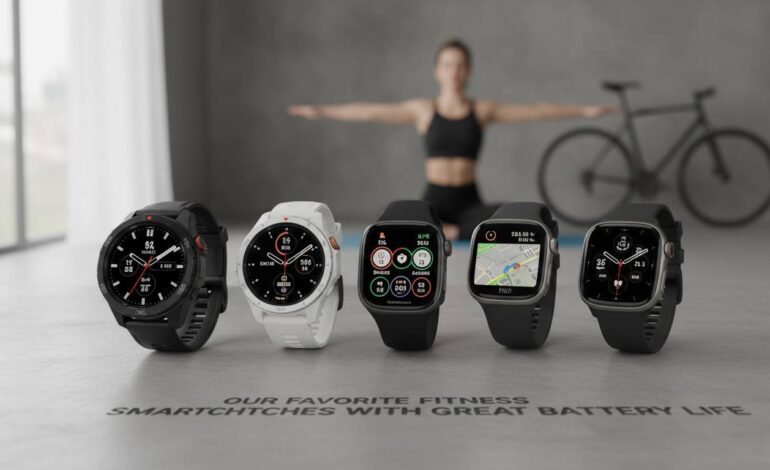
Our Favorite Fitness Smartwatches With Great Battery Life

Battery life is the one feature that fitness trackers always seem to promise more of than they deliver. You check the box that says “up to 14 days,” charge it once, and then find yourself scrambling for a charger around day three because you’ve been tracking runs with GPS, checking notifications, and—god forbid—you actually want to track your sleep.
After testing dozens of models across every price tier, here’s what actually holds up: Garmin makes the watches you’ll forget to charge, while Apple and Samsung land in the middle ground where you trade some endurance for features that feel like a real computer on your wrist. Let’s break down what actually matters.
Why Battery Life Actually Matters
Picture this: you’re three hours into a marathon, gunning for a personal best, and your watch dies mid-race. Or you roll out of bed for a 5 AM workout and realize your device stopped tracking somewhere around 2 AM, so you’ve got nothing to show for eight hours of supposed sleep data.
These aren’t horror stories—they’re Tuesday afternoons for people with the wrong watch.
Most flagship smartwatches advertise 18-36 hours, but that’s under lab conditions. Flip on GPS, keep the always-on display running, and let it ping your heart rate every second, and you’ll be hunting for a cable by dinner. For daily trainers, that means charging every single night. That gets old fast, and it also accelerates battery degradation—so you’re punishing the very battery you’re trying to preserve.
A watch that lasts five, seven, or fourteen days? That’s freedom. You can track a weekend backpacking trip without a battery pack. You can monitor sleep for a full week without thinking about chargers. You can travel without toting a dedicated charging cable everywhere.
There’s also the data angle. Sleep tracking only works when it’s uninterrupted. GPS tracking for long runs needs consistent satellite contact. When your watch dies mid-session, you lose what comes after—and sometimes what came before, depending on how the buffer handled things. A watch with real stamina captures your metrics completely, every time.
“For serious athletes, battery life isn’t a luxury—it’s a prerequisite. You can’t rebuild your training data from a watch that died at mile 18.”
What “Great” Battery Life Actually Means
Manufacturers love their optimistic numbers. The “up to 14 days” on the box assumes you’ve turned off everything useful—no notifications, no GPS, maybe you’re not even wearing it. Real-world use typically delivers 60-80% of those claims.
Here’s how to think about it practically:
Extended battery mode (7+ days): These watches dial back smart features to focus on core fitness tracking. Think basic heart rate, step counts, and workout logs. Perfect for training blocks where you don’t care about Instagram notifications.
Typical smartwatch use (2-4 days): Apple Watch and Samsung Galaxy Watch live here. You get the full experience—notifications, music controls, apps—but plan on charging every other night.
GPS-focused use (10-40 hours): This is the number that matters for runners and cyclists. Some Garmin models hit 40+ hours in battery-saver GPS mode; others tap out around 10-12 hours with full GPS and music running.
Knowing which number actually applies to your life keeps you from buying a watch based on marketing that will never match your reality.
Garmin: The Endurance Leader
Garmin built its name making watches that athletes trust when it matters. The whole lineup—from basic fitness bands to absolute beasts made for ultramarathons—shares one thing: battery performance that makes competitors look bad.
The Garmin Fenix 7 is the complete package. Real-world use gets you 10-14 days with the touchscreen active. Flip on battery saver and you can push toward a month. GPS tracking runs 18-22 hours in full mode—plenty for any ultramarathon or all-day mountain bike ride. It also throws in color topographical maps, multi-GNSS for better satellite lock, and training readiness scores that actually tell you when to rest.
Want Fenix performance without the Fenix price? The Garmin Forerunner 955 has nearly identical GPS and training features in a lighter case built for runners. Expect about 15 days in smartwatch mode and up to 42 hours in ultra-trac GPS mode. The solar-charging version adds a few extra days, which matters if you’re spending long days outside.
The Garmin Epix (Gen 2) tries to be both fitness watch and everyday smartwatch, pairing an AMOLED display that looks as sharp as Apple screens with Garmin’s signature endurance. You’re looking at 6-7 days before charging—shorter than the Fenix but still better than most non-Garmin options.
What separates Garmin isn’t just the raw numbers. It’s the control. You can tweak GPS settings, screen timeouts, notification handling—there’s always another dial to turn when you need more runtime. For athletes who don’t want charging to interrupt training, Garmin is the standard.
Apple Watch: The Smart Features Champion
If you’re planted in Apple’s ecosystem, the Apple Watch Series 9 (and the newer Ultra 2) are worth a serious look. Battery life won’t beat Garmin on any spec sheet, but the integration with iPhone and the overall experience make these compelling for a lot of fitness-focused users.
Series 9 gets you roughly 18-24 hours in normal use. That’s a full day, but if you want sleep tracking, you’re charging every night. The always-on display, robust notifications, and massive third-party app ecosystem make that tradeoff worth it for users who want a real smartwatch that also happens to track fitness well.
For Apple users who want more, the Apple Watch Ultra 2 pushes to about 36 hours with typical use and up to 72 hours in low-power mode. That’s a genuine game-changer if you want sleep tracking without nightly charging. GPS battery life hits around 12 hours with music—enough for marathon day.
Where Apple wins is health ecosystem depth. Sleep apnea detection, detailed heart rate analysis, and FDA-cleared ECG give medical-grade insights that most competitors can’t touch. If you want a watch that feels like a comprehensive health device, Apple’s integration is unmatched.
One catch: Apple Watches need iPhone. Android users get nothing here, and if you’re on Windows or desktop most of the appeal evaporates. The magnetic proprietary charger is also its own thing—you won’t be borrowing your friend’s cable.
Samsung Galaxy Watch: The Android Alternative
Samsung’s Galaxy Watch 6 and newer Galaxy Watch 7 offer the most polished Android smartwatch experience, though battery life stays a weak point.
Expect around 24-30 hours with always-on display enabled. Turn that off and you might stretch to 40 hours. GPS tracking runs 10-12 hours—on par with Apple, well behind Garmin.
Samsung’s differentiators: body composition analysis that goes beyond basic metrics, and the rotating bezel on some models gives you tactile control that touchscreen-only devices lack. Samsung Health plays nicely with Galaxy phones, and Wear OS supports plenty of third-party fitness apps.
For Android users who want the full smartwatch experience, this works—just know that nightly charging becomes routine if sleep tracking matters to you.
Fitbit: The Sleep Tracking Specialist
Fitbit’s Charge 6 and Sense 2 sit in weird middle ground—they’re more fitness tracker than full smartwatch, but they bring health features that everyday users find valuable while serious athletes might overlook them.
The Charge 6 delivers around 6-7 days of battery, solid for the price. You lose some smartwatch capabilities compared to Apple or Samsung, but notifications and basic responses work fine. Heart rate accuracy has improved substantially, and Fitbit’s sleep scoring still leads the pack for people who actually care about understanding their rest.
The Sense 2 adds ECG, skin temperature sensing, and stress management tools, but battery drops to 3-4 days with all sensors running. That’s comparable to full smartwatches but less than the Charge 6.
For users who want activity tracking, sleep analysis, and basic health metrics without the smartphone-on-wrist experience, Fitbit delivers excellent value. The subscription push for premium features has grown aggressive, but the core tracking remains free and solid.
COROS: The Rising Contender
COROS has built a quiet cult following among endurance athletes, and the numbers justify it. The COROS Pace 2 runs about 30 days in daily use and up to 60 hours with GPS enabled—matching or beating Garmin at a notably lower price.
The tradeoff is a thinner app ecosystem and less polished everyday smartwatch features. If you want your watch to feel like a stripped-down training tool, COROS delivers. If you want smartphone-level features, it’ll feel sparse.
The COROS Apex 2 adds tougher build quality, multi-GNSS support, and map navigation while keeping similar endurance. Trail runners and triathletes who want pro-level features without premium Garmin prices should pay attention.
Amazfit: Budget Performance
Amazfit (a Zepp subsidiary) delivers surprising value for the price-conscious. The Amazfit GTR 4 and GTS 4 run 10-14 days in typical use and up to 24 hours of GPS tracking—roughly half what comparable Garmin or Apple models cost.
Accuracy doesn’t quite match the top tier, and the app experience feels less refined. But you get solid baseline fitness tracking, built-in GPS, and battery endurance that punches well above its price. If you want a capable fitness watch without spending $500+, Amazfit earns a look.
Extending Your Battery
Whatever watch you pick, habits matter:
Turn off always-on display unless you actually need it. This one setting can halve or more your runtime.
Use battery saver modes on rest days or when you know you won’t need full features. Most watches let you strip down to essentials while keeping core tracking.
Lower GPS frequency during training. You don’t need a ping every second for most workouts. Less frequent updates save significant power without meaningfully hurting accuracy.
Kill Bluetooth when you’re not using it—especially while traveling. Some users keep their watch in airplane mode except during actual workout tracking.
Update your software. Manufacturers constantly optimize battery performance through firmware, and outdated versions often drain faster.
Picking What’s Right
This really comes down to what you care about most.
If endurance and pro-level training metrics are your thing, Garmin leads unambiguously. The Forerunner 955 or Fenix 7 changes how you think about charging—it’s just not something you worry about.
If you want the best smartwatch experience with solid fitness on top, Apple Watch Series 9 or Ultra 2 integrates with iPhone in ways no competitor matches. You’ll charge more often, but the experience justifies it for many users.
Android users have a harder call. Samsung makes the most polished experience but with battery life that mirrors Apple’s limitations. Garmin works with Android and runs circles around everyone else on stamina, though you sacrifice some smart features.
If budget matters or you just want reliable fitness tracking without premium prices, Fitbit and Amazfit both offer real value by prioritizing core tracking over smartwatch bells and whistles.
The honest answer: figure out how you’ll actually use it. Competitive athletes should care about GPS battery life and training analytics. Casual users might prioritize notifications and apps. Your answer points you to the right watch.
Conclusion
Great battery life in a fitness smartwatch starts with knowing your own training habits and what you actually need. Garmin keeps pushing the envelope on endurance—watches you can go weeks without charging while getting data that pros use. Apple and Samsung deliver the most complete smartwatch experiences, though they ask you to charge more often. COROS and Amazfit are challenging the established players on value and stamina, giving budget-minded buyers more choices than ever.
One thing worth remembering: the best fitness watch is the one you’ll actually wear. Battery life matters, but it matters most when paired with features you’ll use and a design that fits your life. Think about how you train, what data actually matters to you, and how much convenience you want from something on your wrist.
FAQs
How long should a good fitness smartwatch battery last?
At least 2-3 days with regular use including workout tracking and notifications. Fitness-focused models like Garmin can hit 7-14 days or more.
Can I use a fitness watch for marathon training?
Yes, but pick wisely. Look for 10+ hours of GPS battery life. Garmin Forerunner and COROS models dominate here; Apple Watch Ultra 2 handles marathons adequately.
Does always-on display drain battery quickly?
Yes—often reducing runtime by 30-50% depending on the device. Disable it if battery matters to you.
Should I charge my fitness watch every night?
Only if you need sleep tracking and wear it daily. If your watch has solid battery (5+ days), you can skip nightly charging and still track sleep consistently.
Which fitness watch has the longest battery life?
Garmin Fenix 7 and COROS Pace 2 lead here—Garmin claims weeks in battery saver mode, and COROS offers 60+ hours of continuous GPS tracking.