Smartwatch for Fitness – Free Shipping

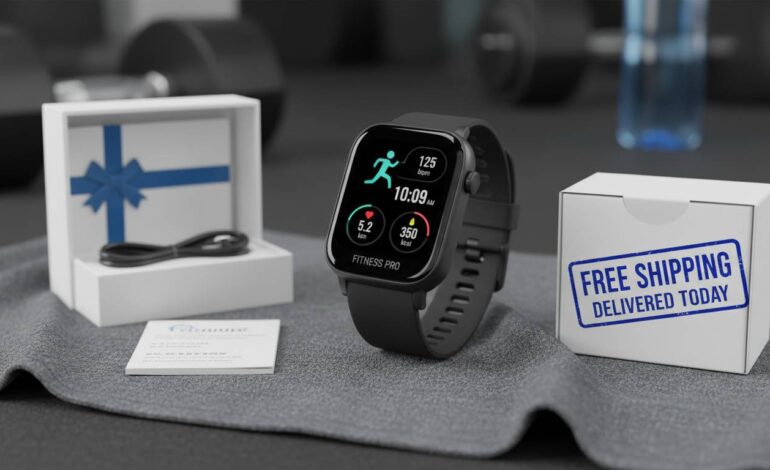
Looking for a good fitness smartwatch without overshipping costs? You’ve got options across every price range, from budget trackers to serious athlete watches. This guide covers what actually matters when picking a watch, breaks down some solid choices, and shows you where to find free shipping so you’re not paying extra for delivery.
What Actually Makes a Smartwatch Good for Fitness
The core features that matter for fitness tracking come down to a few basics: heart rate monitoring, step counting, sleep tracking, and GPS. Most decent fitness watches hit these marks. Beyond that, you get into nice-to-have territory like VO2 max estimates, recovery scores, and automatic workout detection.
Water resistance matters if you swim. Most fitness watches handle this fine with 5ATM ratings, which covers pool swimming without issues.
Battery life is where things get interesting. Some watches need charging every day or two. Others stretch to a week or more. For long runs or bikepacking trips, that battery difference matters a lot.
One thing people overlook: ecosystem compatibility. Apple Watch plays nicest with iPhones. Samsung and Garmin work better with Android. If you mix platforms, you might lose some features.
Solid Fitness Smartwatches to Consider
Apple Watch Series 9
Apple’s latest still dominates for iPhone users. Heart rate tracking, blood oxygen, ECG, temperature sensing for cycle tracking—the health features are thorough. The S9 chip keeps things snappy and enables on-device Siri.
Workout tracking covers the usual suspects plus some less common ones. Double Tap lets you control the watch one-handed, which actually comes in handy when you’re mid-set and don’t want to grab your phone.
The catch: daily charging. If you’re used to a一周 charge, this feels like a hassle.
Garmin Forerunner 265
Garmin makes the best running watches, and the 265 shows why. Training Readiness score tells you whether to push hard or take it easy based on sleep and recovery data. The AMOLED display reads well in any light.
GPS performance is excellent—multi-band GPS handles urban canyons and tree cover better than most. Battery goes up to 15 days in watch mode, 24 hours with GPS on. That’s enough for a 100-miler if you’re into that kind of thing.
Sleep tracking includes nap detection, which is surprisingly useful if you’re the type who crashes after lunch.
Samsung Galaxy Watch 6
Galaxy Watch 6 sits in the middle ground between fitness tracker and full smartwatch. The BioActive sensor handles heart rate, blood oxygen, and body composition (skeletal muscle, body fat estimates).
Over 100 workout modes with automatic exercise detection. The running coach gives real-time form feedback, which newer runners often find helpful. Samsung Health pulls everything together if you’re already in that ecosystem.
Classic model has the rotating bezel, which is genuinely nice for navigating without smearing fingerprints on the screen.
Fitbit Charge 6
If you want fitness tracking without the smartwatch premium, Charge 6 hits hard. Built-in GPS (no phone required), continuous heart rate, and Fitbit’s sleep tracking remain solid. 40+ exercise modes covers most people.
Google integration brings Maps and YouTube Music controls. Battery stretches to 7 days—far better than the Apple Watch.
The tradeoff: fewer smartwatch features. You get notifications, but it’s not replacing your phone. For many people, that’s actually fine.
Garmin Fenix 7
This is the tank. Rugged build, topo maps, ski maps, golf course maps. Multi-band GPS for when you’re way off trail. Battery up to 22 days in watch mode.
Training features match the Forerunner plus outdoor extras. Popular with triathletes and ultra-runners who need something that won’t quit.
Pricey, and overkill if you’re mostly walking and lifting. But if you’re hard on gear or spend time outside, the durability pays off.
Picking Features That Match Your Goals
What you prioritize depends entirely on what you do:
Runners and cyclists: GPS accuracy and battery life. Multi-band GPS costs more but tracks better in tough spots. Long battery means not dying on a 20-miler.
Swimmers: Water resistance (5ATM minimum) and swim tracking. Lap counts, stroke type, SWOLF scores matter if you’re serious about pool work.
Gym rats: Rep counting exists on some watches. Recovery tracking helps avoid overtraining. Don’t sleep on sleep tracking—it’s underrated for strength gains.
Casual users: Just want to move more? Step counting, basic heart rate, and sleep tracking cover it. Mid-range works fine here.
Finding Free Shipping Deals
Free shipping saves $10-50 depending where you buy. Here’s where to look:
Amazon: Prime members get free shipping on almost everything. Lightning deals pop up regularly. Even without Prime, many watches ship free over $25.
Direct from manufacturers: Garmin, Apple, Samsung sometimes offer free shipping during promos or above certain order amounts. Worth checking before buying elsewhere.
Best Buy: Often matches free shipping offers. Price match guarantee helps too.
Black Friday and Cyber Monday: Free shipping becomes standard during major sales. Stack with sale prices for the best deals.
Newsletter signup: Retailers often send free shipping codes to subscribers. Worth a minute to sign up before a big purchase.
Getting the Most From Your Purchase
Once you’ve got the watch:
Set it up right. Accurate personal info (age, weight, height) makes calorie tracking and heart rate zones actually useful. Skip this and you’re guessing.
Spend a week exploring. Test workouts, customize data screens, figure out what metrics matter to you. Most people never use half the features their watch offers.
Set realistic goals. Chasing 10,000 steps when you’re currently at 4,000 leads to burnout. Build gradually.
Actually sync and review data. Weekly look-back helps spot patterns. Are you sleeping worse on certain days? Not recovering after hard workouts? That info becomes useful over time.
Mistakes People Make
Buying for brand instead of features. Sure, Garmin makes great athlete watches, but maybe you don’t need all that. And Apple Watch is only great if you use iPhone.
Ignoring ecosystem. Samsung watch with iPhone works but loses features. Apple Watch with Android is limited. Check before you commit.
Not trying it on. Weight and fit matter more than you’d think. Watches end up in drawers because they feel wrong on the wrist.
Forgetting ongoing costs. Bands, chargers, premium subscriptions add up. Factor that in.
Waiting for something better. There’s always a newer model coming. Find what works now at a fair price.
Where Things Are Heading
A few trends worth noting:
Non-invasive glucose monitoring is coming. Several companies working on it. Big deal for diabetics and anyone tracking nutrition.
AI insights getting smarter. Watches will start making contextual recommendations based on your patterns, not just showing data.
Health features pushing toward medical grade. ECG already exists. More approvals pending.
Battery tech improving. Some experimental designs pointing toward week-plus battery life eventually.
Deeper integration across devices. Your watch, scale, blood pressure cuff talking to each other more seamlessly.
Wrapping Up
Pick a watch that fits what you actually do. The Apple Watch works great for iPhone users who want it all. Garmin dominates for serious athletes. Fitbit wins on value. Samsung sits in the comfortable middle.
Free shipping isn’t hard to find—Amazon, manufacturer sites, Best Buy all offer it regularly. Stack with sales events for the best deals.
The best watch is the one you’ll wear. Don’t overthink it. Pick something in your budget that does what you need, use it consistently, and adjust as your fitness goals evolve.