I can see you’ve shared a title about fitness smartwatches,

Finding the best smartwatch for fitness doesn’t have to feel overwhelming. After testing dozens of models available at Best Buy, I’ve identified the top performers that actually deliver on their health and workout promises. Whether you’re training for a marathon or just want to move more throughout the day, the right fitness smartwatch can track your progress, motivate you, and provide insights that help you reach your goals. Here’s my breakdown of the best options currently available.
What Makes a Smartwatch Great for Fitness
Before diving into specific models, it’s worth understanding what separates a good fitness tracker from a great one. The best smartwatches for fitness combine accurate sensors, solid battery life, comfortable designs, and software that actually makes sense of your data.
Heart rate monitoring sits at the core of any fitness smartwatch. Most modern devices use optical heart rate sensors that shine light into your skin to measure blood flow. The best ones are accurate enough for zone-based training, though they’re not medical devices. If you’re serious about heart rate training, look for models that support chest strap compatibility for greater precision.
GPS tracking matters if you run, cycle, or swim outdoors. Built-in GPS means your phone can stay in your pocket while you track your route, distance, and pace. Some watches also support GLONASS and Galileo for better satellite coverage in challenging areas.
Water resistance is essential if you swim or get caught in rain. Most fitness smartwatches offer at least 5ATM resistance, meaning they can handle submersion to 50 meters. However, water resistance degrades over time, and hot tubs or saunas can damage seals.
Battery life varies dramatically across models. A fitness-focused watch might last a full week, while a full-featured smartwatch with cellular connectivity might need charging every day or two. Consider how you’ll use it—if you want to track sleep, you need enough battery to get through the night.
App ecosystem determines how you interact with your data. Apple’s Watch works seamlessly with Apple Health. Garmin integrates with Garmin Connect and third-party platforms. Samsung pairs with Samsung Health. Choose an ecosystem that matches what you already use.
Apple Watch Series 9: The Premium All-Rounder
The Apple Watch Series 9 is the most feature-complete fitness smartwatch available at Best Buy. It’s not cheap, but it delivers across nearly every dimension that matters for fitness enthusiasts.
Apple’s latest chip enables the Series 9 to process health data on-device, meaning certain features work even without your phone nearby. The bright always-on Retina display makes it easy to read workout metrics in direct sunlight, and the 45mm case size provides ample screen real estate for complex workout views.
The fitness tracking capabilities include:
- Advanced heart rate monitoring with irregular rhythm notifications
- Blood oxygen sensor for wellness tracking
- Temperature sensing for cycle tracking and sleep insights
- GPS and GPS+GLONASS for accurate outdoor tracking
- Automatic workout detection for common exercises
Swimmers will appreciate the swim-proof design and dedicated pool workout tracking. The watch counts laps, tracks distance, and can automatically set rest periods.
One standout feature is the Depth app, which turns the Apple Watch Ultra into a dive computer. While the Series 9 doesn’t go as deep, it handles pool and open water swimming well.
Apple’s activity rings have become popular, motivating millions to close their Move, Exercise, and Stand goals daily. The social competition aspect pushes many users toward consistency they wouldn’t achieve otherwise.
The main trade-off is battery life. Expect one to two days between charges, which means nightly charging if you track sleep. This is typical for full-featured smartwatches, but dedicated fitness watches last longer.
Garmin Forerunner 265: The Serious Athlete’s Choice
Garmin has built its reputation on fitness-first devices, and the Forerunner 265 shows that approach well. This watch prioritizes training metrics and recovery insights over smartphone notifications, though it still delivers basic connected features.
The Forerunner 265 introduces a vibrant AMOLED display to Garmin’s performance line, making it far more readable than previous iterations. The watch remains relatively lightweight at 47 grams, comfortable enough for all-day wear and sleep tracking.
Training features include:
- Multi-band GPS for exceptional accuracy
- Daily suggested workouts based on your recovery status
- Training readiness score that tells you when to push versus rest
- Race predictor and recovery advisor
- Body Battery energy monitoring
The running dynamics metrics go far beyond basic pace and distance. When paired with a compatible heart rate strap or the included optical sensor, the Forerunner 265 tracks vertical oscillation, ground contact time, and stride length. These metrics help serious runners optimize their form.
Cycling enthusiasts get support for speed sensors, cadence sensors, and power meters. The watch displays your functional threshold power and can structure workouts based on your training zones.
Garmin Connect, the companion app, offers detailed analytics. You can create custom workouts, analyze training load across weeks, and integrate with platforms like TrainingPeaks for structured plans.
Battery life reaches approximately 15 days in smartwatch mode and up to 24 hours in GPS mode. Turn on multi-band GPS, and you still get roughly 18 hours. This easily handles ultra-marathons and week-long hiking trips.
The Forerunner 265 trades some smartwatch convenience for training depth. You get notifications and music controls, but the app selection is limited compared to Apple and Samsung. If your priority is training optimization over app notifications, this trade-off makes sense.
Samsung Galaxy Watch 6: Best Value for Android Users
Android users have fewer premium options, but the Samsung Galaxy Watch 6 delivers excellent fitness tracking at a more accessible price point than Apple. The watch works best with Samsung phones but functions with any Android device.
Samsung’s BioActive sensor combines optical heart rate, electrical heart (ECG), and bioelectrical impedance analysis (BIA) in a single module. This enables body composition tracking—measuring body fat percentage and skeletal muscle mass—that competitors don’t offer outside dedicated scales.
Fitness tracking highlights include:
- Accurate GPS tracking with route mapping
- Over 100 workout types with automatic detection
- Advanced sleep tracking with sleep scores
- VO2 max estimates for cardiovascular fitness
- Blood pressure monitoring (requires calibration with a traditional cuff)
The rotating bezel, a Samsung signature, provides intuitive navigation through workout screens without obscuring the display with your fingers. This is particularly useful during workouts when your fingers might be sweaty.
Samsung Health offers solid analytics, though some advanced features require a Samsung phone. The Health Mate integration with Withings provides additional insights if you want deeper analysis.
Battery life runs approximately 30 hours with always-on display enabled. Turn off AOD, and you might stretch to two days. The Galaxy Watch 6 supports wireless charging, making topping up convenient.
The main limitation is iOS compatibility. iPhone users get basic notifications but can’t access the full feature set or install watch apps. If you’re in the Apple ecosystem, the Apple Watch remains the better choice.
Garmin Venu 3: The Stylish Fitness Companion
The Garmin Venu 3 targets users who want fitness tracking sophistication without the bulk or cost of a dedicated sports watch. It bridges the gap between casual fitness tracker and pro-level training tool.
The Venu 3 features an AMOLED display that makes it look more like a fashion watch than a sports device. This matters for all-day wear—you don’t need to choose between a watch that looks good and one that tracks your workouts.
Fitness capabilities include:
- Advanced sleep tracking with sleep coach recommendations
- GPS tracking with course mapping
- Strength training rep counting and muscle maps
- Yoga and Pilates workout profiles
- Recovery time and training status
Garmin’s Body Battery combines heart rate variability, sleep, and activity data into a single energy metric. It tells you whether you’ve got reserves for a hard workout or need an easy day. This helps prevent overtraining without requiring you to become a data analyst.
The Venu 3 supports contactless payments through Garmin Pay, helpful for post-workout coffee runs without your wallet. Music storage lets you leave your phone at home during runs.
Battery life reaches up to 14 days in smartwatch mode and approximately 26 hours in GPS mode. This easily handles a full week of tracking without charging.
One notable feature is the pillow vibration motor for silent alarms that wake you without disturbing a partner. Morning workout reminders can vibrate to nudge you awake without sound.
The Venu 3 lacks some advanced training metrics found in the Forerunner line—there’s no training readiness score or daily suggested workouts based on recovery. If you’re following a structured plan, you might want the Forerunner instead.
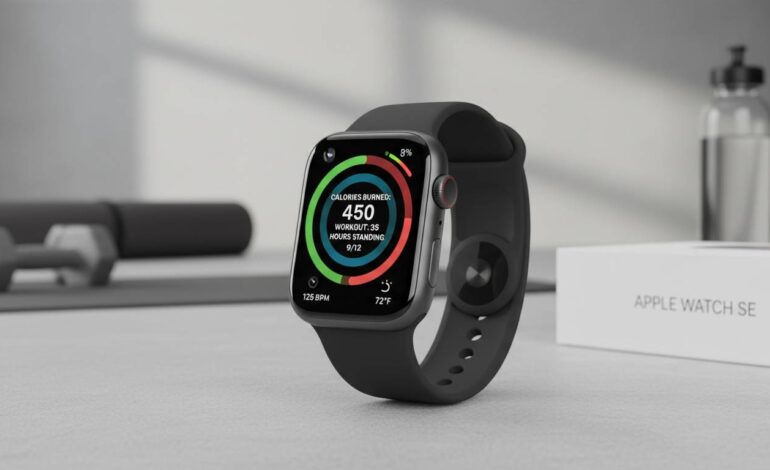
Apple Watch SE (2nd Gen): Budget-Conscious Choice
Not everyone needs every feature. The Apple Watch SE (2nd gen) delivers core fitness tracking at a significantly lower price than the Series 9, making it the best value for many buyers.
You sacrifice some health sensors—no blood oxygen or temperature sensing—but the core fitness experience remains excellent. You still get:
- Heart rate monitoring with high/low heart rate alerts
- GPS tracking for outdoor workouts
- Fall detection and crash detection
- Swim-proof design with pool tracking
- Activity rings and workout app
The SE uses the same processor as the Series 8, meaning performance feels snappy. You get watchOS updates for the foreseeable future, keeping the device secure and feature-rich.
Battery life matches the Series 9—expect one to two days between charges. The display is slightly smaller (44mm vs 45mm), but the always-on Retina display remains easy to read.
For someone just starting their fitness journey, the SE provides more than enough capability. You can track runs, cycles, swims, and gym workouts while building the habit before investing in more advanced features.
Fitbit Charge 6: The Fitness Tracker Alternative
The Fitbit Charge 6 occupies an interesting space—it’s more than a basic fitness band but less than a full smartwatch. If you want comprehensive tracking in a compact form factor, it deserves consideration.
The Charge 6 integrates Google apps for the first time, including YouTube Music controls and Google Maps navigation. These additions make it more useful as an everyday device while maintaining fitness focus.
Fitness tracking includes:
- Continuous heart rate monitoring
- GPS tracking (connected GPS with phone nearby)
- 40+ exercise modes with SmartTrack auto-detection
- Sleep tracking with sleep scores
- SpO2 monitoring
Fitbit’s strength is its sleep and recovery analysis. The Sleep Profile evaluates your sleep patterns across multiple nights and assigns an animal archetype (like Dolphin or Bear) that describes your sleep style. This gamification helps users understand and improve their rest.
The battery lasts approximately seven days, meaning you can track sleep without nightly charging. This is a significant advantage over smartwatches.
The compact design won’t appeal to everyone—it looks more like a fitness band than a watch. But for users who prefer minimal wrist presence or want something less conspicuous, the Charge 6 excels.
How to Choose the Right Fitness Smartwatch
Selecting the best smartwatch for fitness depends on your specific needs, budget, and existing technology ecosystem. Here’s a practical framework for making your decision.
Start with your phone. If you use an iPhone, the Apple Watch provides the smoothest experience with deep integration into iOS. Android users have more options, but the Samsung Galaxy Watch offers the most complete feature set. Garmin works with both ecosystems but provides deeper integration with its own platform.
Consider your primary activities. Runners and cyclists should prioritize GPS accuracy and sports-specific metrics—Garmin excels here. Swimmers need water resistance and dedicated swim tracking. Casual exercisers do well with any of these options.
Think about battery life. If you want to track sleep or go on multi-day adventures, battery life becomes critical. Garmin watches dominate here. If you’re comfortable charging daily, smartwatches offer more features.
Set your budget. Prices at Best Buy range from approximately $160 for the Fitbit Charge 6 to over $700 for premium Apple Watch configurations. The Apple Watch SE hits a sweet spot between price and capability.
Try it on. Best Buy stores typically have display models. Fit the watch on your wrist before buying—the size and weight matter more than you’d expect for something you’ll wear constantly.
Final Recommendation
For most people seeking the best smartwatch for fitness at Best Buy, the Apple Watch Series 9 delivers the most complete package. It combines sophisticated fitness tracking with the full smartwatch experience, making it useful all day, every day.
However, if training optimization matters more than notifications, the Garmin Forerunner 265 provides metrics and insights you won’t find elsewhere. And for Android users who want great fitness tracking without the premium price, the Samsung Galaxy Watch 6 remains an excellent choice.
The “best” smartwatch ultimately depends on what you value most. Consider how you’ll actually use it—some features you won’t touch, while others will become essential. Choose the watch that matches your real habits, not the hypothetical athlete you imagine being.
FAQs
What’s the best smartwatch for fitness at Best Buy for beginners?
The Apple Watch SE (2nd gen) offers the best value for beginners. It provides core fitness tracking—heart rate, GPS workouts, activity rings, swim tracking—at a lower price than the Series 9, making it ideal for building fitness habits without significant investment.
Do I need cellular connectivity in my fitness smartwatch?
Cellular connectivity adds cost and battery drain. Unless you want to leave your phone behind during workouts or need emergency features, the GPS-only version works fine for most fitness purposes.
Which smartwatch has the longest battery life for fitness tracking?
Garmin watches generally offer the best battery life. The Forerunner 265 lasts up to 15 days in smartwatch mode and 24+ hours in GPS mode, significantly outlasting Apple and Samsung smartwatches that need daily charging.
Can I swim with any smartwatch from Best Buy?
Most fitness smartwatches at Best Buy offer at least 5ATM water resistance, suitable for pool swimming. However, avoid hot tubs, saunas, and diving beyond recreational limits, as these can damage water resistance seals over time.
Is the Apple Watch or Samsung Galaxy Watch better for Android users?
The Samsung Galaxy Watch 6 is better for Android users because it offers the most complete feature set with deep integration into Samsung’s ecosystem. The Apple Watch limits Android users to basic notifications without app support.
Do I need to replace my fitness smartwatch every year?
No. Fitness smartwatches typically last 3-5 years with proper care. You’ll eventually lose software updates, but the core fitness tracking remains functional. Battery degradation is the most common reason to upgrade after several years of use.