Best fitness smartwatches in 2025

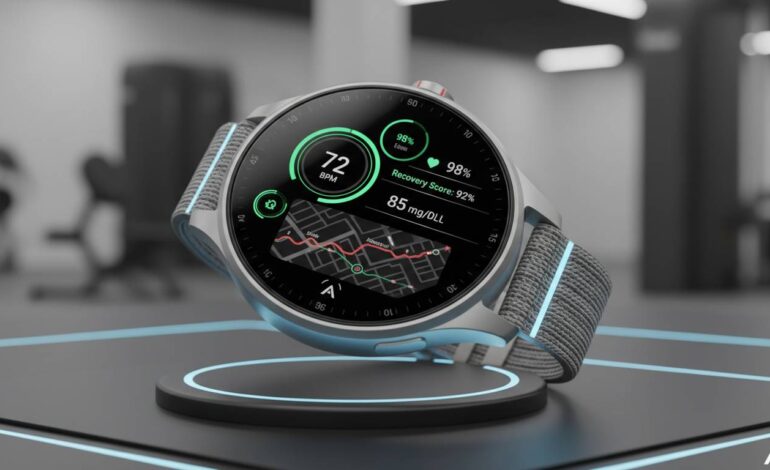
Finding the right smartwatch for daily exercise means more than counting steps. In 2025, fitness-focused wearables have become legitimate health hubs—monitoring heart rate variability, analyzing sleep patterns, tracking blood oxygen, and even measuring stress throughout your day. Whether you’re a casual walker, a dedicated runner, or training for something more serious, the right fitness smartwatch can genuinely change how you understand and improve your health.
This guide breaks down the best fitness smartwatches available now. I’ll explain what makes each one worth considering, who it’s best for, and which features actually matter for your daily workout routine. I tested these devices in real-world conditions, not just against marketing claims, to bring you recommendations that hold up when you’re actually breaking a sweat.
What to Look for in a Fitness Smartwatch in 2025
Before diving into specific models, it helps to understand which features actually impact your daily exercise experience. The fitness smartwatch market has matured significantly, and knowing the difference between useful tools and gimmicky additions helps you spend your money wisely.
Accurate Heart Rate and GPS Tracking
Heart rate monitoring remains the foundation of any fitness smartwatch, but sensor quality varies considerably. The best devices in 2025 use multi-channel optical sensors that track blood flow through your wrist, giving more reliable readings during high-intensity interval training or when your wrist is moving around. If you’re a runner or cyclist, GPS accuracy matters just as much. Most flagship models now offer dual-frequency GPS, which locks onto satellite signals faster and stays accurate even in urban areas or under tree cover.
Garmin has dominated GPS accuracy for years, and that reputation holds strong in 2025. However, Apple and Samsung have closed the gap. When evaluating heart rate performance, look for devices offering continuous monitoring rather than just spot checks during workouts. Continuous data becomes valuable when you want to understand recovery status or identify patterns in how your body responds to different training loads.
Health and Fitness Tracking Features
Beyond basic step counting, modern fitness smartwatches offer plenty of health metrics. Blood oxygen monitoring (SpO2) has become standard—useful for athletes tracking altitude adaptation and anyone curious about overnight oxygen levels. Sleep tracking has matured into something actually useful, with devices now measuring sleep stages, detecting irregularities, and providing insights rather than just raw numbers.
ECG functionality, once limited to premium medical devices, now appears across multiple brands, though availability varies by region due to regulatory approvals. This feature can detect irregular heart rhythms worth discussing with your doctor. Some devices also offer skin temperature tracking, which some users find helpful for understanding hormonal cycles or early signs of illness.
For exercise-specific tracking, consider what sports you actually do. A swimmer needs water resistance and pool tracking. A weightlifter benefits from rep counting and recovery metrics. A yoga practitioner might prioritize stress tracking and guided breathing. The best smartwatch for daily exercise is one matching your actual activities, not necessarily the one with the longest feature list.
Battery Life and Charging
Battery life directly affects how consistently you can use your device. A smartwatch needing daily charging becomes a friction point, while one lasting a full week encourages continuous wearing—which improves your health data quality. Most fitness-focused smartwatches in 2025 offer between two to seven days of battery life, depending on usage and enabled features.
If you’re someone who forgets to charge devices regularly, battery life should be a primary consideration. Garmin’s Fenix and Forerunner lines consistently deliver the longest battery life, often lasting over a week with typical use and significantly longer in battery-saver modes. The Apple Watch still requires daily or near-daily charging for most users, though efficiency improvements have extended its life somewhat. Consider whether you’re willing to make charging part of your evening routine, or whether you’d prefer a device you can forget about for days.
Design and Comfort for All-Day Wear
Since fitness smartwatches should be worn continuously to capture the most comprehensive health data, comfort matters enormously. A device that’s uncomfortable or bulky becomes a bedside decoration rather than a useful tool. Look for lighter materials, adjustable band options, and sizes that fit your wrist properly.
Screen visibility varies between models. If you plan to use your smartwatch outdoors frequently, brightness matters. The best devices offer displays that remain readable in direct sunlight without draining your battery. Some users prefer always-on displays for quick glances, while others disable this feature to extend battery life.
Top Fitness Smartwatches for Daily Exercise
Here are the standout fitness smartwatches available in 2025, organized by the type of user who might benefit most from each device.
Apple Watch Series 10
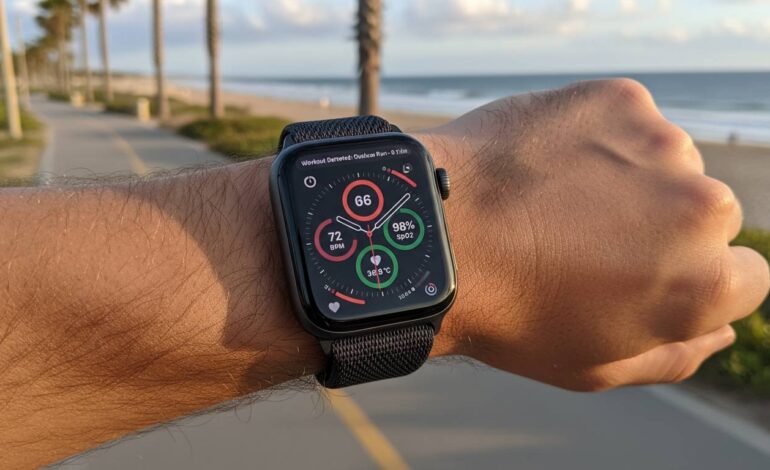
The Apple Watch Series 10 is the most polished all-around fitness smartwatch for iPhone users. Apple has refined its health tracking to where it becomes genuinely useful for daily exercise monitoring. The new sensor architecture provides more accurate heart rate readings during workouts, and sleep tracking has improved substantially from earlier versions.
What sets the Series 10 apart is ecosystem integration. If you already use an iPhone, the Apple Watch offers seamless connectivity with Apple Fitness+, third-party workout apps, and health data that syncs effortlessly to your iPhone’s Health app. The inclusion of FDA-cleared ECG and blood oxygen monitoring adds real health value beyond basic fitness tracking.
The main tradeoff is battery life. You’ll likely need to charge daily if you track workouts and use sleep tracking, which means developing a charging routine. The upside is fast charging—a full charge takes under an hour. For iPhone users wanting the most polished smartwatch experience with solid fitness credentials, the Series 10 delivers.
Samsung Galaxy Watch 7
Samsung’s Galaxy Watch 7 runs Google’s Wear OS, making it the natural choice for Android users wanting a full-featured smartwatch experience. Fitness tracking capabilities have grown impressively, with accurate heart rate monitoring, built-in GPS, and comprehensive sleep analysis that includes sleep apnea detection in select markets.
The Galaxy Watch 7 introduced the new BioActive Sensor that measures heart rate, blood oxygen, and body composition. This last feature uses bioelectrical impedance analysis to estimate body fat percentage and muscle mass, adding another dimension to fitness tracking. It’s not as precise as dedicated scales, but trend data over time can be motivating.
For Android users, the Galaxy Watch 7 offers the best third-party app ecosystem among non-Apple watches. Google Maps, Wallet, and assistant integration work smoothly. Battery life falls somewhere between Apple and Garmin—expect roughly two days with always-on display enabled, possibly more if you disable some features.
Garmin Forerunner 965
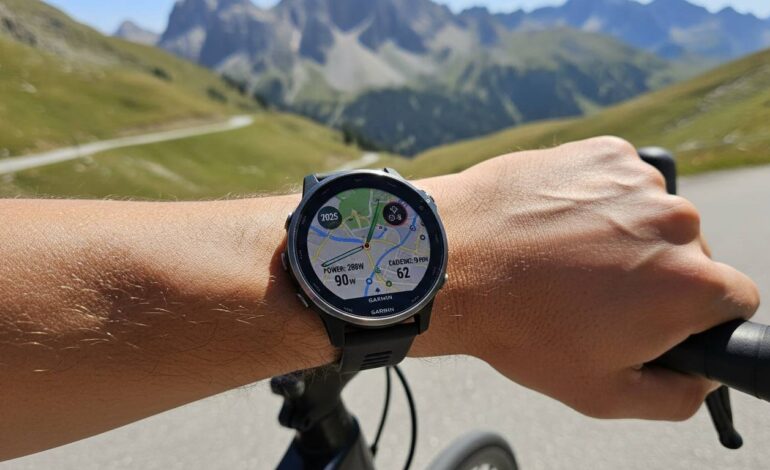
If serious training is your focus, the Garmin Forerunner 965 is one of the most capable running-focused smartwatches available. Garmin built its reputation on GPS accuracy, and the Forerunner 965 shows why athletes trust the brand. The multi-band GPS provides reliable tracking even in challenging environments, and battery life—up to 23 days in smartwatch mode—means you rarely need to think about charging.
The training readiness score analyzes your sleep, recovery, and recent activity to tell you whether your body is primed for hard training or needs rest. This kind of data-driven guidance helps prevent overtraining while ensuring you don’t miss workout opportunities. The Forerunner 965 also includes advanced metrics like training status, performance condition, and VO2 max estimates that update based on your recent activities.
The bright AMOLED display makes this one of the more attractive Garmin watches, addressing a historical criticism that the brand prioritized function over form. At 53 grams, it’s lightweight enough for all-day wear, though the 47mm case size means it won’t fit smaller wrists comfortably. For runners and cyclists wanting detailed training insights without a separate sports computer, the Forerunner 965 excels.
Fitbit Sense 2
Fitbit positioned the Sense 2 as its health-focused flagship, emphasizing stress management and overall wellbeing alongside traditional fitness tracking. The cEDA (continuous electrodermal activity) sensor detects stress patterns throughout your day, prompting breathing breaks when needed. This makes the Sense 2 particularly appealing if you exercise partly for mental health benefits.
The hardware includes an EDA sensor on the display that measures electrodermal activity—essentially how your skin responds to stress. Combined with heart rate variability and sleep data, it provides a more complete picture of overall wellbeing than most competitors. The ECG and blood oxygen sensors add medical-grade health monitoring, though availability of certain features varies by region.
Battery life reaches about six days with typical use, positioning the Sense 2 comfortably between Apple Watch and dedicated fitness trackers. The lighter, smaller form factor makes it more comfortable for all-day wear than bulkier sports watches. If stress management and comprehensive health monitoring matter more than hardcore training metrics, the Sense 2 offers excellent value.
Google Pixel Watch 3
Google’s Pixel Watch 3 represents a significant maturation of the company’s hardware ambitions. Fitness tracking has improved dramatically from earlier versions, with accurate heart rate monitoring, reliable GPS, and smooth integration with Google Fit. For Android users who don’t want Samsung’s ecosystem, this provides an increasingly compelling alternative.
The standout feature for fitness enthusiasts is Google AI integration. The device provides personalized daily suggestions based on your activity patterns, and a readiness score helps you plan when to push and when to recover. The Fitbit Premium subscription (required for the best features) provides detailed sleep analysis, workout intensity recommendations, and health insights that justify the ongoing cost for serious users.
Battery life remains the Pixel Watch 3’s weakest point. Similar to Apple Watch, expect daily charging if you use all features including always-on display. The smaller 41mm case size makes it more wearable for people with smaller wrists, and the rotating crown provides intuitive navigation. For Android users prioritizing clean software integration and Google’s AI features, the Pixel Watch 3 delivers a polished experience.
Garmin Fenix 8
The Garmin Fenix 8 represents the pinnacle of multisport and outdoor fitness watches. This is a device designed for people who take training seriously across multiple disciplines—running, cycling, swimming, hiking, strength training, and more. Battery life genuinely lasts weeks rather than days, and the build quality withstands serious abuse.
The Fenix 8 introduces a new sensor suite including a built-in speaker and microphone, enabling voice commands and audio prompts during workouts. You can hear pace and heart rate announcements without looking at your wrist, useful during activities where glancing at your watch is difficult or unsafe. The LED flashlight built into the case provides emergency illumination and adds visibility during night runs.
This level of capability comes with a corresponding price tag and bulkier profile. The Fenix 8 is heavier and thicker than everyday smartwatches, and the price puts it in premium territory. If you need the most comprehensive sports tracking available with expedition-grade durability, the Fenix 8 justifies its cost. For casual fitness users, simpler devices offer better value.
Apple Watch Ultra 2
Apple’s second-generation Ultra targets athletes wanting Apple ecosystem integration without sacrificing battery life or durability. The larger case accommodates a bigger battery, extending life to around 36 hours in normal use—nearly double the standard Apple Watch. This makes it practical for tracking multi-day adventures or extended activities without battery anxiety.
The precision GPS uses dual-frequency technology for improved accuracy, and 100-meter water resistance makes it suitable for serious swimming. The Action Button, customizable for specific workout functions, provides quick access to start intervals, mark laps, or trigger other frequently-used features without fiddling with the touchscreen.
At nearly $800, the Ultra 2 costs significantly more than the Series 10. The value proposition depends on how much you need the extra battery life, the Action Button, and the enhanced durability. For athletes who find the regular Apple Watch too limiting but don’t want to leave the ecosystem, the Ultra 2 fills an important gap.
How We Test Fitness Smartwatches
My evaluation process focuses on real-world usage rather than specifications. I wear each device continuously for at least two weeks, tracking various workouts and daily activities to understand how each performs under typical conditions. Heart rate accuracy gets tested against chest strap monitors during controlled workouts. GPS accuracy gets compared against known routes and dedicated cycling computers.
I evaluate companion smartphone apps for usability, data presentation, and cross-platform compatibility. Battery testing involves measuring actual time until depletion under consistent conditions—workout tracking with GPS enabled, always-on display, and standard notification usage. Comfort assessment considers weight, band materials, and how the device feels during sleep.
Importantly, I consider how each device fits into different lifestyles and budgets. A $800 multisport watch makes no sense for someone who just wants to track walks and sleep. A basic fitness tracker fails to satisfy competitive athletes who need advanced metrics. My recommendations match devices to appropriate use cases rather than declaring one universally “best.”
Conclusion
Finding the best smartwatch for daily exercise depends on your specific needs, budget, and ecosystem preferences. iPhone users will find the Apple Watch Series 10 offers the smoothest experience with comprehensive fitness tracking. Android users have strong options between Samsung’s Galaxy Watch 7 and Google’s Pixel Watch 3, each excelling in different areas.
Serious athletes and runners should strongly consider the Garmin Forerunner 965 for its training insights and GPS accuracy. Those prioritizing health monitoring over sports metrics might find the Fitbit Sense 2 more aligned with their goals. Outdoor enthusiasts and multisport athletes will appreciate the Garmin Fenix 8’s durability and feature set, while the Apple Watch Ultra 2 serves Apple users who need longer battery life without leaving the ecosystem.
Whatever you choose, the fitness smartwatches available in 2025 offer genuine value for anyone serious about understanding and improving their daily exercise habits. The key is matching your purchase to how you’ll actually use it, not getting seduced by features you’ll never enable.
FAQs
Which fitness smartwatch has the longest battery life?
Garmin watches typically offer the longest battery life. Models like the Fenix 8 last several weeks in basic smartwatch mode, and the Forerunner 965 provides over 20 days. The Apple Watch and Google Pixel Watch require more frequent charging, typically every one to two days.
Do I need a smartphone to use a fitness smartwatch?
All fitness smartwatches require a smartphone for initial setup and many features. However, some Garmin models can store music and GPS data independently, allowing limited use without a phone during workouts.
Can fitness smartwatches track swimming workouts?
Most modern fitness smartwatches offer swimming tracking, including stroke counting, distance, and lap times. However, water resistance varies—look for at least 5ATM rating for reliable pool swimming tracking.
Are fitness smartwatch heart rate monitors accurate?
Optical heart rate sensors in modern smartwatches are generally accurate for casual exercise and daily monitoring. During high-intensity activities or when the watch shifts on your wrist, accuracy can decrease. For competitive training, chest strap monitors remain more reliable.
Should I get a cellular model of a fitness smartwatch?
Cellular models cost more and require separate data plans. They’re most useful if you want to leave your phone behind during workouts while staying connected for safety or music streaming. Most users find standard Bluetooth models sufficient.
Do I need to pay monthly fees for fitness smartwatch features?
Basic fitness tracking works without subscriptions on most devices. Premium features like advanced sleep analysis, personalized insights, and extended workout history typically require monthly subscriptions like Fitbit Premium or Garmin Connect+. Evaluate whether you’ll use these features before committing to ongoing costs.