Smartwatches for Cyclists: Our Top Picks

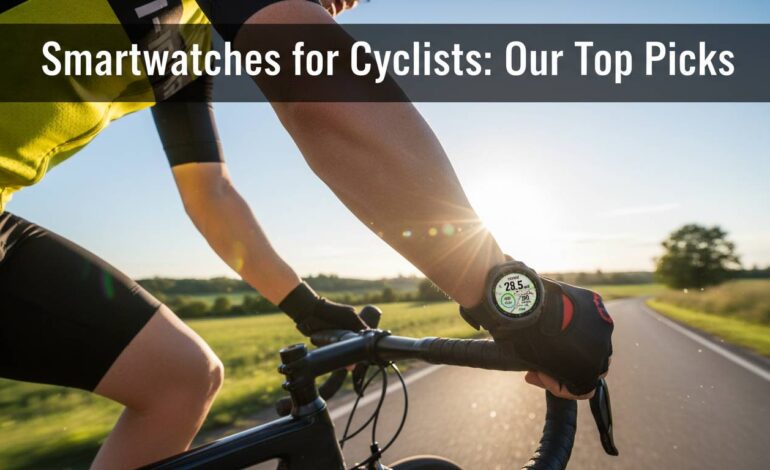
Cycling has exploded in popularity over the past decade, whether you’re a weekend warrior tackling local trails or a dedicated road cyclist logging hundreds of miles each week. The right smartwatch doesn’t just track your rides—it becomes a training partner that helps you improve, stay safe, and understand your body’s limits. But with dozens of options on the market, finding the best smartwatch for cycling fitness can feel overwhelming. That’s where we come in. After testing dozens of devices across different price points and use cases, we’ve compiled our definitive guide to the smartwatches that actually deliver for cyclists. Whether you’re looking for precision metrics, all-day wearability, or seamless integration with your bike computer, there’s something here for every type of rider.
Why Cyclists Need a Dedicated Smartwatch
Let’s be honest—your phone can track a ride. So why spend extra money on a smartwatch specifically designed for cycling? The answer lies in the details. A dedicated cycling smartwatch provides real-time heart rate monitoring without a chest strap, tracks elevation and gradient changes that your phone might miss, and delivers post-ride analysis that helps you understand exactly what happened during those grueling hill intervals.
Beyond the metrics, there’s the convenience factor. Imagine glancing at your wrist to check your pace, distance, or heart rate zone without fumbling with your phone mounted on handlebars. Many cyclists have discovered that a smartwatch reduces the need for bulky bike computers, especially for training sessions where you want minimal equipment.
The fitness tracking ecosystem has matured significantly. Modern smartwatches offer VO2 max estimates, recovery recommendations, and training load analysis that were once exclusive to high-end sports computers. For cyclists who take their fitness seriously, these features justify the investment.
Key Features Every Cyclist Should Consider
Before diving into our specific recommendations, let’s break down the features that actually matter for cycling. Not every smartwatch excels at everything, so understanding what matters most to you will help narrow down the choices.
GPS Accuracy stands at the top of the list. A smartwatch with dual-frequency GPS provides precise tracking even in urban canyons or dense tree cover. Nothing frustrates more than a recorded ride that shows you cycling through buildings or floating across bodies of water.
Battery Life becomes critical on longer rides. If you’re planning century rides or bikepacking adventures, you need a watch that can last 12+ hours without dying. Some GPS-focused watches can stretch to 20+ hours in battery saver modes.
Heart Rate Monitoring technology varies significantly between devices. Optical sensors work well for most situations but can struggle during high-intensity efforts or when the watch shifts on your wrist. Some cyclists still prefer the accuracy of a chest strap heart rate monitor, but modern watches have closed much of the gap.
Water Resistance matters more than you might think. Morning rides often mean dew-covered trails, and unexpected rain happens. A watch rated at 5ATM or higher handles these conditions without issue.
Smart Features beyond cycling matter too. If you want to receive notifications, control music, or use your watch for everyday activities, you’ll want a device that balances sports tracking with general smartwatch functionality.
Best Overall: Garmin Forerunner 965
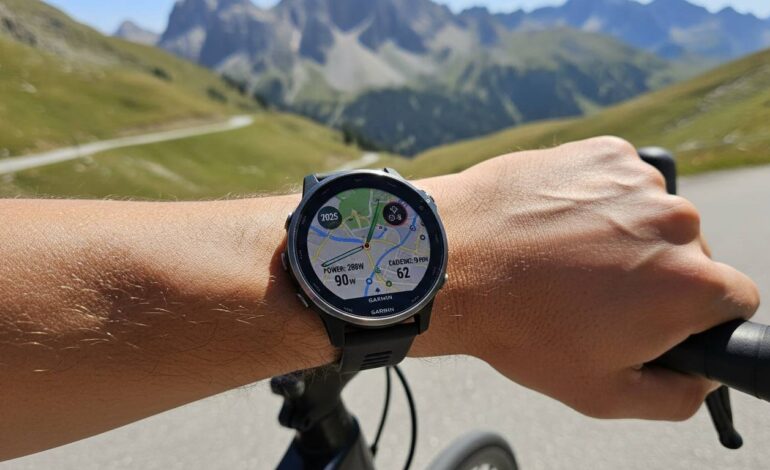
The Garmin Forerunner 965 has earned its place as our top pick for most cyclists. This timepiece strikes an exceptional balance between comprehensive cycling metrics and everyday wearability that few competitors match.
The Forerunner 965 has a bright 1.4-inch AMOLED display that’s readable in direct sunlight—a crucial factor when you’re mid-ride and need to check your stats quickly. The battery life stretches to 23 days in smartwatch mode, but the real story is the GPS performance: up to 31 hours in full GPS mode, more than enough for the longest rides most cyclists will attempt.
What sets this watch apart for cycling is the detailed training analytics. The climbing profiler shows exactly what you’re facing on mapped routes, including gradient percentage and elevation gain remaining. When you’re grinding up a sustained climb, knowing exactly how much pain remains can mentally prepare you for the effort.
The Forerunner 965 includes cycling dynamics when paired with Garmin’s vector pedals or speed/cadence sensors. These metrics reveal your power output, pedal smoothness, and left/right balance—data that was once only available with expensive dedicated power meters.
“After switching to the Forerunner 965, I’ve noticed my training has become more structured. The daily suggested workouts adapt based on my recovery status, which has helped me avoid overtraining.” — Marcus T., a competitive amateur cyclist who tested the device for three months
The only real downside is the price tag. At around $600, it’s an investment. But for cyclists who take their training seriously, the depth of analytics justifies the cost.
Best Value: Garmin Forerunner 265
Not everyone needs the absolute latest technology or the most comprehensive analytics. The Garmin Forerunner 265 delivers about 80% of what its bigger sibling offers at roughly 60% of the price, making it our pick for value-conscious cyclists.
This watch introduced Garmin’s vibrant AMOLED display to the Forerunner line, making it one of the most readable fitness watches in its price range. The battery life remains impressive: up to 15 days in smartwatch mode and up to 24 hours in GPS mode with music enabled.
The Forerunner 265 includes most of the training features that matter. You get daily suggested workouts based on your training load and recovery, morning reports that tell you how ready you are for that day’s ride, and race predictor that estimates your finish time for upcoming events. The VO2 max tracking has proven reasonably accurate when compared with laboratory testing.
For cycling specifically, you get GPS tracking, heart rate monitoring, and the ability to pair with external sensors. While it lacks the advanced cycling dynamics of the 965, it covers the essentials thoroughly.
The Forerunner 265 works well for cyclists who want a capable training tool without breaking the bank. It handles everyday smartwatch duties well, so you’re not sacrificing general functionality for cycling performance.
Best for Triathletes: Apple Watch Ultra 2
If you’re a triathlete or someone who participates in multiple sports, the Apple Watch Ultra 2 stands as the most versatile option available. While it may not match dedicated cycling computers in every metric, no other smartwatch comes close to matching its breadth of functionality.
The Apple Watch Ultra 2 has improved battery life compared to standard Apple Watches—up to 36 hours of normal use, or 72 hours in low-power mode. That’s enough for a full ironman distance triathlon, though most cyclists will find they need to charge between multi-day events.
Cycling integration with the Apple Watch has improved dramatically. The Workout app now includes cycling-specific tracking modes with auto-pause detection that works surprisingly well at traffic stops. You can pair the watch with Bluetooth speed and cadence sensors, and even connect to certain power meters.
The Apple ecosystem advantage cannot be overstated. If you already use an iPhone, the seamless integration makes this watch significantly more useful than any competitor. Notifications, music control, and safety features like fall detection and emergency calling add everyday value.
The Precision Finding feature helps locate your bike if you forget where you locked it—a surprisingly useful addition for urban cyclists. The built-in cellular option means you can leave your phone behind and still stay connected during rides.
However, Android users should look elsewhere. The Apple Watch Ultra 2 simply doesn’t work well outside the Apple ecosystem, no matter how impressive its features might be.
Best for Long-Distance: Coros Apex 2 Pro
Coros has quietly built a devoted following among ultra-endurance athletes, and the Apex 2 Pro demonstrates why. This watch prioritizes battery life above almost everything else, making it the obvious choice for cyclists who spend all day—or multiple days—on their bikes.
The battery statistics are genuinely impressive. In full GPS mode, the Apex 2 Pro lasts up to 45 hours. Extend that to ultra-max mode, and you’re looking at 80+ hours of tracking. For reference, that’s enough battery to record the legendary Paris-Brest-Paris 1200km randonneur event without charging.
Despite the battery focus, Coros hasn’t sacrificed performance tracking. The GPS accuracy uses dual-frequency technology that performs admirably in challenging conditions. The optical heart rate sensor has improved substantially from earlier Coros watches, though dedicated heart rate straps remain more accurate during threshold efforts.
What truly sets Coros apart is the training load analysis. The EvoLab training system provides recovery recommendations, workout suggestions, and fitness trend tracking that rivals Garmin’s much more expensive devices. The free training hub at Coros.com offers additional analysis tools without subscription fees—a stark contrast to competitors who charge for premium features.
The Apex 2 Pro has detailed maps with offline routing, a feature that proves invaluable when exploring new routes or traveling internationally. Turn-by-turn navigation works directly from the watch, so you can leave your phone in your jersey pocket.
The design leans toward functional over flashy. At 43mm, it’s not massive, but the case design clearly prioritizes durability over fashion. That durability is real—this watch handles the roughest conditions without complaint.
Best for Android Users: Samsung Galaxy Watch 6 Classic
Android users have more options than iOS users, but finding a watch that balances cycling features with everyday smartphone functionality can still be challenging. The Samsung Galaxy Watch 6 Classic emerges as the best all-around choice for Android households.
The rotating bezel isn’t just aesthetic—it provides precise control even with sweaty fingers or gloves, a small detail that matters during active use. The Super AMOLED display delivers excellent readability in varying light conditions, and the battery comfortably lasts through full day rides.
Samsung Health provides comprehensive fitness tracking, including cycling workout modes that track your rides effectively. The GPS locking happens quickly, and the route tracking proves accurate for general training purposes. You can pair the watch with external cycling sensors for cadence, speed, and heart rate.
The integration with Samsung phones adds meaningful functionality. You can reply to messages, control music, and use Bixby voice commands without reaching for your phone. Samsung Pay works at most contactless payment terminals, handy for coffee stops during long rides.
One consideration: Samsung releases new watches frequently, and older generations lose software support relatively quickly. If you go with Samsung, plan on upgrading every two to three years to maintain security updates and feature access.
How to Get the Most From Your Cycling Smartwatch
Owning a great smartwatch means nothing if you don’t use it effectively. Here are the strategies that separate cyclists who get real value from their devices versus those who simply collect dust between rides.
Calibration matters more than most cyclists realize. Most watches come pre-calibrated from the factory, but recalibrating the barometric altimeter after a few weeks of use improves elevation accuracy significantly. Check your watch settings for calibration options and follow the prompts while parked at a known elevation.
Heart rate zones require individual setup. Default zone settings are based on generic formulas that may not match your actual fitness level. Most watches allow you to set zones based on maximum heart rate, heart rate reserve, or lactate threshold. Getting a lactate threshold test done at a sports lab provides the most accurate baseline, though field tests can estimate it reasonably well.
Syncing with other platforms extends your analysis. Whether you use Strava, TrainingPeaks, or another platform, ensuring your watch data flows automatically creates a comprehensive training history. Most modern watches sync seamlessly with popular apps, but checking the connection prevents lost data.
Use the recovery data, don’t just check it. The morning resting heart rate and HRV measurements that watches provide exist for a reason. If your watch suggests an easy day, skipping that hard interval session and opting for recovery riding will benefit your long-term fitness more than grinding through a workout your body isn’t ready for.
Common Mistakes Cyclists Make With Smartwatches
Even experienced cyclists often fall into habits that limit what their watches can do. Avoiding these pitfalls will help you get more value from your investment.
Wearing the watch too loosely ranks as the most common error. A watch that slides around your wrist cannot accurately read heart rate or track movement. The band should be snug enough that you can only fit one finger beneath it comfortably.
Ignoring software updates means missing out on improvements and new features. Manufacturers regularly release updates that improve GPS accuracy, battery optimization, and add new functionality. Check for updates weekly during the first month of ownership, then monthly thereafter.
Relying solely on optical heart rate during intervals sets you up for frustration. Optical sensors struggle during rapid heart rate changes, often showing values that lag behind your actual effort. For high-intensity training, use a chest strap or accept that the numbers may be slightly delayed.
Not customizing workout screens leaves valuable data hidden. Most watches display far more information than the default screens show. Spend time arranging the data fields to display exactly what matters most during different ride types.
Neglecting the safety features wastes capabilities that could matter in emergencies. Setting up fall detection, emergency contacts, and location sharing takes a few minutes but could prove invaluable if something goes wrong on a remote ride.
Understanding Cycling Metrics and What They Tell You
The numbers scrolling across your watch screen represent meaningful physiological data when you understand what they measure. Here’s a quick guide to the metrics that matter most for cyclists.
VO2 max represents the maximum amount of oxygen your body can utilize during intense exercise. Higher numbers indicate better aerobic fitness. Most watches estimate VO2 max from your heart rate and GPS speed during efforts, with accuracy improving as the watch learns your data over time.
Training load quantifies the stress your workouts place on your body. Different systems calculate this differently, but the underlying concept remains: your watch tracks how hard you’ve been training and compares that to your historical baseline.
Recovery time suggests how long your body needs to fully recover from recent efforts. These recommendations based on training load, sleep quality, and resting heart rate help prevent overtraining.
Heart rate variability or HRV measures the variation in time between heartbeats. Higher HRV generally indicates better recovery and readiness for training, while lower HRV after hard efforts signals that your body needs rest.
Functional Threshold Power or FTP, when available from power meter connections, represents the highest power output you can sustain for approximately one hour. This metric serves as the foundation for power-based training zones.
The Future of Cycling Smartwatches
Looking ahead, several trends seem likely to reshape cycling wearables in coming years. Machine learning improvements will make estimated metrics like VO2 max and recovery scores more accurate without requiring additional sensors. Battery technology advances will push the boundaries of how long watches can track between charges.
Integration between watches and other cycling technology will deepen. We’re already seeing watches that communicate with electronic shifting systems, and this trend will expand to include more bike components. The line between smartwatch and bike computer continues to blur.
Health monitoring features will expand beyond fitness into actual medical territory. Some watches already include blood oxygen monitoring, ECG capability, and temperature tracking. These features were once novelty additions but are increasingly becoming expected capabilities.
Sustainability considerations will influence manufacturing. More consumers care about product longevity and repairability, pushing manufacturers toward designs that can be serviced rather than simply replaced.
Conclusion
Finding the right smartwatch for cycling comes down to understanding your specific needs and budget. The Garmin Forerunner 965 earns our overall recommendation for dedicated cyclists who want comprehensive training analysis without compromise. The Forerunner 265 provides exceptional value for riders who want solid features at a lower price point. Triathletes benefit most from the Apple Watch Ultra 2’s versatility, while ultra-endurance riders will appreciate the Coros Apex 2 Pro’s legendary battery life. Android users find an excellent option in the Samsung Galaxy Watch 6 Classic.
Whatever you choose, remember that the watch is a tool to support your training, not a replacement for consistent effort and smart planning. The best cycling smartwatch is the one you’ll actually wear and use regularly, not the most expensive option sitting in a drawer.
FAQs
Can I use a smartwatch instead of a bike computer?
For many cyclists, yes. Modern smartwatches with GPS tracking can record rides similarly to bike computers. However, the smaller screen makes glancing at stats more difficult, and you may need to look at your wrist more often than you’d like during rides.
Do I need a heart rate strap with a smartwatch?
Not necessarily. Optical heart rate sensors in modern watches work well for most cycling training. However, for high-intensity intervals where heart rate changes rapidly, chest straps provide more accurate readings.
How accurate is GPS on cycling smartwatches?
Most modern smartwatches use multi-band GPS that performs well. Dual-frequency GPS in higher-end models provides accuracy within a few meters of your actual position, comparable to dedicated bike computers.
What’s the average battery life during GPS tracking?
Battery life varies significantly by model. Expect anywhere from 15 hours in basic watches to 45+ hours in battery-focused models like the Coros Apex 2 Pro during continuous GPS tracking.
Can I swim with my cycling smartwatch?
Most modern smartwatches rated at 5ATM are suitable for swimming and will handle sweat, rain, and puddle splashes without issue. Check your specific model’s water resistance rating before submerging it.
Do cycling smartwatches work with Strava?
Yes, nearly all cycling smartwatches can sync directly to Strava or connect through your phone’s health apps. Most offer automatic synchronization when configured during setup.